Presence Detection Probes: The Hidden Key to Accurate Occupancy Sensing Systems
Learn about presence detection probes, their role in mmWave sensing systems, how they work, and how to select and configure them for commercial occupancy detection.
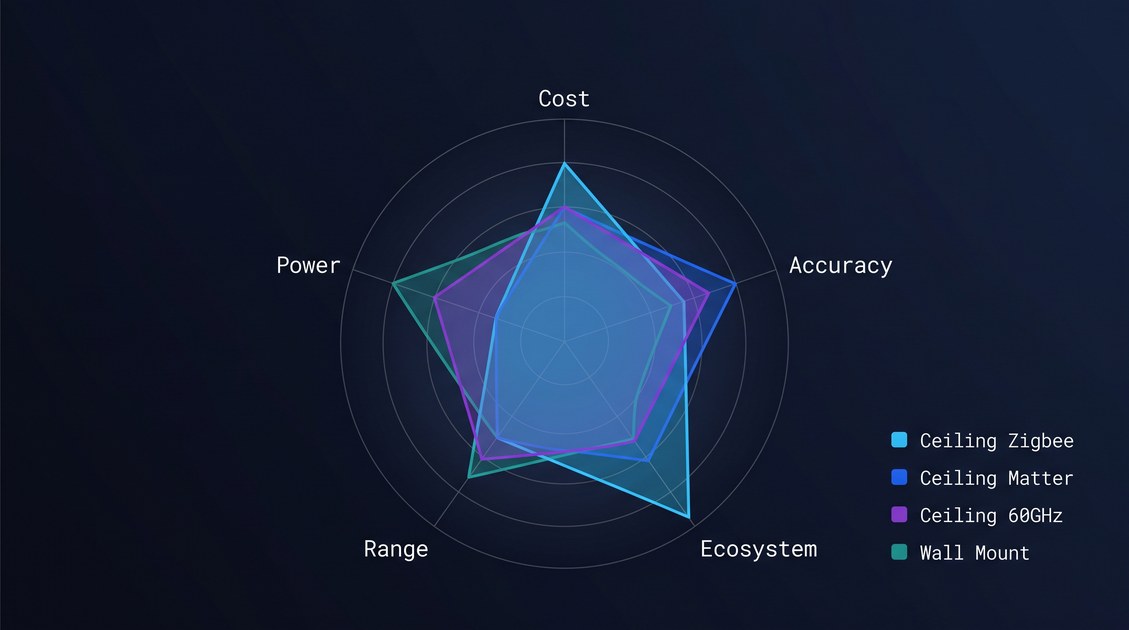
Presence detection probes are the internal signal processing and sensing functions within a millimeter-wave (mmWave) radar occupancy sensor that extract and classify the presence of human occupants from the raw reflected radar signal — specifically, the sequence of FMCW chirp processing, range-Doppler mapping, micro-motion extraction, and occupancy classification that together determine whether a stationary or moving human is present within the detection zone. In a modern 60 GHz mmWave presence sensor, presence detection probes are implemented as a combination of hardware-accelerated signal processing (FFT computation on the radar transceiver chip) and software-based classification (on a microcontroller or a dedicated inference engine), and they are the functional components that distinguish a true presence sensor from a simple motion detector. A well-designed set of presence detection probes can extract the micro-Doppler signature of human breathing at 0.2–0.5 Hz from a target at 6–8 meters, can distinguish this signature from environmental noise (HVAC airflow, building vibration, fan motion), and can report the occupancy state with a stationary-occupant true positive rate above 99% in controlled testing. Understanding the architecture and configuration of presence detection probes is essential for engineers designing mmWave presence sensors, for procurement teams evaluating sensor products, and for deployment teams optimizing sensor performance in the field.
The term "presence detection probes" refers to a specific technical concept that is often overlooked in the marketing materials and even in the documentation of commercial presence sensor products. While the marketing materials focus on the headline specifications (detection range, accuracy, connectivity), the actual performance of a presence sensor is determined by the quality of its presence detection probes — the signal processing functions that turn raw radar reflections into a reliable occupancy state. This article explains what presence detection probes are, how they are implemented in modern mmWave presence sensors, how their configuration affects performance, and how to evaluate and optimize them for a specific deployment.
Presence Detection Probes: The Functional Architecture
The functional architecture of presence detection probes in a modern mmWave presence sensor can be broken down into four stages: range processing, Doppler processing, micro-motion extraction, and occupancy classification. Each stage transforms the raw radar signal into a more refined representation of the detection zone, and the quality of each stage directly determines the overall performance of the sensor.
Presence Detection Probes: Range Processing
The first stage of presence detection probes is range processing. In an FMCW radar, the transmitted signal is a chirp whose frequency sweeps linearly across a defined bandwidth (typically 7 GHz at 60 GHz) over a short period (typically 50–200 microseconds). The reflected signal from targets in the detection zone is mixed with a copy of the transmitted chirp, producing a beat signal whose frequency is proportional to the range of the target. The range processing probe performs a Fast Fourier Transform (FFT) on this beat signal to determine the range of every target in the detection zone, producing a "range profile" that shows the distribution of reflected energy across all ranges.
The range resolution of this probe is determined by the bandwidth: c / (2 × B), where c is the speed of light and B is the bandwidth. For a 60 GHz sensor with 7 GHz of bandwidth, the range resolution is approximately 2.1 cm, which is sufficient to resolve a person from the bed, the floor, and the walls in a typical hotel room. A 24 GHz sensor with 250 MHz of bandwidth has a range resolution of only 0.6 m, which is too coarse to resolve individual targets and is one of the reasons 24 GHz is less suitable for presence detection.
The range processing probe is typically implemented as a hardware-accelerated FFT on the radar transceiver chip, with the output (the range profile) transferred to the microcontroller for further processing. The quality of the range processing probe — including the accuracy of the chirp linearization, the effectiveness of the window function (typically a Hann or Hamming window to reduce spectral leakage), and the dynamic range of the ADC — directly determines the quality of the subsequent processing stages.
Presence Detection Probes: Doppler Processing
The second stage of presence detection probes is Doppler processing. In an FMCW radar, the phase of the beat signal across successive chirps contains information about the velocity of the targets. A stationary target produces a beat signal with a constant phase across chirps; a moving target produces a beat signal whose phase shifts from chirp to chirp, with the phase shift proportional to the target's velocity. The Doppler processing probe performs a second FFT across the chirps of each range bin to determine the velocity of every target at every range, producing a "range-Doppler map" that shows the distribution of reflected energy across all range-velocity combinations.
The velocity resolution of this probe is determined by the wavelength and the frame duration (the time over which the chirps are acquired). For a 60 GHz system with a 50 ms frame duration, the velocity resolution is approximately 0.05 m/s, which is sufficient to detect the slow motion of a person breathing (0.01–0.05 m/s at the chest wall). A 24 GHz system with the same frame duration has a velocity resolution of approximately 0.12 m/s, which is too coarse to reliably detect breathing.
The Doppler processing probe is typically implemented as a hardware-accelerated FFT (or as a software FFT on the microcontroller, depending on the chip architecture). The quality of the Doppler processing probe — including the accuracy of the chirp-to-chirp phase coherence, the effectiveness of the clutter removal (subtracting the average range-Doppler map to remove stationary clutter), and the choice of the FFT size — determines the sensor's ability to detect slow-moving and stationary targets.
Presence Detection Probes: Micro-Motion Extraction
The third stage of presence detection probes is micro-motion extraction. This is the probe that distinguishes a true presence sensor from a motion detector. The Doppler processing probe produces a range-Doppler map that shows the velocity of targets, but a sleeping person produces a Doppler signature that is very slow (0.2–0.5 Hz at the chest wall) and that is modulated over time rather than being a constant velocity. The micro-motion extraction probe analyzes the time-varying Doppler signature at each range bin to identify periodic components (breathing, heartbeat) that indicate a human presence.
The micro-motion extraction probe typically uses one or more of the following techniques:
- Time-frequency analysis: perform a short-time Fourier transform (STFT) or a wavelet transform on the time-varying Doppler signature at each range bin, to identify the frequency components of the micro-motion.
- Autocorrelation: compute the autocorrelation of the time-varying Doppler signature at each range bin, to identify periodic components (breathing produces a peak in the autocorrelation at the breathing period, typically 2–5 seconds).
- Spectral analysis: compute the power spectral density of the time-varying Doppler signature at each range bin, to identify the dominant frequency components (breathing produces a peak in the spectrum at 0.2–0.5 Hz).
- Machine learning: use a trained neural network or a support vector machine to classify the time-varying Doppler signature as "human breathing," "environmental noise," or "no motion."
The micro-motion extraction probe is the most computationally intensive of the presence detection probes, and it is typically implemented as a software function on the microcontroller (or on a dedicated inference engine, if the sensor includes one). The quality of the micro-motion extraction probe — including the accuracy of the time-frequency analysis, the robustness of the autocorrelation to noise, and the quality of the machine learning model — determines the sensor's ability to detect stationary occupants.
Presence Detection Probes: Occupancy Classification
The fourth stage of presence detection probes is occupancy classification. This probe takes the output of the micro-motion extraction probe (the detected micro-motion signatures at each range bin) and produces a final occupancy state: "present," "absent," or "ambiguous." The classification probe may also produce additional information, such as the number of occupants, the location of the occupants, and the activity of the occupants (sleeping, sitting, walking, falling).
The occupancy classification probe typically uses a combination of rule-based logic and machine learning:
- Rule-based logic: if the micro-motion extraction probe detects a periodic component at 0.2–0.5 Hz at any range bin, the classification probe reports "present." If no periodic component is detected at any range bin for a defined period (typically 10–30 seconds), the classification probe reports "absent."
- Machine learning: a trained neural network takes the range-Doppler map and the micro-motion signatures as input, and produces a probability of occupancy at each range bin. The classification probe reports "present" if the probability exceeds a threshold (typically 0.5–0.9, depending on the desired trade-off between false positives and false negatives).
The quality of the occupancy classification probe — including the accuracy of the machine learning model, the robustness of the rule-based logic to edge cases, and the appropriate setting of the probability threshold — determines the final performance of the presence sensor in terms of true positive rate, false positive rate, and detection latency.
Presence Detection Probes: Configuration and Tuning
The configuration and tuning of presence detection probes is a critical part of the sensor design process, and it is also a consideration for deployment teams that need to optimize sensor performance for a specific environment. The key configuration parameters are:
Presence Detection Probes: Chirp Configuration
The chirp configuration determines the range and velocity resolution of the sensor. The key parameters are:
- Bandwidth: the frequency range swept by the chirp (typically 4–7 GHz at 60 GHz). A wider bandwidth provides better range resolution but requires more processing power.
- Chirp duration: the time over which the chirp is swept (typically 50–200 microseconds). A shorter chirp duration provides faster frame rates but may reduce the signal-to-noise ratio.
- Number of chirps per frame: the number of chirps acquired in a single frame (typically 16–256). A larger number of chirps provides better velocity resolution but increases the frame duration.
- Frame rate: the number of frames acquired per second (typically 10–20 Hz). A higher frame rate provides better temporal resolution but increases the processing load.
The chirp configuration is a trade-off between range resolution, velocity resolution, frame rate, and processing power. A typical configuration for a 60 GHz presence sensor is 7 GHz bandwidth, 100 microsecond chirp duration, 64 chirps per frame, and 20 Hz frame rate, which provides 2.1 cm range resolution, 0.05 m/s velocity resolution, and 50 ms frame duration.
Presence Detection Probes: Detection Thresholds
The detection thresholds determine the sensitivity of the presence detection probes. The key thresholds are:
- Range threshold: the minimum reflected energy at a range bin for the bin to be considered a potential target. A lower threshold increases sensitivity but may increase false positives.
- Doppler threshold: the minimum Doppler energy at a range-velocity bin for the bin to be considered a potential target. A lower threshold increases sensitivity but may increase false positives.
- Micro-motion threshold: the minimum periodic component energy at a range bin for the bin to be considered a human presence. A lower threshold increases sensitivity but may increase false positives.
- Classification threshold: the minimum probability of occupancy for the classification probe to report "present." A lower threshold increases the true positive rate but may increase the false positive rate.
The detection thresholds are typically set by the sensor manufacturer to provide a balanced performance across a range of environments, but they can be adjusted by the deployment team to optimize performance for a specific environment. For example, in an environment with high HVAC airflow (which can produce micro-Doppler signatures that look similar to human breathing), the micro-motion threshold may be increased to reduce false positives, at the cost of a slightly lower true positive rate.
Presence Detection Probes: Filtering and Noise Reduction
The filtering and noise reduction functions in the presence detection probes are essential for achieving high accuracy in real-world environments. The key filters are:
- Clutter removal: subtracting the average range-Doppler map from each frame to remove stationary clutter (walls, furniture, fixed objects). This is essential for detecting moving and stationary targets against a background of static reflections.
- Spatial filtering: filtering the range-Doppler map to remove targets that are outside the expected detection zone (e.g., targets beyond the maximum range, or targets at angles outside the field of view).
- Temporal filtering: filtering the occupancy state over time to smooth out brief false positives and false negatives. A typical temporal filter requires the occupancy state to be stable for 2–5 seconds before reporting a change, which reduces the false positive rate at the cost of a slightly higher detection latency.
- Environmental filtering: filtering the micro-motion signatures to distinguish human breathing from environmental motion (HVAC airflow, curtain movement, fan motion). This is typically done using a machine learning model that has been trained on a dataset of human and environmental micro-motion signatures.
The quality of the filtering and noise reduction functions is often the difference between a presence sensor that works well in a controlled test room and one that works well in a real-world deployment. A sensor with poor environmental filtering may achieve 99% true positive rate in a test room but only 80% in a real hotel room with active HVAC.
Presence Detection Probes: Performance Optimization
Optimizing the performance of presence detection probes for a specific deployment requires understanding the trade-offs between the key performance metrics: true positive rate, false positive rate, detection latency, and processing power. The following sections describe the optimization strategies for each metric.
Presence Detection Probes: Maximizing True Positive Rate
The true positive rate (TPR) is the percentage of time that a human occupant is correctly reported as present. To maximize the TPR:
- Use a high-bandwidth chirp configuration: a 60 GHz sensor with 7 GHz of bandwidth provides the best range resolution and micro-Doppler sensitivity.
- Use a sensitive micro-motion threshold: a lower threshold increases the probability of detecting a human presence, at the cost of a potentially higher false positive rate.
- Use a robust micro-motion extraction probe: a machine learning model that has been trained on a diverse dataset of human micro-motion signatures will be more robust to variations in occupant behavior (different breathing depths, different sleep postures) than a rule-based classifier.
- Use a long temporal filter: requiring the occupancy state to be stable for 2–5 seconds before reporting a change reduces the probability of missing a brief presence, at the cost of a slightly higher detection latency.
Presence Detection Probes: Minimizing False Positive Rate
The false positive rate (FPR) is the percentage of time the sensor reports presence when the room is actually empty. To minimize the FPR:
- Use an aggressive clutter removal: subtracting the average range-Doppler map removes stationary clutter that could be misinterpreted as a human presence.
- Use a robust environmental filter: a machine learning model that has been trained on a dataset of environmental micro-motion signatures (HVAC airflow, curtain movement, fan motion) will be more robust to false positives than a simple threshold-based classifier.
- Use a high micro-motion threshold: a higher threshold reduces the probability of reporting a human presence when the micro-motion is actually environmental, at the cost of a potentially lower true positive rate.
- Use a long temporal filter: requiring the occupancy state to be stable for 2–5 seconds before reporting a change reduces the probability of reporting a brief false positive.
Presence Detection Probes: Minimizing Detection Latency
The detection latency is the time between an occupant entering the detection zone and the sensor reporting the change. To minimize the detection latency:
- Use a high frame rate: a higher frame rate (20 Hz or higher) provides better temporal resolution and reduces the latency of the micro-motion extraction.
- Use a short temporal filter: requiring the occupancy state to be stable for only 1–2 seconds before reporting a change reduces the latency, at the cost of a potentially higher false positive rate.
- Use a fast classification probe: a hardware-accelerated classification probe (or a lightweight machine learning model) reduces the processing time per frame.
Presence Detection Probes: Minimizing Processing Power
The processing power required by the presence detection probes determines the power consumption of the sensor, which is a critical consideration for battery-powered deployments. To minimize the processing power:
- Use a duty-cycled configuration: the radar transceiver and the signal processing pipeline are active only for a short burst (typically 50–200 ms) every 1–5 seconds, and are in sleep mode for the rest of the time. This reduces the average processing power by 80–95%, at the cost of a higher detection latency.
- Use a hardware-accelerated FFT: the range and Doppler FFTs are performed on the radar transceiver chip (which has a dedicated FFT hardware accelerator) rather than on the microcontroller, which reduces the processing load on the microcontroller.
- Use a lightweight classification probe: a rule-based classifier or a small neural network requires less processing power than a large neural network, at the cost of a potentially lower accuracy.
Presence Detection Probes: Evaluation and Benchmarking
Evaluating and benchmarking the performance of presence detection probes is essential for both sensor manufacturers (who need to validate their designs) and deployment teams (who need to select the right sensor for their application). The evaluation should be based on a structured test methodology that measures the key performance metrics under controlled and real-world conditions.
Presence Detection Probes: Controlled Testing
Controlled testing is conducted in a test room with known dimensions, known environmental conditions, and known occupant behavior. The test methodology typically involves:
- Stationary occupant test: a human occupant sits or lies in the detection zone for a defined period (typically 30–60 minutes), and the sensor's occupancy state is recorded. The true positive rate is calculated as the percentage of time the sensor correctly reports "present."
- Empty room test: the detection zone is empty for a defined period (typically 24 hours), and the sensor's occupancy state is recorded. The false positive rate is calculated as the percentage of time the sensor incorrectly reports "present."
- Latency test: a human occupant enters the detection zone, and the time between entry and the sensor reporting "present" is measured. The test is repeated multiple times to calculate the average and the distribution of the detection latency.
- Multi-occupant test: multiple human occupants are in the detection zone, and the sensor's occupancy count is recorded. The counting accuracy is calculated as the percentage of time the sensor correctly reports the number of occupants.
Controlled testing provides a baseline for the sensor's performance, but it does not capture the full range of real-world conditions (HVAC airflow, furniture, occupant variability). A sensor that performs well in controlled testing may perform poorly in real-world deployment if its presence detection probes are not robust to environmental variations.
Presence Detection Probes: Real-World Testing
Real-world testing is conducted in the actual deployment environment (a hotel room, an office, a healthcare facility) over an extended period (typically 1–4 weeks). The test methodology typically involves:
- Ground truth collection: the actual occupancy state of the room is recorded manually (by an observer) or automatically (by a reference sensor, such as a camera with on-device processing). The ground truth is compared to the sensor's occupancy state to calculate the true positive rate, false positive rate, and detection latency.
- Environmental monitoring: the environmental conditions in the room (HVAC airflow, temperature, humidity, lighting) are recorded to identify any correlations between environmental conditions and sensor performance.
- Occupant variability: the test includes a range of occupant behaviors (sleeping, sitting, walking, reading, watching TV) to evaluate the sensor's robustness to variations in occupant behavior.
Real-world testing is the most reliable way to evaluate the performance of presence detection probes, but it is also the most expensive and time-consuming. A typical real-world test for a hotel room deployment involves installing the sensor in 5–10 rooms for 2–4 weeks, collecting ground truth data, and analyzing the performance.
Presence Detection Probes: Common Failure Modes
Despite the maturity of the technology, several common failure modes can undermine the performance of presence detection probes. The most frequent failure modes are:
Presence Detection Probes: HVAC-Induced False Positives
HVAC airflow can produce micro-Doppler signatures that look similar to human breathing, especially when the airflow is turbulent or when it interacts with curtains, blinds, or other lightweight objects. A presence detection probe that is not robust to HVAC-induced micro-motion may report false positives when the room is empty but the HVAC is running. The mitigation is to use an environmental filter that has been trained on a dataset of HVAC-induced micro-motion signatures, and to mount the sensor away from HVAC diffusers (minimum 0.5 m).
Presence Detection Probes: Multipath-Induced Ghost Targets
Multipath (the reflection of the radar signal off walls, floors, and furniture) can produce ghost targets that are not real, which can confuse the presence detection probes. The mitigation is to use a MIMO antenna array with spatial filtering to reject multipath, and to mount the sensor in a location with a clear line of sight to the detection zone.
Presence Detection Probes: Occupant Variability
Different occupants have different breathing depths, different sleep postures, and different micro-motion characteristics, which can affect the performance of the presence detection probes. A probe that has been trained on a limited dataset may perform well for some occupants but poorly for others. The mitigation is to use a machine learning model that has been trained on a diverse dataset of occupant micro-motion signatures, and to validate the model on a separate test set that includes a range of occupant types.
Presence Detection Probes: Environmental Drift
The performance of presence detection probes can drift over time due to changes in the environment (furniture rearrangement, new objects in the room, changes in the HVAC configuration). A probe that was calibrated at installation may perform poorly months or years later if the environment has changed. The mitigation is to use an adaptive probe that continuously learns the background signature of the room and updates its baseline, and to periodically re-commission the sensor if the environment has changed significantly.
Presence Detection Probes: Procurement Considerations
For a procurement team evaluating presence sensor products, the quality of the presence detection probes is a critical but often overlooked consideration. The following questions should be asked of the sensor vendor:
- What is the chirp configuration? (bandwidth, chirp duration, number of chirps per frame, frame rate). A 60 GHz sensor with 7 GHz of bandwidth and a 20 Hz frame rate is the baseline for high-performance presence detection.
- What is the micro-motion extraction methodology? (time-frequency analysis, autocorrelation, spectral analysis, machine learning). A machine learning-based probe is typically more robust than a rule-based probe.
- What is the classification methodology? (rule-based, machine learning, hybrid). A hybrid approach (rule-based for the basic occupancy state, machine learning for the activity classification) is typically the most accurate.
- What is the environmental filtering methodology? (clutter removal, spatial filtering, temporal filtering, environmental filtering). A probe with robust environmental filtering is essential for real-world deployment.
- What is the configuration interface? (can the detection thresholds be adjusted by the deployment team?). A sensor with configurable thresholds allows the deployment team to optimize performance for a specific environment.
- What is the test methodology and the test results? (controlled testing, real-world testing, true positive rate, false positive rate, detection latency). A vendor that provides comprehensive test data is more credible than one that provides only marketing claims.
Presence Detection Probes: Future Trends
The presence detection probes market is evolving rapidly, driven by advances in mmWave chipset technology, machine learning, and the increasing demand for accurate occupancy data. Several trends are shaping the future of the market.
Presence Detection Probes: Edge AI and On-Device Inference
The increasing use of edge AI and on-device inference is enabling more sophisticated presence detection probes that can run on the sensor itself, without requiring cloud connectivity. A modern presence sensor can run a neural network locally to classify occupancy events, to detect falls, and to recognize activities, all within the power budget of a battery-powered device. This trend is reducing the data transmitted to the cloud (improving privacy) and is improving the accuracy and responsiveness of the presence detection probes.
Presence Detection Probes: Multi-Modal Sensing
The convergence of mmWave radar with other sensing modalities (PIR, ultrasonic, acoustic, CO₂) is enabling multi-modal presence detection probes that can leverage the strengths of each technology. A multi-modal probe can use mmWave radar for the primary presence detection, PIR for fast motion detection, and CO₂ for long-term occupancy estimation, combining the outputs to achieve higher accuracy than any single technology. This trend is particularly relevant for applications that require very high accuracy (healthcare, security) or that operate in challenging environments (industrial, outdoor).
Presence Detection Probes: Adaptive and Self-Learning Probes
The development of adaptive and self-learning presence detection probes that can continuously learn the background signature of the room and update their baseline is addressing the problem of environmental drift. An adaptive probe can detect changes in the environment (furniture rearrangement, new objects, changes in the HVAC configuration) and can adjust its detection thresholds accordingly, maintaining high accuracy over the lifetime of the sensor without requiring manual re-commissioning.
Presence Detection Probes: Conclusion
Presence detection probes are the hidden key to the performance of any mmWave presence sensor, and understanding their architecture, configuration, and optimization is essential for engineers, procurement teams, and deployment teams. A well-designed set of presence detection probes — with a high-bandwidth chirp configuration, a robust micro-motion extraction methodology, a hybrid classification approach, and comprehensive environmental filtering — can achieve a stationary-occupant true positive rate above 99% in controlled testing and above 95% in real-world deployment, with a false positive rate below 1% and a detection latency below 3 seconds.
For a procurement team, the quality of the presence detection probes should be a primary evaluation criterion, alongside the headline specifications (detection range, accuracy, connectivity). A vendor that can provide a detailed technical description of its presence detection probes, comprehensive test data, and a configurable interface for optimization is a stronger candidate than a vendor that provides only marketing claims. For a deployment team, the ability to configure and tune the presence detection probes for a specific environment is essential for achieving the high accuracy levels that justify the higher cost of a mmWave presence sensor compared to a PIR motion sensor. With the right presence detection probes, the right configuration, and the right optimization, a mmWave presence sensor can deliver a level of occupancy awareness that is impossible to achieve with any other technology.
Not sure which sensor fits your project?
Talk to our mmWave application engineers for a free consultation.
Find the right presence sensor for your hotel project
Compare the 3 protocols, check hotel-specific case studies, and download the installation guide
Related products
2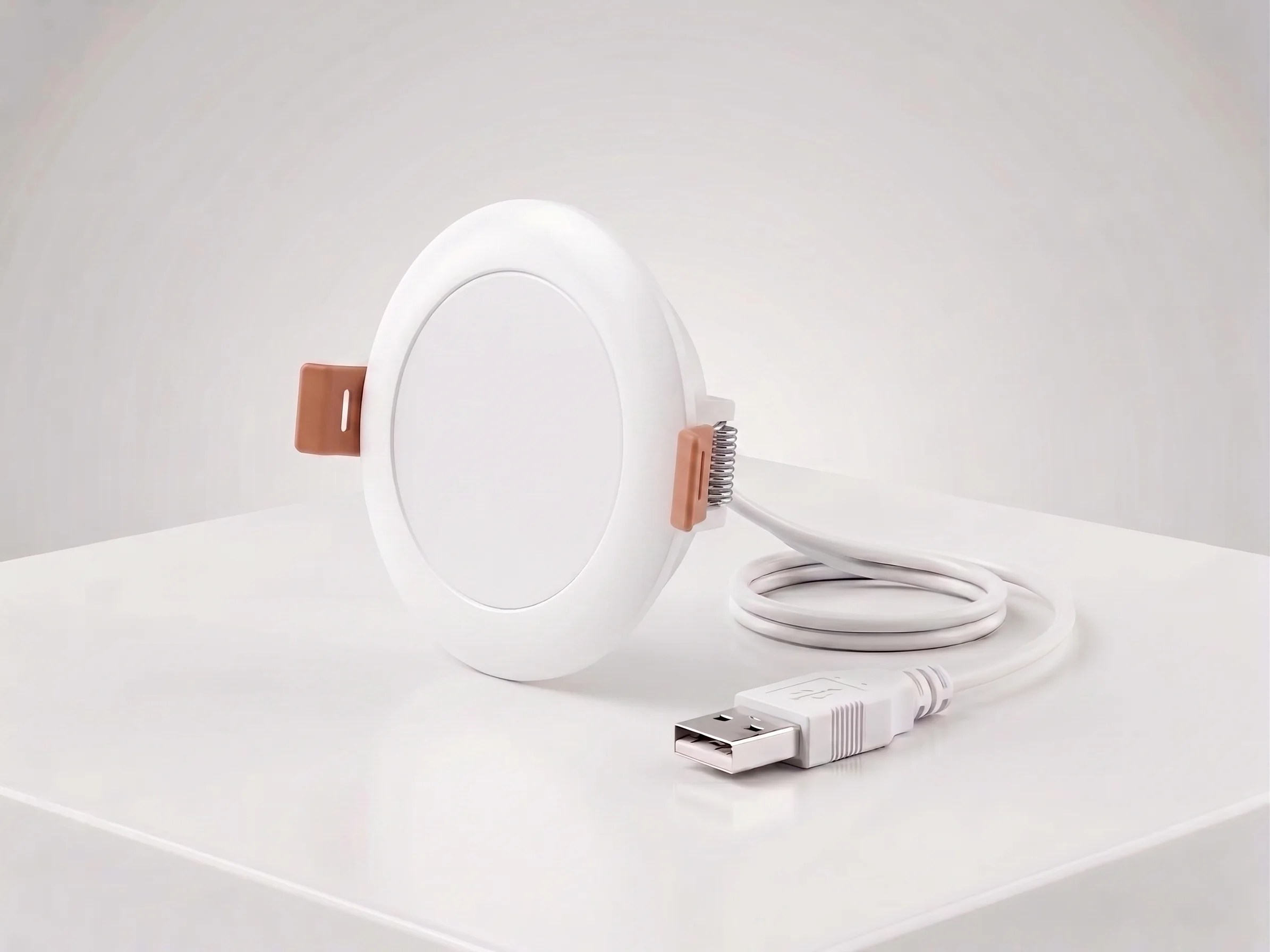
Ceiling Mount mmWave Human Presence Sensor — Zigbee
24GHz wideband mmWave ceiling presence sensor with 10m motion detection, 2.5m micro-motion, and breathing detection. 120° field, DC5V, Zigbee 3.0. For hotel room occupancy and commercial automation.
This page already points to it as the next recommended reference.
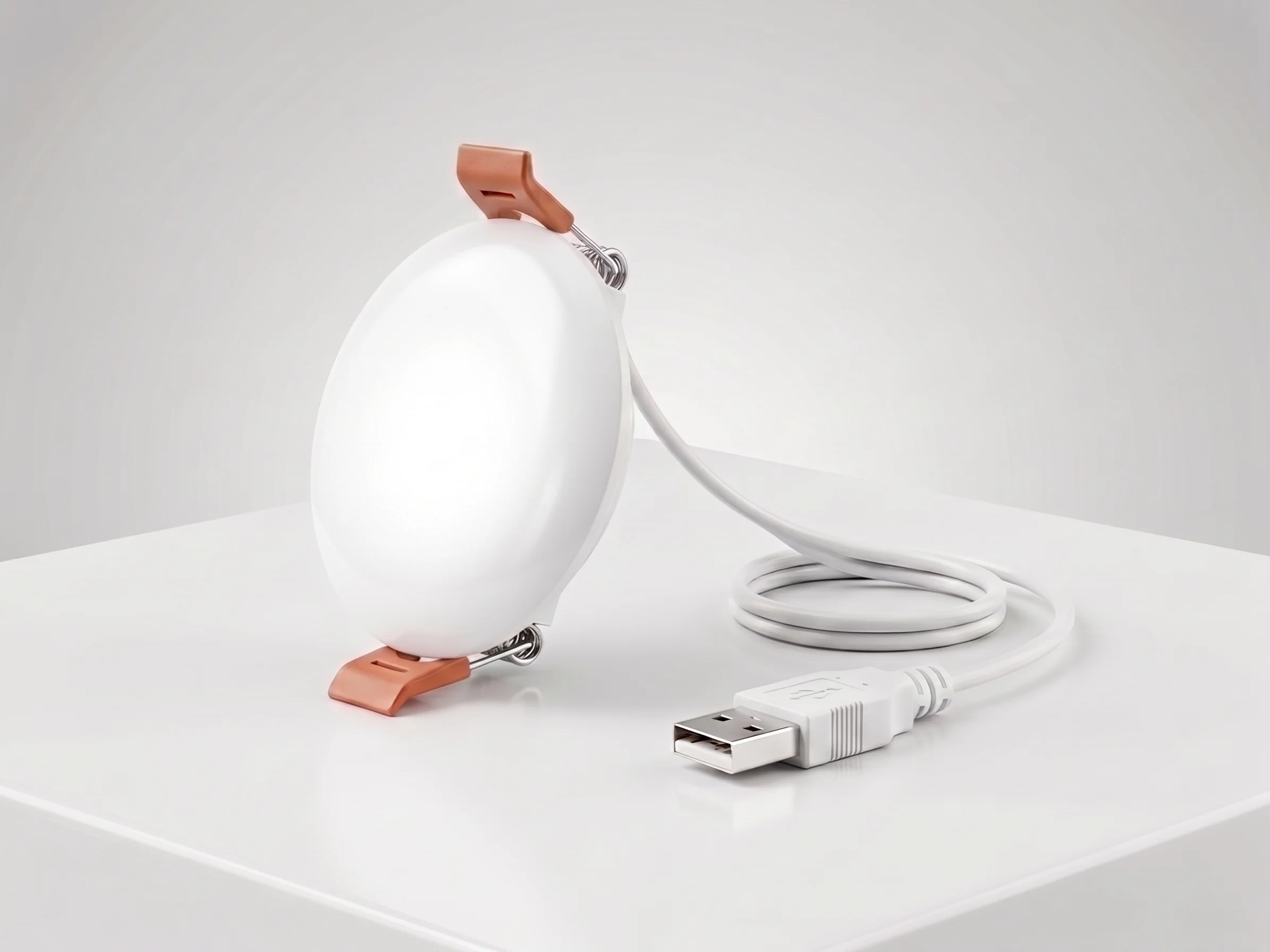
Ceiling Mount mmWave Human Presence Sensor — WiFi
24GHz wideband mmWave ceiling presence sensor with 10m motion detection, 2.5m micro-motion, and breathing detection. 120° field, DC5V, WiFi 2.4GHz. No gateway required for retrofit hotel and apartment projects.
This page already points to it as the next recommended reference.
Related solutions
1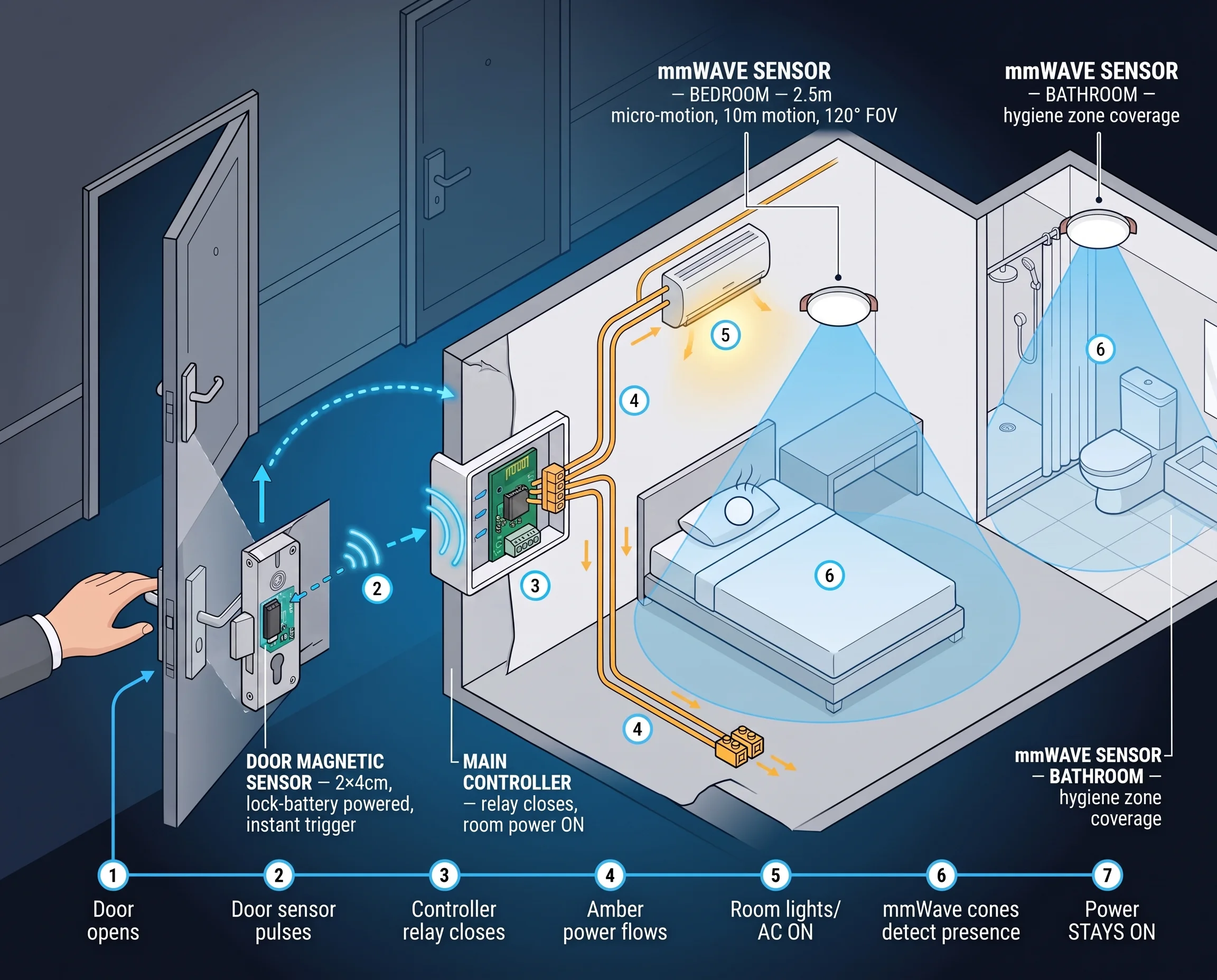
Hotel Room Occupancy & Motion Sensor Solution
mmWave radar presence sensors for hotel room occupancy, housekeeping scheduling, and HVAC energy saving. Detect true occupancy — even when the guest is asleep — with our ceiling-mount hotel room motion sensor.
It supports the same product context: Ceiling Mount mmWave Human Presence Sensor — Zigbee, Ceiling Mount mmWave Human Presence Sensor — WiFi.
Related blog posts
3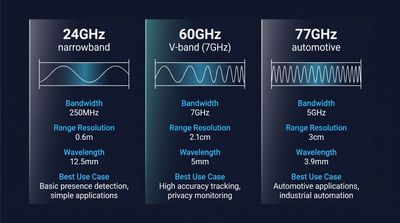
60GHz vs 24GHz vs 77GHz mmWave Sensors: Choosing the Right Frequency for Commercial Presence Detection
Compare 60GHz, 24GHz, and 77GHz mmWave sensors for commercial presence detection. Technical specs, detection range, privacy, and OEM sourcing guidance.
It supports the same product context: Ceiling Mount mmWave Human Presence Sensor — Zigbee, Ceiling Mount mmWave Human Presence Sensor — WiFi.
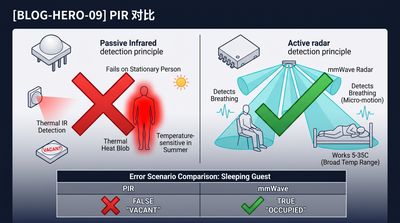
What Is an Electronic Presence Sensor? Technology, Accuracy, and How It Differs From a Motion Sensor
Learn what an electronic presence sensor is, how it detects stationary humans, and how it differs from a PIR motion sensor. Covers mmWave, accuracy, and use cases.
It supports the same product context: Ceiling Mount mmWave Human Presence Sensor — Zigbee, Ceiling Mount mmWave Human Presence Sensor — WiFi.
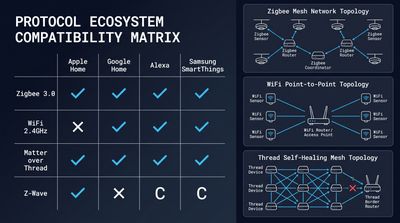
How to Integrate mmWave Presence Sensors With Home Assistant (Local Control Guide)
Step-by-step local control setup guide for mmWave devices, covering MQTT/Matter config, automation scripts, calibration and OEM ceiling presence sensor integration tips.
It supports the same product context: Ceiling Mount mmWave Human Presence Sensor — WiFi, Ceiling Mount mmWave Human Presence Sensor — Zigbee.
Specify your hotel project with our engineers
Send your room count, ceiling type, and protocol preference. We will return a sample plan and quote within 24 business hours.
- Move from general guidance into a product or application discussion.
- Use RFQ when pricing, drawings, MOQ, or launch timing needs structure.
- Keep a direct contact path visible for fast clarifications and handoff.