A meeting room is occupied long before it is moving
The people in a meeting room spend most of the meeting still. They sit at the table, read a deck, take notes, listen on a call. What changes is not movement — it is presence.
A sensor that only responds to movement sees an empty room after a few quiet minutes. The lights go off mid-presentation, the cooling switches to unoccupied, and someone stands up to wave at the ceiling. That is the moment a building stops feeling smart.
mmWave radar measures something different: the micro-motion of a body that is alive and present — a chest rising, a hand moving, a head turning. A person sitting still is still detected, because the sensor is not looking for travel across the room.
Where motion sensors get meeting rooms wrong
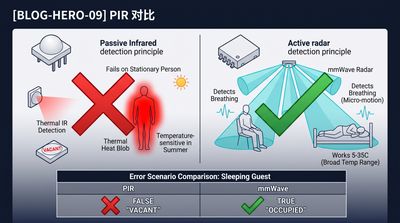
Passive infrared (PIR) sensors react to movement and to the thermal contrast between a body and the background. Both inputs go quiet in the situations meeting rooms produce all day:
- Long seated meetings. Everyone at the table is still for twenty minutes at a time.
- Presentations. The speaker stands at the screen, mostly stationary.
- Calls and video conferences. Participants sit and listen.
- Reading and note taking. Small movements, nothing a PIR sensor counts as motion.
- Warm afternoons. As ambient temperature approaches body temperature, the thermal contrast PIR depends on shrinks, and false "empty" readings increase.
The result is a room that switches off while it is in use. People notice the light going out far more than they notice the energy saved.
What the room can do once it knows
Presence data changes what a room control system can act on:
- Lighting stays on while anyone is present, and switches off shortly after the last person leaves — no manual switch at the door.
- Cooling and heating follow the room instead of a schedule. A room that is booked but unused does not run at comfort setpoint all afternoon.
- Room release happens on real vacancy. A booking that ends early frees the room, and a room nobody entered does not sit reserved.
- Focus booths and phone rooms behave like small meeting rooms: light and ventilation on presence, off on vacancy.
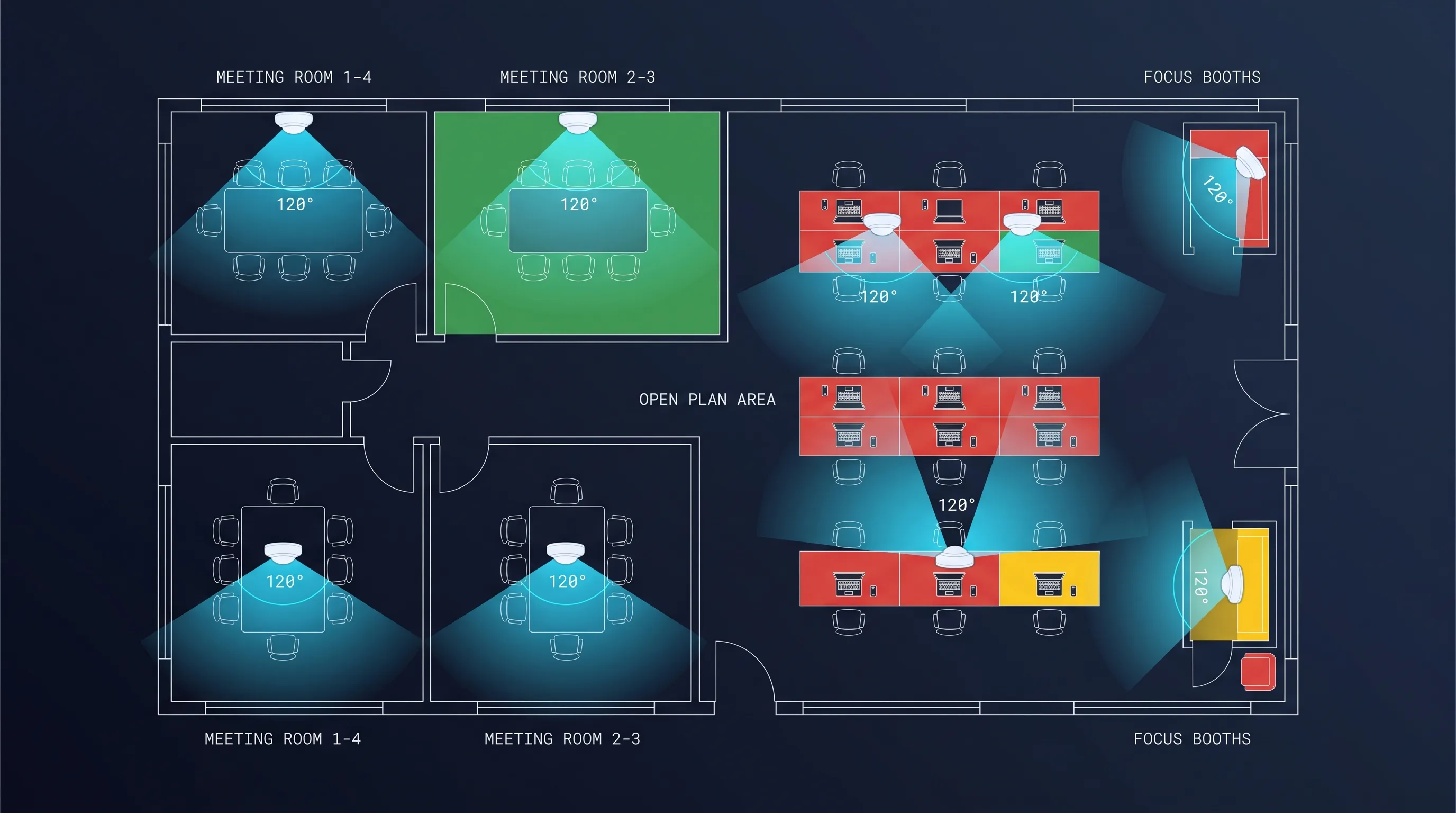
- Open plan zones can be lit by the desk row rather than the whole floor, if the ceiling layout allows one unit per zone.
Placement: one sensor per room, two for the big ones
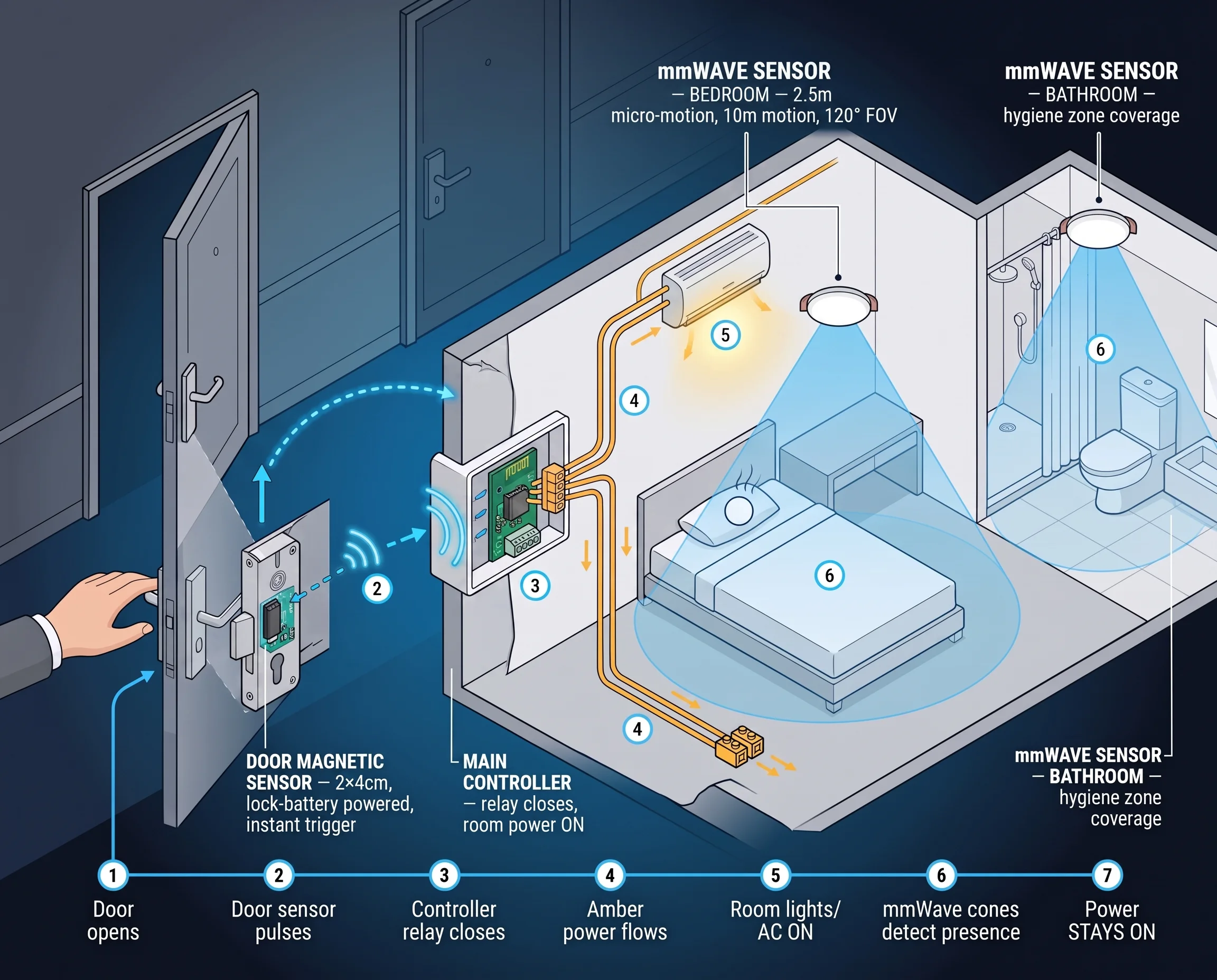
A ceiling-mounted unit covers a 120° cone from a standard ceiling height, with 10 m motion range and micro-motion detection to 2.5 m.
| Room type |
Typical count |
Notes |
| Small meeting room (up to ~8 seats) |
1 |
Centred over the table |
| Medium meeting room (10–14 seats) |
1–2 |
Two units if the table is longer than the cone covers |
| Boardroom / large room (16+ seats) |
2–3 |
Split the table into zones rather than widening one sensor |
| Focus booth, phone room |
1 |
One unit per booth |
| Open plan desk zone |
1 per zone |
Place above the zone, not in the aisle |
Micro-motion range is the constraint that matters. The 2.5 m figure is why a ceiling unit over a meeting table holds the room occupied while people sit and talk — and why rooms with unusually high ceilings need the coverage checked on the floor plan rather than assumed.
Where there is no accessible ceiling, the wall-mount version in a standard 86 mm box covers the same room types from the wall beside the table.
Choosing the version
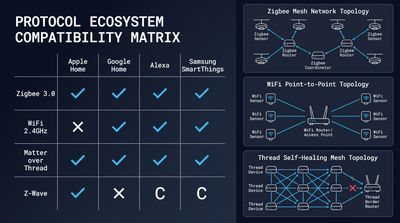
The detection core is identical across the range; the radio is the choice.
| Version |
Fits when |
| Zigbee 3.0 |
The building already runs a Zigbee network with a coordinator |
| WiFi 2.4 GHz |
No gateway is available and each room needs to join the local network directly |
| Matter over Thread |
The specification calls for Matter interoperability |
| Wall mount (86 mm) |
Ceiling access is limited or the room is best covered from the wall |
All versions report the same occupancy state, so control logic does not change with the radio.
Retrofit without opening the ceiling
For an existing building the questions are practical:
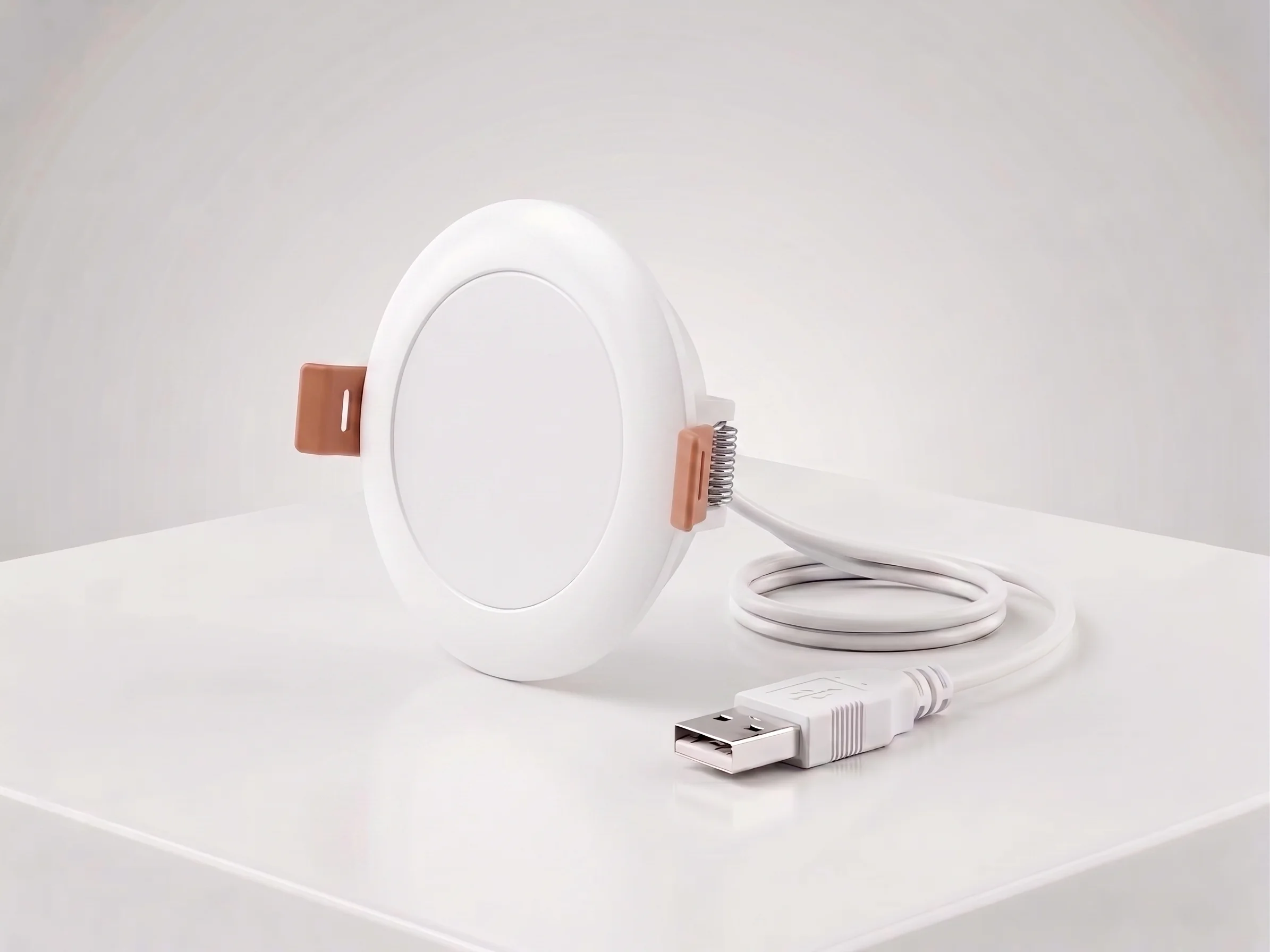
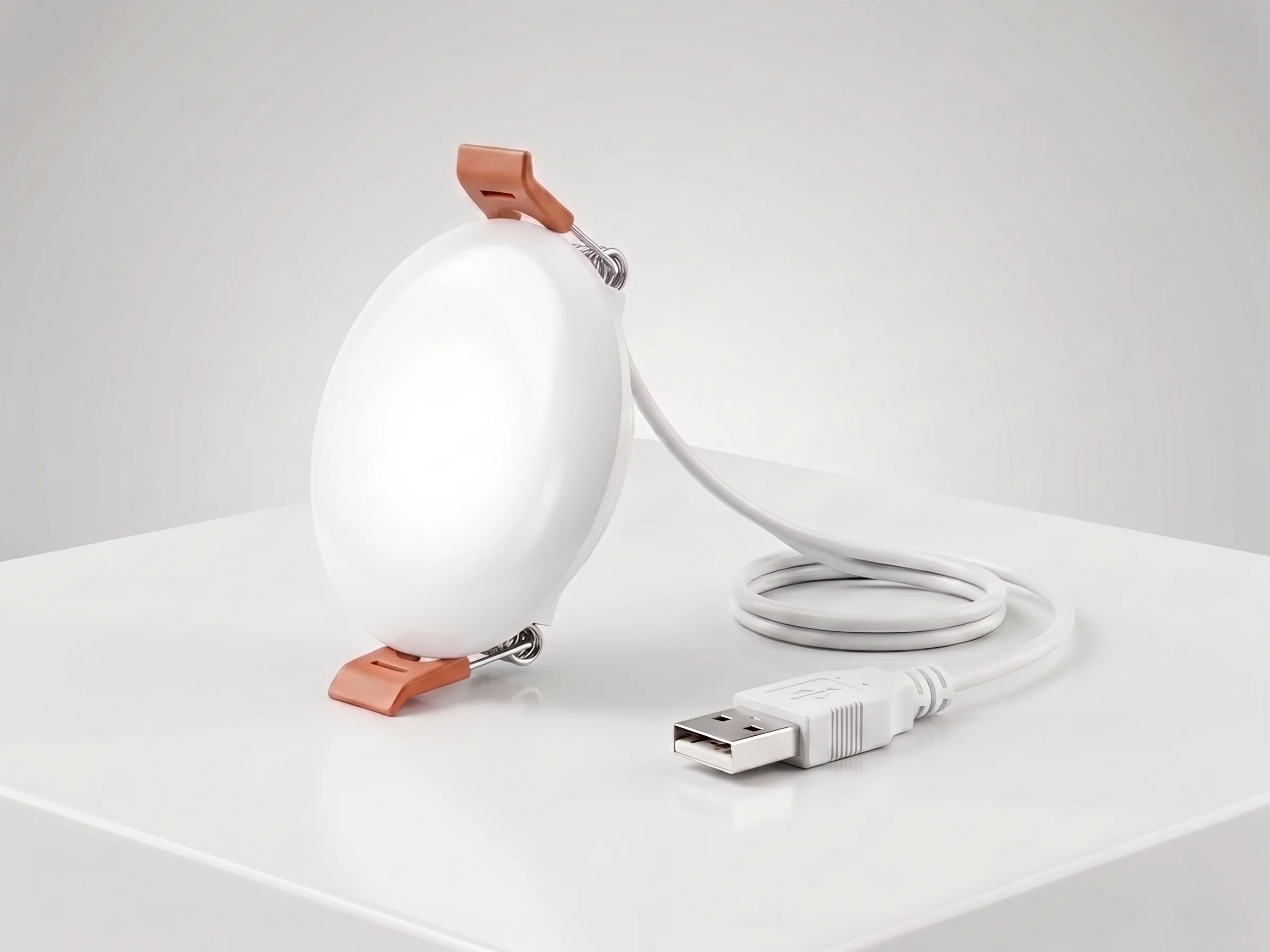
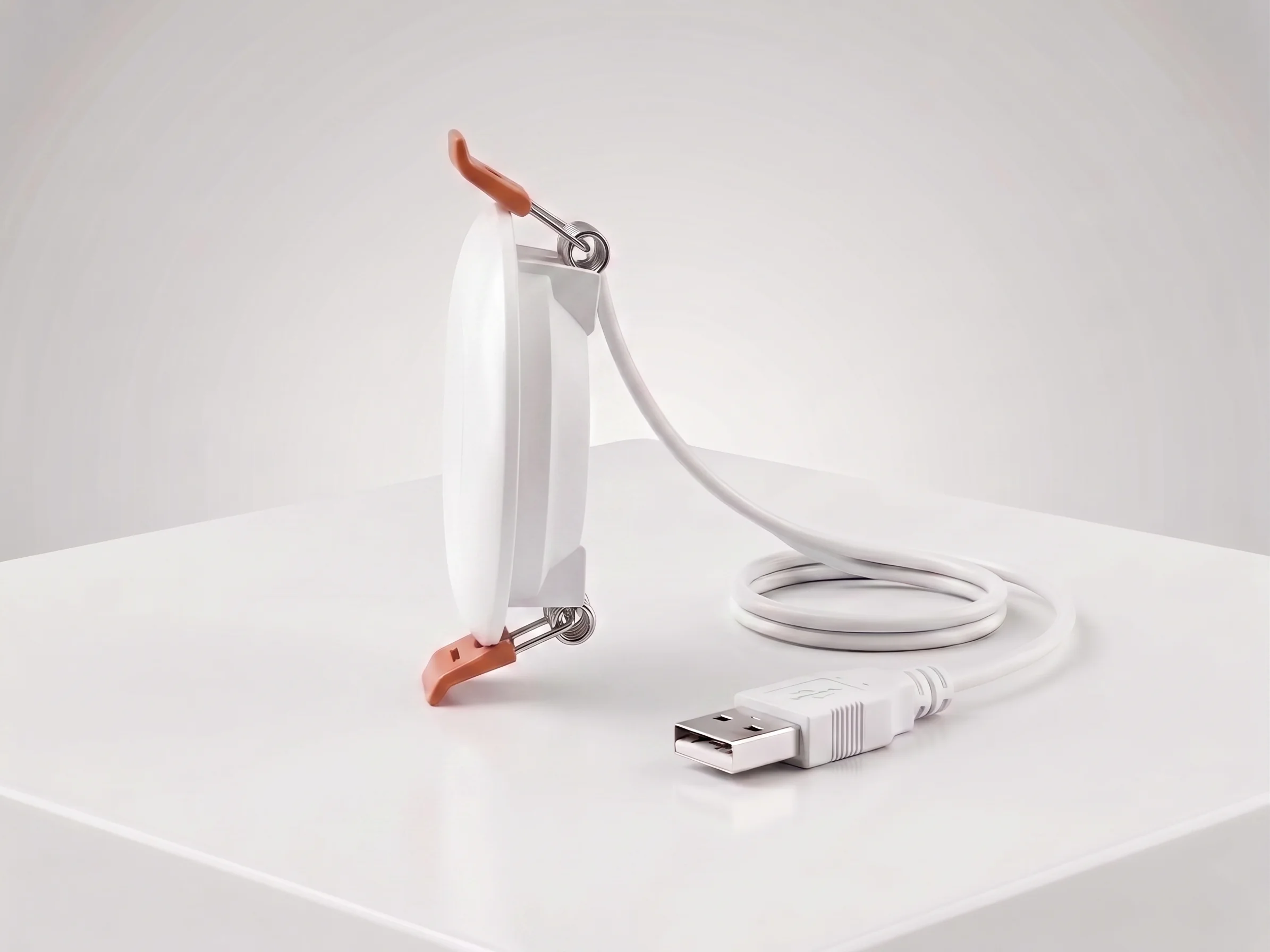
- Ceiling type. A standard flush cutout works for most suspended and plasterboard ceilings; a surface-mount housing is used where cutting is not allowed.
- Power. The units run on DC 5 V, either from an adapter in the ceiling void or from the lighting circuit at the fitting.
- Network. If the building has no coordinator, the WiFi version removes the dependency without adding infrastructure.
- Wiring route. Cable can usually follow the existing lighting circuit, which keeps the electrician's work inside the ceiling void.
Rooms are normally done in a single visit per floor, with the sensor mounted, powered and joined before the ceiling tiles go back.
Specifications
| Parameter |
Ceiling version |
Wall version |
| Detection |
24 GHz wideband mmWave radar |
24 GHz wideband mmWave radar |
| Motion range |
10 m |
10 m |
| Micro-motion / static range |
2.5 m (breathing-level) |
2.5 m |
| Field of view |
120° |
120° |
| Power |
DC 5 V, standby < 0.5 W |
DC 5 V |
| Mounting |
Flush ceiling, Φ86 mm |
86 mm wall box |
| Options |
Zigbee 3.0 / WiFi 2.4 GHz / Matter over Thread |
Zigbee + WiFi |
| Operating temperature |
−10 °C to +55 °C |
Indoor use |
Where this fits, and where it does not
✅ Meeting rooms, boardrooms, focus booths and open plan zones where people sit still for long periods.
✅ Buildings replacing PIR occupancy sensors that switch rooms off while they are in use.
✅ Projects that need occupancy data without cameras in the room.
❌ Rooms where the requirement is counting how many people are inside. This is a presence sensor, not a people counter.
❌ Specifications that require the sensor itself to host the room booking logic. The sensor reports occupancy; the room control layer decides what to do with it.
What we need to quote
Send four things and we will return a sensor count, a placement sketch and a price:
- Room list with sizes, seat counts and ceiling height.
- Ceiling construction and whether a flush cutout is allowed.
- How rooms are used — booked meetings, shared drop-in, focus work, or a mix.
- Country of installation and required delivery window.
If you already have a floor plan, send it and we will mark sensor positions on it.