Millimeter Wave Radar: The Technology Behind Modern Human Presence Detection
A deep technical guide to millimeter wave radar technology. Covers FMCW principles, frequency bands, antenna design, micro-Doppler, and applications in presence detection.
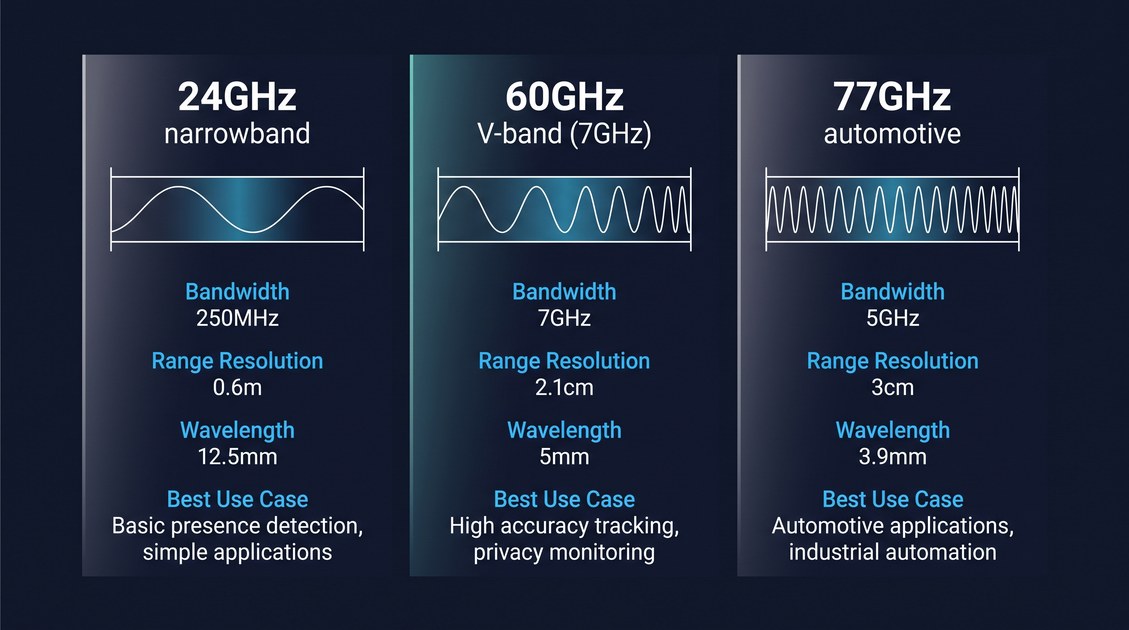
Millimeter wave radar is an active radio detection technology that uses electromagnetic waves in the 1–10 mm wavelength range (corresponding to frequencies of 30–300 GHz) to detect, locate, and track objects by analyzing the reflections of a transmitted signal. Unlike passive infrared (PIR) sensors that rely on detecting thermal radiation, a millimeter wave radar system emits its own signal — most commonly a frequency-modulated continuous wave (FMCW) chirp that sweeps across a bandwidth of 250 MHz to 7 GHz — and measures the time delay, frequency shift, and amplitude of the reflected signal to determine the range, velocity, and angular position of targets in the field of view. For human presence detection applications, modern millimeter wave radar systems operating at 60 GHz (57–64 GHz) with 7 GHz of bandwidth achieve range resolution on the order of 2 cm, can detect the micro-Doppler signature of human breathing at 0.2–0.5 Hz from up to 8 meters away, and can resolve multiple occupants within a single room using 2×2 or 3×3 multiple-input multiple-output (MIMO) antenna arrays. The technology has moved from military and automotive origins to become the dominant sensing modality for commercial presence detection in hotel rooms, offices, healthcare facilities, and smart homes, driven by the miniaturization of silicon mmWave transceivers and the availability of unlicensed spectrum in the 24 GHz, 60 GHz, and 77 GHz industrial-scientific-medical (ISM) bands.
Understanding millimeter wave radar at a technical level is valuable for engineers designing presence detection systems, for procurement teams evaluating sensors, and for solutions architects selecting technologies for building automation. This article explains the physics behind millimeter wave radar, how FMCW processing extracts range and velocity from reflected signals, how antenna arrays determine angular resolution, why the 60 GHz band has become the default for indoor presence detection, and how the micro-Doppler signatures of human breathing enable the reliable detection of stationary occupants that PIR sensors cannot achieve. The goal is to provide a rigorous technical foundation that goes beyond the typical "what is mmWave" overview and that enables informed decisions about sensor selection, system design, and deployment.
Millimeter Wave Radar: The Physics of mmWave Sensing
The physics of millimeter wave radar is governed by the same electromagnetic principles that govern all radio frequency systems, but the short wavelength (1–10 mm) and the wide bandwidths available in the mmWave frequency range give the technology capabilities that are not achievable at lower frequencies. Three physical principles are particularly important: the relationship between wavelength and antenna size, the relationship between bandwidth and range resolution, and the relationship between frequency and propagation characteristics.
Millimeter Wave Radar: Wavelength, Antenna Size, and Angular Resolution
The wavelength of an electromagnetic wave is inversely proportional to its frequency: wavelength = speed of light / frequency. At 24 GHz, the wavelength is approximately 12.5 mm; at 60 GHz, it is approximately 5.0 mm; at 77 GHz, it is approximately 3.9 mm. The shorter wavelength at higher frequencies allows smaller antennas for a given gain, which is why mmWave radar systems can be packaged in compact modules that fit inside ceiling-mounted presence sensors.
The angular resolution of a radar system — its ability to distinguish two objects that are at the same range but at different angles — is determined by the aperture size of the antenna array relative to the wavelength. The angular resolution is approximately λ / D, where λ is the wavelength and D is the antenna aperture. For a fixed physical antenna size (e.g., 50 mm aperture), a 60 GHz system with a 5 mm wavelength achieves an angular resolution of approximately 0.1 rad (5.7°), while a 24 GHz system with a 12.5 mm wavelength achieves only 0.25 rad (14°). This is why 60 GHz and 77 GHz systems can resolve multiple occupants in a room while 24 GHz systems typically cannot.
For a ceiling-mounted presence sensor that needs to localize an occupant to within 0.5–1 m at a 3 m range, the required angular resolution is approximately 10–20°. A 60 GHz system with a 50 mm antenna aperture can meet this requirement, while a 24 GHz system with the same aperture cannot. This angular resolution advantage is one of the reasons 60 GHz has become the default frequency for indoor presence detection.
Millimeter Wave Radar: Bandwidth and Range Resolution
The range resolution of a radar system — its ability to distinguish two objects that are at the same angle but at different ranges — is determined by the bandwidth of the transmitted signal. The range resolution is c / (2 × B), where c is the speed of light and B is the bandwidth. At 24 GHz with 250 MHz of bandwidth, the range resolution is approximately 0.6 m; at 60 GHz with 7 GHz of bandwidth, the range resolution is approximately 2.1 cm; at 77 GHz with 5 GHz of bandwidth, the range resolution is approximately 3 cm.
The dramatic improvement in range resolution at 60 GHz and 77 GHz (compared to 24 GHz) is what enables these systems to detect the micro-motion of human breathing. A person breathing produces a chest wall displacement of 5–20 mm at a frequency of 0.2–0.5 Hz. To detect this motion, the radar system must be able to resolve range changes smaller than the breathing displacement, which requires a range resolution on the order of 5 mm or better. A 60 GHz system with 2.1 cm range resolution cannot directly resolve the breathing displacement in the range dimension, but it can resolve the phase modulation of the reflected signal, which is how modern mmWave presence sensors detect breathing. A 24 GHz system with 0.6 m range resolution has much poorer phase resolution and struggles to detect the breathing micro-motion.
Millimeter Wave Radar: Propagation and Material Penetration
The propagation characteristics of millimeter wave radar signals are significantly different from those of lower-frequency radio systems. Three propagation effects are particularly relevant: atmospheric attenuation, material penetration, and multipath.
Atmospheric attenuation at 60 GHz is unusually high due to the oxygen absorption resonance at this frequency, with attenuation on the order of 15 dB/km. This sounds severe, but for indoor sensing applications where the maximum range is typically 8–12 m, the atmospheric attenuation is negligible (0.15 dB at 10 m). The oxygen absorption does have a beneficial side effect: it prevents 60 GHz signals from propagating between rooms, which is a privacy advantage for hotel and residential deployments.
Material penetration is a critical consideration for indoor presence detection. At 60 GHz, the 5 mm wavelength is shorter than the thickness of most building materials, and the signal is strongly attenuated by drywall, wood framing, and glass. A typical interior drywall partition attenuates a 60 GHz signal by 20–40 dB, which is enough to make the signal effectively invisible through the wall. This is a privacy advantage (the sensor cannot see into adjacent rooms) but a deployment constraint (the sensor must have a clear line of sight to the detection zone). At 24 GHz, the 12.5 mm wavelength penetrates drywall with less attenuation (10–20 dB), which can be a problem for privacy-sensitive deployments. At 77 GHz, the 3.9 mm wavelength also does not penetrate drywall significantly.
Multipath is the phenomenon where the radar signal reaches the target via multiple paths (direct path, reflection from the floor, reflection from the ceiling, reflection from the walls). Multipath can create ghost targets and can mask real targets, and it is a significant challenge for indoor mmWave radar. Modern signal processing techniques (including MIMO beamforming, spatial filtering, and machine learning) can mitigate multipath, but it remains a consideration in the design of a presence sensor.
Millimeter Wave Radar: FMCW Processing and Signal Analysis
The most common waveform used in commercial millimeter wave radar for presence detection is the frequency-modulated continuous wave (FMCW) chirp. FMCW processing is the technique that allows a radar system to determine the range and velocity of targets from the reflected signal, and it is the foundation of every modern mmWave presence sensor.
Millimeter Wave Radar: The FMCW Chirp and Beat Frequency
In an FMCW radar, the transmitter emits a signal whose frequency sweeps linearly across a defined bandwidth over a short period called the chirp duration (typically 50–200 microseconds). The transmitted signal is mixed with a copy of itself (the local oscillator signal), and the reflected signal from a target is also mixed with the local oscillator signal. The result of mixing the reflected signal with the local oscillator is a beat signal whose frequency is proportional to the time delay between transmission and reception, which is proportional to the range of the target.
The beat frequency is f_b = (2 × B × R) / (c × T), where B is the bandwidth, R is the range, c is the speed of light, and T is the chirp duration. For a 60 GHz system with 7 GHz bandwidth and a 100 microsecond chirp, a target at 5 m produces a beat frequency of approximately 2.3 MHz. By performing a Fast Fourier Transform (FFT) on the beat signal, the radar processor can determine the range of every target in the detection zone with a resolution of c / (2 × B), which is approximately 2.1 cm for a 7 GHz bandwidth.
The FMCW chirp allows the radar to determine the range of targets without requiring the high peak power of a pulsed radar (which would be required to achieve the same range resolution with a time-of-flight measurement). This is why FMCW is the preferred waveform for low-power, short-range mmWave presence sensors: the system can achieve high range resolution with modest transmit power.
Millimeter Wave Radar: Doppler Processing and Velocity Measurement
In addition to range, an FMCW radar can determine the velocity of a target by analyzing the phase of the beat signal across multiple chirps. A stationary target produces a beat signal with a constant phase across chirps; a moving target produces a beat signal whose phase shifts from chirp to chirp, with the phase shift proportional to the target's velocity. By performing a second FFT across the chirps (a "Doppler FFT"), the radar processor can determine the velocity of every target in the detection zone.
The velocity resolution of an FMCW radar is determined by the wavelength and the frame duration (the time over which the chirps are acquired). For a 60 GHz system with a 50 ms frame duration, the velocity resolution is approximately 0.05 m/s, which is sufficient to detect the slow motion of a person breathing (0.01–0.05 m/s at the chest wall). This Doppler sensitivity is what enables the detection of stationary occupants: even though the person is not moving macroscopically, the micro-motion of their breathing produces a measurable Doppler signature that the radar can detect.
Millimeter Wave Radar: Micro-Doppler and Human Signature Analysis
The micro-Doppler effect is the phenomenon where the micro-motion of parts of a target (the limbs of a walking person, the chest wall of a breathing person, the blades of a helicopter) produces distinctive Doppler signatures that can be analyzed to identify the target and its activity. In human presence detection, the most important micro-Doppler signature is the breathing signature: the periodic chest wall motion at 0.2–0.5 Hz produces a Doppler modulation that is distinct from the background noise and from the Doppler signatures of inanimate objects.
Modern mmWave presence sensors use signal processing techniques to extract the breathing signature from the radar return. The processing typically involves:
- Range FFT: perform an FFT on the beat signal of each chirp to determine the range of every target in the detection zone.
- Doppler FFT: perform an FFT across the chirps of each range bin to determine the velocity of every target at every range.
- Range-Doppler map: produce a 2D map of range vs. velocity that shows the distribution of reflected energy across all range-velocity combinations.
- Micro-Doppler extraction: for each range bin that contains a target, analyze the time-varying Doppler signature to identify periodic components (breathing, heartbeat) that indicate a human presence.
- Classification: use a machine learning model (or a rule-based classifier) to classify the target as "human present," "no human present," or "ambiguous."
The classification step is where modern mmWave presence sensors achieve their high accuracy. A well-trained machine learning model can distinguish the breathing signature from background noise (HVAC airflow, building vibration, fan motion) with high confidence, achieving a stationary-occupant true positive rate above 99% in controlled testing. This is the capability that distinguishes a true presence sensor from a motion sensor.
Millimeter Wave Radar: Antenna Arrays and Beamforming
The antenna array is the component that determines the angular resolution and the field of view of a millimeter wave radar system, and it is one of the most important design decisions in a presence sensor product. The antenna array determines how many targets the radar can resolve simultaneously, how accurately it can localize each target, and how broadly it can cover the detection zone.
Millimeter Wave Radar: MIMO Antenna Arrays
Modern mmWave presence sensors use multiple-input multiple-output (MIMO) antenna arrays, where multiple transmit antennas and multiple receive antennas are arranged in a defined geometry. The phase differences across the receive antennas (due to the different path lengths from the transmit antennas to the target and back to the receive antennas) allow the radar to determine the angle of arrival of the reflected signal, which is how the radar localizes targets in the angular dimension.
A 2×2 MIMO array (two transmit antennas, two receive antennas) provides a single virtual antenna pair and can determine the angle of arrival in one dimension (typically azimuth). A 3×3 MIMO array provides nine virtual antenna pairs and can determine the angle of arrival in two dimensions (azimuth and elevation). A 4×4 MIMO array provides sixteen virtual antenna pairs and can achieve finer angular resolution in both dimensions.
For a ceiling-mounted presence sensor that needs to localize an occupant to within 0.5–1 m at a 3 m range, a 3×3 MIMO array at 60 GHz is typically sufficient. For applications that require finer localization (e.g., detecting which side of the bed a sleeping person is on), a 4×4 MIMO array may be required.
Millimeter Wave Radar: Field of View and Beam Steering
The field of view of a mmWave radar system is the angular range over which the antenna can effectively transmit and receive signals. A wide field of view (e.g., ±60° azimuth) is desirable for a ceiling-mounted presence sensor that needs to cover an entire room, while a narrow field of view (e.g., ±20°) is desirable for a long-range sensor that needs to focus on a specific zone.
Modern mmWave radar systems can steer the beam electronically by adjusting the phase of the signals applied to the transmit antennas. This beam steering allows the radar to focus its energy on a specific direction, which can improve the signal-to-noise ratio for targets in that direction. Beam steering is particularly valuable for applications where the radar needs to scan a wide area (e.g., a large conference room) and to focus on specific targets within that area.
For a typical ceiling-mounted presence sensor, the antenna array is designed to provide a wide field of view (±60° azimuth, ±40° elevation) without beam steering, and the radar processes all reflections within the field of view simultaneously. This is simpler and more power-efficient than active beam steering, and it is sufficient for most indoor presence detection applications.
Millimeter Wave Radar: Frequency Band Selection
The choice of frequency band is one of the most consequential decisions in the design of a millimeter wave radar system, because it determines the available bandwidth, the antenna size, the propagation characteristics, and the regulatory environment. The three frequency bands used in commercial mmWave radar are 24 GHz, 60 GHz, and 77 GHz, each with different strengths and weaknesses.
Millimeter Wave Radar: The 24 GHz Band
The 24 GHz band (24.0–24.25 GHz narrowband ISM or 24.05–24.25 GHz UWB) is the oldest and most mature mmWave band for commercial applications. It has been used for decades for motion sensing, automatic door openers, and speed measurement. The narrowband ISM allocation provides 250 MHz of bandwidth, which is sufficient for motion detection but not for fine range resolution or micro-Doppler detection. The UWB allocation provides up to 5 GHz of bandwidth, which enables fine range resolution, but the UWB allocation is being phased out for new automotive designs in Europe and is increasingly restricted for other applications.
For a millimeter wave radar system intended for motion-only applications (stairwell vacancy sensing, security motion detection), 24 GHz narrowband is a cost-effective choice. For applications that require stationary-occupant detection, 24 GHz is less suitable due to the limited bandwidth (narrowband) or the regulatory uncertainty (UWB).
Millimeter Wave Radar: The 60 GHz Band
The 60 GHz band (57–64 GHz in most jurisdictions, with some regional variation) is now the dominant band for indoor presence detection. It provides 7 GHz of unlicensed bandwidth (the widest unlicensed allocation available for mmWave sensing), which enables 2.1 cm range resolution and micro-Doppler detection of human breathing. The 5 mm wavelength allows compact antenna arrays (a 3×3 MIMO array at 60 GHz fits in a 20×20 mm PCB area), and the oxygen absorption resonance at 60 GHz provides a natural privacy barrier (the signal does not propagate between rooms).
The 60 GHz band is regulated under FCC Part 15.255 in the United States and EN 305 550 in the European Union, with clear technical rules for emission limits, indoor/outdoor use, and transmit power. The regulatory environment is mature and worldwide, which makes 60 GHz the default choice for new mmWave presence sensor designs.
Millimeter Wave Radar: The 77 GHz Band
The 77 GHz band (76–81 GHz) is primarily an automotive radar band, used for long-range automotive radar (adaptive cruise control, collision avoidance). It provides 5 GHz of bandwidth (similar to 60 GHz), and the 3.9 mm wavelength allows even smaller antennas than 60 GHz. The band is being increasingly used for industrial applications that require long range (20–30 m) and fine angular resolution, such as warehouse zone detection, airport terminal crowd monitoring, and large-venue occupancy tracking.
The 77 GHz band is regulated under FCC Part 15.253 in the United States and EN 302 264-2 in the European Union, with rules that are shaped by automotive safety considerations. A 77 GHz radar system for commercial (non-automotive) use may require additional qualification work to demonstrate compliance with the automotive-oriented rules, which adds cost and time to the certification process. For indoor presence detection applications where the range is less than 12 m, 60 GHz is almost always a better choice than 77 GHz due to the lower cost and simpler certification.
| Band | Frequency | Bandwidth | Range resolution | Wavelength | Max range (human) | Primary use |
|---|---|---|---|---|---|---|
| 24 GHz narrowband | 24.0–24.25 GHz | 250 MHz | 0.6 m | 12.5 mm | 20–30 m | Motion-only, low cost |
| 24 GHz UWB | 24.05–24.25 GHz | 5 GHz | 3 cm | 12.5 mm | 20–30 m | High-precision motion (phase-out) |
| 60 GHz | 57–64 GHz | 7 GHz | 2.1 cm | 5.0 mm | 8–12 m | Indoor presence detection (default) |
| 77 GHz | 76–81 GHz | 5 GHz | 3 cm | 3.9 mm | 15–30 m | Automotive, industrial long-range |
Millimeter Wave Radar: Applications in Human Presence Detection
The applications of millimeter wave radar in human presence detection span multiple verticals, each with different requirements and constraints. The following sections describe the major application categories and how mmWave radar addresses the specific needs of each.
Millimeter Wave Radar: Hotel Room Presence Detection
Hotel rooms are the canonical application for mmWave radar presence detection. A 60 GHz ceiling-mounted mmWave radar sensor can reliably detect whether a guest is in the room throughout their stay, including when they are sleeping, sitting at the desk, or using the bathroom. The occupancy data feeds the building management system for housekeeping coordination, the HVAC system for energy management, and the in-room automation system for personalized guest experiences. The mmWave radar's ability to detect stationary occupants (which PIR sensors cannot) is the key capability that makes hotel room presence detection viable: a PIR-based system would repeatedly report a sleeping guest as absent, triggering unnecessary housekeeping intrusions and reverting the HVAC to setback mode during the night.
Millimeter Wave Radar: Office and Commercial Space Sensing
Office buildings use mmWave radar for per-room HVAC and lighting control, zone-level occupancy analytics, and space utilization monitoring. A mmWave radar sensor in an individual office can detect whether the office is occupied and adjust the HVAC and lighting accordingly, with the benefit that a person working quietly at their desk is still detected as present. In open-plan workspaces, a mmWave radar sensor with multi-target tracking can provide zone-level occupancy data that informs space planning and cleaning schedules.
Millimeter Wave Radar: Healthcare and Assisted Living
Healthcare facilities use mmWave radar for fall detection, bed-exit alerting, and occupancy-based environmental control in patient rooms. The privacy profile of mmWave radar (no images, non-invasive) makes it suitable for deployment in private spaces where camera-based sensing would be inappropriate. A mmWave radar sensor in a hospital room can detect a fall within seconds and alert the nursing staff, can monitor patient bed occupancy, and can trigger environmental controls based on room occupancy.
Millimeter Wave Radar: Smart Home and Residential
The residential smart home market uses mmWave radar for occupancy-based lighting, HVAC control, and security monitoring. A mmWave radar sensor in a living room can keep the lights on while the occupant is watching TV (a scenario where PIR sensors fail), can trigger the HVAC to comfort mode when the occupant enters the room, and can provide occupancy-based security monitoring without the privacy concerns of cameras.
Millimeter Wave Radar: Performance Benchmarks
The performance of a millimeter wave radar presence sensor is typically characterized by several key metrics. The following benchmarks represent the state of the art for 60 GHz mmWave radar systems in 2026.
Millimeter Wave Radar: Detection Accuracy
- Stationary-occupant true positive rate: above 99% in controlled testing, above 95% in real-world deployment
- Stationary-occupant false negative rate: below 1% in controlled testing, below 5% in real-world deployment
- Moving-occupant detection latency: below 1 second
- False positive rate: below 1% over a 24-hour period in a typical indoor environment
Millimeter Wave Radar: Detection Range and Field of View
- Maximum detection range for a stationary occupant: 6–8 m (ceiling-mounted, 60 GHz)
- Maximum detection range for a moving occupant: 8–12 m (ceiling-mounted, 60 GHz)
- Field of view: ±60° azimuth, ±40° elevation (typical ceiling-mounted configuration)
- Angular resolution: 1–3° (with a 3×3 MIMO array at 60 GHz)
- Range resolution: 2.1 cm (with 7 GHz bandwidth at 60 GHz)
Millimeter Wave Radar: Power and Form Factor
- Active power consumption: 0.5–1.0 W (typical 60 GHz ceiling-mounted sensor)
- Standby power consumption: a few milliwatts (in duty-cycled configurations)
- Form factor: 70 mm diameter ceiling puck (typical 60 GHz sensor with 3×3 MIMO array)
- Battery life (battery-powered configurations): 12–18 months on a CR123A cell with a 2–3 second radar duty cycle
Millimeter Wave Radar: Limitations and Challenges
Despite its many advantages, millimeter wave radar has several limitations and challenges that engineers and procurement teams should be aware of.
Millimeter Wave Radar: Multipath and Ghost Targets
In indoor environments, mmWave radar signals reflect off walls, floors, ceilings, and furniture, creating multipath that can produce ghost targets (apparent targets that are not real) and can mask real targets. Modern signal processing techniques (including MIMO beamforming, spatial filtering, and machine learning) can mitigate multipath, but it remains a consideration in the design of a presence sensor. A well-designed sensor will include multipath mitigation in its signal processing pipeline, and the sensor's performance should be verified in the actual deployment environment rather than only in a controlled test room.
Millimeter Wave Radar: Environmental Sensitivity
mmWave radar presence sensors can be sensitive to environmental factors including HVAC airflow (which can produce micro-Doppler signatures that look similar to human breathing), heavy curtains moving in air currents, and external vibration (foot traffic in adjacent rooms, nearby elevator machinery). A well-designed sensor will include environmental filtering in its signal processing to distinguish human micro-motion from environmental motion, but the sensor's performance may degrade in environments with high levels of these干扰 sources.
Millimeter Wave Radar: Privacy and Data Handling
While mmWave radar produces point cloud data rather than images (which is a significant privacy advantage over camera-based sensing), the point cloud data can still reveal information about the occupant's activity (sleeping, sitting, walking, falling). A well-designed sensor will process all radar data on-device and will only transmit the classified occupancy state (or the fall alert) to the downstream system, retaining no raw data. This on-device processing architecture is the key to the privacy profile of mmWave radar and is essential for deployments in privacy-sensitive environments (hotel rooms, healthcare facilities, residential homes).
Millimeter Wave Radar: Cost and Complexity
mmWave radar sensors are more complex and more expensive than PIR motion sensors, with module costs of $6–18 at 1K volume for a 60 GHz module (compared to $0.5–2 for a PIR sensor). The higher cost is justified for applications that require stationary-occupant detection, but for applications where motion-only detection is sufficient, PIR sensors remain the more cost-effective choice. The complexity of mmWave radar also requires more sophisticated signal processing and more careful installation than PIR sensors, which adds to the total cost of ownership.
Millimeter Wave Radar: Future Directions
The millimeter wave radar market is in a rapid evolution phase, with several trends shaping the future of the technology.
Millimeter Wave Radar: Single-Chip Integration
The increasing integration of mmWave transceivers into single-chip solutions (combining the radio, baseband, and a microcontroller in a single package) is reducing the bill of materials cost and enabling smaller form factors. As of 2026, several vendors offer single-chip 60 GHz solutions that integrate the entire signal chain, and the per-chip cost has fallen to $2–4 at high volume. This trend is expected to continue, with per-chip costs projected to fall to $1.5–3 by 2029.
Millimeter Wave Radar: On-Device Machine Learning
The increasing use of on-device machine learning inference is improving detection accuracy and enabling new capabilities (activity recognition, fall detection, gait analysis). A modern mmWave radar sensor can run a small neural network locally to classify occupancy events, which reduces the data transmitted to the cloud (improving privacy) and improves detection accuracy (especially in challenging environments).
Millimeter Wave Radar: Multi-Sensor Fusion
The convergence of mmWave radar with other sensing modalities (CO₂ sensing, light sensing, temperature/humidity sensing, acoustic sensing) into multi-sensor ceiling devices is reducing the per-room cost of a comprehensive sensing stack and enabling new applications (indoor air quality monitoring, daylight harvesting, voice control). The major hotel chains and office operators are increasingly specifying these multi-sensor devices in their new construction and retrofit projects.
Millimeter Wave Radar: 77 GHz for Commercial Applications
The 77 GHz band, traditionally reserved for automotive radar, is being increasingly used for commercial applications that require long range and fine angular resolution. As the chipset ecosystem for 77 GHz matures and the certification process for non-automotive applications becomes clearer, 77 GHz is expected to find growing use in warehouse, airport, and large-venue applications. For indoor presence detection, however, 60 GHz is expected to remain the dominant band due to its lower cost and simpler certification.
Millimeter Wave Radar: Conclusion
Millimeter wave radar has emerged as the dominant sensing technology for human presence detection in commercial and residential applications, driven by its ability to detect stationary occupants (which PIR sensors cannot), its compact form factor (enabled by the short wavelength), its excellent privacy profile (no images, room-confined signal), and its maturing chipset ecosystem. For any deployment that requires reliable occupancy detection — hotel rooms, offices, healthcare facilities, residential homes — a 60 GHz mmWave radar sensor is the default choice, delivering stationary-occupant true positive rates above 99% in controlled testing with a form factor that fits in a ceiling puck and a cost that is competitive with high-end PIR sensors when the total cost of ownership is considered.
Understanding the physics and signal processing of millimeter wave radar — the FMCW chirp, the range and Doppler FFTs, the micro-Doppler signature of human breathing, the MIMO antenna array — is valuable for engineers designing presence detection systems, for procurement teams evaluating sensors, and for solutions architects selecting technologies for building automation. With this technical foundation, the selection of a mmWave radar sensor becomes a structured decision based on frequency band, antenna configuration, detection performance, and integration requirements, rather than a choice based on marketing claims. The technology continues to evolve rapidly, with single-chip integration, on-device machine learning, and multi-sensor fusion driving down costs and enabling new applications, ensuring that millimeter wave radar will remain the foundation of human presence detection for the foreseeable future.
Not sure which sensor fits your project?
Talk to our mmWave application engineers for a free consultation.
Find the right presence sensor for your hotel project
Compare the 3 protocols, check hotel-specific case studies, and download the installation guide
Related products
3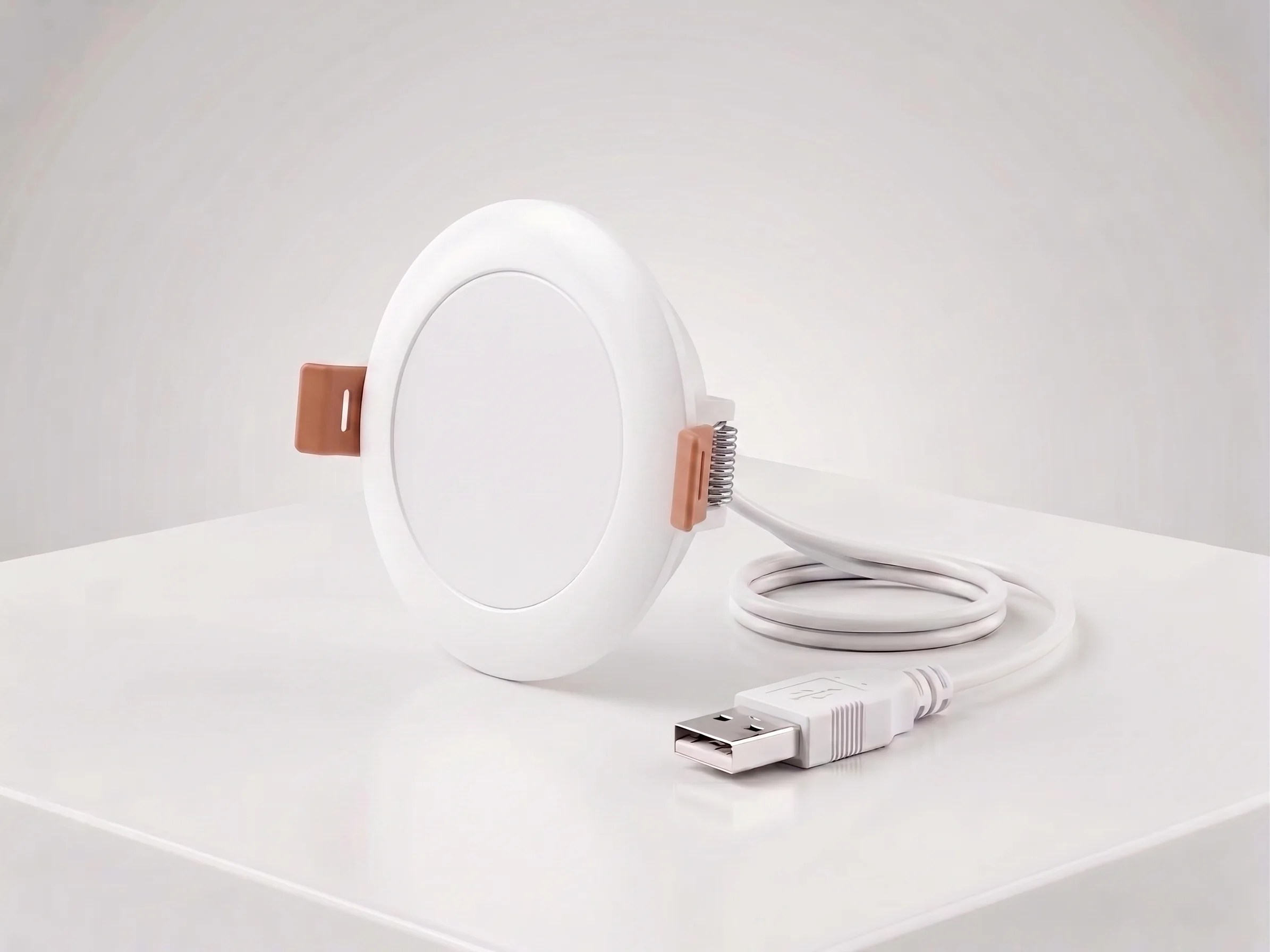
Ceiling Mount mmWave Human Presence Sensor — Zigbee
24GHz wideband mmWave ceiling presence sensor with 10m motion detection, 2.5m micro-motion, and breathing detection. 120° field, DC5V, Zigbee 3.0. For hotel room occupancy and commercial automation.
This page already points to it as the next recommended reference.
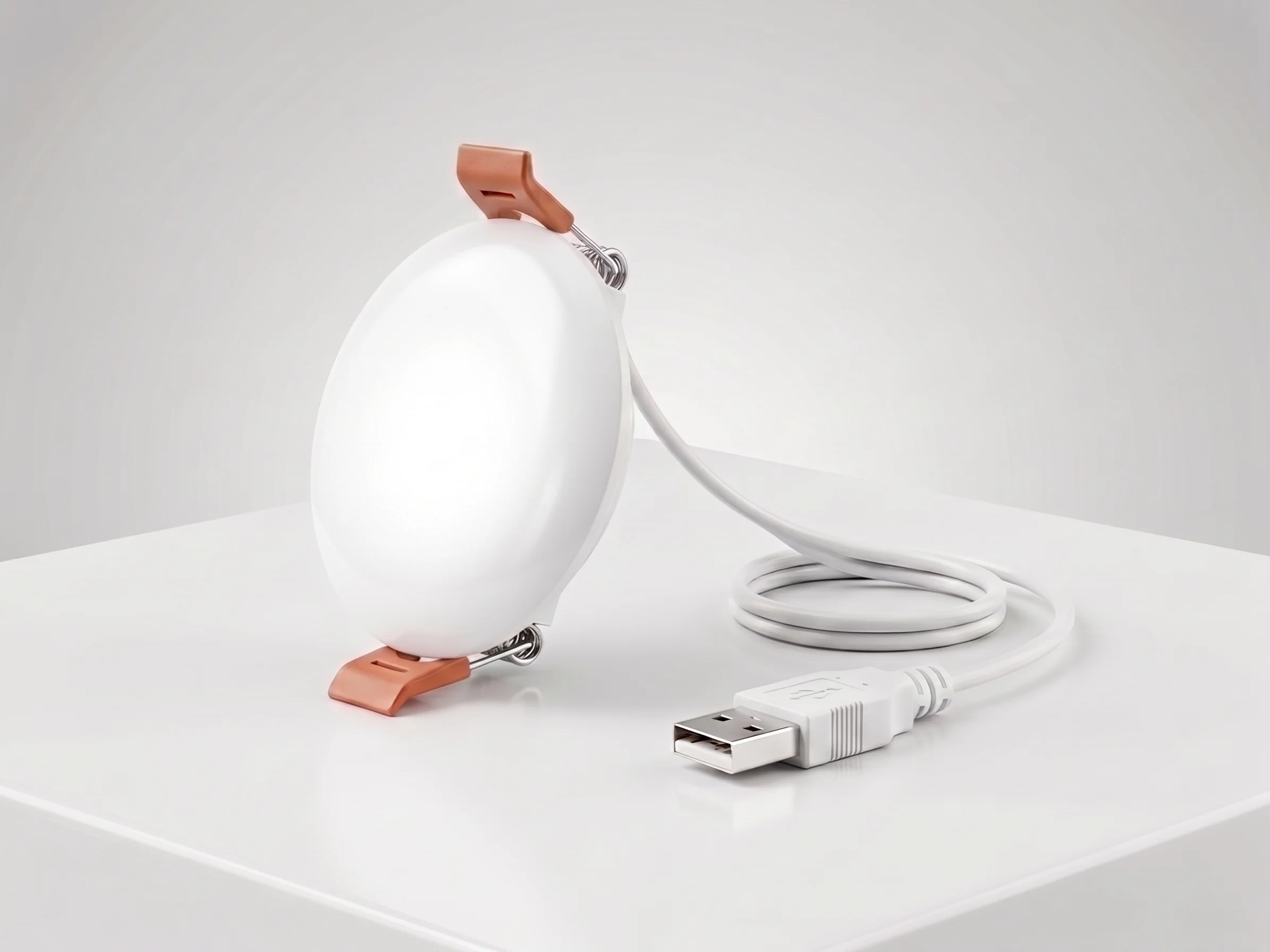
Ceiling Mount mmWave Human Presence Sensor — WiFi
24GHz wideband mmWave ceiling presence sensor with 10m motion detection, 2.5m micro-motion, and breathing detection. 120° field, DC5V, WiFi 2.4GHz. No gateway required for retrofit hotel and apartment projects.
This page already points to it as the next recommended reference.
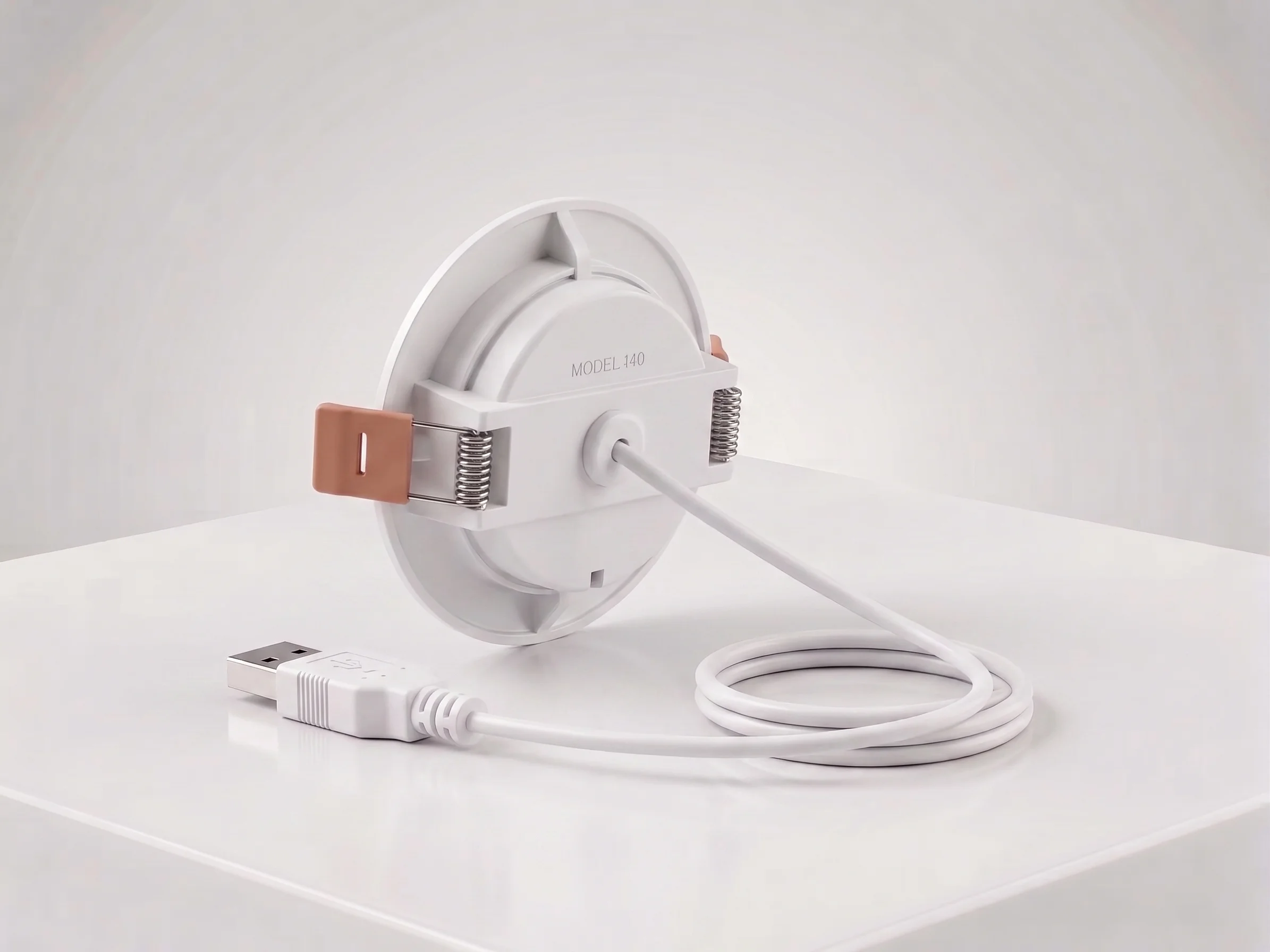
Ceiling Mount mmWave Human Presence Sensor — Matter over Thread
24GHz wideband mmWave ceiling presence sensor with 10m motion, 2.5m micro-motion, and breathing detection. 120° field, DC5V, Matter over Thread. Works natively with Apple Home, Google Home, and Alexa.
This page already points to it as the next recommended reference.
Related solutions
1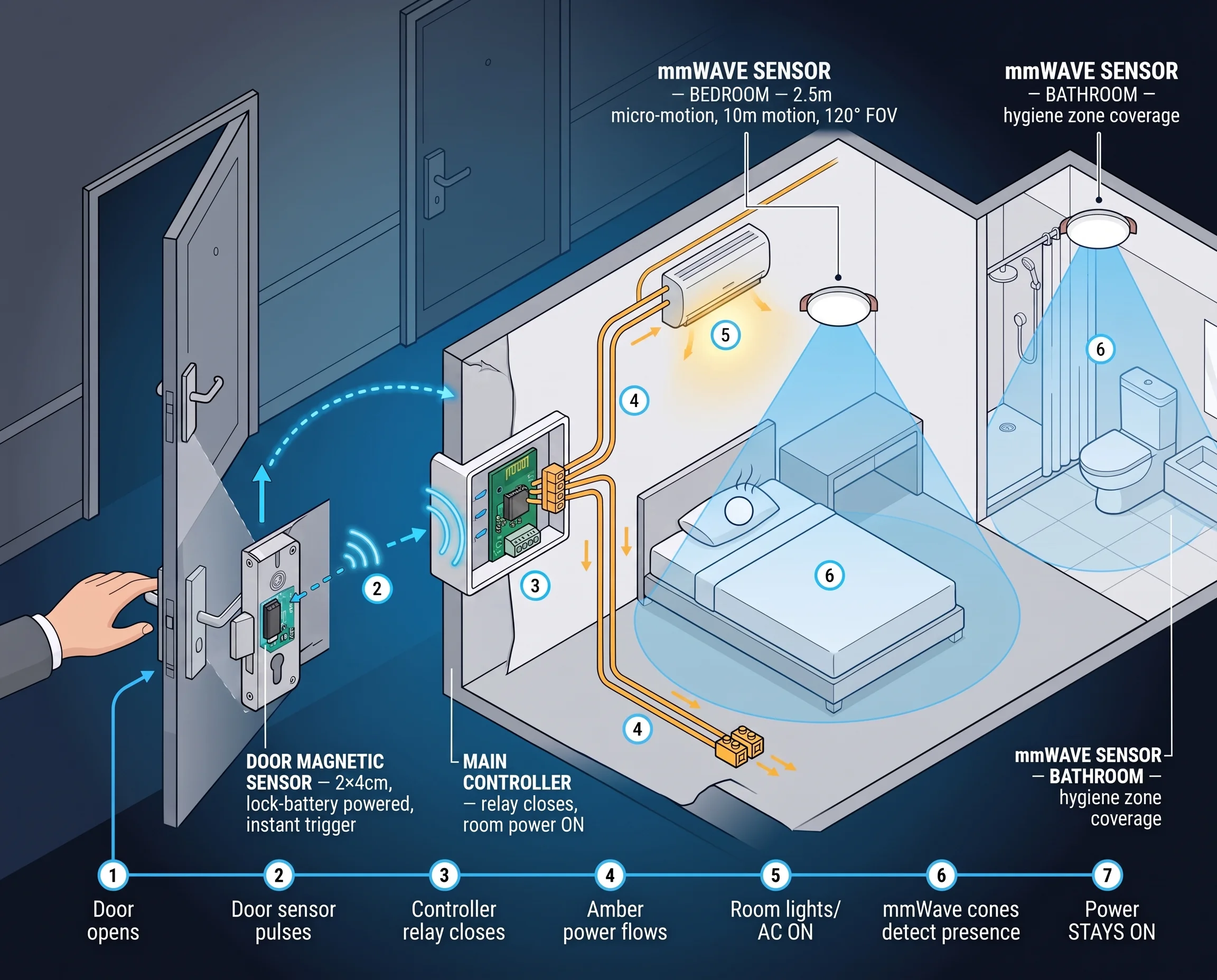
Hotel Room Occupancy & Motion Sensor Solution
mmWave radar presence sensors for hotel room occupancy, housekeeping scheduling, and HVAC energy saving. Detect true occupancy — even when the guest is asleep — with our ceiling-mount hotel room motion sensor.
It supports the same product context: Ceiling Mount mmWave Human Presence Sensor — Zigbee, Ceiling Mount mmWave Human Presence Sensor — WiFi, Ceiling Mount mmWave Human Presence Sensor — Matter over Thread.
Related blog posts
3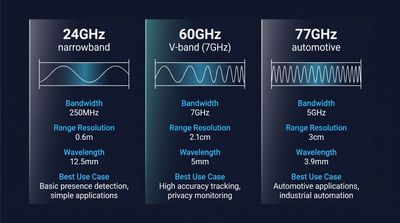
60GHz vs 24GHz vs 77GHz mmWave Sensors: Choosing the Right Frequency for Commercial Presence Detection
Compare 60GHz, 24GHz, and 77GHz mmWave sensors for commercial presence detection. Technical specs, detection range, privacy, and OEM sourcing guidance.
It supports the same product context: Ceiling Mount mmWave Human Presence Sensor — Zigbee, Ceiling Mount mmWave Human Presence Sensor — WiFi.
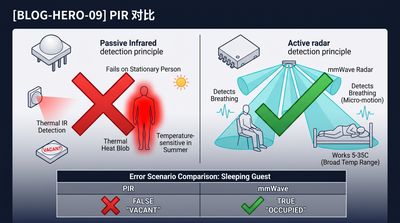
What Is an Electronic Presence Sensor? Technology, Accuracy, and How It Differs From a Motion Sensor
Learn what an electronic presence sensor is, how it detects stationary humans, and how it differs from a PIR motion sensor. Covers mmWave, accuracy, and use cases.
It supports the same product context: Ceiling Mount mmWave Human Presence Sensor — Zigbee, Ceiling Mount mmWave Human Presence Sensor — WiFi, Ceiling Mount mmWave Human Presence Sensor — Matter over Thread.
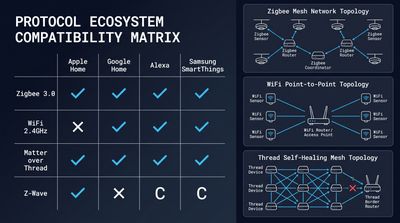
How to Integrate mmWave Presence Sensors With Home Assistant (Local Control Guide)
Step-by-step local control setup guide for mmWave devices, covering MQTT/Matter config, automation scripts, calibration and OEM ceiling presence sensor integration tips.
It supports the same product context: Ceiling Mount mmWave Human Presence Sensor — Matter over Thread, Ceiling Mount mmWave Human Presence Sensor — WiFi, Ceiling Mount mmWave Human Presence Sensor — Zigbee.
Specify your hotel project with our engineers
Send your room count, ceiling type, and protocol preference. We will return a sample plan and quote within 24 business hours.
- Move from general guidance into a product or application discussion.
- Use RFQ when pricing, drawings, MOQ, or launch timing needs structure.
- Keep a direct contact path visible for fast clarifications and handoff.