Why people counting is a different sensor from presence detection
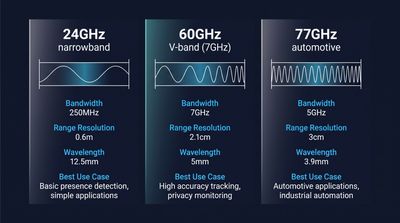
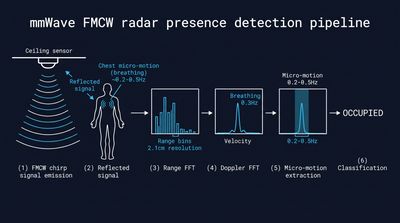
A presence sensor answers one question: is this space occupied? A people counting radar answers a harder one: how many people are here, in which direction, and how has that changed over the day. The radar hardware is related — both use 60GHz mmWave — but the firmware, field of view and output interface are built for counting flows rather than for holding an occupancy flag.
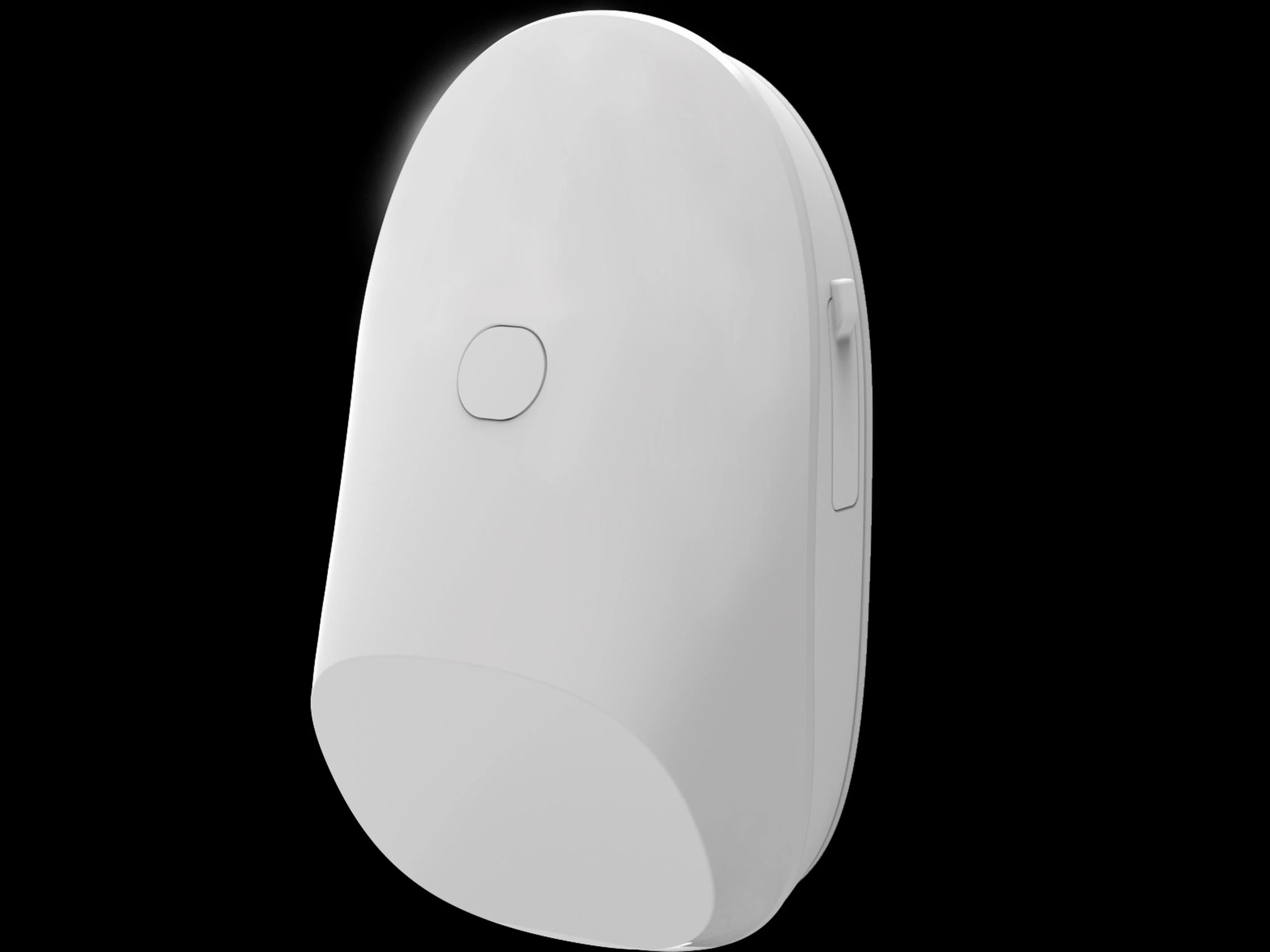
This page covers the two counting builds in the series: a recessed ceiling unit that takes a two-wire AC feed, and a wall-mount unit powered over USB-C that publishes counts and trajectories over MQTT. They are not interchangeable, and the choice usually comes down to where power and mounting space exist.
Model comparison
|
Ceiling model |
Wall model |
| Radar |
60GHz mmWave |
60GHz mmWave |
| Power |
AC 110–220V, two-wire |
USB 5V / 1A, Type-C |
| Mounting |
Ceiling, 65mm barrel (66–68mm cut-out) |
Wall, 1.6–2.4m installation height |
| Field of view |
Wide 90–100°, narrow ~70°, elliptical |
4m × 4m effective counting area |
| Output |
Real-time count |
Real-time count, trajectory, entry/exit statistics |
| Communication |
WiFi 2.4GHz |
WiFi + MQTT (requires an MQTT server) |
| Dimensions |
Φ80 × 45.5mm |
— |
| Operating temperature |
−10 to +55°C |
−10 to +60°C |
Transmit power on the ceiling model is ≤8dBm (8mW), which keeps the radar comfortably inside the 60GHz general-purpose emission limits used across most markets.
Ceiling people counting radar
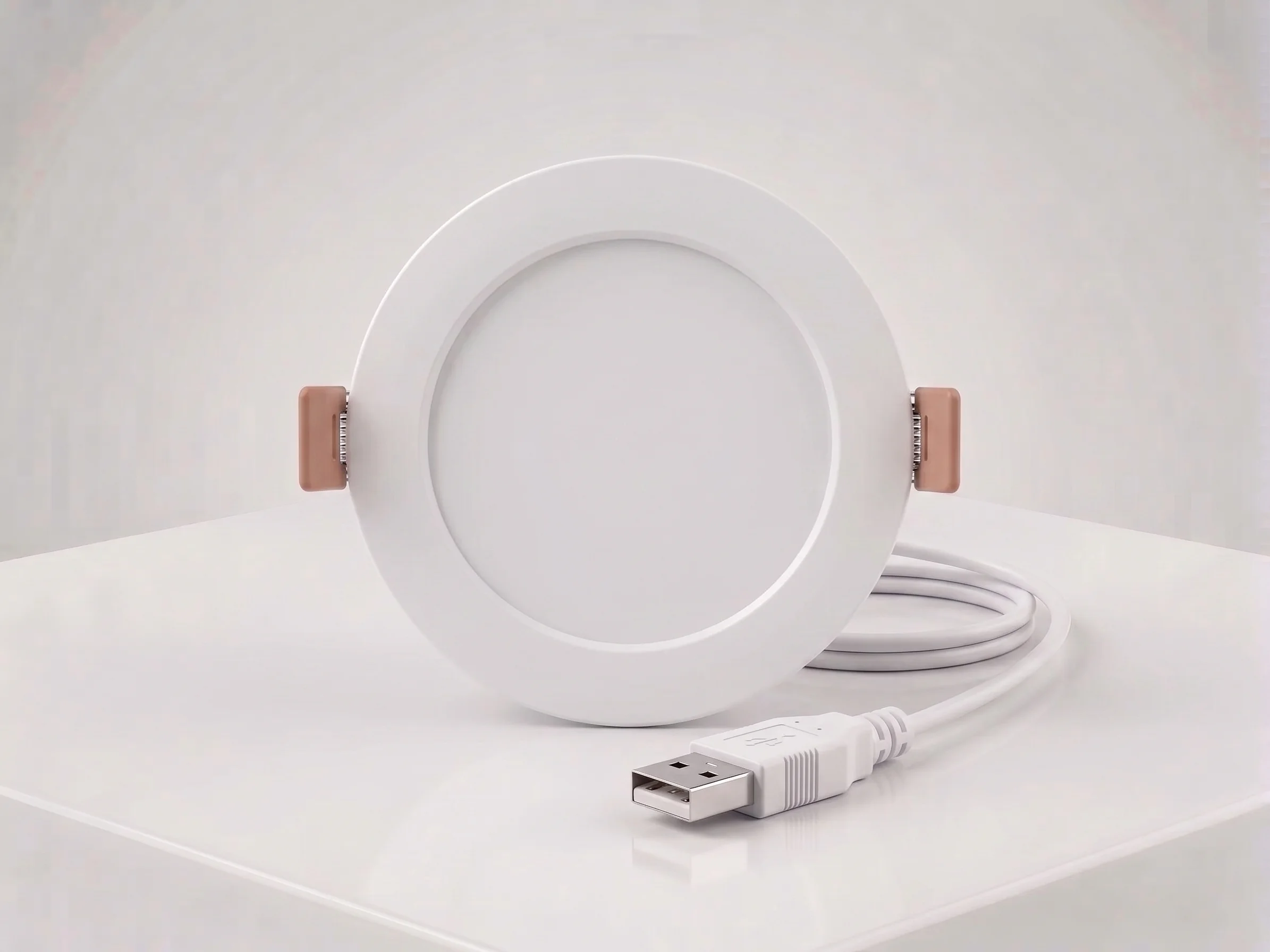
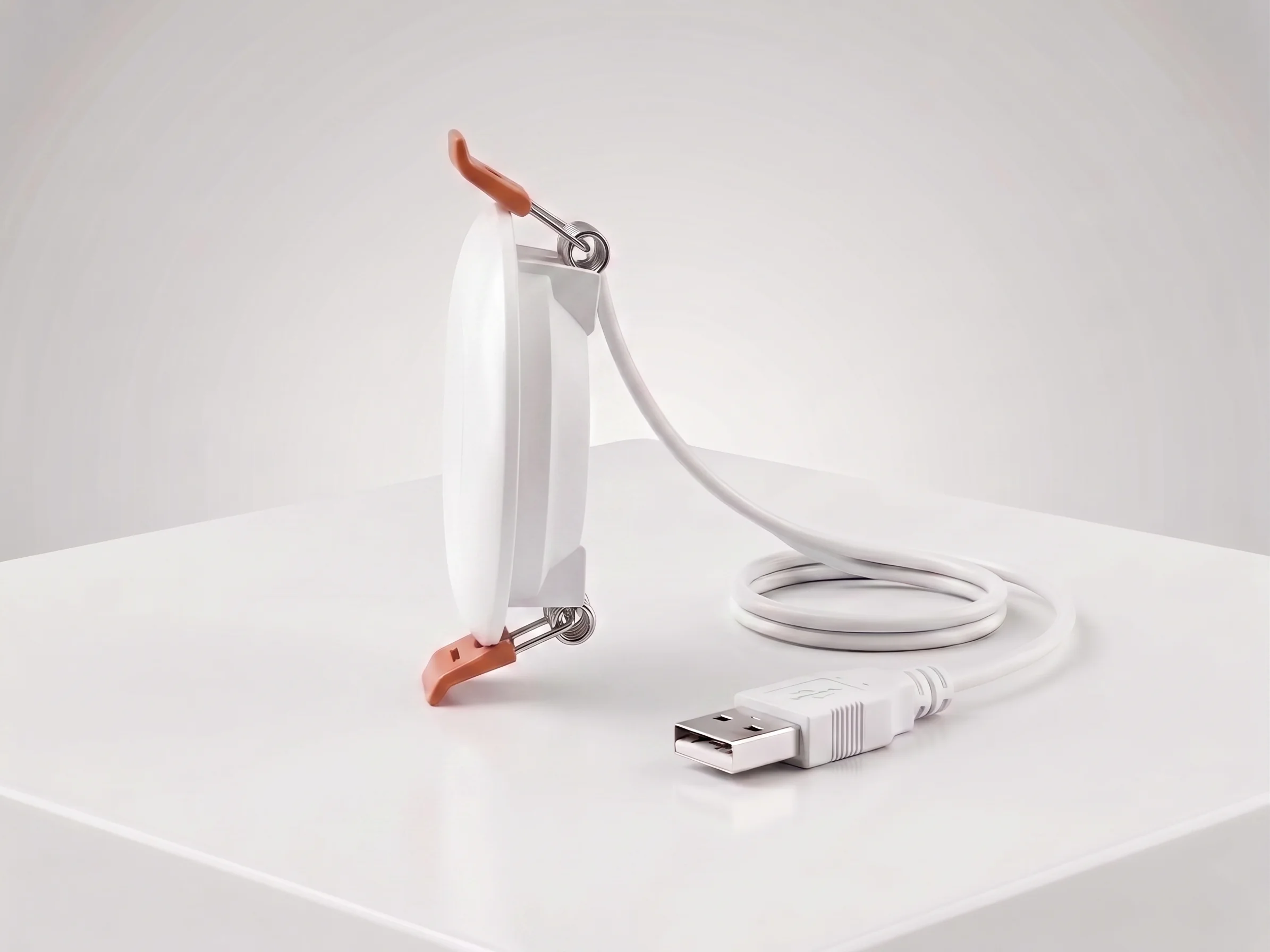
The ceiling unit is the one to specify for open areas, lobbies and wide corridors. It mounts in a 65mm barrel through a 66–68mm ceiling cut-out — the same shape as a recessed downlight — and needs only a two-wire AC feed, with no separate data cable.
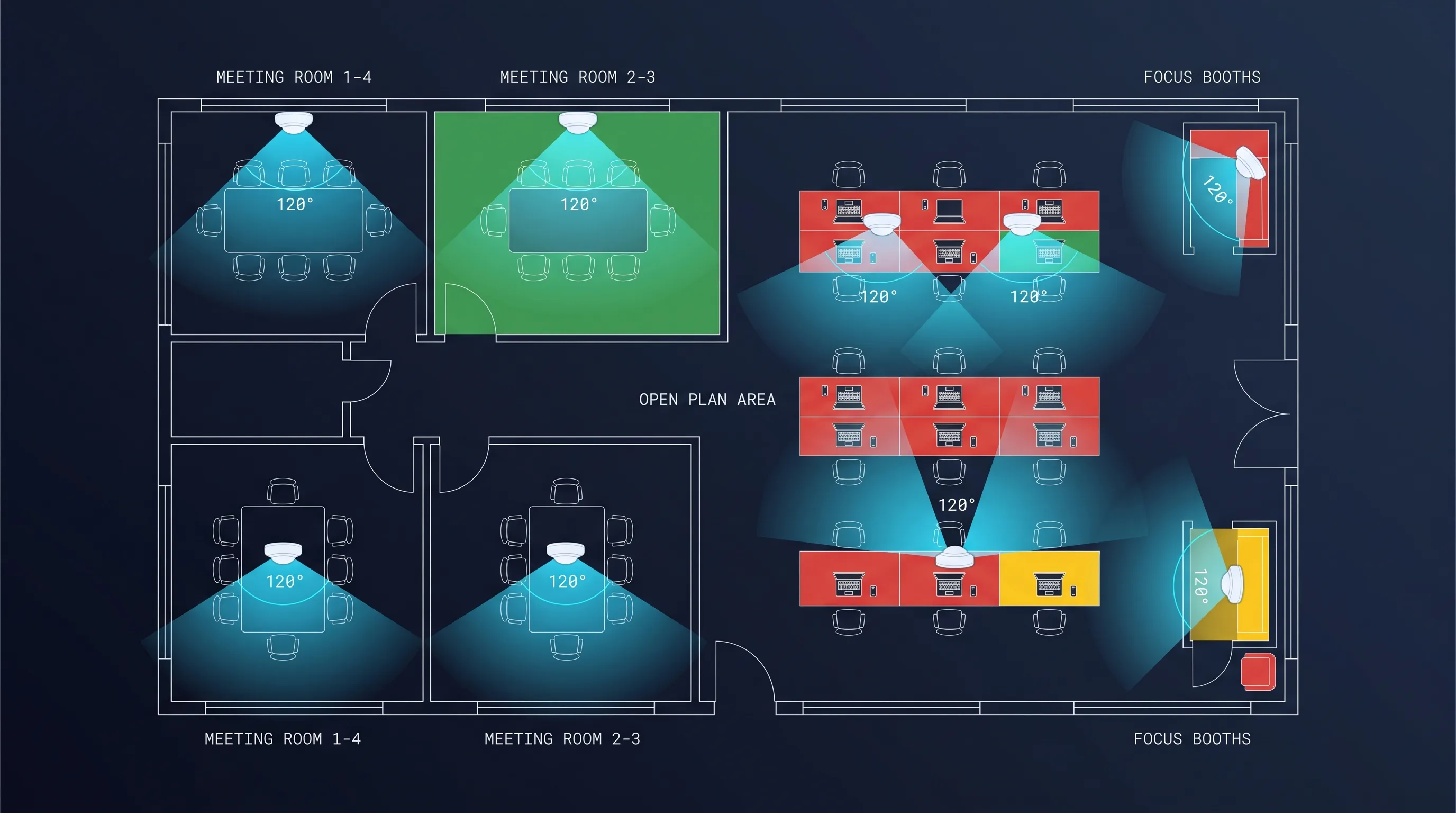
Its pattern is elliptical rather than circular: wide 90–100° across the short axis and about 70° along the long axis. That shape is deliberate, because the geometry of a ceiling-mounted counter means the horizontal coverage should stretch further down a corridor than across it. Real-time count is published over WiFi 2.4GHz.
Wall-mount counting radar with trajectory
The wall unit is the one for doorways, entrances and short corridors. It installs at 1.6–2.4m on the wall and covers a 4m × 4m effective counting area, which is the working envelope for a normal single or double doorway approach.
Its value is in the detail beyond the total: trajectory and entry/exit statistics allow a site to distinguish a person walking through from a person entering and lingering, and to separate inbound from outbound flow. It is powered over USB-C at 5V / 1A, so it needs no mains work at all, and publishes to an MQTT server over WiFi.
That last point matters operationally. The wall model does not use a vendor cloud: it expects an MQTT server on the customer's side. Projects that already run a broker can integrate directly; projects that do not should budget for one, because without it the count has nowhere to go.
Deployment notes that affect accuracy
Count accuracy is governed by geometry more than by radar specification. Mount the sensor so the doorway is inside the field of view for the full approach, not only at the threshold; avoid positions where a wall or partition clips the edge of the beam, since partial coverage produces undercounts at busy moments. For the wall model, keep the sensor centred on the opening and, where possible, at right angles to the direction of travel.
For retail aisles and meeting rooms, ceiling height determines the usable area. Test one unit on the actual site before committing to a per-room quantity — a single commissioning session settles both coverage and the counting direction setting.
OEM/ODM and customisation
Both models are available for OEM/ODM from MOQ 500 pcs. Customisation covers firmware thresholds and counting logic, MQTT topic and payload mapping, housing colour and branding, and packaging. Samples ship in 3–5 days; mass production runs 7–10 days from confirmation.
FAQ
Can the count be exported to a dashboard? Yes on the wall model: counts and trajectories are published over MQTT, so any broker-connected dashboard can consume them. The ceiling model reports real-time count over WiFi and is intended for direct integration rather than MQTT fan-out.
Does it identify individuals? No. Output is aggregate count, trajectory and entry/exit statistics. There is no image capture and no biometric data.
What about a room with two doorways? Use one unit per opening. A single sensor cannot reliably attribute a person to the correct entry point when both are inside one field of view.