What this 24GHz ceiling presence sensor series covers
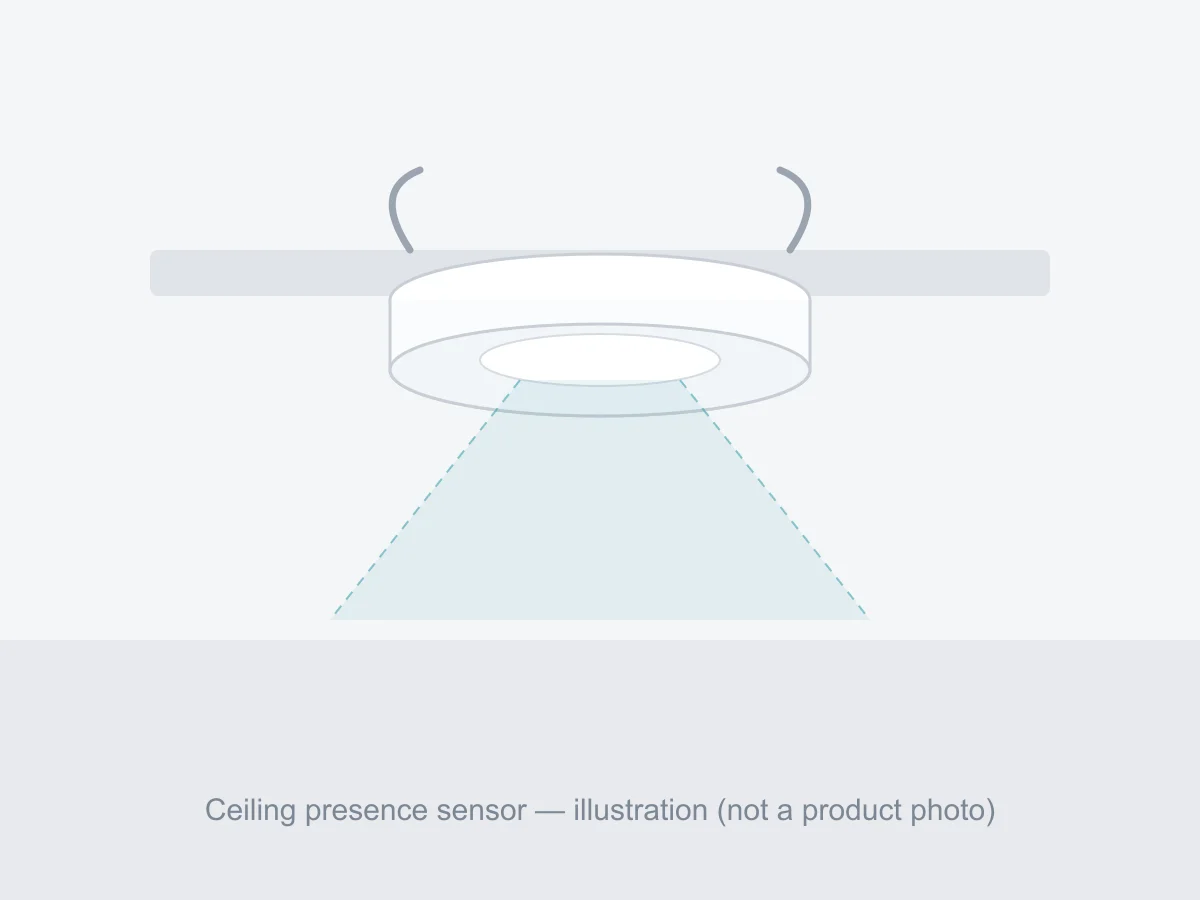
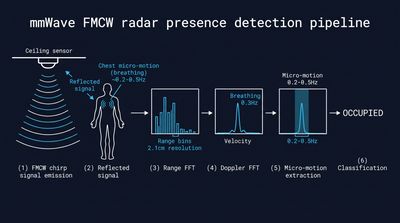
The 24GHz ceiling presence sensor series is a single radar platform built in five production variants. The radar hardware — a 24GHz FMCW front end with micro-motion sensitivity — is shared. What changes between models is the power stage and the radio that reports presence upstream, because those two details decide where a sensor can physically be installed.
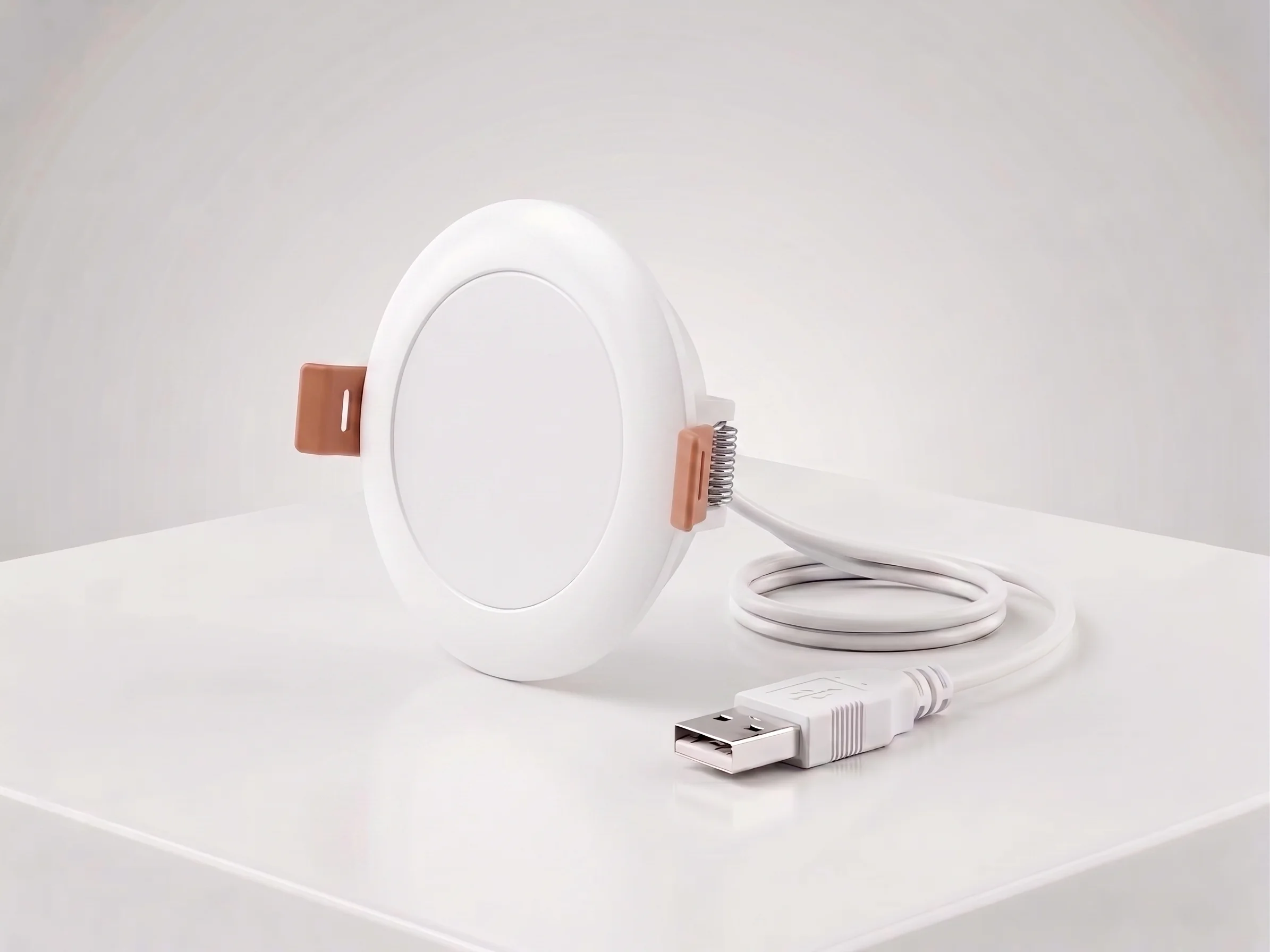
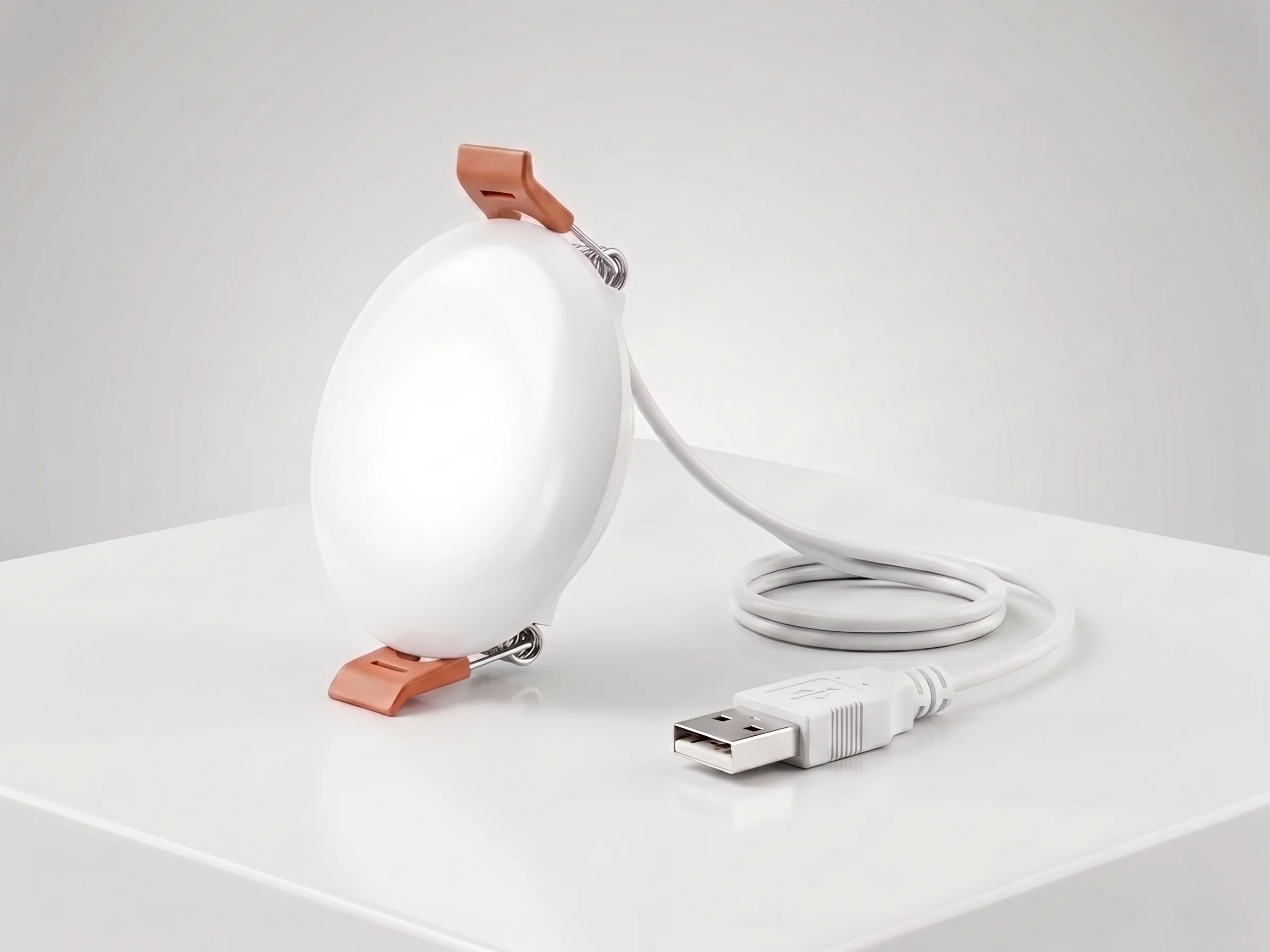
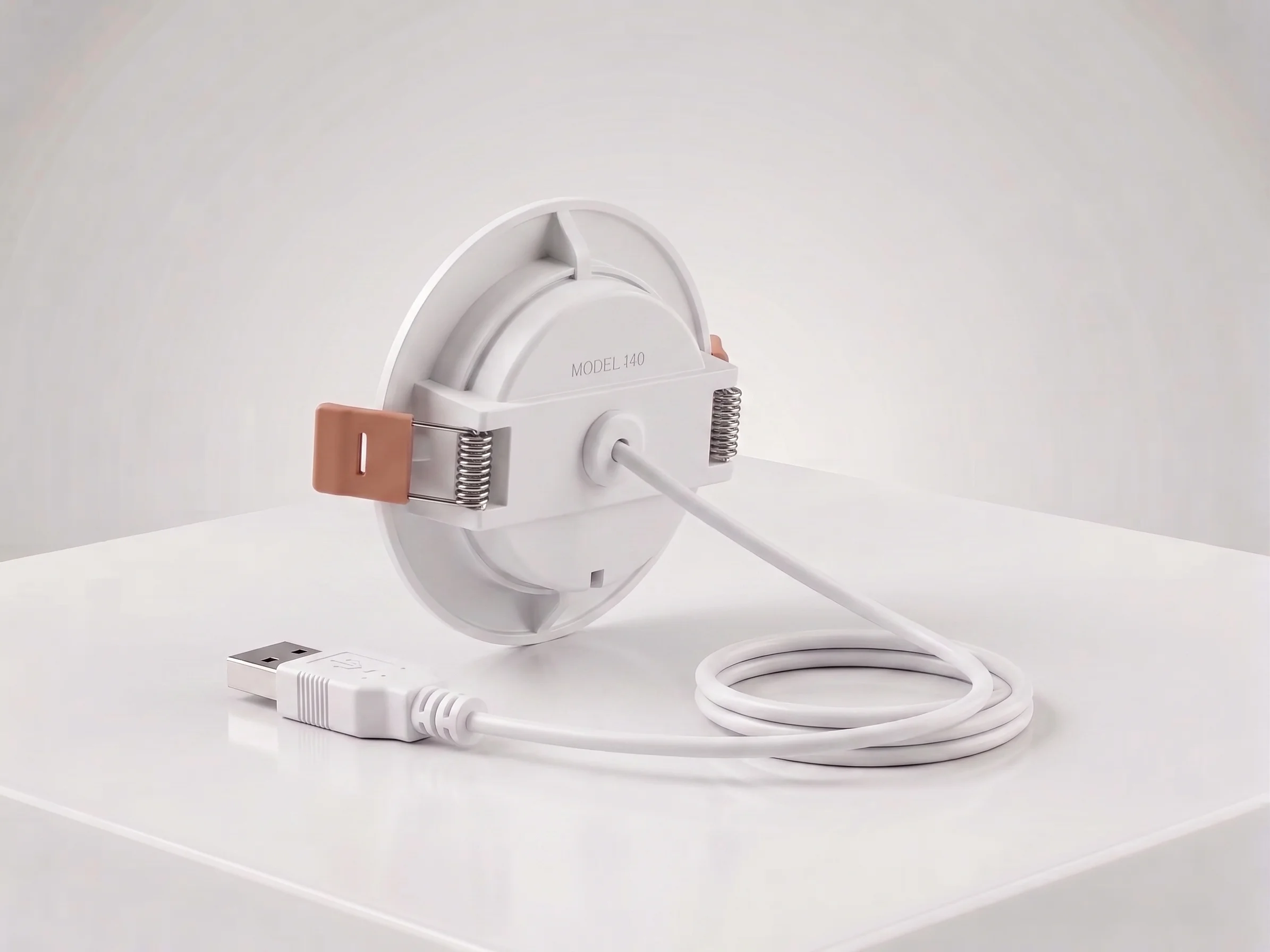
Two families sit in the series. The mains-powered models (BLE, NearLink and Zigbee) replace a ceiling light or an existing PIR occupancy sensor: they accept 110–260V AC, switch a load of up to 300W through their own relay, and fit a Ø50mm ceiling cut-out. The USB-powered models (WiFi and Zigbee) take 5V / 1A and only report presence — they do not switch a load, which makes them the right choice when the light circuit is controlled elsewhere.
Model comparison
| Model |
Power |
Protocol |
Detection |
Mounting |
| 24GHz BLE |
110–260V AC, relay ≤300W |
Bluetooth Low Energy |
Ø4–7m motion / micro-motion |
Ceiling, Ø50mm cut-out |
| 24GHz NearLink |
110–260V AC, relay ≤300W |
NearLink (XingShan) |
Ø4–7m motion / micro-motion |
Ceiling, Ø50mm cut-out |
| 24GHz Zigbee (mains) |
110–260V AC, relay ≤300W |
Zigbee |
0–7m, app-adjustable |
Ceiling, Ø50mm cut-out |
| USB WiFi |
USB 5V / 1A |
WiFi 2.4GHz |
8×10m motion, 3×4m static, 2.2×3.6m sleep |
Ceiling, 29.5×73×86mm |
| USB Zigbee |
USB 5V / 1A |
Zigbee |
8×10m motion, 3×4m static, 2.2×3.6m sleep |
Ceiling, 29.5×73×86mm |
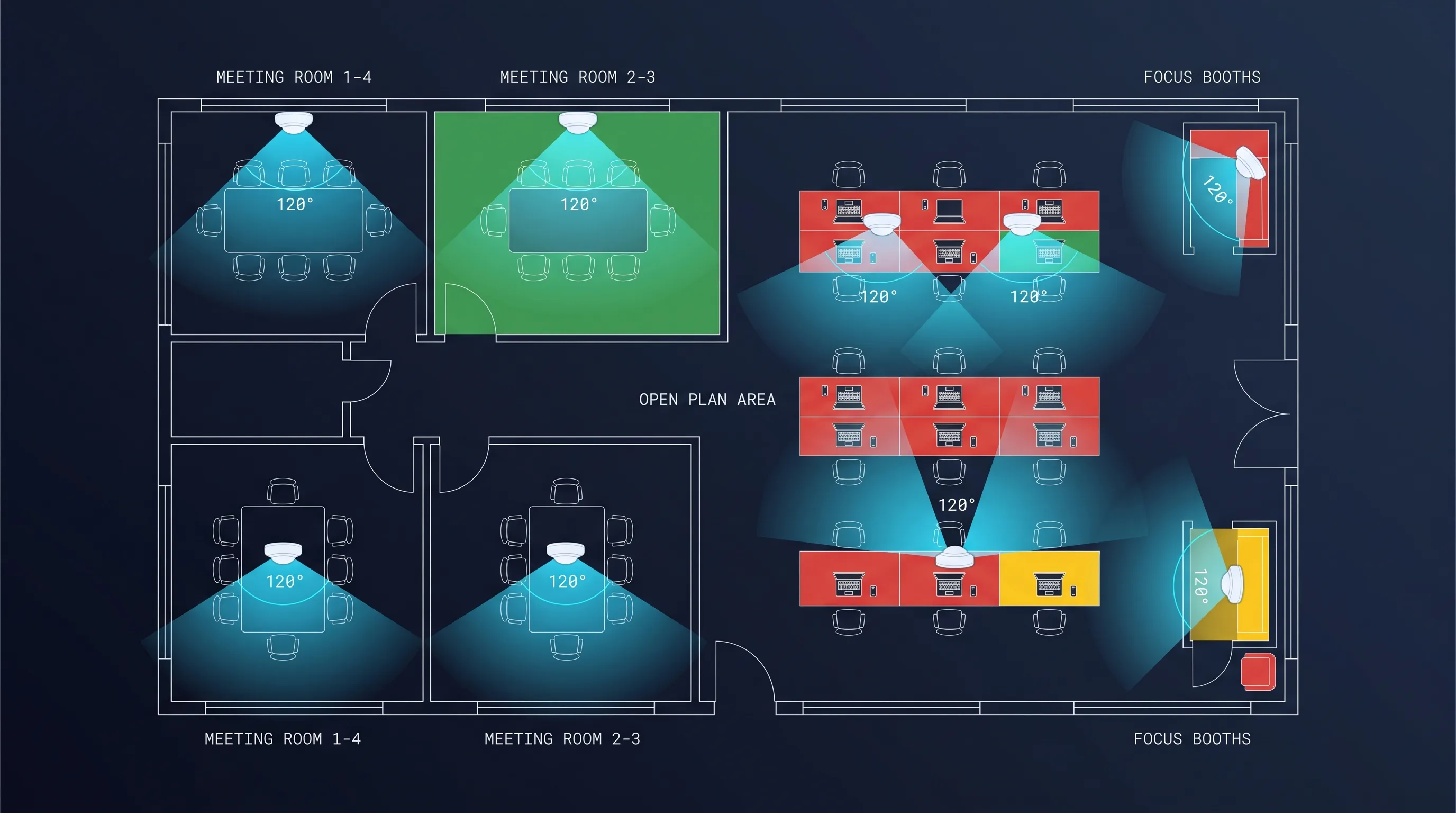
Field of view is 120° on the mains models and 90° horizontal by 60° vertical on the USB models. That difference matters in specification review: a 120° pattern covers a corridor or bathroom from a centred ceiling position, while the narrower 90° × 60° pattern concentrates sensitivity on a room interior.
Mains-powered models: BLE, NearLink and Zigbee
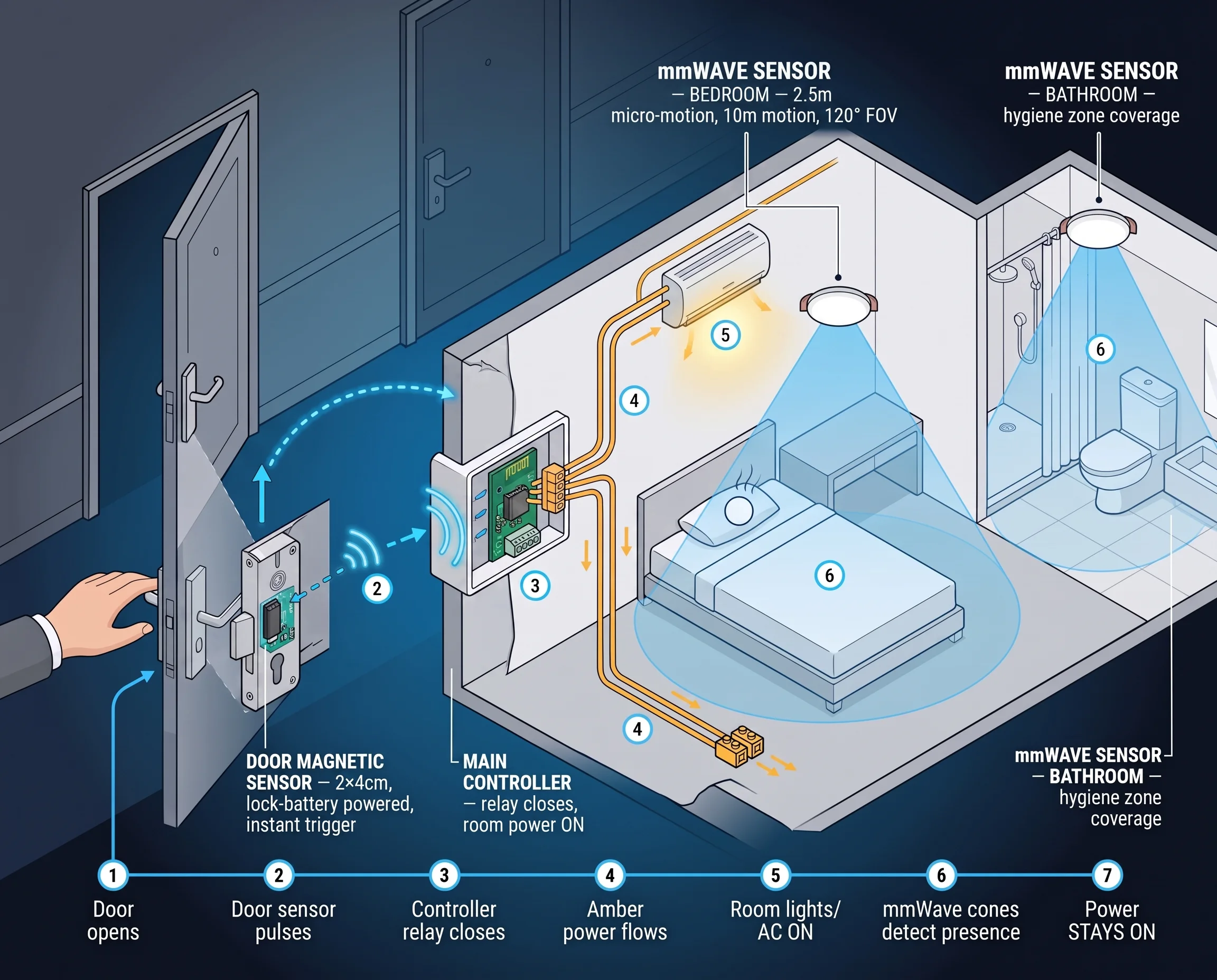
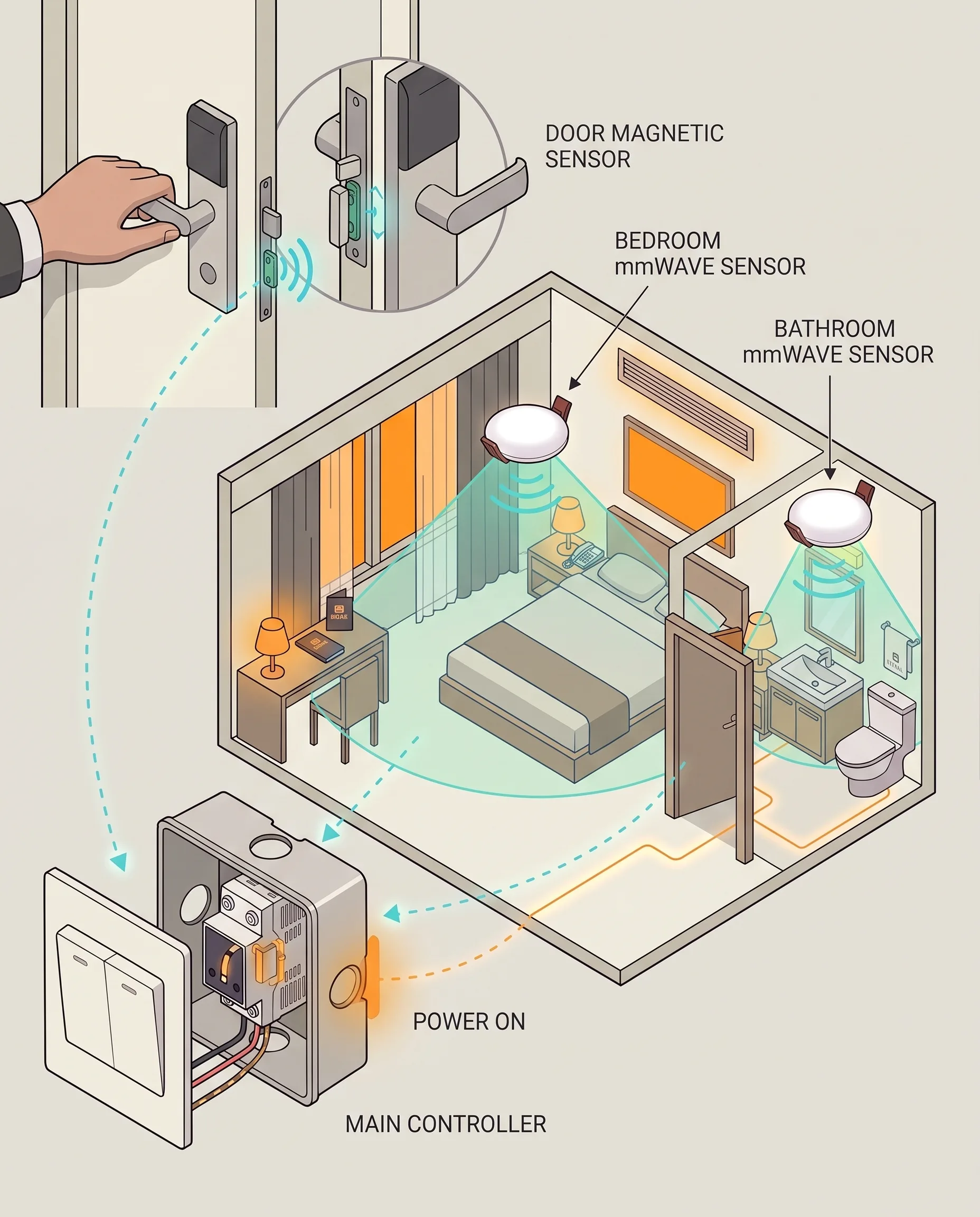
The three mains models are the ones to specify when the sensor replaces a ceiling light or an existing occupancy detector. They mount at a reference height of 2.7–3m, wire to VIN / VOUT / GND terminals, and drive the lighting circuit directly.
Two settings make them practical in hospitality and commercial spaces. The light sensor threshold (0–3000 lux) stops a room light from switching on in daylight, and the hold delay (0–24 minutes, app-adjustable) keeps the light on long enough that a seated guest is not left in the dark. The reference detection diameter is Ø4–7m, which covers a standard guest bathroom or an en-suite corridor from a single point.
Protocol choice within this family is a question of what the building already runs. Zigbee drops into an existing mesh. BLE suits app-commissioned installations without a gateway, and NearLink is the option for projects standardised on that ecosystem.
USB-powered models: WiFi and Zigbee
The USB models solve the case where there is no switch leg at the ceiling. They take 5V / 1A from a USB supply or a powered fixture, and report motion, static presence and sleep state over WiFi 2.4GHz or Zigbee.
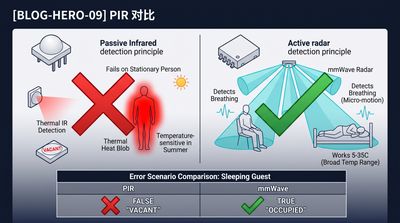
Their detection figures are quoted separately by state: 8×10m for motion, 3×4m for static presence and 2.2×3.6m for sleep. In practice this means the sensor holds occupancy at desk and sleeping distances, which is where PIR devices fail. The 29.5×73×86mm oval housing mounts flat to the ceiling; the long axis should face the far detection range.
How to choose between the five models
Start with the wiring, not the protocol. If a ceiling light circuit with a switch leg is available and the sensor should control that light directly, select a mains model. If the sensor only needs to report presence into an existing building system, select a USB model.
Then choose the protocol by what the installation already speaks: Zigbee for an existing mesh, WiFi where no gateway exists, BLE for app-only commissioning, NearLink for that ecosystem. Where a project needs both direct switching in wet rooms and presence reporting in open areas, the two families can be combined in one deployment without any controller of their own.
OEM/ODM options
All five models are available for OEM/ODM from MOQ 500 pcs on standard configurations. Customisation covers firmware behaviour (hold time, light threshold, output mapping), housing colour and branding, packaging, and the radio module for projects that need a specific ecosystem. Samples ship in 3–5 days and mass production runs 7–10 days from confirmation.
FAQ
Do I need a gateway? Only for the protocol you choose. Zigbee models need a Zigbee 3.0 coordinator; WiFi and BLE models commission from a phone; the mains relay models switch light circuits whether or not anything else is online.
Can it replace an existing PIR ceiling sensor? Physically yes if the ceiling has a Ø50mm cut-out and an AC switch leg. The radar detects stationary occupants, so the hold behaviour differs from PIR in a way occupants notice: lights stay on while they sit still.
Does it detect through glass or partitions? 24GHz attenuates through building materials, and the detection figures above are quoted for open line of sight. Treat partitions as stopping detection and plan one sensor per enclosed space.