Sensor Presensi Zigbee: Panduan Lengkap Deteksi mmWave
Panduan lengkap sensor presensi Zigbee. Pelajari bagaimana radar mmWave dan jaringan mesh Zigbee memungkinkan deteksi presensi hotel dan kantor yang skalabel.
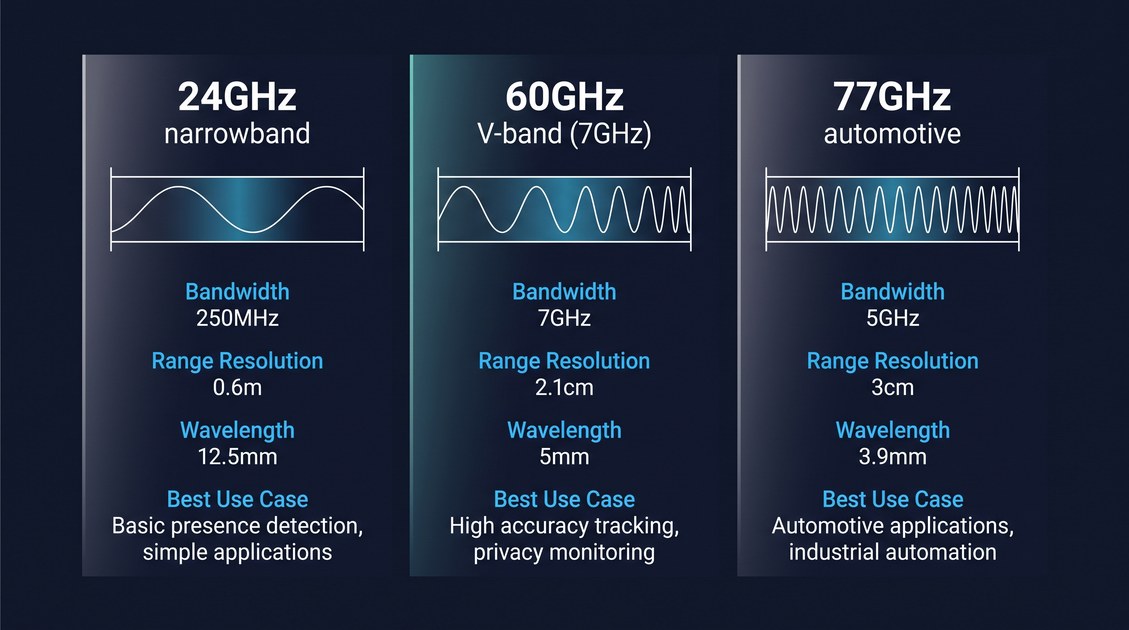
Sensor presensi Zigbee adalah perangkat deteksi presensi yang menggabungkan teknologi radar gelombang milimeter (mmWave) — yang umumnya bekerja pada 60 GHz (57–64 GHz) dengan bandwidth 7 GHz — dengan protokol jaringan mesh nirkabel Zigbee 3.0 untuk menciptakan sistem deteksi okupansi yang skalabel bagi hotel, kantor, dan bangunan hunian. Komponen radar mmWave mendeteksi penghuni manusia yang bergerak maupun yang diam dengan merasakan tanda micro-Doppler pernapasan pada 0.2–0.5 Hz, mencapai tingkat true positive untuk penghuni statis di atas 99% dalam pengujian terkontrol dan di atas 95% dalam penerapan nyata. Radio Zigbee 3.0, yang bekerja pada pita ISM 2.4 GHz, membawa status okupansi dari setiap sensor ke koordinator Zigbee melalui jaringan mesh yang mampu menyembuhkan diri sendiri, di mana setiap sensor dapat merutekan pesan melalui tetangganya, sehingga memperluas jangkauan efektif dan memberikan redundansi terhadap kegagalan satu simpul. Kombinasi radar mmWave untuk deteksi dan Zigbee untuk komunikasi telah menjadi arsitektur bawaan untuk sensor presensi kamar hotel, sensor zona penerapan kantor, dan monitor okupansi fasilitas kesehatan karena memberikan akurasi sensor mmWave kabel dengan fleksibilitas instalasi penerapan nirkabel.
Arsitektur sensor presensi Zigbee telah menjadi pilihan dominan untuk deteksi presensi komersial di hotel dan kantor, dan memahami alasannya memerlukan peninjauan terhadap kendala penerapan di lingkungan tersebut serta pertimbangan kelebihan dan kekurangan antar protokol nirkabel. Panduan ini memberikan gambaran menyeluruh tentang sensor presensi Zigbee, mencakup teknologinya, arsitektur jaringan, praktik terbaik instalasi, dan kriteria pemilihan sensor yang tepat untuk kebutuhan penerapan tertentu.
Sensor Presensi Zigbee: Teknologi dan Arsitektur
Arsitektur perangkat sensor presensi Zigbee bukan sekadar menempelkan modul radar pada radio Zigbee — kedua subsistem harus dirancang bersama untuk menyeimbangkan konsumsi daya, latensi deteksi, dan keandalan jaringan.
Sensor Presensi Zigbee: Komponen Radar mmWave
Komponen radar mmWave pada perangkat sensor presensi Zigbee umumnya merupakan transceiver FMCW (frequency-modulated continuous wave) 60 GHz dengan susunan antena MIMO 2×2 atau 3×3. Transceiver ini mengonsumsi daya sekitar 0.5–1.0 W saat aktif dan melakukan tugas komputasi intensif yaitu mengekstraksi tanda micro-Doppler pernapasan dari pantulan radar.
Pita frekuensi 60 GHz menjadi pilihan bawaan untuk perangkat sensor presensi Zigbee karena menyediakan:
- Bandwidth 7 GHz yang memungkinkan resolusi jarak 2.1 cm dan deteksi micro-Doppler pernapasan
- Panjang gelombang 5 mm yang memungkinkan susunan antena kompak (susunan MIMO 3×3 muat dalam area PCB 20×20 mm)
- Penyerapan oksigen yang tinggi sehingga memberikan penghalang privasi alami (sinyal tidak merambat antar ruangan)
- Lingkungan regulasi yang matang di seluruh dunia (FCC Part 15.255, EN 305 550)
Sensor Presensi Zigbee: Komponen Radio Zigbee
Komponen radio Zigbee pada perangkat sensor presensi Zigbee didasarkan pada transceiver IEEE 802.15.4 2.4 GHz. Radio ini mengonsumsi daya sekitar 0.02–0.05 W saat mentransmisikan dan hanya beberapa mikrowatt saat tidur dalam mode siaga. Protokol Zigbee 3.0 menyediakan:
- Konsumsi daya rendah: cocok untuk penerapan bertenaga baterai
- Jaringan mesh: setiap perangkat dapat merutekan pesan melalui tetangganya, memperluas jangkauan efektif
- Penyembuhan mandiri: jika satu perangkat gagal, jaringan otomatis menemukan jalur alternatif
- Klaster terstandarisasi: klaster "Occupancy Sensing" (0x0406) adalah cara standar untuk melaporkan status okupansi
- Keamanan: enkripsi AES-128, distribusi kunci jaringan, autentikasi perangkat
Sensor Presensi Zigbee: Duty Cycling dan Manajemen Daya
Tantangan desain utama untuk perangkat sensor presensi Zigbee, terutama pada implementasi bertenaga baterai, adalah duty cycling radar. Radar tidak dapat berjalan terus-menerus pada daya penuh jika perangkat diharapkan bertahan bertahun-tahun dengan baterai, karena konsumsi radar 1 W secara kontinu akan menghabiskan sel AA biasa dalam hitungan minggu.
Solusi yang digunakan pada sebagian besar perangkat sensor presensi Zigbee komersial adalah siklus tugas yang menyeimbangkan konsumsi daya dengan latensi deteksi: radar bangun untuk ledakan singkat (biasanya 50–200 milidetik) setiap 1–5 detik, melakukan pemeriksaan presensi cepat, lalu kembali tidur. Radio Zigbee tetap dalam mode siaga (mendengarkan pesan masuk dari koordinator) sebagian besar waktu dan hanya bangun untuk mentransmisikan ketika status okupansi berubah.
Pada penerapan bertenaga listrik, duty cycle dapat lebih agresif (radar bangun setiap 0.5–1 detik) untuk mengurangi latensi deteksi. Pada penerapan bertenaga baterai, radar biasanya bangun setiap 2–3 detik, menghasilkan latensi deteksi 1–2 detik, yang masih dapat diterima untuk sebagian besar aplikasi hotel dan kantor.
Sensor Presensi Zigbee: Topologi Jaringan dan Perilaku Mesh
Protokol Zigbee 3.0 mendukung tiga topologi jaringan: star, tree, dan mesh. Pada topologi star, setiap perangkat sensor presensi Zigbee berkomunikasi langsung dengan koordinator, yang menyederhanakan jaringan tetapi membatasi jangkauan. Pada topologi mesh, setiap perangkat sensor presensi Zigbee dapat merutekan pesan melalui tetangganya, memperluas jangkauan efektif, mengisi celah cakupan, dan memberikan redundansi jika satu perangkat gagal.
Mesh adalah topologi bawaan untuk sebagian besar penerapan sensor presensi Zigbee komersial karena lebih tangguh dan lebih skalabel.
Sensor Presensi Zigbee: Perilaku Jaringan Mesh
Perilaku mesh jaringan sensor presensi Zigbee ditentukan oleh protokol routing Zigbee, yang didasarkan pada AODV (Ad hoc On-Demand Distance Vector). Ketika perangkat sensor presensi Zigbee memiliki peristiwa okupansi untuk dilaporkan, ia mencoba merutekan pesan ke koordinator melalui jalur terpendek yang tersedia, menggunakan sensor tetangga sebagai router perantara. Jika jalur yang diutamakan gagal (karena perangkat tetangga offline atau di luar jangkauan), perangkat otomatis menemukan jalur alternatif, memberikan kemampuan penyembuhan mandiri.
Perilaku mesh ini sangat berharga dalam penerapan hotel di mana perangkat sensor presensi Zigbee dipasang di setiap ruangan dan satu perangkat yang gagal tidak seharusnya mengganggu data okupansi ruangan-ruangan di sekitarnya.
Sensor Presensi Zigbee: Kapasitas dan Latensi Jaringan
Kekhawatiran praktis dalam penerapan sensor presensi Zigbee berskala besar adalah kapasitas dan latensi jaringan. Setiap perangkat sensor presensi Zigbee, saat mentransmisikan peristiwa okupansi, menempati sejumlah kecil airtime pada kanal 2.4 GHz. Jika ratusan perangkat mencoba mentransmisikan secara bersamaan selama peristiwa di seluruh gedung (seperti pergantian shift di gedung perkantoran), jaringan dapat menjadi padat dan pesan dapat tertunda atau hilang.
Protokol Zigbee 3.0 menyertakan beberapa mekanisme untuk mengelola hal ini: penjadwalan transmisi, prioritas pesan, dan backoff otomatis. Pada penerapan sensor presensi Zigbee yang dirancang baik, jaringan harus dikonfigurasi dengan koordinator Zigbee yang cukup (biasanya 1 koordinator per 50–100 sensor) dan kanal 2.4 GHz yang tersedia cukup banyak (Zigbee 3.0 mendukung 16 kanal, dengan 11, 15, 20, 25 umum digunakan untuk menghindari interferensi WiFi) untuk menangani laju peristiwa puncak.
Latensi dari peristiwa okupansi hingga diterimanya di koordinator pada penerapan sensor presensi Zigbee tipikal adalah antara 0.5 dan 3 detik, tergantung beban jaringan dan jumlah hop antara sensor dan koordinator.
Sensor Presensi Zigbee: Mengapa Menjadi Pilihan Bawaan untuk Penerapan Hotel
Industri perhotelan adalah vertikal penerapan terbesar untuk perangkat sensor presensi Zigbee, dan alasannya spesifik terkait kendala operasional dan ekonomi properti hotel.
Sensor Presensi Zigbee: Instalasi Tanpa Mengganggu Tamu
Alasan utama sensor presensi Zigbee lebih dipilih di hotel dibandingkan sensor kabel adalah instalasi tanpa mengganggu tamu. Sensor presensi kabel memerlukan penarikan kabel dari setiap ruangan ke titik distribusi pusat, yang berarti membongkar dinding, menambal dinding gypsum, mengecat ulang, dan kemungkinan memindahkan tamu selama instalasi. Sebaliknya, penerapan sensor presensi Zigbee dapat dipasang ruangan demi ruangan oleh satu teknisi dalam waktu sekitar 15 menit per ruangan: sensor ditenagai dari listrik ruangan yang sudah ada atau dari baterai tahan lama, dipasang di plafon dengan beberapa sekrup atau perekat, diprovisioning ke jaringan Zigbee melalui sistem manajemen gedung, lalu ruangan dikembalikan ke tim housekeeping.
Tim dua teknisi dapat memasang perangkat sensor presensi Zigbee di 200 kamar selama dua minggu tanpa gangguan tamu sama sekali, dan ini adalah metrik penerapan terpenting bagi operator hotel.
Sensor Presensi Zigbee: Integrasi dengan sistem manajemen gedung
Alasan kedua mengapa sensor presensi Zigbee mendominasi di hotel adalah integrasi natif dengan sistem manajemen gedung. Vendor BMS hotel utama (Oracle Hospitality OPERA Cloud, CloudBeds, Mews, RoomKeyPMS) semuanya mendukung Zigbee sebagai protokol deteksi okupansi natif, biasanya melalui gateway Zigbee-to-BMS atau melalui integrasi Zigbee langsung dengan sistem kontrol kamar. Perangkat sensor presensi Zigbee yang dipasang di kamar otomatis melaporkan status okupansinya ke BMS, yang kemudian dapat memicu otomatisasi housekeeping, manajemen energi, dan otomatisasi pengalaman tamu.
Fakta bahwa Zigbee sudah menjadi protokol standar untuk kontrol kamar hotel (termostat berbasis Zigbee, kunci pintu berbasis Zigbee, kontrol dalam kamar berbasis Zigbee) berarti perangkat sensor presensi Zigbee dapat memanfaatkan infrastruktur gateway yang sudah ada tanpa memerlukan perangkat keras tambahan.
Sensor Presensi Zigbee: Fleksibilitas Bertenaga Baterai
Keunggulan ketiga sensor presensi Zigbee di hotel adalah opsi penerapan bertenaga baterai. Meskipun banyak perangkat sensor presensi Zigbee hotel bertenaga listrik, beberapa penerapan menggunakan perangkat bertenaga baterai untuk menghindari bahkan pekerjaan minimal yang diperlukan untuk menepkan daya listrik. Perangkat sensor presensi Zigbee bertenaga baterai dapat dipasang hanya dengan perekat, tanpa alat, dan tanpa risiko memicu inspeksi kode kebakaran gedung.
Umur baterai perangkat sensor presensi Zigbee tipikal, dengan siklus tugas radar 2–3 detik, adalah 12–18 bulan pada sel CR123A, yang dapat diterima untuk penerapan hotel karena tim housekeeping dapat mengganti baterai selama perawatan rutin kamar.
Sensor Presensi Zigbee: Penerapan di Kantor dan Properti Komersial
Gedung perkantoran dan properti komersial adalah vertikal penerapan utama kedua untuk perangkat sensor presensi Zigbee.
Sensor Presensi Zigbee: Analitik Okupansi Tingkat Zona
Dalam lingkungan kantor, perangkat sensor presensi Zigbee sering digunakan untuk analitik okupansi tingkat zona alih-alih koordinasi housekeeping per ruangan. Satu perangkat sensor presensi Zigbee di kantor individual dapat menyediakan data okupansi untuk kontrol HVAC kantor tersebut, tetapi jaringan perangkat di seluruh lantai dapat menyediakan data agregat tentang bagaimana lantai tersebut digunakan.
Jaringan mesh Zigbee sangat berharga dalam konteks ini karena dapat memperluas cakupan di seluruh lantai atau gedung tanpa mengharuskan setiap perangkat memiliki garis pandang langsung ke koordinator. Data okupansi dari jaringan sensor presensi Zigbee diagregasi di sistem manajemen gedung dan diekspos melalui dashboard untuk tim properti korporat.
Sensor Presensi Zigbee: Integrasi dengan Sistem Manajemen Gedung
Penerapan sensor presensi Zigbee kantor biasanya terintegrasi dengan sistem manajemen gedung (BMS). Vendor BMS utama (Siemens, Schneider Electric, Johnson Controls, Honeywell) semuanya mendukung Zigbee sebagai protokol natif untuk deteksi okupansi, biasanya melalui gateway Zigbee-to-BACnet atau melalui integrasi langsung.
Sensor Presensi Zigbee: Daftar Periksa Pengadaan dan Instalasi
Bagi tim pengadaan yang mengevaluasi perangkat sensor presensi Zigbee, daftar periksa berikut merangkum kerangka keputusan di atas menjadi proses pengadaan yang dapat ditindaklanjuti.
Sensor Presensi Zigbee: Spesifikasi Teknis
- Pita frekuensi: pastikan sensor bekerja pada pita 60 GHz untuk sensitivitas gerak mikro yang optimal
- Konfigurasi antena: pastikan konfigurasi MIMO (biasanya 2×2 atau 3×3) dan bidang pandang yang dihasilkan
- Jangkauan deteksi: pastikan jangkauan deteksi maksimum untuk penghuni bergerak dan penghuni statis (biasanya 6–8 m)
- Konsumsi daya: pastikan konsumsi daya aktif dan konsumsi daya siaga
- Duty cycle: pastikan apakah sensor mendukung duty cycling yang dapat dikonfigurasi
Sensor Presensi Zigbee: Spesifikasi Jaringan Zigbee
- Versi Zigbee: pastikan sensor mendukung Zigbee 3.0 (standar saat ini)
- Klaster Zigbee yang didukung: pastikan sensor mengimplementasikan klaster "Occupancy Sensing" (0x0406)
- Topologi jaringan: pastikan apakah sensor mendukung routing mesh (kemampuan router) atau hanya perangkat ujung
- Kanal yang didukung: pastikan kanal Zigbee mana yang didukung sensor
- Keamanan: pastikan sensor mendukung keamanan Zigbee 3.0 (enkripsi AES-128, distribusi kunci jaringan, autentikasi perangkat)
Sensor Presensi Zigbee: Integrasi dan Konektivitas
- Persyaratan gateway: pastikan apakah sensor memerlukan gateway Zigbee tertentu atau dapat bekerja dengan koordinator Zigbee 3.0 standar apa pun
- Kompatibilitas protokol: pastikan bagaimana sensor terintegrasi dengan sistem target (BMS untuk hotel, BMS untuk kantor, platform smart home untuk hunian)
- Format pesan: pastikan data apa yang ditransmisikan sensor melalui Zigbee (status okupansi biner, data titik mentah, peristiwa terklasifikasi)
- Retensi data: pastikan apakah sensor menyimpan data okupansi historis di perangkat
Sensor Presensi Zigbee: Spesifikasi Fisik dan Instalasi
- Bentuk fisik: pastikan dimensi fisik dan metode pemasangan
- Sumber daya: pastikan apakah sensor bertenaga listrik, bertenaga baterai, atau mendukung keduanya
- Rating IP: pastikan rating perlindungan masuk (ingress protection)
- Sertifikasi: pastikan sensor membawa sertifikasi yang diperlukan (CE, FCC, RoHS)
Sensor Presensi Zigbee: Jebakan Umum
Beberapa jebakan umum dapat merusak penerapan sensor presensi Zigbee:
- Cakupan Zigbee yang tidak memadai: memasang sensor di ruangan di mana sinyal Zigbee tidak dapat menjangkau sensor tetangga mana pun
- Interferensi dari WiFi: menerapkan sensor pada kanal Zigbee yang tumpang tindih dengan kanal WiFi gedung
- Perencanaan baterai yang kurang: menerapkan sensor bertenaga baterai tanpa rencana jelas untuk penggantian baterai
- Tinggi atau orientasi pemasangan yang salah: memasang sensor terlalu dekat dengan plafon atau dengan susunan antena menghadap menjauhi ruangan
- Kelebihan beban pada satu koordinator Zigbee: menghubungkan lebih dari 100 sensor ke satu koordinator
Sensor Presensi Zigbee: Tren Masa Depan
Pasar sensor presensi Zigbee berkembang pesat, didorong oleh beberapa tren:
- Konvergensi Matter: standar smart home Matter, yang dibangun di atas protokol Thread (yang berbasis IEEE 802.15.4 seperti Zigbee), menjadi protokol interoperabilitas dominan untuk perangkat hunian. Banyak vendor sensor presensi Zigbee kini memproduksi perangkat dual-mode yang mendukung Zigbee dan Matter sekaligus.
- Integrasi chipset: semakin meningkatnya integrasi transceiver mmWave dan radio Zigbee ke dalam solusi satu chip mengurangi biaya dan memungkinkan bentuk fisik yang lebih kecil
- Machine learning di perangkat: perangkat sensor presensi Zigbee modern dapat menjalankan jaringan saraf kecil secara lokal untuk mengklasifikasi peristiwa okupansi
- Konvergensi multi-sensor: konvergensi perangkat sensor presensi Zigbee dengan modalitas deteksi dalam kamar lainnya (CO₂, cahaya, suhu/kelembapan, akustik)
Sensor Presensi Zigbee: Rekomendasi Akhir
Arsitektur sensor presensi Zigbee telah menjadi pilihan bawaan untuk deteksi presensi nirkabel di kamar hotel, kantor, fasilitas kesehatan, dan semakin banyak juga di smart home hunian karena memberikan keseimbangan terbaik antara akurasi deteksi, fleksibilitas instalasi, dan kematangan integrasi di antara opsi nirkabel yang tersedia.
Untuk penerapan hotel atau kantor yang memerlukan deteksi penghuni statis yang akurat dan di mana penarikan kabel baru tidak praktis, perangkat sensor presensi Zigbee hampir selalu merupakan pilihan teknis yang tepat. Untuk penerapan fasilitas kesehatan yang memerlukan deteksi jatuh dan pemantauan keselamatan, perangkat sensor presensi Zigbee dengan daya listrik dan duty cycle yang dioptimalkan untuk latensi rendah adalah pilihan yang tepat. Untuk penerapan hunian di mana konsumen telah memilih platform smart home berbasis Zigbee (SmartThings, Home Assistant, Hubitat), perangkat sensor presensi Zigbee adalah pilihan yang tepat, dan perangkat dual-mode Zigbee+Matter adalah pilihan terbaik untuk ketahanan masa depan.
Produk yang direkomendasikan untuk sebagian besar aplikasi adalah ceiling-presence-sensor-zigbee, yang menyediakan deteksi radar mmWave wideband 24GHz, jaringan mesh Zigbee 3.0, opsi daya listrik atau baterai, serta integrasi dengan sistem manajemen gedung utama.
Sebagian konten artikel ini dihasilkan oleh AI dan dioptimalkan untuk akurasi profesional dan keterbacaan. A presence sensor Zigbee is a presence detection device that combines millimeter-wave (mmWave) radar technology — most commonly operating at 60 GHz (57–64 GHz) with 7 GHz of bandwidth — with Zigbee 3.0 wireless mesh networking protocol to create a scalable occupancy sensing system for hotels, offices, and residential buildings. The mmWave radar component detects both moving and stationary human occupants by sensing the micro-Doppler signature of breathing at 0.2–0.5 Hz, achieving a stationary-occupant true positive rate above 99% in controlled testing and above 95% in real-world deployment. The Zigbee 3.0 radio, operating in the 2.4 GHz ISM band, carries the occupancy state from each sensor to a Zigbee coordinator via a self-healing mesh network where each sensor can route messages through its neighbors, extending the effective range and providing redundancy against single-node failures. The combination of mmWave radar for detection and Zigbee for communication has become the default architecture for hotel room presence sensors, office deployment zone sensors, and healthcare facility occupancy monitors because it delivers the accuracy of wired mmWave sensors with the installation flexibility of wireless deployment.
The presence sensor Zigbee architecture has become the dominant choice for commercial presence detection in hotels and offices, and understanding why requires looking at the deployment constraints of these environments and the trade-offs between wireless protocols. This guide provides a comprehensive overview of the presence sensor Zigbee, covering the technology, the network architecture, the installation best practices, and the selection criteria for choosing the right sensor for a specific deployment.
Presence Sensor Zigbee: Technology and Architecture
The architecture of a presence sensor Zigbee device is more than simply gluing a radar module onto a Zigbee radio — the two subsystems must be designed together to balance power consumption, detection latency, and network reliability.
Presence Sensor Zigbee: The mmWave Radar Component
The mmWave radar component of a presence sensor Zigbee device is typically a 60 GHz FMCW (frequency-modulated continuous wave) transceiver with a 2×2 or 3×3 MIMO antenna array. The transceiver consumes approximately 0.5–1.0 W when active and performs the computationally intensive task of extracting the breathing micro-Doppler signature from the radar return.
The 60 GHz frequency band is the default for presence sensor Zigbee devices because it provides:
- 7 GHz of bandwidth, enabling 2.1 cm range resolution and micro-Doppler detection of breathing
- A 5 mm wavelength that allows compact antenna arrays (a 3×3 MIMO array fits in a 20×20 mm PCB area)
- High oxygen absorption that provides a natural privacy barrier (the signal does not propagate between rooms)
- A mature regulatory environment worldwide (FCC Part 15.255, EN 305 550)
Presence Sensor Zigbee: The Zigbee Radio Component
The Zigbee radio component of a presence sensor Zigbee device is based on a 2.4 GHz IEEE 802.15.4 transceiver. The radio consumes approximately 0.02–0.05 W when transmitting and a few microwatts when sleeping in standby. The Zigbee 3.0 protocol provides:
- Low power consumption: suitable for battery-powered deployments
- Mesh networking: each device can route messages through its neighbors, extending the effective range
- Self-healing: if a single device fails, the network automatically finds an alternate path
- Standardized clusters: the "Occupancy Sensing" cluster (0x0406) is the standard way to report occupancy state
- Security: AES-128 encryption, network key distribution, device authentication
Presence Sensor Zigbee: Duty Cycling and Power Management
A key design challenge for a presence sensor Zigbee device, particularly in battery-powered implementations, is duty cycling the radar. The radar cannot run continuously at full power if the device is expected to run for years on a battery, because 1 W of continuous radar consumption would deplete a typical AA cell in weeks.
The solution used in most commercial presence sensor Zigbee devices is a duty cycle that balances power consumption with detection latency: the radar wakes up for a short burst (typically 50–200 milliseconds) every 1–5 seconds, performs a rapid presence check, and then returns to sleep. The Zigbee radio remains in standby (listening for incoming messages from the coordinator) most of the time and only wakes up to transmit when the occupancy state has changed.
In a mains-powered deployment, the duty cycle can be more aggressive (radar wakes every 0.5–1 second) to reduce detection latency. In a battery-powered deployment, the radar typically wakes every 2–3 seconds, resulting in a detection latency of 1–2 seconds, which is acceptable for most hotel and office applications.
Presence Sensor Zigbee: Network Topology and Mesh Behavior
The Zigbee 3.0 protocol supports three network topologies: star, tree, and mesh. In a star topology, every presence sensor Zigbee device communicates directly with the coordinator, which simplifies the network but limits the range. In a mesh topology, every presence sensor Zigbee device can route messages through its neighbors, extending the effective range, filling coverage gaps, and providing redundancy if a single device fails.
Mesh is the default topology for most commercial presence sensor Zigbee deployments because it is more resilient and more scalable.
Presence Sensor Zigbee: Mesh Network Behavior
The mesh behavior of a presence sensor Zigbee network is determined by the Zigbee routing protocol, which is based on AODV (Ad hoc On-Demand Distance Vector). When a presence sensor Zigbee device has an occupancy event to report, it attempts to route the message to the coordinator via the shortest available path, using neighbor sensors as intermediate routers. If the preferred path fails (because a neighbor device is offline or out of range), the device automatically discovers an alternate path, providing self-healing capability.
This mesh behavior is particularly valuable in hotel deployments where presence sensor Zigbee devices are installed in every room and a single failed device should not disrupt the occupancy data for adjacent rooms.
Presence Sensor Zigbee: Network Capacity and Latency
A practical concern in large presence sensor Zigbee deployments is network capacity and latency. Each presence sensor Zigbee device, when it transmits an occupancy event, occupies a small amount of airtime on the 2.4 GHz channel. If hundreds of devices attempt to transmit simultaneously during a building-wide event (such as a shift change in an office building), the network can become congested and messages can be delayed or dropped.
The Zigbee 3.0 protocol includes several mechanisms to manage this: transmission scheduling, message priority, and automatic backoff. In a well-designed presence sensor Zigbee deployment, the network should be configured with enough Zigbee coordinators (typically 1 coordinator per 50–100 sensors) and enough available 2.4 GHz channels (Zigbee 3.0 supports 16 channels, with 11, 15, 20, 25 being commonly used to avoid WiFi interference) to handle peak event rates.
The latency from occupancy event to coordinator receipt in a typical presence sensor Zigbee deployment is between 0.5 and 3 seconds, depending on the network load and the number of hops between the sensor and the coordinator.
Presence Sensor Zigbee: Why It Has Become the Default for Hotel Deployments
The hospitality industry is the single largest deployment vertical for presence sensor Zigbee devices, and the reasons are specific to the operational and economic constraints of hotel properties.
Presence Sensor Zigbee: Installation Without Disrupting Guests
The primary reason presence sensor Zigbee is preferred in hotels over wired sensors is installation without guest disruption. A wired presence sensor requires running cabling from each room to a central distribution point, which means cutting into walls, patching drywall, repainting, and possibly relocating guests during the installation. A presence sensor Zigbee deployment, by contrast, can be installed room-by-room by a single engineer in approximately 15 minutes per room: the sensor is powered from the room's existing mains or from a long-life battery, it is mounted on the ceiling with a few screws or adhesive, it is provisioned into the Zigbee network via the building management system, and then the room is handed back to housekeeping.
A team of two engineers can install presence sensor Zigbee devices in 200 rooms across two weeks without any guest disruption, which is the single most important deployment metric for hotel operators.
Presence Sensor Zigbee: Integration with building management systems
The second major reason presence sensor Zigbee is dominant in hotels is native integration with building management systems. The major hotel BMS vendors (Oracle Hospitality OPERA Cloud, CloudBeds, Mews, RoomKeyPMS) all support Zigbee as a native occupancy-detection protocol, typically through a Zigbee-to-BMS gateway or through direct Zigbee integration with the room control system. A presence sensor Zigbee device installed in a room automatically reports its occupancy state to the BMS, which can then trigger housekeeping automation, energy management, and guest experience automation.
The fact that Zigbee is already the standard protocol for hotel room control (Zigbee-based thermostats, Zigbee-based door locks, Zigbee-based in-room controls) means that a presence sensor Zigbee device can leverage the existing gateway infrastructure without requiring additional hardware.
Presence Sensor Zigbee: Battery-Powered Flexibility
A third advantage of presence sensor Zigbee in hotels is the option for battery-powered deployment. While many hotel presence sensor Zigbee devices are mains-powered, some deployments use battery-powered devices to avoid even the minimal work required to tap into mains power. A battery-powered presence sensor Zigbee device can be installed with adhesive only, with no tools, and with no risk of triggering building fire code inspections.
The battery life of a typical presence sensor Zigbee device, with a 2–3 second radar duty cycle, is 12–18 months on a CR123A cell, which is acceptable for hotel deployments because the housekeeping team can replace batteries during routine room maintenance.
Presence Sensor Zigbee: Office and Commercial Real Estate Deployment
Office buildings and commercial real estate are the second major deployment vertical for presence sensor Zigbee devices.
Presence Sensor Zigbee: Zone-Level Occupancy Analytics
In an office environment, presence sensor Zigbee devices are often used for zone-level occupancy analytics rather than per-room housekeeping coordination. A single presence sensor Zigbee device in an individual office can provide occupancy data for that office's HVAC control, but a network of devices across a floor can provide aggregate data on how the floor is being used.
The Zigbee mesh network is particularly valuable in this context because it can extend coverage across an entire floor or building without requiring every device to have a direct line of sight to a coordinator. The occupancy data from the presence sensor Zigbee network is aggregated at the building management system and exposed through dashboards for the corporate real estate team.
Presence Sensor Zigbee: Integration with Building Management Systems
Office presence sensor Zigbee deployments typically integrate with the building management system (BMS) rather than with a building management system. The major BMS vendors (Siemens, Schneider Electric, Johnson Controls, Honeywell) all support Zigbee as a native protocol for occupancy detection, typically through a Zigbee-to-BACnet gateway or through direct integration.
Presence Sensor Zigbee: Procurement and Installation Checklist
For a procurement team evaluating presence sensor Zigbee devices, the following checklist distills the decision framework above into a actionable procurement process.
Presence Sensor Zigbee: Technical Specifications
- Frequency band: confirm that the sensor operates in the 60 GHz band for optimal micro-motion sensitivity
- Antenna configuration: confirm the MIMO configuration (typically 2×2 or 3×3) and the resulting field of view
- Detection range: confirm the maximum detection range for moving and stationary occupants (typically 6–8 m)
- Power consumption: confirm the active power consumption and the standby power consumption
- Duty cycle: confirm whether the sensor supports configurable duty cycling
Presence Sensor Zigbee: Zigbee Network Specifications
- Zigbee version: confirm that the sensor supports Zigbee 3.0 (the current standard)
- Supported Zigbee clusters: confirm that the sensor implements the "Occupancy Sensing" cluster (0x0406)
- Network topology: confirm whether the sensor supports mesh routing (router capability) or is an end-device only
- Supported channels: confirm which Zigbee channels the sensor supports
- Security: confirm that the sensor supports Zigbee 3.0 security (AES-128 encryption, network key distribution, device authentication)
Presence Sensor Zigbee: Integration and Connectivity
- Gateway requirements: confirm whether the sensor requires a specific Zigbee gateway or whether it can work with any standard Zigbee 3.0 coordinator
- Protocol compatibility: confirm how the sensor integrates with the target system (BMS for hotels, BMS for offices, smart home platform for residential)
- Message format: confirm what data the sensor transmits over Zigbee (binary occupancy state, raw point cloud data, classified events)
- Data retention: confirm whether the sensor retains any historical occupancy data on-device
Presence Sensor Zigbee: Physical and Installation Specifications
- Form factor: confirm the physical dimensions and the mounting method
- Power source: confirm whether the sensor is mains-powered, battery-powered, or supports both
- IP rating: confirm the ingress protection rating
- Certifications: confirm that the sensor carries the required certifications (CE, FCC, RoHS)
Presence Sensor Zigbee: Common Pitfalls
Several common pitfalls can undermine a presence sensor Zigbee deployment:
- Insufficient Zigbee coverage: installing sensors in rooms where the Zigbee signal cannot reach any neighbor sensor
- Interference from WiFi: deploying sensors on a Zigbee channel that overlaps with the building's WiFi channels
- Inadequate battery planning: deploying battery-powered sensors without a clear plan for battery replacement
- Incorrect mounting height or orientation: installing the sensor too close to the ceiling or with the antenna array oriented away from the room
- Overloading a single Zigbee coordinator: connecting more than 100 sensors to a single coordinator
Presence Sensor Zigbee: Future Trends
The presence sensor Zigbee market is evolving rapidly, driven by several trends:
- Matter convergence: the Matter smart home standard, built on the Thread protocol (which is based on IEEE 802.15.4 like Zigbee), is becoming the dominant interoperability protocol for residential devices. Many presence sensor Zigbee vendors are now producing dual-mode devices that support both Zigbee and Matter.
- Chipset integration: the increasing integration of mmWave transceivers and Zigbee radios into single-chip solutions is reducing cost and enabling smaller form factors
- On-device machine learning: modern presence sensor Zigbee devices can run a small neural network locally to classify occupancy events
- Multi-sensor convergence: the convergence of the presence sensor Zigbee device with other in-room sensing modalities (CO₂, light, temperature/humidity, acoustic)
Presence Sensor Zigbee: Final Recommendation
The presence sensor Zigbee architecture has become the default choice for wireless presence detection in hotel rooms, offices, healthcare facilities, and increasingly in residential smart homes because it delivers the best balance of detection accuracy, installation flexibility, and integration maturity among the available wireless options.
For a hotel or office deployment where accurate stationary-occupant detection is required and where new cabling is impractical, a presence sensor Zigbee device is almost always the right technical choice. For a healthcare deployment where fall detection and safety monitoring are required, a presence sensor Zigbee device with mains power and a duty cycle optimized for low latency is the right choice. For a residential deployment where the consumer has chosen a Zigbee-based smart home platform (SmartThings, Home Assistant, Hubitat), a presence sensor Zigbee device is the right choice, and a Zigbee+Matter dual-mode device is the best choice for future-proofing.
The recommended product for most applications is the ceiling-presence-sensor-zigbee, which provides 24GHz wideband mmWave radar detection, Zigbee 3.0 mesh networking, mains or battery power options, and integration with major building management systems and building management systems.
Part of this article content is generated by AI and optimized for professional accuracy and readability.
blog.inArticleCta.title
blog.inArticleCta.description
contentGraph.title
contentGraph.description
contentGraph.sections.products
2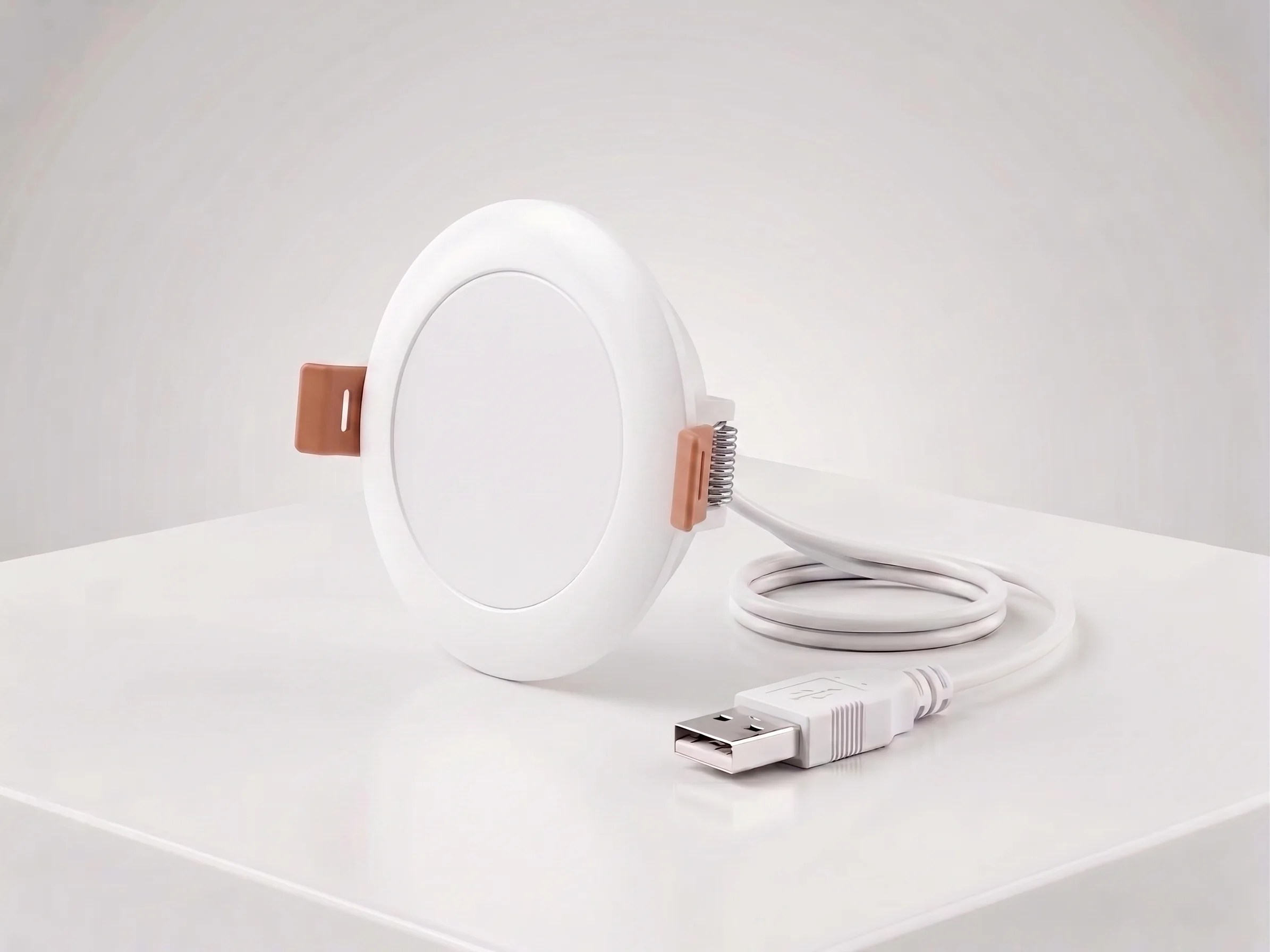
Sensor Kehadiran Manusia mmWave Pasang Plafon — Zigbee
Sensor kehadiran mmWave 24GHz pita lebar untuk plafon: deteksi gerak 10m, mikro-gerak 2,5m, deteksi napas. Sudut 120°, DC5V, Zigbee 3.0, untuk kamar hotel.
contentGraph.reasons.explicit
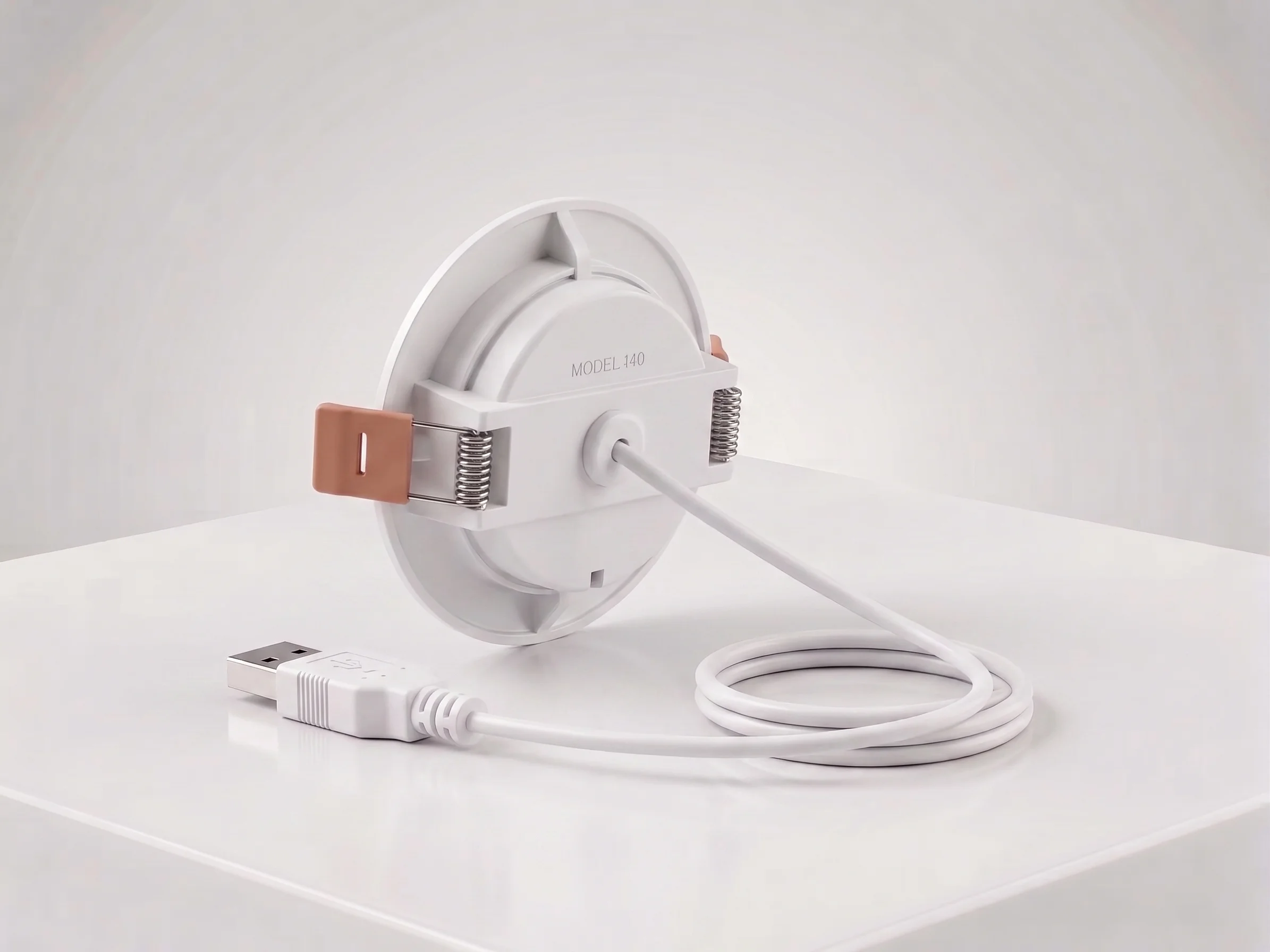
Sensor Kehadiran Manusia mmWave Plafon — Matter over Thread
Sensor kehadiran mmWave plafon 24GHz: gerak 10m, mikro-gerak 2.5m, deteksi napas. 120°, DC5V, Matter over Thread untuk Apple Home, Google Home, dan Alexa.
contentGraph.reasons.explicit
contentGraph.sections.solutions
1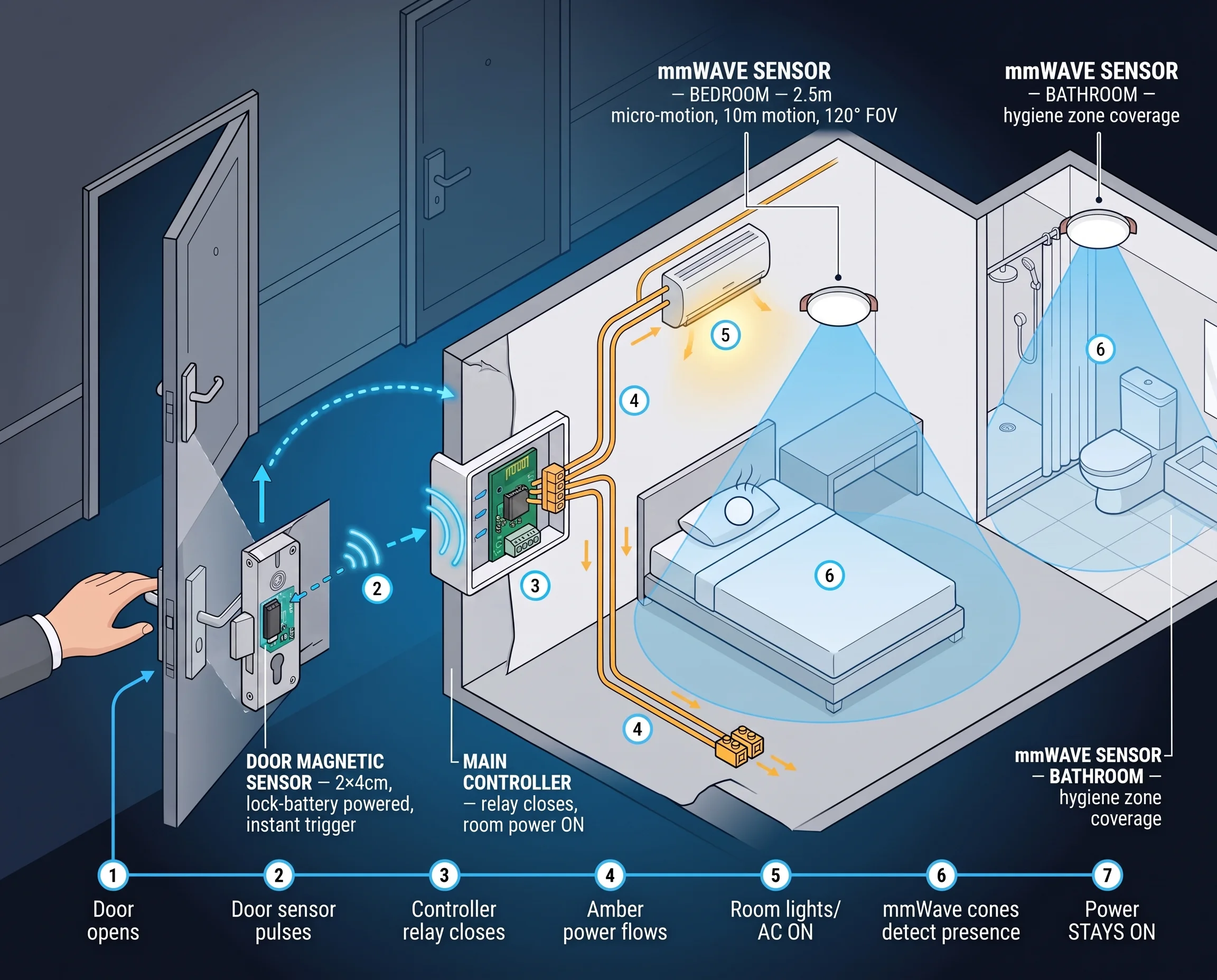
Solusi Sensor Okupansi & Gerak Kamar Hotel
Sensor okupansi radar mmWave untuk kamar hotel: deteksi tamu yang tidur, jadwalkan housekeeping, hemat energi HVAC 20-40% tanpa alarm kosong palsu.
contentGraph.reasons.productContext
contentGraph.sections.blog
3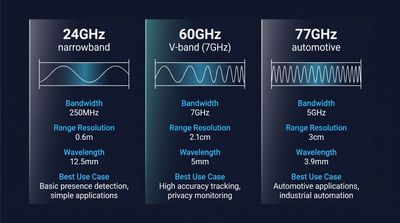
Sensor mmWave 60GHz vs 24GHz vs 77GHz: Memilih Frekuensi yang Tepat untuk Deteksi Kehadiran Komersial
Bandingkan sensor mmWave 60GHz, 24GHz, dan 77GHz untuk deteksi kehadiran komersial. Spesifikasi teknis, jangkauan deteksi, privasi, dan panduan sourcing OEM.
contentGraph.reasons.productContext
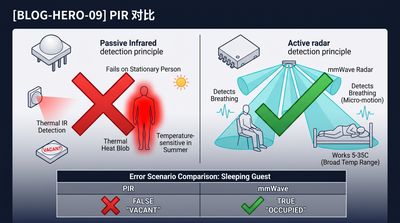
Apa Itu Sensor Kehadiran Elektronik? Teknologi dan Akurasi
Pelajari apa itu sensor kehadiran elektronik, cara mendeteksi manusia diam, dan perbedaannya dengan sensor gerak PIR. Membahas mmWave, akurasi, dan penerapan.
contentGraph.reasons.productContext
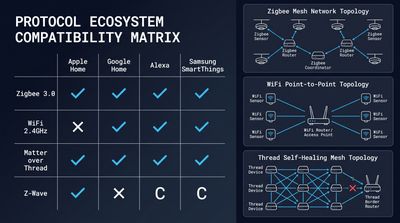
Cara Integrasi Sensor Kehadiran mmWave dengan Home Assistant
Panduan lengkap kontrol lokal perangkat mmWave: konfigurasi MQTT/Matter, skrip otomasi, kalibrasi, dan tips integrasi sensor kehadiran plafon OEM.
contentGraph.reasons.productContext
nextStep.blog.title
nextStep.blog.description
- nextStep.blog.points.one
- nextStep.blog.points.two
- nextStep.blog.points.three