Data Presence dan Sensor: Panduan Data Hunian Gedung 2026
Data presence dan sensor: cara data hunian dikumpulkan, diproses, dan digunakan untuk menggerakkan HVAC, pencahayaan, serta analitik hunian gedung.
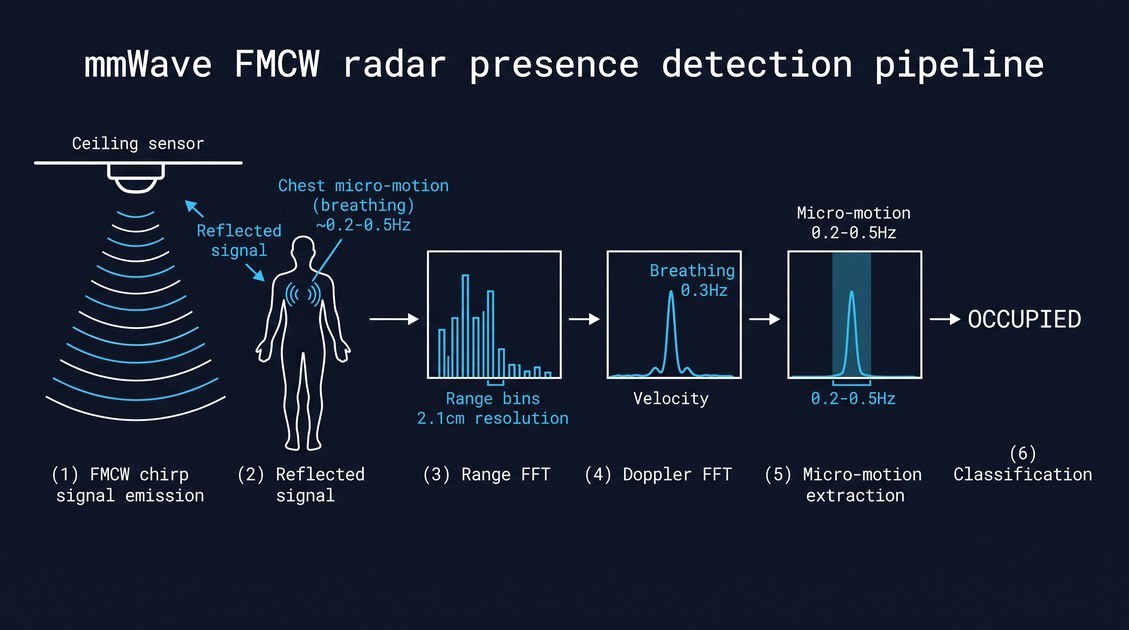
Data presence dan sensor mengacu pada informasi hunian yang dikumpulkan oleh perangkat deteksi presence (umumnya sensor radar mmWave 60 GHz) dan sistem hilir yang mengonsumsi data ini untuk menggerakkan otomasi gedung, manajemen energi, analitik pemanfaatan ruang, serta pemantauan keamanan. Sensor presence mengumpulkan data hunian mentah — umumnya status biner "terisi / tidak terisi", dan dalam beberapa kasus informasi tambahan seperti jumlah penghuni, lokasi penghuni di dalam ruangan, serta aktivitas penghuni (tidur, duduk, berjalan, jatuh) — dan mengirimkan data ini ke sistem hilir (sistem manajemen gedung, sistem manajemen gedung, platform penjadwalan, atau platform analitik cloud) melalui protokol nirkabel (Zigbee, WiFi, Matter) atau protokol kabel (BACnet, Modbus, Ethernet). Data presence kemudian digunakan untuk menggerakkan tindakan otomatis (penyesuaian setpoint HVAC, kontrol pencahayaan, penugasan kebersihan) dan untuk menyediakan analitik (pemanfaatan ruang, konsumsi energi, pola hunian) yang menjadi dasar keputusan jangka panjang tentang gedung dan organisasi.
Panduan ini memberikan gambaran menyeluruh tentang data presence dan sensor, mencakup proses pengumpulan data, pipeline pemrosesan data, aplikasi hilir, serta pertimbangan privasi dan kepatuhan.
Data Presence dan Sensor: Pengumpulan Data
Proses pengumpulan data presence dimulai dari sensor presence, yang mendeteksi status hunian dan mengirimkan data ke sistem hilir.
Data Presence dan Sensor: Output Data Sensor
Sensor presence mmWave 60 GHz modern mengumpulkan dan mengeluarkan data berikut:
- Status hunian biner: "terisi" atau "tidak terisi" — output yang paling dasar dan paling umum
- Jumlah hunian: jumlah penghuni di zona deteksi (untuk sensor dengan kemampuan pelacakan multi-target)
- Lokasi penghuni: lokasi penghuni di dalam ruangan (untuk sensor dengan resolusi sudut halus)
- Klasifikasi aktivitas: aktivitas penghuni (tidur, duduk, berjalan, jatuh) — untuk sensor dengan machine learning on-board
- Stempel waktu peristiwa: waktu setiap perubahan status hunian
Sensor biasanya mengirimkan data ini ke sistem hilir melalui protokol nirkabel (Zigbee, WiFi, Matter) atau protokol kabel (BACnet, Modbus, Ethernet), dengan format data ditentukan oleh protokol dan implementasi sensor.
Data Presence dan Sensor: Frekuensi Transmisi Data
Sensor mengirimkan data presence ke sistem hilir berdasarkan perubahan status hunian:
- Saat perubahan status: sensor mengirimkan data segera ketika status hunian berubah (dari "terisi" menjadi "tidak terisi" atau sebaliknya). Ini adalah mode transmisi paling umum karena meminimalkan lalu lintas jaringan dan konsumsi daya.
- Periodik: sensor mengirimkan data secara berkala (misalnya setiap 5 menit) untuk mengonfirmasi status saat ini, meskipun tidak ada perubahan. Ini digunakan untuk aplikasi yang membutuhkan heartbeat rutin untuk memastikan sensor masih beroperasi.
- Saat peristiwa: sensor mengirimkan data pada peristiwa tertentu (misalnya peristiwa deteksi jatuh, peristiwa keluar tempat tidur), selain transmisi perubahan status.
Data Presence dan Sensor: Pipeline Pemrosesan Data
Pipeline pemrosesan data presence mengubah data sensor mentah menjadi informasi yang dapat ditindaklanjuti bagi sistem-sistem hilir.
Data Presence dan Sensor: Agregasi Data
Langkah pertama dalam pipeline pemrosesan data adalah agregasi data, yang menggabungkan data dari beberapa sensor menjadi tampilan terpadu hunian gedung. Agregasi biasanya dilakukan oleh gateway atau platform cloud, yang menerima data dari setiap sensor dan menggabungkannya menjadi tampilan tingkat gedung atau tingkat portofolio.
Agregasi dapat mencakup:
- Agregasi tingkat ruangan: menggabungkan data dari semua sensor di sebuah ruangan menjadi satu status hunian ruangan
- Agregasi tingkat lantai: menggabungkan data dari semua ruangan di satu lantai menjadi ringkasan hunian lantai
- Agregasi tingkat gedung: menggabungkan data dari semua lantai menjadi ringkasan hunian gedung
- Agregasi tingkat portofolio: menggabungkan data dari semua gedung menjadi ringkasan hunian portofolio
Data Presence dan Sensor: Analitik Data
Langkah kedua dalam pipeline pemrosesan data adalah analitik data, yang mengekstrak wawasan dari data hunian yang telah diagregasi. Analitik dapat mencakup:
- Analisis pemanfaatan ruang: bagaimana ruang gedung digunakan, termasuk ruangan mana yang secara konsisten terisi, mana yang konsisten kosong, dan jam berapa hunian mencapai puncak
- Analisis konsumsi energi: korelasi antara hunian dan konsumsi energi, digunakan untuk mengidentifikasi peluang penghematan energi
- Analisis pola hunian: pola hunian dari waktu ke waktu, digunakan sebagai dasar penjadwalan staf, jadwal kebersihan, dan perencanaan ruang
- Deteksi anomali: deteksi pola hunian yang tidak biasa yang mungkin menandakan masalah (misalnya ruangan yang konsisten terisi di luar jam operasional dapat menandakan masalah keamanan)
Data Presence dan Sensor: Aplikasi Hilir
Data presence digunakan oleh berbagai aplikasi hilir.
Data Presence dan Sensor: Kontrol HVAC
Aplikasi kontrol HVAC menggunakan data presence untuk menyesuaikan setpoint HVAC berdasarkan hunian aktual. HVAC berada dalam mode kenyamanan ketika ruangan terisi, dan dalam mode setback ketika ruangan kosong. Penghematan energi dari kontrol HVAC berbasis hunian biasanya mencapai 20–40% per ruangan.
Data Presence dan Sensor: Kontrol Pencahayaan
Aplikasi kontrol pencahayaan menggunakan data presence untuk menyalakan lampu saat ruangan terisi dan mematikannya saat ruangan kosong. Kontrol pencahayaan juga dapat mencakup daylight harvesting (meredupkan lampu ketika cahaya alami cukup) dan kontrol scene (memilih scene pencahayaan berdasarkan aktivitas).
Data Presence dan Sensor: Koordinasi Kebersihan
Aplikasi koordinasi kebersihan (untuk hotel) menggunakan data presence untuk mengoptimalkan jadwal kebersihan. Ruangan yang tidak terisi dapat segera dibersihkan, ruangan yang terisi dapat ditunda, dan ruangan yang tamunya sudah check out dapat diprioritaskan.
Data Presence dan Sensor: Integrasi Platform Penjadwalan
Integrasi platform penjadwalan (untuk kantor) menggunakan data presence untuk menyediakan ketersediaan ruangan secara real-time. Platform penjadwalan (Microsoft 365, Google Workspace, Robin, Envoy) menampilkan status hunian real-time setiap ruang rapat, menghilangkan masalah "ghost meeting" dan masalah "stolen meeting".
Data Presence dan Sensor: Pemantauan Keamanan
Aplikasi pemantauan keamanan menggunakan data presence untuk mendeteksi penyusup ketika gedung seharusnya kosong. Data presence dibandingkan dengan hunian yang diharapkan (berdasarkan jadwal, sistem kontrol akses, atau sistem alarm), dan hunian yang tidak terduga akan memicu peringatan.
Data Presence dan Sensor: Analitik Pemanfaatan Ruang
Aplikasi analitik pemanfaatan ruang menggunakan data presence untuk memberikan wawasan tentang bagaimana ruang gedung digunakan. Analitik dapat menjadi dasar keputusan tentang perencanaan ruang, konsolidasi, dan jadwal kebersihan.
Data Presence dan Sensor: Privasi dan Kepatuhan
Pengumpulan dan pemrosesan data presence menimbulkan pertimbangan privasi dan kepatuhan, terutama di yurisdiksi dengan hukum perlindungan data yang komprehensif.
Data Presence dan Sensor: Kepatuhan GDPR
Di Uni Eropa, General Data Protection Regulation (GDPR) mengatur pemrosesan data pribadi. Sistem data presence yang hanya mengumpulkan peristiwa hunian anonim (tanpa menautkan peristiwa tersebut ke individu yang dapat diidentifikasi) umumnya berada di luar cakupan data pribadi.
Namun, jika data presence ditautkan ke individu yang dapat diidentifikasi (misalnya nomor kamar hotel yang ditautkan ke pemesanan tamu, atau ruangan kantor yang ditautkan ke badge karyawan), sistem dapat masuk dalam cakupan data pribadi, dan organisasi harus menerapkan langkah teknis dan organisasi yang sesuai untuk melindungi data tersebut.
Data Presence dan Sensor: Kepatuhan CCPA
Di California, California Consumer Privacy Act (CCPA) mengatur pemrosesan informasi pribadi. Prinsip yang sama berlaku: sistem data presence yang hanya mengumpulkan peristiwa hunian anonim umumnya berada di luar cakupan informasi pribadi.
Data Presence dan Sensor: Minimalisasi Data
Prinsip kunci untuk sistem data presence yang sesuai dengan privasi adalah minimalisasi data: sistem hanya boleh mengumpulkan data yang diperlukan untuk fungsi yang dimaksudkan, dan tidak boleh mengumpulkan informasi yang dapat mengidentifikasi pribadi (PII). Sistem harus:
- Memproses data radar mentah di perangkat: sensor harus melakukan seluruh pemrosesan radar di perangkat dan hanya mengirimkan status hunian yang telah diklasifikasikan ke sistem hilir
- Menyimpan data hunian tanpa menautkannya ke individu yang dapat diidentifikasi: peristiwa hunian harus disimpan terpisah dari identitas tamu atau karyawan apa pun, dengan penautan hanya dibuat di lapisan aplikasi untuk kasus penggunaan tertentu
- Membuang data mentah setelah periode singkat: data radar mentah harus dibuang dalam hitungan detik setelah dihasilkan, dan hanya peristiwa yang telah diklasifikasikan yang disimpan
Data Presence dan Sensor: Kepatuhan SB-327
Di California, undang-undang keamanan IoT SB-327 mewajibkan produsen perangkat terhubung (termasuk sensor presence) untuk menerapkan "fitur keamanan yang wajar" yang sesuai dengan perangkatnya. Sistem data presence harus menerapkan autentikasi, manajemen kredensial, dan mekanisme pembaruan yang sesuai untuk mematuhi SB-327.
Data Presence dan Sensor: Arsitektur
Arsitektur sistem data presence biasanya mencakup komponen-komponen berikut:
Data Presence dan Sensor: Lapisan Sensor
Lapisan sensor terdiri dari sensor presence (sensor radar mmWave 60 GHz) yang dipasang di setiap ruangan. Sensor mendeteksi status hunian dan mengirimkan data ke gateway.
Data Presence dan Sensor: Lapisan Gateway
Lapisan gateway terdiri dari gateway (koordinator Zigbee, access point WiFi, atau gateway khusus) yang menerima data dari sensor dan meneruskannya ke platform cloud atau sistem manajemen gedung. Gateway juga dapat melakukan sebagian agregasi dan pemrosesan data.
Data Presence dan Sensor: Lapisan Platform Cloud
Lapisan platform cloud terdiri dari platform berbasis cloud yang menerima data dari gateway, mengagregasinya, dan menyediakan analitik serta integrasi dengan aplikasi hilir. Platform cloud dapat berupa platform spesifik vendor (misalnya platform cloud PresenceSensor) atau platform terbuka (misalnya Microsoft Azure IoT, AWS IoT Core).
Data Presence dan Sensor: Lapisan Aplikasi
Lapisan aplikasi terdiri dari aplikasi hilir yang mengonsumsi data presence: sistem kontrol HVAC, sistem kontrol pencahayaan, sistem manajemen kebersihan, platform penjadwalan, sistem pemantauan keamanan, dan dasbor analitik pemanfaatan ruang.
Data Presence dan Sensor: Rekomendasi Akhir
Data presence dan sensor adalah fondasi otomasi gedung modern, memungkinkan kontrol HVAC dan pencahayaan berbasis hunian, koordinasi kebersihan, integrasi platform penjadwalan, pemantauan keamanan, serta analitik pemanfaatan ruang. Radar mmWave 60 GHz adalah teknologi sensor yang dominan, memberikan deteksi penghuni stasioner yang andal dan profil privasi yang sangat baik.
Bagi organisasi yang merencanakan penyebaran sistem data presence, pendekatan yang tepat adalah memulai dengan definisi yang jelas tentang persyaratan aplikasi (aplikasi hilir mana yang akan mengonsumsi data, data apa yang dibutuhkan, persyaratan privasi dan kepatuhan apa yang berlaku), kemudian merancang arsitektur sistem (lapisan sensor, lapisan gateway, lapisan platform cloud, lapisan aplikasi), lalu memilih sensor dan platform yang memenuhi persyaratan tersebut. Dengan sistem yang tepat, yang dirancang dan diintegrasikan dengan benar, sistem data presence dapat memberikan nilai signifikan melalui penghematan energi, efisiensi operasional, dan peningkatan pengalaman penghuni.
Sebagian konten artikel ini dihasilkan oleh AI dan dioptimalkan untuk akurasi profesional dan keterbacaan. Presence data and sensors refer to the occupancy information collected by presence detection devices (typically 60 GHz mmWave radar sensors) and the downstream systems that consume this data to drive building automation, energy management, space utilization analytics, and security monitoring. A presence sensor collects raw occupancy data — typically a binary "occupied / not occupied" state, and in some cases additional information such as the number of occupants, the location of the occupants within the room, and the activity of the occupants (sleeping, sitting, walking, falling) — and transmits this data to a downstream system (building management system, building management system, scheduling platform, or cloud analytics platform) via a wireless protocol (Zigbee, WiFi, Matter) or a wired protocol (BACnet, Modbus, Ethernet). The presence data is then used to drive automated actions (HVAC setpoint adjustment, lighting control, housekeeping dispatch) and to provide analytics (space utilization, energy consumption, occupancy patterns) that inform long-term decisions about the building and the organization.
This guide provides a comprehensive overview of presence data and sensors, covering the data collection process, the data processing pipeline, the downstream applications, and the privacy and compliance considerations.
Presence Data and Sensors: Data Collection
The presence data collection process starts with the presence sensor, which detects the occupancy state and transmits the data to a downstream system.
Presence Data and Sensors: The Sensor's Data Output
A modern 60 GHz mmWave presence sensor collects and outputs the following data:
- Binary occupancy state: "occupied" or "not occupied" — the most basic and most common output
- Occupancy count: the number of occupants in the detection zone (for sensors with multi-target tracking capability)
- Occupant location: the location of the occupants within the room (for sensors with fine angular resolution)
- Activity classification: the activity of the occupants (sleeping, sitting, walking, falling) — for sensors with on-board machine learning
- Event timestamps: the time of each occupancy state change
The sensor typically transmits this data to a downstream system via a wireless protocol (Zigbee, WiFi, Matter) or a wired protocol (BACnet, Modbus, Ethernet), with the data format determined by the protocol and the sensor's implementation.
Presence Data and Sensors: Data Transmission Frequency
The sensor transmits the presence data to the downstream system based on the occupancy state change:
- On state change: the sensor transmits the data immediately when the occupancy state changes (from "occupied" to "not occupied" or vice versa). This is the most common transmission mode, as it minimizes the network traffic and the power consumption.
- Periodic: the sensor transmits the data periodically (e.g., every 5 minutes) to confirm the current state, even if there has been no change. This is used for applications that require a regular heartbeat to confirm that the sensor is still operational.
- On event: the sensor transmits the data on specific events (e.g., a fall detection event, a bed-exit event), in addition to the state change transmissions.
Presence Data and Sensors: Data Processing Pipeline
The presence data processing pipeline transforms the raw sensor data into actionable information for the downstream systems.
Presence Data and Sensors: Data Aggregation
The first step in the data processing pipeline is data aggregation, which combines the data from multiple sensors into a unified view of the building's occupancy. The aggregation is typically done by a gateway or a cloud platform, which receives the data from each sensor and aggregates it into a building-wide or portfolio-wide view.
The aggregation may include:
- Room-level aggregation: combining the data from all sensors in a room into a single room occupancy state
- Floor-level aggregation: combining the data from all rooms on a floor into a floor occupancy summary
- Building-level aggregation: combining the data from all floors into a building occupancy summary
- Portfolio-level aggregation: combining the data from all buildings into a portfolio occupancy summary
Presence Data and Sensors: Data Analytics
The second step in the data processing pipeline is data analytics, which extracts insights from the aggregated occupancy data. The analytics may include:
- Space utilization analysis: how the building's space is being used, including which rooms are consistently occupied, which are consistently empty, and which times of day have peak occupancy
- Energy consumption analysis: the correlation between occupancy and energy consumption, used to identify opportunities for energy savings
- Occupancy pattern analysis: the patterns of occupancy over time, used to inform staffing, cleaning schedules, and space planning
- Anomaly detection: the detection of unusual occupancy patterns that may indicate a problem (e.g., a room that is consistently occupied outside of business hours may indicate a security issue)
Presence Data and Sensors: Downstream Applications
The presence data is used by a variety of downstream applications.
Presence Data and Sensors: HVAC Control
The HVAC control application uses the presence data to adjust the HVAC setpoints based on actual occupancy. The HVAC is in comfort mode when the room is occupied, and in setback mode when the room is empty. The energy savings from occupancy-based HVAC control are typically 20–40% per room.
Presence Data and Sensors: Lighting Control
The lighting control application uses the presence data to turn the lights on when the room is occupied and off when the room is empty. The lighting control may also include daylight harvesting (dimming the lights when there is sufficient natural light) and scene control (selecting a lighting scene based on the activity).
Presence Data and Sensors: Housekeeping Coordination
The housekeeping coordination application (for hotels) uses the presence data to optimize the housekeeping schedule. Rooms that are unoccupied can be cleaned immediately, rooms that are occupied can be deferred, and rooms where the guest has checked out can be prioritized.
Presence Data and Sensors: Scheduling Platform Integration
The scheduling platform integration (for offices) uses the presence data to provide real-time room availability. The scheduling platform (Microsoft 365, Google Workspace, Robin, Envoy) shows the real-time occupancy state of each conference room, eliminating the "ghost meeting" problem and the "stolen meeting" problem.
Presence Data and Sensors: Security Monitoring
The security monitoring application uses the presence data to detect intruders when the building is supposed to be empty. The presence data is compared to the expected occupancy (based on the schedule, the access control system, or the alarm system), and any unexpected occupancy triggers an alert.
Presence Data and Sensors: Space Utilization Analytics
The space utilization analytics application uses the presence data to provide insights into how the building's space is being used. The analytics can inform decisions about space planning, consolidation, and cleaning schedules.
Presence Data and Sensors: Privacy and Compliance
The collection and processing of presence data raises privacy and compliance considerations, especially in jurisdictions with comprehensive data protection laws.
Presence Data and Sensors: GDPR Compliance
In the European Union, the General Data Protection Regulation (GDPR) regulates the processing of personal data. A presence data system that collects only anonymous occupancy events (without linking the events to identifiable individuals) is generally outside the scope of personal data.
However, if the presence data is linked to identifiable individuals (e.g., a hotel room number linked to a guest booking, or an office room linked to an employee badge), the system may be in scope of personal data, and the organization must implement appropriate technical and organizational measures to protect the data.
Presence Data and Sensors: CCPA Compliance
In California, the California Consumer Privacy Act (CCPA) regulates the processing of personal information. The same principle applies: a presence data system that collects only anonymous occupancy events is generally outside the scope of personal information.
Presence Data and Sensors: Data Minimization
The key principle for privacy-compliant presence data systems is data minimization: the system should collect only the data necessary for the intended functions, and should not collect any personally identifiable information (PII). The system should:
- Process the raw radar data on-device: the sensor should perform all radar processing on-device and should only transmit the classified occupancy state to the downstream system
- Store the occupancy data without linking to identifiable individuals: the occupancy events should be stored separately from any guest or employee identity, with the linkage only established at the application layer for specific use cases
- Discard the raw data after a short period: the raw radar data should be discarded within seconds of generation, and only the classified events should be retained
Presence Data and Sensors: SB-327 Compliance
In California, the SB-327 IoT security law requires manufacturers of connected devices (including presence sensors) to implement "reasonable security features" appropriate to the device. The presence data system should implement appropriate authentication, credential management, and update mechanisms to comply with SB-327.
Presence Data and Sensors: Architecture
The architecture of a presence data system typically includes the following components:
Presence Data and Sensors: The Sensor Layer
The sensor layer consists of the presence sensors (60 GHz mmWave radar sensors) installed in each room. The sensors detect the occupancy state and transmit the data to the gateway.
Presence Data and Sensors: The Gateway Layer
The gateway layer consists of the gateways (Zigbee coordinators, WiFi access points, or dedicated gateways) that receive the data from the sensors and forward it to the cloud platform or the building management system. The gateway may also perform some data aggregation and processing.
Presence Data and Sensors: The Cloud Platform Layer
The cloud platform layer consists of the cloud-based platform that receives the data from the gateways, aggregates it, and provides the analytics and the integration with the downstream applications. The cloud platform may be a vendor-specific platform (e.g., the PresenceSensor cloud platform) or an open platform (e.g., Microsoft Azure IoT, AWS IoT Core).
Presence Data and Sensors: The Application Layer
The application layer consists of the downstream applications that consume the presence data: the HVAC control system, the lighting control system, the housekeeping management system, the scheduling platform, the security monitoring system, and the space utilization analytics dashboard.
Presence Data and Sensors: Final Recommendation
Presence data and sensors are the foundation of modern building automation, enabling occupancy-based HVAC and lighting control, housekeeping coordination, scheduling platform integration, security monitoring, and space utilization analytics. The 60 GHz mmWave radar is the dominant sensor technology, providing reliable stationary-occupant detection and an excellent privacy profile.
For an organization planning a presence data system deployment, the right approach is to start with a clear definition of the application requirements (which downstream applications will consume the data, what data is needed, what privacy and compliance requirements apply), then design the system architecture (sensor layer, gateway layer, cloud platform layer, application layer), then select the sensors and the platform that meet the requirements. With the right system, correctly designed and integrated, the presence data system can deliver significant value through energy savings, operational efficiency, and improved occupant experience.
Part of this article content is generated by AI and optimized for professional accuracy and readability.
blog.inArticleCta.title
blog.inArticleCta.description
contentGraph.title
contentGraph.description
contentGraph.sections.products
2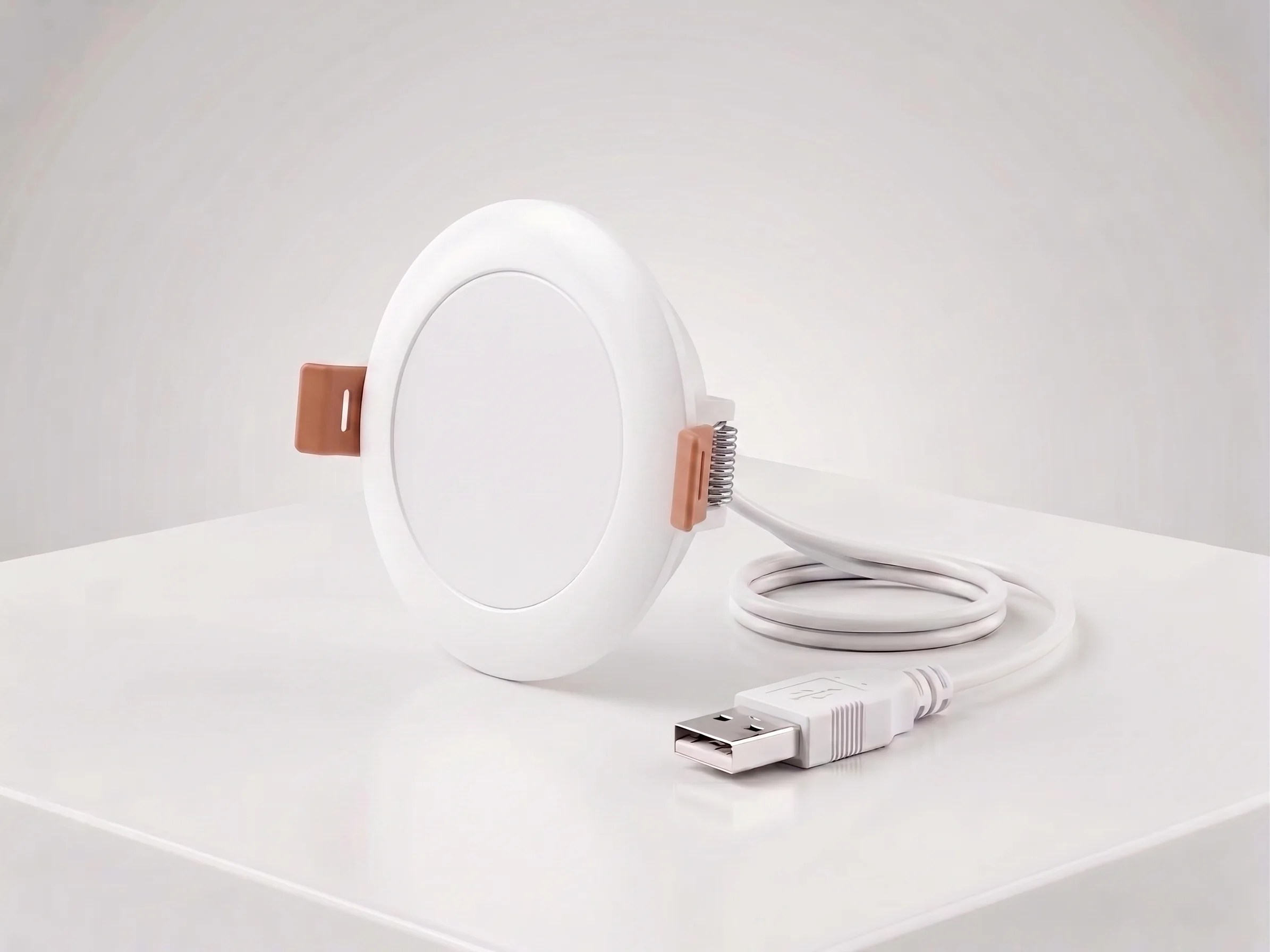
Sensor Kehadiran Manusia mmWave Pasang Plafon — Zigbee
Sensor kehadiran mmWave 24GHz pita lebar untuk plafon: deteksi gerak 10m, mikro-gerak 2,5m, deteksi napas. Sudut 120°, DC5V, Zigbee 3.0, untuk kamar hotel.
contentGraph.reasons.explicit
Sensor Kehadiran Manusia mmWave Plafon — WiFi
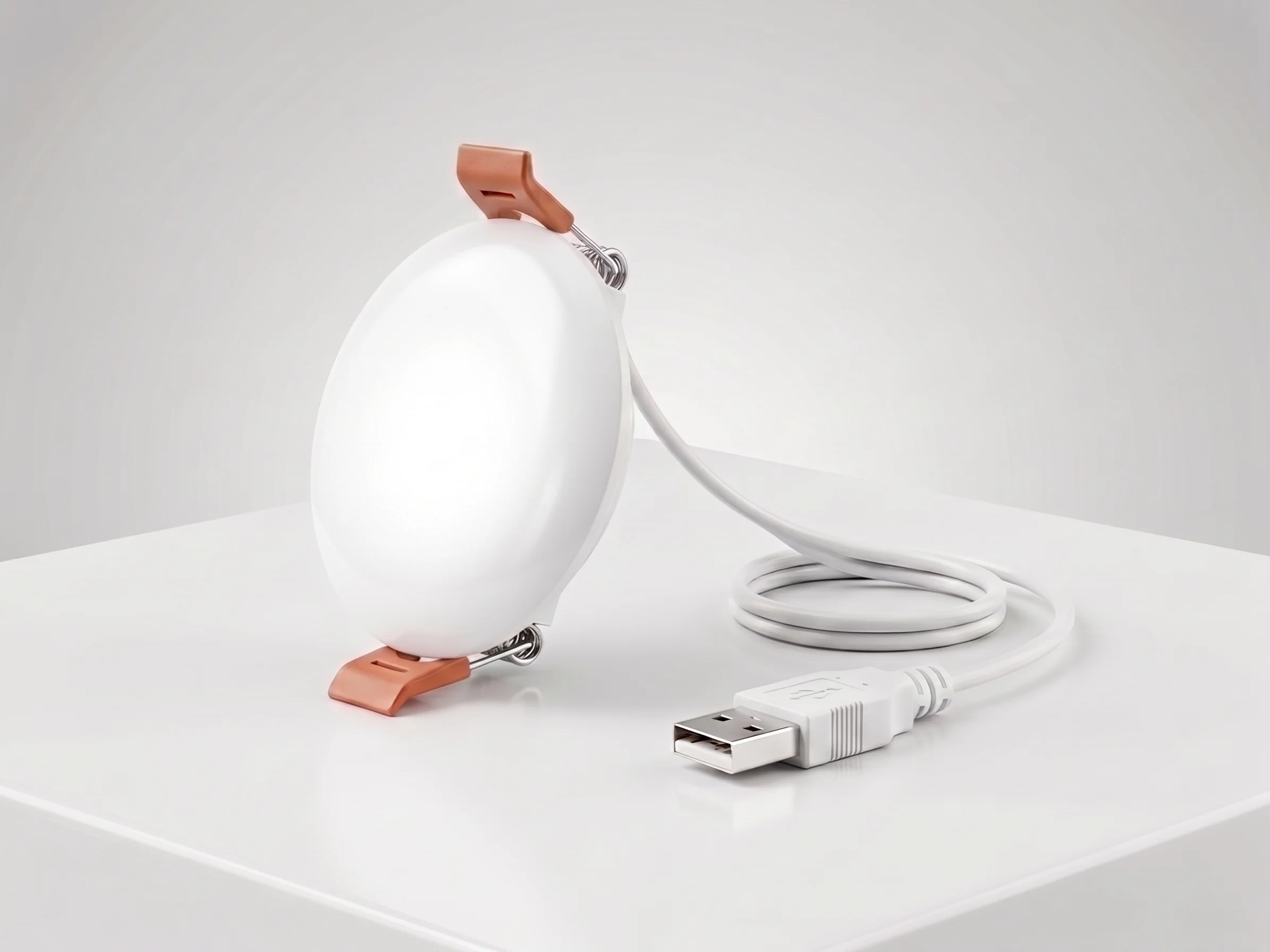
Sensor kehadiran mmWave 24GHz plafon, deteksi gerak 10m, mikro-gerak 2.5m, pernapasan. Sudut 120°, DC5V, WiFi 2.4GHz. Tanpa gateway, ideal retrofit hotel.
contentGraph.reasons.explicit
contentGraph.sections.solutions
1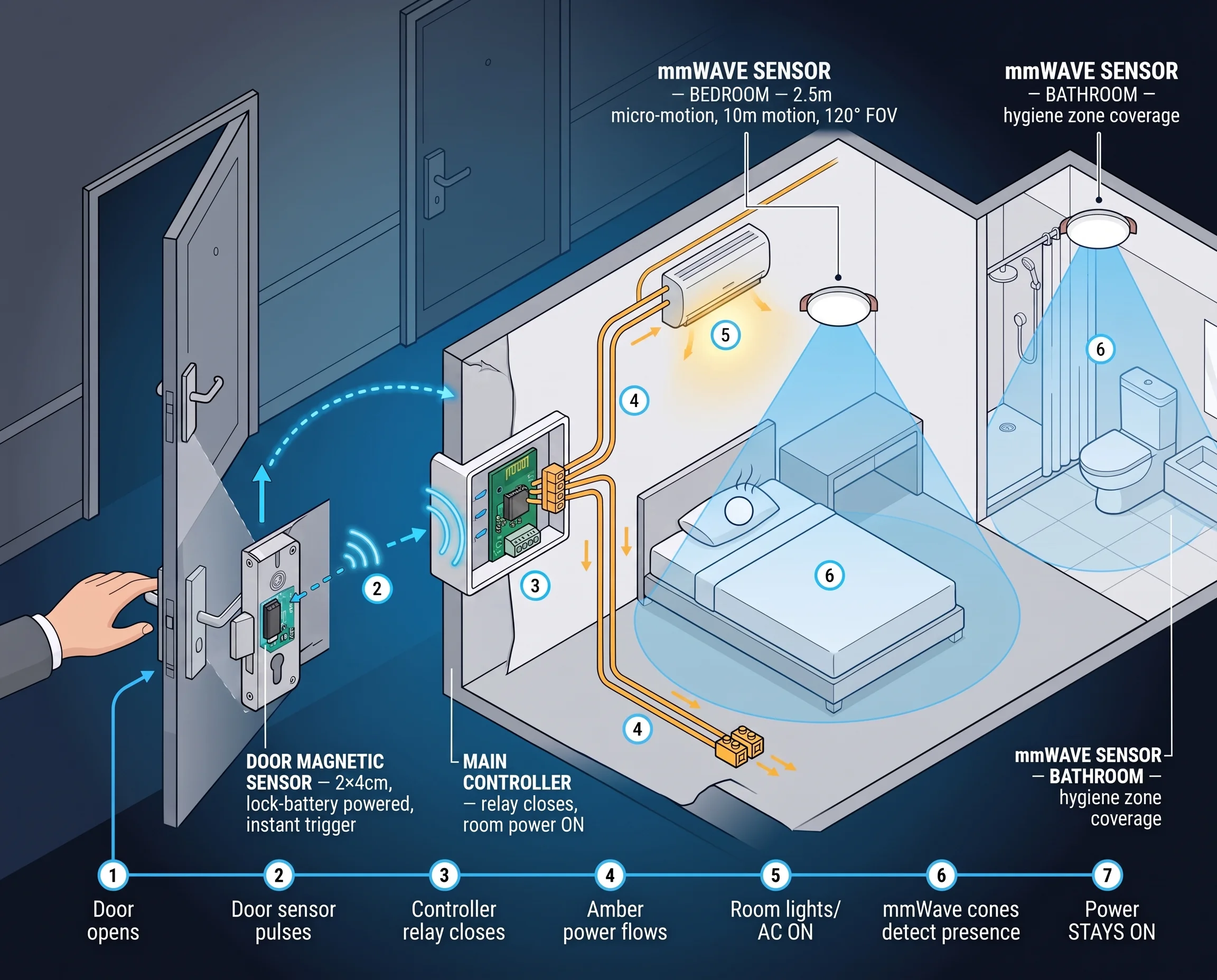
Solusi Sensor Okupansi & Gerak Kamar Hotel
Sensor okupansi radar mmWave untuk kamar hotel: deteksi tamu yang tidur, jadwalkan housekeeping, hemat energi HVAC 20-40% tanpa alarm kosong palsu.
contentGraph.reasons.productContext
contentGraph.sections.blog
3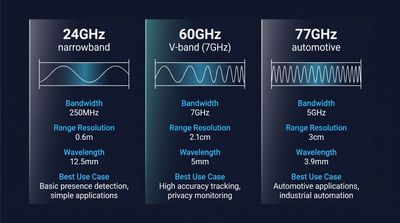
Sensor mmWave 60GHz vs 24GHz vs 77GHz: Memilih Frekuensi yang Tepat untuk Deteksi Kehadiran Komersial
Bandingkan sensor mmWave 60GHz, 24GHz, dan 77GHz untuk deteksi kehadiran komersial. Spesifikasi teknis, jangkauan deteksi, privasi, dan panduan sourcing OEM.
contentGraph.reasons.productContext
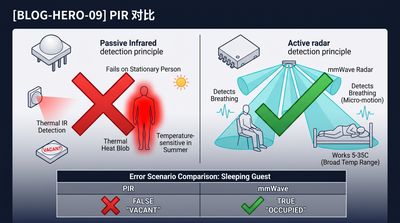
Apa Itu Sensor Kehadiran Elektronik? Teknologi dan Akurasi
Pelajari apa itu sensor kehadiran elektronik, cara mendeteksi manusia diam, dan perbedaannya dengan sensor gerak PIR. Membahas mmWave, akurasi, dan penerapan.
contentGraph.reasons.productContext
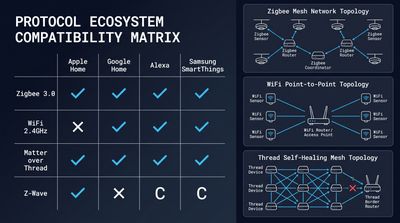
Cara Integrasi Sensor Kehadiran mmWave dengan Home Assistant
Panduan lengkap kontrol lokal perangkat mmWave: konfigurasi MQTT/Matter, skrip otomasi, kalibrasi, dan tips integrasi sensor kehadiran plafon OEM.
contentGraph.reasons.productContext
nextStep.blog.title
nextStep.blog.description
- nextStep.blog.points.one
- nextStep.blog.points.two
- nextStep.blog.points.three