Sensor Kehadiran Label: Panduan Pelabelan & Kepatuhan 2026
Panduan lengkap produk sensor kehadiran label: persyaratan pelabelan FCC/CE/RoHS, tanda kepatuhan, dan hal yang perlu diperhatikan saat membeli.
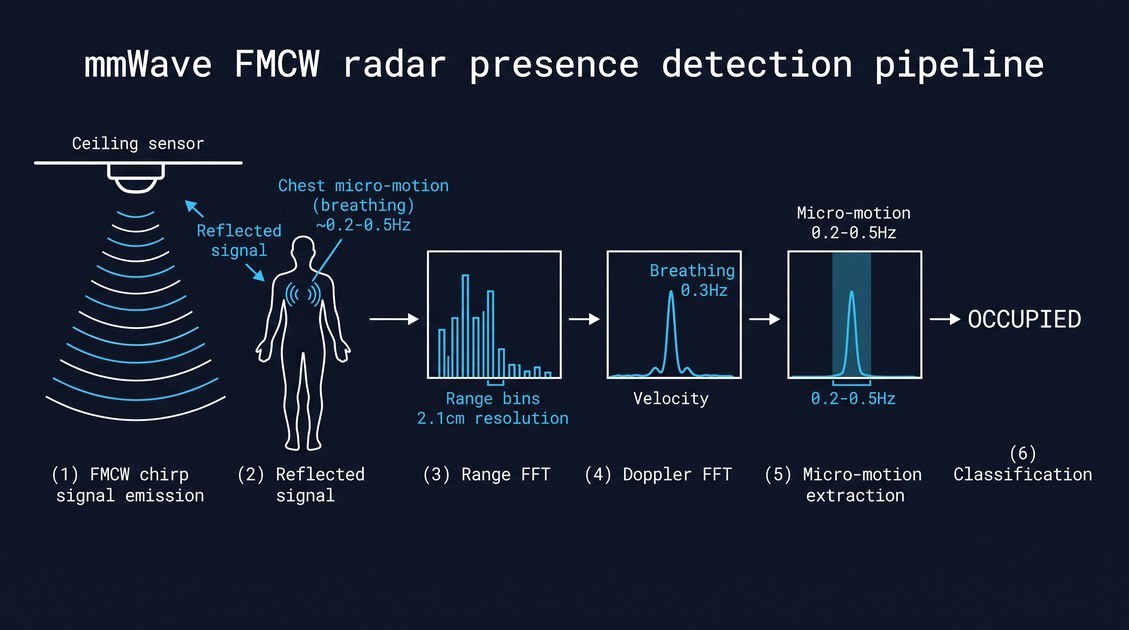
Sensor kehadiran label mengacu pada perangkat deteksi kehadiran dengan persyaratan pelabelan dan kepatuhan tertentu, termasuk label FCC ID (wajib untuk semua perangkat frekuensi radio yang dijual di AS), tanda CE (wajib untuk semua perangkat frekuensi radio yang dijual di UE), tanda RoHS (wajib untuk produk elektronik yang dijual di UE dan California), serta berbagai tanda kepatuhan regional (IC untuk Kanada, MIC untuk Jepang, SRRC untuk Tiongkok, KC untuk Korea Selatan, NCC untuk Taiwan, RCM untuk Australia). Pasar sensor kehadiran label sama dengan pasar sensor kehadiran secara umum — kata kunci "label" mencerminkan ketertarikan pembeli pada label regulasi dan tanda kepatuhan pada produk, yang penting untuk penjualan yang sah di pasar sasaran. Persyaratan pelabelan dan kepatuhan untuk sensor kehadiran bergantung pada pasar sasaran (AS, UE, Tiongkok, dll.), konektivitas (WiFi, Zigbee, Matter, dll.), dan fitur spesifik produk (bertenaga baterai, bertenaga listrik, dengan deteksi jatuh, dll.).
Panduan ini memberikan gambaran komprehensif tentang persyaratan pelabelan dan kepatuhan untuk sensor kehadiran, mencakup persyaratan regional utama, tanda kepatuhan spesifik, dan hal yang perlu diperhatikan saat membeli sensor kehadiran berlabel dan patuh regulasi.
Sensor Kehadiran Label: Persyaratan Kepatuhan Regional Utama
Sensor kehadiran label harus membawa tanda kepatuhan yang sesuai untuk pasar sasaran.
Sensor Kehadiran Label: FCC (Amerika Serikat)
Federal Communications Commission (FCC) mewajibkan semua perangkat frekuensi radio yang dijual di Amerika Serikat untuk membawa FCC ID, yang merupakan pengenal unik yang ditetapkan oleh FCC untuk model perangkat tertentu. FCC ID biasanya dicetak pada label yang ditempelkan pada perangkat atau kemasannya, dan laporan pengujian serta sertifikasi terkait didaftarkan ke FCC.
Untuk sensor kehadiran dengan WiFi, Zigbee, atau konektivitas nirkabel 2.4 GHz lainnya, aturan FCC yang berlaku adalah FCC Part 15.249 (untuk 24 GHz) atau FCC Part 15.255 (untuk 60 GHz). Laporan pengujian harus memverifikasi bahwa perangkat memenuhi batas emisi radiasi dan batas emisi konduksi yang ditentukan dalam aturan tersebut.
Sensor Kehadiran Label: CE (Uni Eropa)
Uni Eropa mewajibkan semua perangkat frekuensi radio yang dijual di UE untuk membawa tanda CE, yang merupakan pernyataan dari pabrikan bahwa perangkat tersebut mematuhi direktif UE yang berlaku. Direktif yang berlaku untuk sensor kehadiran adalah:
- Radio Equipment Directive (RED) 2014/53/EU: mencakup aspek frekuensi radio perangkat
- EMC Directive 2014/30/EU: mencakup aspek kompatibilitas elektromagnetik
- Low Voltage Directive (LVD) 2014/35/EU: mencakup aspek keselamatan kelistrikan (untuk perangkat bertenaga listrik)
- RoHS Directive 2011/65/EU: mencakup pembatasan zat berbahaya
Tanda CE harus disertai Declaration of Conformity (DoC) dan Technical File, yang harus dipelihara oleh pabrikan dan disediakan kepada otoritas regulatori atas permintaan.
Untuk sensor kehadiran 60 GHz, standar harmonisasi yang relevan adalah EN 305 550, yang menentukan persyaratan teknis untuk perangkat 60 GHz tanpa lisensi.
Sensor Kehadiran Label: IC (Kanada)
Innovation, Science and Economic Development Canada (ISED) mewajibkan semua perangkat frekuensi radio yang dijual di Kanada untuk membawa IC ID, yang merupakan pengenal unik yang ditetapkan oleh ISED untuk model perangkat tertentu. IC ID dicetak pada label yang ditempelkan pada perangkat, dan laporan pengujian serta sertifikasi terkait didaftarkan ke ISED.
Untuk sensor kehadiran, aturan ISED yang berlaku adalah RSS-247 (untuk 24 GHz) atau RSS-210 (untuk 60 GHz).
Sensor Kehadiran Label: MIC (Jepang)
Kementerian Dalam Negeri dan Komunikasi (MIC) mewajibkan semua perangkat frekuensi radio yang dijual di Jepang untuk membawa MIC ID (juga dikenal sebagai "tanda giteki" atau "技適マーク"). MIC ID dicetak pada label yang ditempelkan pada perangkat, dan laporan pengujian serta sertifikasi terkait didaftarkan ke MIC.
Untuk sensor kehadiran, aturan MIC yang berlaku bergantung pada pita frekuensi dan aplikasi spesifiknya.
Sensor Kehadiran Label: SRRC (Tiongkok)
State Radio Regulation Committee (SRRC) mewajibkan semua perangkat frekuensi radio yang dijual di Tiongkok untuk membawa SRRC ID (juga dikenal sebagai "CMIIT ID"). SRRC ID dicetak pada label yang ditempelkan pada perangkat, dan laporan pengujian serta sertifikasi terkait didaftarkan ke SRRC.
Untuk sensor kehadiran, aturan SRRC yang berlaku bergantung pada pita frekuensi dan aplikasi spesifiknya.
Sensor Kehadiran Label: KC (Korea Selatan)
Korea Communications Commission (KCC) mewajibkan semua perangkat frekuensi radio yang dijual di Korea Selatan untuk membawa tanda KC. Tanda KC dicetak pada label yang ditempelkan pada perangkat, dan laporan pengujian serta sertifikasi terkait didaftarkan ke KCC.
Sensor Kehadiran Label: NCC (Taiwan)
National Communications Commission (NCC) mewajibkan semua perangkat frekuensi radio yang dijual di Taiwan untuk membawa tanda NCC. Tanda NCC dicetak pada label yang ditempelkan pada perangkat.
Sensor Kehadiran Label: RCM (Australia/Selandia Baru)
Australian Communications and Media Authority (ACMA) mewajibkan semua perangkat frekuensi radio yang dijual di Australia atau Selandia Baru untuk membawa tanda RCM. Tanda RCM dicetak pada label yang ditempelkan pada perangkat, dan Declaration of Conformity terkait didaftarkan ke ACMA.
Sensor Kehadiran Label: Tanda Kepatuhan Lainnya
Selain tanda kepatuhan regional, sensor kehadiran label mungkin juga perlu membawa tanda-tanda berikut, bergantung pada aplikasinya.
Sensor Kehadiran Label: RoHS
Directive Restriction of Hazardous Substances (RoHS) membatasi penggunaan zat berbahaya tertentu dalam peralatan listrik dan elektronik. Tanda kepatuhan RoHS wajib untuk produk yang dijual di UE, Tiongkok, California, dan beberapa yurisdiksi lainnya.
Sensor Kehadiran Label: WEEE
Directive Waste Electrical and Electronic Equipment (WEEE) mewajibkan pabrikan menyediakan daur ulang dan pemulihan limbah peralatan elektronik. Tanda WEEE (tong beroda yang dicoret) wajib untuk produk yang dijual di UE.
Sensor Kehadiran Label: REACH
Regulasi Registration, Evaluation, Authorisation and Restriction of Chemicals (REACH) membatasi penggunaan bahan kimia tertentu dalam produk. Kepatuhan REACH wajib untuk produk yang dijual di UE.
Sensor Kehadiran Label: Prop 65
California Safe Drinking Water and Toxic Enforcement Act (Proposition 65) mewajibkan peringatan untuk produk yang mengandung bahan kimia dalam daftar Prop 65. Peringatan Prop 65 wajib untuk produk yang dijual di California.
Sensor Kehadiran Label: SB-327
Undang-undang keamanan IoT California (SB-327) mewajibkan pabrikan perangkat terhubung (termasuk sensor kehadiran) untuk menerapkan "fitur keamanan yang wajar" yang sesuai dengan perangkat. Pabrikan harus menyediakan dokumentasi kepatuhan SB-327.
Sensor Kehadiran Label: HIPAA
Health Insurance Portability and Accountability Act (HIPAA) tidak mewajibkan tanda tertentu, tetapi pabrikan sensor kehadiran yang digunakan di fasilitas kesehatan harus menerapkan perlindungan teknis yang memadai untuk melindungi data pasien. Pabrikan harus menyediakan dokumentasi kepatuhan HIPAA.
Sensor Kehadiran Label: Hal yang Perlu Diperhatikan Saat Membeli
Ketika membeli sensor kehadiran berlabel dan patuh regulasi, pembeli harus memperhatikan hal-hal berikut.
Sensor Kehadiran Label: Tanda Kepatuhan Regional
Sensor kehadiran harus membawa tanda kepatuhan yang sesuai untuk pasar sasaran: FCC (AS), CE (UE), IC (Kanada), MIC (Jepang), SRRC (Tiongkok), KC (Korea Selatan), NCC (Taiwan), RCM (Australia/Selandia Baru), dan tanda regional lainnya.
Sensor Kehadiran Label: Sertifikasi Produk
Sensor kehadiran harus membawa sertifikasi produk yang sesuai: RoHS, WEEE, REACH, Prop 65, SB-327, dan sertifikasi spesifik produk lainnya.
Sensor Kehadiran Label: Dokumentasi Pabrikan
Pabrikan harus menyediakan dokumentasi komprehensif, termasuk Declaration of Conformity (DoC), Technical File, laporan pengujian, dan sertifikat kepatuhan.
Sensor Kehadiran Label: Kualitas Label
Label pada sensor kehadiran harus tahan lama, terbaca dengan jelas, dan ditempelkan dengan benar pada perangkat atau kemasannya. Label harus mencakup tanda kepatuhan, nomor model, nomor seri, dan peringatan yang diwajibkan.
Sensor Kehadiran Label: Pentingnya Kepatuhan
Pelabelan dan kepatuhan sensor kehadiran bukan sekadar formalitas — keduanya penting untuk penjualan produk yang sah di pasar sasaran. Menjual produk yang tidak patuh regulasi di pasar yang teregulasi dapat mengakibatkan:
- Tindakan regulatori: otoritas regulatori dapat memerintahkan produk ditarik dari pasar
- Denda dan sanksi: pabrikan dapat didenda karena menjual produk yang tidak patuh regulasi
- Penarikan produk: pabrikan mungkin diwajibkan menarik produk yang tidak patuh regulasi
- Kerusakan reputasi: reputasi pabrikan dapat rusak karena menjual produk yang tidak patuh regulasi
- Keluhan pelanggan: pelanggan dapat mengeluhkan kurangnya kepatuhan, yang mengarah pada pengembalian barang dan hilangnya penjualan
Pabrikan sensor kehadiran yang bereputasi baik akan berinvestasi dalam pengujian kepatuhan dan dokumentasi yang diperlukan, serta menyediakan tanda kepatuhan hasilnya pada label produk.
Sensor Kehadiran Label: Produk yang Direkomendasikan
Produk yang direkomendasikan untuk penerapan sensor kehadiran label adalah ceiling-presence-sensor-zigbee, ceiling-presence-sensor-wifi, dan ceiling-presence-sensor-matter, yang membawa tanda kepatuhan yang sesuai untuk pasar sasaran (FCC, CE, RoHS, dan lainnya), serta didukung dokumentasi pabrikan yang komprehensif.
Sensor Kehadiran Label: Rekomendasi Akhir
Pasar sensor kehadiran label sama dengan pasar sensor kehadiran secara umum, dengan kata kunci "label" yang mencerminkan ketertarikan pembeli pada label regulasi dan tanda kepatuhan pada produk. Persyaratan pelabelan dan kepatuhan untuk sensor kehadiran bergantung pada pasar sasaran, konektivitas, dan fitur spesifik produk.
Bagi pembeli yang memilih sensor kehadiran berlabel dan patuh regulasi, pendekatan yang tepat adalah memverifikasi bahwa produk membawa tanda kepatuhan yang sesuai untuk pasar sasaran, bahwa pabrikan menyediakan dokumentasi komprehensif (DoC, Technical File, laporan pengujian), dan bahwa label tersebut tahan lama serta terbaca dengan jelas. Pabrikan yang bereputasi baik akan berinvestasi dalam pengujian kepatuhan dan dokumentasi yang diperlukan, serta menyediakan tanda kepatuhan hasilnya pada label produk.
Produk yang direkomendasikan untuk sebagian besar aplikasi adalah ceiling-presence-sensor-zigbee, ceiling-presence-sensor-wifi, dan ceiling-presence-sensor-matter dari vendor dengan portofolio produk yang kuat dan rekam jejak penerapan yang terbukti, serta dengan tanda kepatuhan yang sesuai untuk pasar sasaran.
Sebagian konten artikel ini dihasilkan oleh AI dan dioptimalkan untuk akurasi profesional dan keterbacaan. A label presence sensor refers to a presence detection device with specific labeling and compliance requirements, including the FCC ID label (required for all radio frequency devices sold in the US), the CE marking (required for all radio frequency devices sold in the EU), the RoHS marking (required for electronic products sold in the EU and California), and various regional compliance marks (IC for Canada, MIC for Japan, SRRC for China, KC for South Korea, NCC for Taiwan, RCM for Australia). The label presence sensor market is the same as the broader presence sensor market — the keyword "label" reflects the buyer's interest in the regulatory labels and compliance marks on the product, which are essential for legal sale in the target market. The labeling and compliance requirements for a presence sensor depend on the target market (US, EU, China, etc.), the connectivity (WiFi, Zigbee, Matter, etc.), and the specific features of the product (battery-powered, mains-powered, with fall detection, etc.).
This guide provides a comprehensive overview of the labeling and compliance requirements for presence sensors, covering the major regional requirements, the specific compliance marks, and what to look for when buying a labeled and compliant presence sensor.
Label Presence Sensor: Major Regional Compliance Requirements
The label presence sensor must carry the appropriate compliance marks for the target market.
Label Presence Sensor: FCC (United States)
The Federal Communications Commission (FCC) requires all radio frequency devices sold in the United States to carry an FCC ID, which is a unique identifier assigned by the FCC to the specific device model. The FCC ID is typically printed on a label affixed to the device or its packaging, and the corresponding test report and certification are filed with the FCC.
For presence sensors with WiFi, Zigbee, or other 2.4 GHz wireless connectivity, the applicable FCC rule is FCC Part 15.249 (for 24 GHz) or FCC Part 15.255 (for 60 GHz). The test report must verify that the device complies with the radiated emission limits and the conducted emission limits specified in the rule.
Label Presence Sensor: CE (European Union)
The European Union requires all radio frequency devices sold in the EU to carry the CE marking, which is a declaration by the manufacturer that the device complies with the applicable EU directives. The applicable directives for a presence sensor are:
- Radio Equipment Directive (RED) 2014/53/EU: covers the radio frequency aspects of the device
- EMC Directive 2014/30/EU: covers the electromagnetic compatibility aspects
- Low Voltage Directive (LVD) 2014/35/EU: covers the electrical safety aspects (for mains-powered devices)
- RoHS Directive 2011/65/EU: covers the restriction of hazardous substances
The CE marking must be accompanied by a Declaration of Conformity (DoC) and a Technical File, which the manufacturer must maintain and make available to the regulatory authorities on request.
For 60 GHz presence sensors, the relevant harmonized standard is EN 305 550, which specifies the technical requirements for unlicensed 60 GHz devices.
Label Presence Sensor: IC (Canada)
Innovation, Science and Economic Development Canada (ISED) requires all radio frequency devices sold in Canada to carry an IC ID, which is a unique identifier assigned by ISED to the specific device model. The IC ID is printed on a label affixed to the device, and the corresponding test report and certification are filed with ISED.
For presence sensors, the applicable ISED rule is RSS-247 (for 24 GHz) or RSS-210 (for 60 GHz).
Label Presence Sensor: MIC (Japan)
The Ministry of Internal Affairs and Communications (MIC) requires all radio frequency devices sold in Japan to carry a MIC ID (also known as a "giteki mark" or "技適マーク"). The MIC ID is printed on a label affixed to the device, and the corresponding test report and certification are filed with MIC.
For presence sensors, the applicable MIC rule depends on the frequency band and the specific application.
Label Presence Sensor: SRRC (China)
The State Radio Regulation Committee (SRRC) requires all radio frequency devices sold in China to carry an SRRC ID (also known as a "CMIIT ID"). The SRRC ID is printed on a label affixed to the device, and the corresponding test report and certification are filed with SRRC.
For presence sensors, the applicable SRRC rule depends on the frequency band and the specific application.
Label Presence Sensor: KC (South Korea)
The Korea Communications Commission (KCC) requires all radio frequency devices sold in South Korea to carry a KC mark. The KC mark is printed on a label affixed to the device, and the corresponding test report and certification are filed with KCC.
Label Presence Sensor: NCC (Taiwan)
The National Communications Commission (NCC) requires all radio frequency devices sold in Taiwan to carry an NCC mark. The NCC mark is printed on a label affixed to the device.
Label Presence Sensor: RCM (Australia/New Zealand)
The Australian Communications and Media Authority (ACMA) requires all radio frequency devices sold in Australia or New Zealand to carry the RCM mark. The RCM mark is printed on a label affixed to the device, and the corresponding Declaration of Conformity is filed with ACMA.
Label Presence Sensor: Other Compliance Marks
In addition to the regional compliance marks, the label presence sensor may also need to carry the following marks, depending on the application.
Label Presence Sensor: RoHS
The Restriction of Hazardous Substances (RoHS) Directive restricts the use of certain hazardous substances in electrical and electronic equipment. The RoHS compliance mark is required for products sold in the EU, China, California, and several other jurisdictions.
Label Presence Sensor: WEEE
The Waste Electrical and Electronic Equipment (WEEE) Directive requires manufacturers to provide for the recycling and recovery of waste electronic equipment. The WEEE mark (a crossed-out wheeled bin) is required for products sold in the EU.
Label Presence Sensor: REACH
The Registration, Evaluation, Authorisation and Restriction of Chemicals (REACH) regulation restricts the use of certain chemicals in products. The REACH compliance is required for products sold in the EU.
Label Presence Sensor: Prop 65
The California Safe Drinking Water and Toxic Enforcement Act (Proposition 65) requires warnings for products that contain chemicals on the Prop 65 list. The Prop 65 warning is required for products sold in California.
Label Presence Sensor: SB-327
The California IoT security law (SB-327) requires manufacturers of connected devices (including presence sensors) to implement "reasonable security features" appropriate to the device. The manufacturer must provide documentation of SB-327 compliance.
Label Presence Sensor: HIPAA
The Health Insurance Portability and Accountability Act (HIPAA) does not require a specific mark, but the manufacturer of a presence sensor used in a healthcare facility must implement appropriate technical safeguards to protect patient data. The manufacturer must provide documentation of HIPAA compliance.
Label Presence Sensor: What to Look for When Buying
When buying a labeled and compliant presence sensor, the buyer should look for the following.
Label Presence Sensor: Regional Compliance Marks
The presence sensor should carry the appropriate compliance marks for the target market: FCC (US), CE (EU), IC (Canada), MIC (Japan), SRRC (China), KC (South Korea), NCC (Taiwan), RCM (Australia/New Zealand), and any other regional marks.
Label Presence Sensor: Product Certifications
The presence sensor should carry the appropriate product certifications: RoHS, WEEE, REACH, Prop 65, SB-327, and any other product-specific certifications.
Label Presence Sensor: Manufacturer Documentation
The manufacturer should provide comprehensive documentation, including the Declaration of Conformity (DoC), the Technical File, the test reports, and the compliance certificates.
Label Presence Sensor: Label Quality
The label on the presence sensor should be durable, legible, and properly affixed to the device or its packaging. The label should include the compliance marks, the model number, the serial number, and any required warnings.
Label Presence Sensor: Importance of Compliance
The labeling and compliance of a presence sensor are not just formalities — they are essential for the legal sale of the product in the target market. Selling a non-compliant product in a regulated market can result in:
- Regulatory action: the regulatory authority can order the product to be removed from the market
- Fines and penalties: the manufacturer can be fined for selling non-compliant products
- Product recalls: the manufacturer may be required to recall the non-compliant product
- Reputation damage: the manufacturer's reputation can be damaged by selling non-compliant products
- Customer complaints: customers may complain about the lack of compliance, leading to returns and lost sales
A reputable presence sensor manufacturer will invest in the necessary compliance testing and documentation, and will provide the resulting compliance marks on the product label.
Label Presence Sensor: Recommended Products
The recommended products for label presence sensor deployments are the ceiling-presence-sensor-zigbee, ceiling-presence-sensor-wifi, and ceiling-presence-sensor-matter, which carry the appropriate compliance marks for the target markets (FCC, CE, RoHS, and others), and which are supported by comprehensive manufacturer documentation.
Label Presence Sensor: Final Recommendation
The label presence sensor market is the same as the broader presence sensor market, with the keyword "label" reflecting the buyer's interest in the regulatory labels and compliance marks on the product. The labeling and compliance requirements for a presence sensor depend on the target market, the connectivity, and the specific features of the product.
For a buyer selecting a labeled and compliant presence sensor, the right approach is to verify that the product carries the appropriate compliance marks for the target market, that the manufacturer provides comprehensive documentation (DoC, Technical File, test reports), and that the label is durable and legible. A reputable manufacturer will invest in the necessary compliance testing and documentation, and will provide the resulting compliance marks on the product label.
The recommended products for most applications are the ceiling-presence-sensor-zigbee, ceiling-presence-sensor-wifi, and ceiling-presence-sensor-matter from vendors with strong product portfolios and proven deployment track records, and with the appropriate compliance marks for the target market.
Belum yakin sensor mana yang cocok untuk proyek Anda?
Bicaralah dengan insinyur aplikasi mmWave kami untuk konsultasi gratis.
Temukan sensor kehadiran yang tepat untuk proyek hotel Anda
Bandingkan 3 protokol, periksa studi kasus khusus hotel, dan unduh panduan instalasi
Produk terkait
2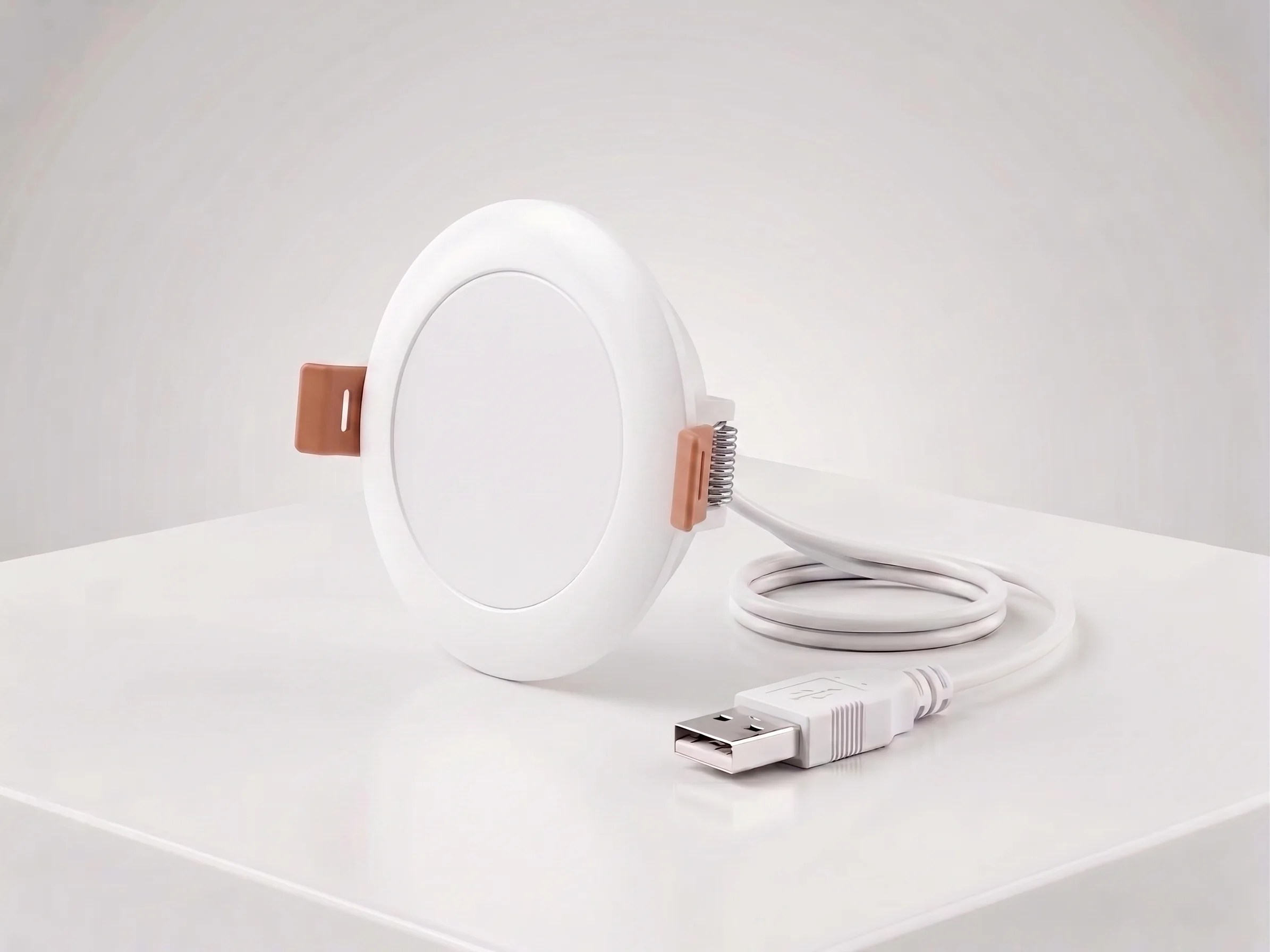
Sensor Kehadiran Manusia mmWave Pasang Plafon — Zigbee
Sensor kehadiran mmWave 24GHz pita lebar untuk plafon: deteksi gerak 10m, mikro-gerak 2,5m, deteksi napas. Sudut 120°, DC5V, Zigbee 3.0, untuk kamar hotel.
Halaman ini sudah menunjuk ke halaman tersebut sebagai referensi yang direkomendasikan berikutnya.
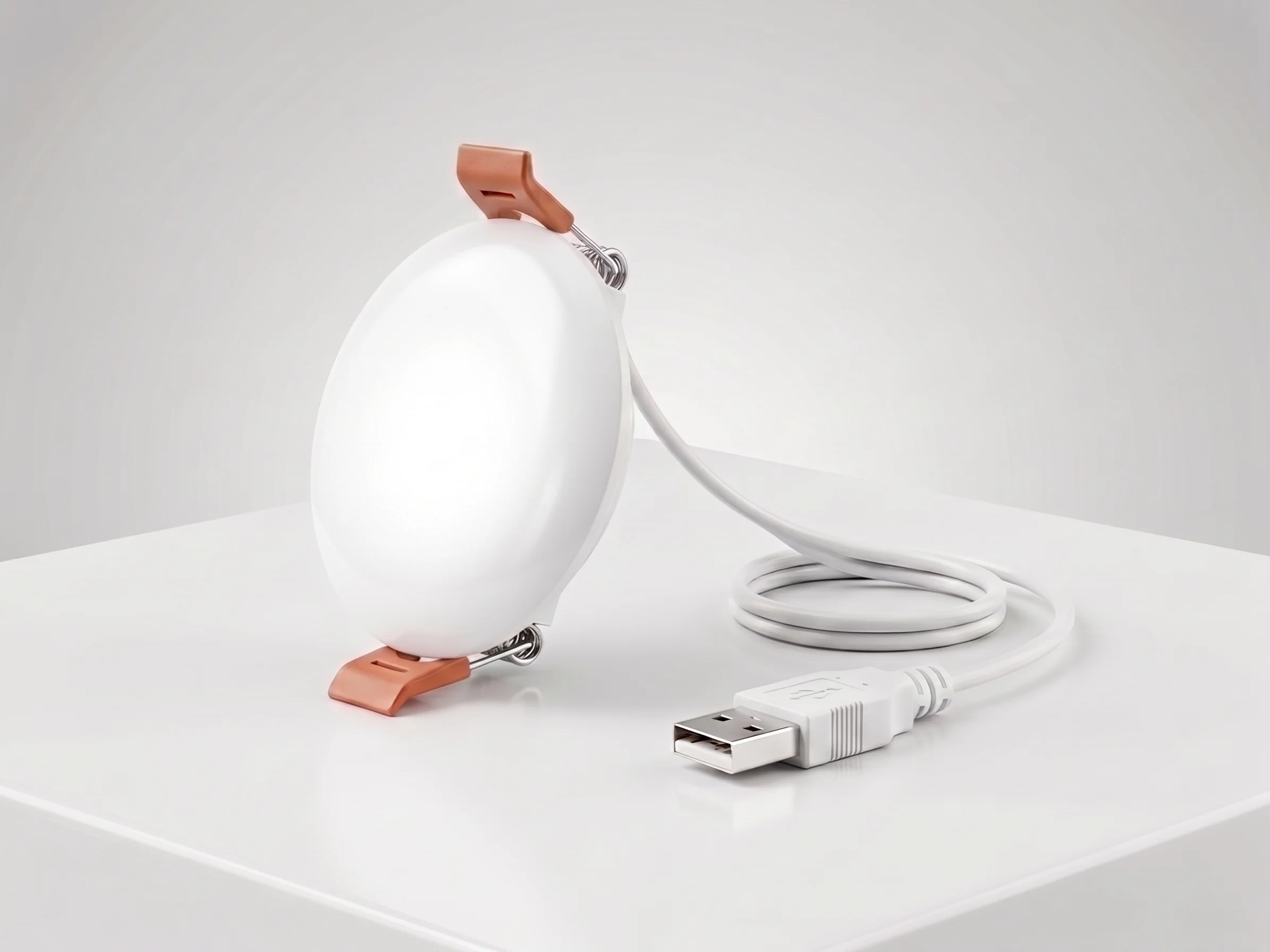
Sensor Kehadiran Manusia mmWave Plafon — WiFi
Sensor kehadiran mmWave 24GHz plafon, deteksi gerak 10m, mikro-gerak 2.5m, pernapasan. Sudut 120°, DC5V, WiFi 2.4GHz. Tanpa gateway, ideal retrofit hotel.
Halaman ini sudah menunjuk ke halaman tersebut sebagai referensi yang direkomendasikan berikutnya.
Solusi terkait
1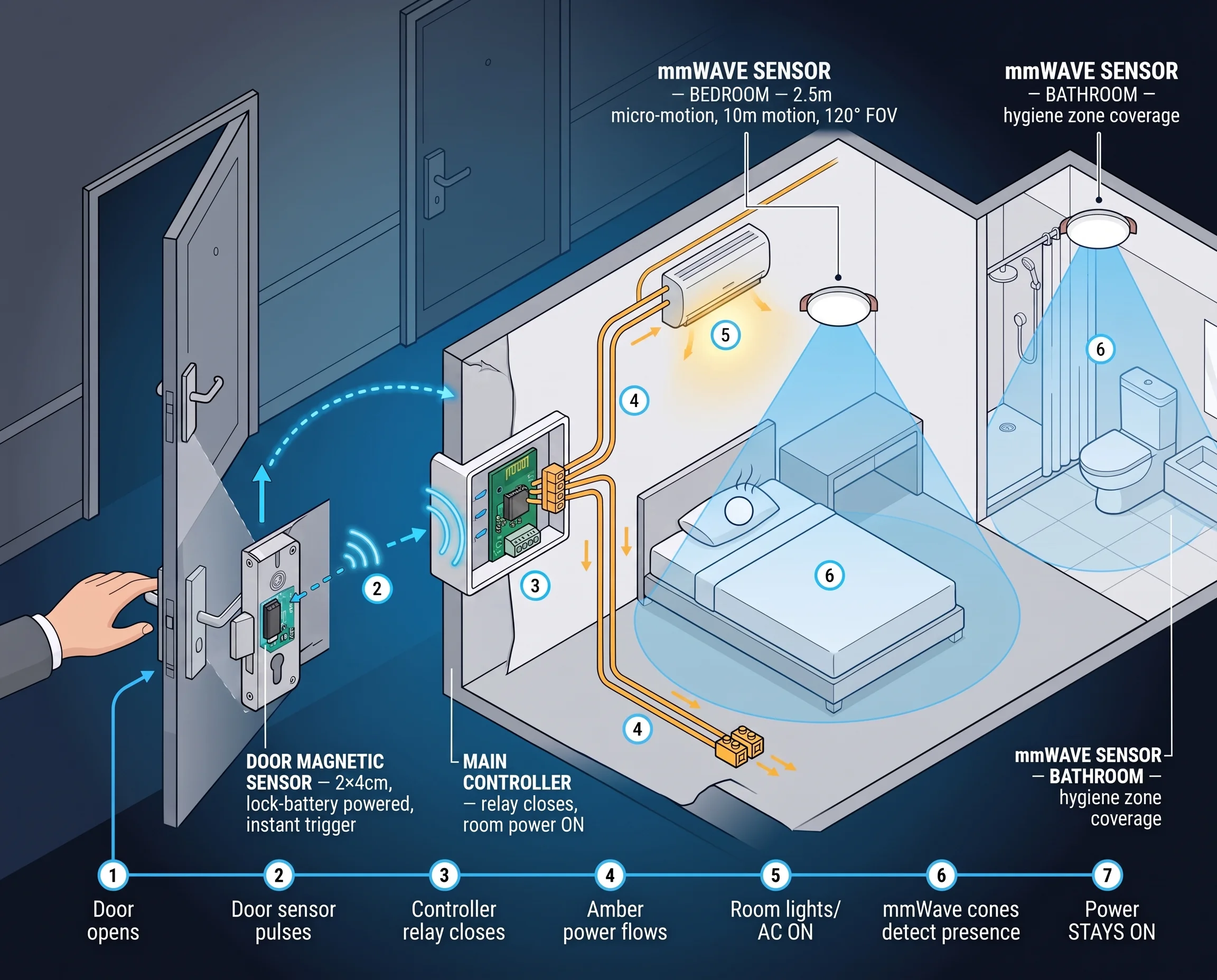
Solusi Sensor Okupansi & Gerak Kamar Hotel
Sensor okupansi radar mmWave untuk kamar hotel: deteksi tamu yang tidur, jadwalkan housekeeping, hemat energi HVAC 20-40% tanpa alarm kosong palsu.
Halaman tersebut mendukung konteks produk yang sama: Sensor Kehadiran Manusia mmWave Pasang Plafon — Zigbee, Sensor Kehadiran Manusia mmWave Plafon — WiFi.
Artikel blog terkait
3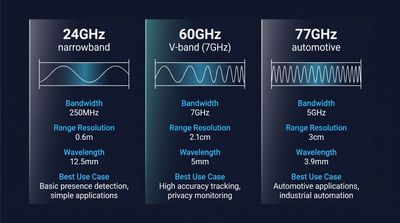
Sensor mmWave 60GHz vs 24GHz vs 77GHz: Memilih Frekuensi yang Tepat untuk Deteksi Kehadiran Komersial
Bandingkan sensor mmWave 60GHz, 24GHz, dan 77GHz untuk deteksi kehadiran komersial. Spesifikasi teknis, jangkauan deteksi, privasi, dan panduan sourcing OEM.
Halaman tersebut mendukung konteks produk yang sama: Sensor Kehadiran Manusia mmWave Pasang Plafon — Zigbee, Sensor Kehadiran Manusia mmWave Plafon — WiFi.
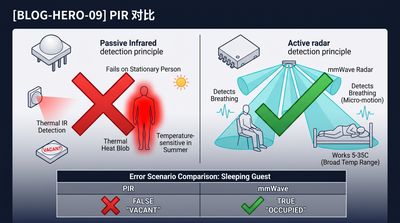
Apa Itu Sensor Kehadiran Elektronik? Teknologi dan Akurasi
Pelajari apa itu sensor kehadiran elektronik, cara mendeteksi manusia diam, dan perbedaannya dengan sensor gerak PIR. Membahas mmWave, akurasi, dan penerapan.
Halaman tersebut mendukung konteks produk yang sama: Sensor Kehadiran Manusia mmWave Pasang Plafon — Zigbee, Sensor Kehadiran Manusia mmWave Plafon — WiFi.
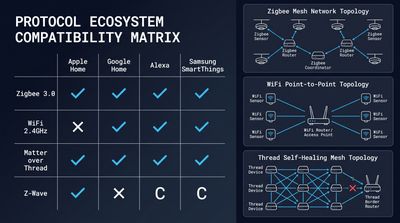
Cara Integrasi Sensor Kehadiran mmWave dengan Home Assistant
Panduan lengkap kontrol lokal perangkat mmWave: konfigurasi MQTT/Matter, skrip otomasi, kalibrasi, dan tips integrasi sensor kehadiran plafon OEM.
Halaman tersebut mendukung konteks produk yang sama: Sensor Kehadiran Manusia mmWave Plafon — WiFi, Sensor Kehadiran Manusia mmWave Pasang Plafon — Zigbee.
Rinci proyek hotel Anda bersama insinyur kami
Kirimkan jumlah kamar, jenis plafon, dan preferensi protokol Anda. Kami akan mengirimkan rencana sampel dan penawaran dalam 24 jam kerja.
- Beralih dari panduan umum ke diskusi produk atau aplikasi.
- Gunakan RFQ saat harga, gambar teknis, MOQ, atau jadwal peluncuran membutuhkan struktur.
- Jaga jalur kontak langsung tetap terlihat untuk klarifikasi cepat dan serah terima.