Detektor Kehadiran Komersial: Panduan Deploy Enterprise
Panduan lengkap detektor kehadiran komersial: teknologi mmWave, penerapan hotel dan kantor, integrasi BMS, serta kriteria pemilihan untuk enterprise.
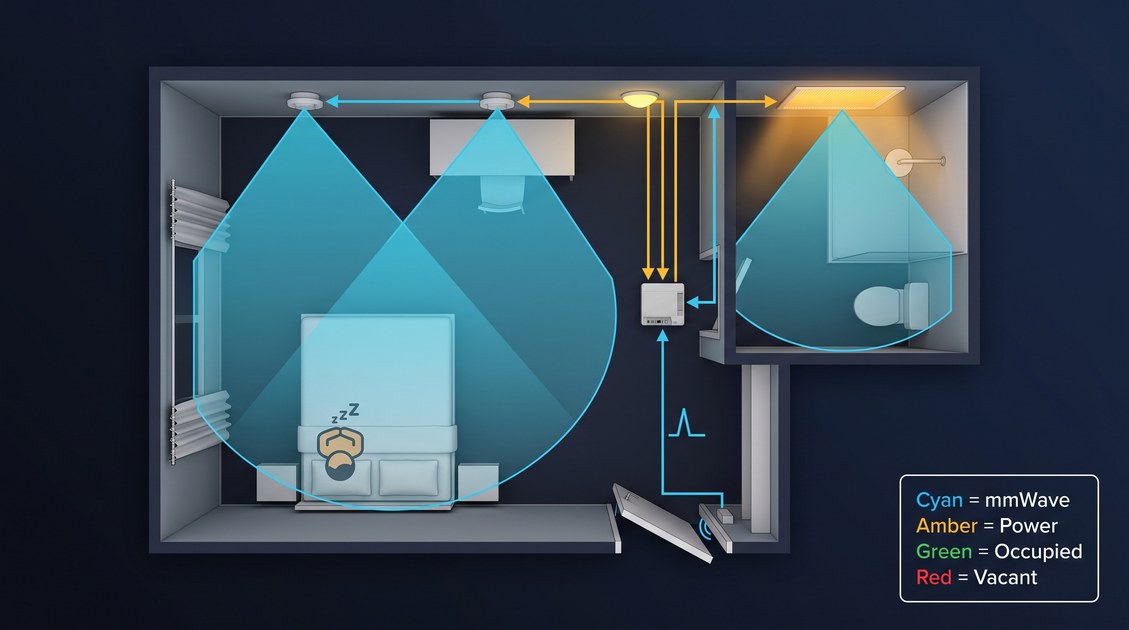
Detektor kehadiran komersial adalah perangkat deteksi okupansi kelas enterprise yang dirancang untuk penerapan skala besar di jaringan hotel, portofolio kantor, fasilitas kesehatan, dan lingkungan komersial lainnya, umumnya menggunakan teknologi radar gelombang milimeter (mmWave) pada frekuensi 60 GHz untuk mendeteksi penghuni manusia yang bergerak maupun diam dengan tingkat true positive penghuni stasioner di atas 99% dalam pengujian terkontrol, serta dilengkapi fitur kelas enterprise yang mencakup kepatuhan terhadap standar-standar utama (FCC, CE, RoHS, GDPR, CCPA, SB-327 untuk California, HIPAA untuk kesehatan), integrasi dengan sistem manajemen bangunan enterprise dan building management system, serta kerangka dukungan yang meliputi dokumentasi, rekayasa aplikasi, dan garansi multi-tahun. Detektor kehadiran komersial dibedakan dari perangkat kelas konsumen melalui fokusnya pada keandalan dan kepatuhan dibandingkan kemudahan penggunaan, melalui desain fisiknya yang tangguh (perlindungan masuk IP20 atau lebih tinggi, garansi 12–24 bulan), serta melalui fakta bahwa produk ini dijual melalui jalur distribusi khusus (distributor otomasi industri, distributor otomasi bangunan) dan bukan melalui jalur ritel konsumen. Pasar detektor kehadiran komersial didominasi oleh perangkat radar mmWave 60 GHz, yang telah menjadi pilihan standar untuk penerapan enterprise karena menghadirkan kemampuan deteksi penghuni stasioner yang esensial untuk manajemen energi serta pengalaman tamu dan penghuni.
Pasar detektor kehadiran komersial telah tumbuh pesat sejak 2020, didorong oleh kebutuhan industri perhotelan akan deteksi okupansi yang akurat untuk koordinasi housekeeping dan manajemen energi, kebutuhan sektor kantor akan analitik utilisasi ruang, serta kebutuhan sektor kesehatan akan deteksi jatuh dan pemantauan pasien. Panduan ini memberikan gambaran menyeluruh tentang detektor kehadiran komersial, mencakup teknologinya, fitur kelas enterprise, kategori aplikasi utama, pertimbangan integrasi, dan kriteria pemilihan untuk memilih detektor yang tepat bagi suatu penerapan enterprise tertentu.
Detektor Kehadiran Komersial: Teknologi dan Arsitektur
Arsitektur detektor kehadiran komersial dirancang untuk keandalan, kepatuhan, dan integrasi.
Detektor Kehadiran Komersial: Radar mmWave 60 GHz
Pita ISM 60 GHz (57–64 GHz) adalah frekuensi standar untuk detektor kehadiran komersial, menyediakan bandwidth 7 GHz yang memungkinkan resolusi jangkauan 2,1 cm dan deteksi micro-Doppler terhadap pernapasan manusia. Panjang gelombang 5 mm memungkinkan susunan antena yang kompak, menghadirkan bentuk puck plafon berdiameter 70 mm yang menjadi standar penerapan komersial.
Detektor Kehadiran Komersial: Pemrosesan Sinyal Kelas Enterprise
Detektor kehadiran komersial dilengkapi pemrosesan sinyal on-board yang dioptimalkan untuk lingkungan komersial:
- Penyaringan lingkungan: penyaringan tangguh untuk membedakan gerak mikro manusia dari gerakan lingkungan (aliran udara HVAC, getaran bangunan, gerakan kipas)
- Klasifikasi on-device: model machine learning (atau pengklasifikasi berbasis aturan) yang mengklasifikasikan target sebagai manusia atau bukan manusia tanpa memerlukan layanan cloud
- Zona deteksi yang dapat dikonfigurasi: untuk deteksi kehadiran multi-zona di ruangan besar
- Penghitungan okupansi: untuk aplikasi yang memerlukan jumlah penghuni (ruang konferensi, kantor besar)
Detektor Kehadiran Komersial: Pilihan Konektivitas
Detektor kehadiran komersial umumnya mendukung beberapa pilihan konektivitas:
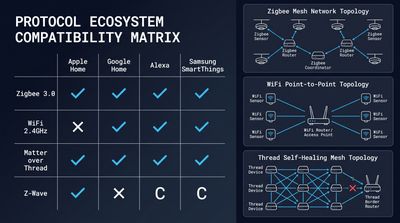
- Zigbee 3.0: pilihan standar untuk penerapan hotel, dengan integrasi native ke sistem manajemen bangunan utama
- WiFi: pilihan standar untuk penerapan kantor, dengan integrasi ke sistem manajemen bangunan dan platform penjadwalan
- PoE (Power over Ethernet): untuk penerapan kantor yang telah tersedia kabel Ethernet
- Matter: semakin menjadi pilihan standar untuk penerapan residensial dan perhotelan, menyediakan kompatibilitas lintas ekosistem
- BACnet/IP: untuk integrasi sistem manajemen bangunan
Detektor Kehadiran Komersial: Fitur Kelas Enterprise
Detektor kehadiran komersial dilengkapi serangkaian fitur kelas enterprise yang membedakannya dari perangkat kelas konsumen.
Detektor Kehadiran Komersial: Kepatuhan dan Sertifikasi
Detektor kehadiran komersial membawa serangkaian sertifikasi yang lengkap:
- Sertifikasi radio: FCC (AS), CE (UE), dan sertifikasi regional lainnya (IC untuk Kanada, MIC untuk Jepang, SRRC untuk Tiongkok, KC untuk Korea Selatan, NCC untuk Taiwan, RCM untuk Australia)
- Sertifikasi keselamatan: RoHS (UE), REACH (UE), dan sertifikasi keselamatan regional lainnya
- Perlindungan data: dokumentasi kepatuhan GDPR untuk penerapan di UE, dokumentasi kepatuhan CCPA untuk penerapan di California, dokumentasi kepatuhan SB-327 untuk penerapan perhotelan di California
- Kesehatan: dokumentasi kepatuhan HIPAA untuk penerapan kesehatan di AS
Detektor Kehadiran Komersial: Desain Fisik
Detektor kehadiran komersial memiliki desain fisik yang tangguh:
- Perlindungan masuk: IP20 atau lebih tinggi (ketahanan debu)
- Suhu operasi: 0–40°C (umum untuk aplikasi dalam ruangan)
- Toleransi kelembapan: hingga 90% RH (tanpa kondensasi)
- Pilihan daya: listrik jaringan (220–240 VAC atau 110–120 VAC), PoE, atau baterai (dengan umur baterai 12–18 bulan)
- Pilihan pemasangan: puck plafon (diameter 70 mm, umum), dudukan dinding (persegi panjang, 80×120 mm), dudukan grid tile (untuk plafon tile gantung)
Detektor Kehadiran Komersial: Garansi dan Dukungan
Detektor kehadiran komersial umumnya mencakup:
- Garansi: standar 12–24 bulan, dengan opsi perpanjangan garansi yang tersedia
- Dukungan teknis: dukungan email dengan waktu respons terjamin, dukungan telepon opsional untuk pelanggan enterprise
- Rekayasa aplikasi: bantuan rekayasa aplikasi opsional untuk output sinyal okupansi ke BMS dan platform penjadwalan
- Dokumentasi: dokumentasi lengkap, meliputi datasheet, panduan instalasi, panduan integrasi, dan dokumentasi API
Detektor Kehadiran Komersial: Aplikasi
Detektor kehadiran komersial diterapkan di berbagai lingkungan enterprise.
Detektor Kehadiran Komersial: Penerapan Hotel
Kamar hotel adalah aplikasi kanonis bagi detektor kehadiran komersial. Detektor kehadiran komersial 60 GHz yang dipasang di plafon dapat mendeteksi secara andal apakah tamu berada di kamar selama menginap, termasuk saat mereka tertidur, serta mengalirkan data okupansi ke sistem manajemen bangunan untuk koordinasi housekeeping dan ke sistem HVAC untuk manajemen energi.
Detektor kehadiran komersial untuk penerapan hotel umumnya mencakup:
- Konektivitas Zigbee 3.0 (output sinyal okupansi native ke BMS)
- Daya listrik jaringan (220–240 VAC atau 110–120 VAC)
- Dokumentasi kepatuhan GDPR/CCPA/SB-327
- Integrasi otomatisasi housekeeping
- Integrasi manajemen energi
Detektor Kehadiran Komersial: Penerapan Kantor
Gedung perkantoran menggunakan detektor kehadiran komersial untuk kontrol HVAC dan pencahayaan per ruangan, deteksi ketersediaan ruang konferensi, dan analitik utilisasi ruang. Kemampuan detektor mendeteksi penghuni stasioner sangat esensial untuk aplikasi kantor di mana pekerja mungkin berada di meja mereka selama berjam-jam tanpa gerakan signifikan.
Detektor kehadiran komersial untuk penerapan kantor umumnya mencakup:
- Konektivitas WiFi atau PoE (integrasi dengan BMS dan platform penjadwalan)
- Daya listrik jaringan atau PoE
- Integrasi BACnet
- Integrasi platform penjadwalan (Microsoft 365, Google Workspace, Robin, Envoy)
- Integrasi analitik utilisasi ruang
Detektor Kehadiran Komersial: Penerapan Kesehatan
Fasilitas kesehatan menggunakan detektor kehadiran komersial di ruang pasien untuk deteksi jatuh, peringatan keluar tempat tidur, dan kontrol lingkungan berbasis okupansi. Profil privasi radar mmWave (tanpa gambar, non-invasif) menjadikannya cocok untuk penerapan di ruang privat di mana sensor berbasis kamera tidak layak digunakan.
Detektor kehadiran komersial untuk penerapan kesehatan umumnya mencakup:
- Daya listrik jaringan dan konektivitas jaringan kabel
- Dokumentasi kepatuhan HIPAA
- Integrasi dengan sistem nurse call
- Integrasi dengan sistem EHR (rekam medis elektronik)
- Kemampuan deteksi jatuh (latensi di bawah 1 detik)
Detektor Kehadiran Komersial: Penerapan Portofolio Multi-Properti
Jaringan hotel besar dan portofolio properti komersial menerapkan detektor kehadiran komersial di banyak properti, sering kali dengan standardisasi pada satu platform untuk menyederhanakan manajemen dan dukungan. Penerapan multi-properti menambahkan persyaratan untuk:
- Konfigurasi terstandarisasi: semua properti menggunakan konfigurasi sensor yang sama
- Manajemen terpusat: satu dashboard atau platform manajemen terpusat
- Provisioning massal: kemampuan untuk melakukan provisioning ratusan sensor dengan cepat
- Agregasi data: data okupansi yang diagregasi di seluruh properti untuk analitik tingkat portofolio
Detektor Kehadiran Komersial: Pertimbangan Integrasi
Integrasi detektor kehadiran komersial dengan sistem enterprise merupakan pertimbangan kritis untuk penerapan skala besar.
Detektor Kehadiran Komersial: Integrasi BMS (Hotel)
Untuk penerapan hotel, detektor kehadiran komersial umumnya terintegrasi dengan sistem manajemen bangunan melalui gateway Zigbee atau melalui API. Integrasi ini memungkinkan:
- Koordinasi housekeeping: BMS mengetahui kamar mana yang terisi dan dapat mengoptimalkan jadwal housekeeping
- Manajemen energi: BMS dapat mengoordinasikan kontrol HVAC dan pencahayaan berdasarkan okupansi
- Pengalaman tamu: BMS dapat memicu pesan sambutan personal, skenario pencahayaan, dan otomatisasi dalam kamar
Vendor BMS yang mendukung integrasi detektor kehadiran komersial meliputi: Oracle Hospitality OPERA Cloud, CloudBeds, Mews, RoomKeyPMS, dan lainnya.
Detektor Kehadiran Komersial: Integrasi BMS (Kantor)
Untuk penerapan kantor, detektor kehadiran komersial umumnya terintegrasi dengan sistem manajemen bangunan melalui BACnet/IP, Modbus TCP, atau API. Integrasi ini memungkinkan:
- Kontrol HVAC: BMS dapat menyesuaikan HVAC berdasarkan okupansi aktual
- Kontrol pencahayaan: BMS dapat menyesuaikan pencahayaan berdasarkan okupansi aktual
- Analitik utilisasi ruang: BMS dapat menyediakan data tentang bagaimana ruang kantor digunakan
Vendor BMS utama yang mendukung integrasi detektor kehadiran komersial meliputi: Siemens (Desigo), Schneider Electric (EcoStruxure), Johnson Controls (Metasys), Honeywell (Enterprise Buildings Integrator), dan lainnya.
Detektor Kehadiran Komersial: Integrasi Platform Penjadwalan (Ruang Rapat)
Untuk penerapan ruang konferensi, detektor kehadiran komersial umumnya terintegrasi dengan platform penjadwalan (Microsoft 365, Google Workspace, Robin, Envoy) melalui API. Integrasi ini memungkinkan:
- Ketersediaan ruangan real-time: platform penjadwalan dapat menampilkan apakah sebuah ruang konferensi sedang terisi
- Analitik ruang rapat: data tentang bagaimana ruang rapat digunakan
- Optimasi no-show: platform penjadwalan dapat melepas ruangan yang telah dipesan tetapi tidak terisi
Detektor Kehadiran Komersial: Kriteria Pemilihan
Memilih detektor kehadiran komersial yang tepat untuk suatu penerapan enterprise tertentu memerlukan evaluasi terhadap beberapa kriteria.
Detektor Kehadiran Komersial: Kinerja Deteksi
Kinerja deteksi adalah kriteria terpenting. Metrik utama meliputi TPR penghuni stasioner, FPR, jangkauan deteksi, dan bidang pandang. Vendor harus menyediakan data pengujian independen untuk metrik-metrik tersebut.
Detektor Kehadiran Komersial: Kepatuhan dan Sertifikasi
Detektor kehadiran komersial harus membawa sertifikasi yang disyaratkan untuk pasar target: FCC, CE, RoHS, dan sertifikasi regional lainnya. Untuk penerapan hotel, kepatuhan GDPR/CCPA/SB-327 wajib dipenuhi. Untuk penerapan kesehatan, kepatuhan HIPAA wajib dipenuhi.
Detektor Kehadiran Komersial: Integrasi
Integrasi harus sesuai dengan infrastruktur yang ada. Untuk penerapan hotel, Zigbee dengan integrasi BMS adalah yang paling umum. Untuk penerapan kantor, WiFi atau PoE dengan integrasi BMS umum digunakan.
Detektor Kehadiran Komersial: Dukungan Vendor
Vendor harus menyediakan dukungan teknis yang kuat, termasuk dokumentasi, application note, panduan integrasi, dan bantuan rekayasa yang responsif. Vendor dengan rekam jejak terbukti di vertikal target lebih diprioritaskan.
Detektor Kehadiran Komersial: Kerangka Pengadaan
Untuk tim pengadaan enterprise, kerangka kerja berikut direkomendasikan:
- Tetapkan persyaratan penerapan: jumlah properti, jumlah sensor per properti, persyaratan integrasi, persyaratan kepatuhan
- Identifikasi vendor kandidat: 2–3 vendor yang menawarkan produk sesuai persyaratan
- Ajukan RFP (request for proposal): terbitkan RFP kepada vendor kandidat, dengan menetapkan volume, linimasa pengiriman, persyaratan kepatuhan, dan persyaratan integrasi
- Evaluasi proposal: evaluasi proposal berdasarkan kesesuaian teknis, harga, lead time, dukungan vendor, dan kepatuhan
- Lakukan uji tuntas: lakukan uji tuntas terhadap vendor, termasuk mengunjungi pabriknya, meninjau sertifikasi kualitasnya, dan memeriksa referensi
- Negosiasikan kontrak: negosiasikan perjanjian pasokan, termasuk harga berbasis volume, syarat pembayaran, garansi, dan SLA
- Laksanakan pilot: laksanakan penerapan pilot (50–500 sensor di 1–2 properti) sebelum berkomitmen pada penerapan penuh
- Skalakan produksi: skalakan produksi berdasarkan hasil pilot
Detektor Kehadiran Komersial: Jebakan Umum
Beberapa jebakan umum dapat menggagalkan penerapan detektor kehadiran komersial enterprise:
- Tidak menetapkan persyaratan integrasi di awal: gagal mengonfirmasi integrasi BMS sebelum memilih vendor
- Mengabaikan persyaratan kepatuhan: gagal mengonfirmasi kepatuhan GDPR/CCPA/SB-327 atau HIPAA
- Tidak melakukan pilot: berkomitmen pada penerapan penuh tanpa terlebih dahulu memverifikasi kinerja sensor
- Meremehkan kebutuhan dukungan: berasumsi vendor akan menyediakan bantuan integrasi padahal mungkin tidak termasuk
- Tidak menstandardisasi antar properti: menggunakan sensor berbeda di properti berbeda, sehingga manajemen dan dukungan menjadi lebih rumit
Detektor Kehadiran Komersial: Rekomendasi Akhir
Detektor kehadiran komersial adalah teknologi standar untuk deteksi kehadiran enterprise pada 2026, dengan radar mmWave 60 GHz sebagai teknologi default untuk sebagian besar aplikasi. Teknologi ini menghadirkan deteksi penghuni stasioner yang andal, profil privasi yang sangat baik, serta kepatuhan dan dukungan yang komprehensif, menjadikannya cocok untuk jaringan hotel, portofolio kantor, fasilitas kesehatan, dan lingkungan enterprise lainnya.
Bagi tim pengadaan enterprise, pendekatan yang tepat adalah memulai dengan definisi persyaratan penerapan yang jelas, kemudian mengevaluasi sensor yang tersedia terhadap persyaratan tersebut, lalu memilih vendor dengan rekam jejak terbukti di vertikal target. Produk yang direkomendasikan untuk sebagian besar aplikasi adalah ceiling-presence-sensor-zigbee untuk penerapan hotel, dan ceiling-presence-sensor-wifi untuk penerapan kantor.
Dengan detektor kehadiran komersial yang tepat, yang terintegrasi dengan benar dengan sistem enterprise, penerapan dapat menghadirkan tingkat kesadaran okupansi yang mustahil dicapai dengan detektor gerak berbasis PIR, serta dapat membenarkan biaya per unit yang lebih tinggi melalui peningkatan efisiensi energi, pengalaman penghuni dan tamu yang lebih baik, dan data okupansi yang lebih akurat untuk analitik enterprise.
Sebagian konten artikel ini dihasilkan oleh AI dan dioptimalkan untuk akurasi profesional serta keterbacaan. A commercial presence detector is an enterprise-grade occupancy detection device designed for large-scale deployment in hotel chains, office portfolios, healthcare facilities, and other commercial environments, typically using millimeter-wave (mmWave) radar technology at 60 GHz to detect both moving and stationary human occupants with a stationary-occupant true positive rate above 99% in controlled testing, and with enterprise-grade features including compliance with major standards (FCC, CE, RoHS, GDPR, CCPA, SB-327 for California, HIPAA for healthcare), integration with enterprise building management systems and building management systems, and a support framework that includes documentation, application engineering, and multi-year warranty. The commercial presence detector is distinguished from consumer-grade devices by its focus on reliability and compliance rather than ease of use, by its robust physical design (IP20 or higher ingress protection, 12–24 month warranty), and by the fact that it is sold through specialized distribution channels (industrial automation distributors, building automation distributors) rather than through retail consumer channels. The commercial presence detector market is dominated by 60 GHz mmWave radar devices, which have become the default choice for enterprise deployments because they deliver the stationary-occupant detection capability that is essential for energy management and for the guest and occupant experience.
The commercial presence detector market has grown rapidly since 2020, driven by the hospitality industry's need for accurate occupancy detection for housekeeping coordination and energy management, the office sector's need for space utilization analytics, and the healthcare sector's need for fall detection and patient monitoring. This guide provides a comprehensive overview of the commercial presence detector, covering the technology, the enterprise-grade features, the major application categories, the integration considerations, and the selection criteria for choosing the right detector for a specific enterprise deployment.
Commercial Presence Detector: Technology and Architecture
The architecture of a commercial presence detector is designed for reliability, compliance, and integration.
Commercial Presence Detector: 60 GHz mmWave Radar
The 60 GHz ISM band (57–64 GHz) is the default frequency for commercial presence detectors, providing 7 GHz of bandwidth that enables 2.1 cm range resolution and micro-Doppler detection of human breathing. The 5 mm wavelength allows for compact antenna arrays, enabling a 70 mm diameter ceiling puck form factor that is the standard for commercial deployments.
Commercial Presence Detector: Enterprise-Grade Signal Processing
A commercial presence detector includes on-board signal processing that is optimized for the commercial environment:
- Environmental filtering: robust filtering to distinguish human micro-motion from environmental motion (HVAC airflow, building vibration, fan motion)
- On-device classification: a machine learning model (or a rule-based classifier) that classifies targets as human or non-human without requiring a cloud service
- Configurable detection zones: for multi-zone presence detection in large rooms
- Occupancy counting: for applications that require the number of occupants (conference rooms, large offices)
Commercial Presence Detector: Connectivity Options
A commercial presence detector typically supports multiple connectivity options:
- Zigbee 3.0: the default for hotel deployments, with native integration with major building management systems
- WiFi: the default for office deployments, with integration with building management systems and scheduling platforms
- PoE (Power over Ethernet): for office deployments where Ethernet cabling is available
- Matter: increasingly the default for residential and hospitality deployments, providing cross-ecosystem compatibility
- BACnet/IP: for building management system integration
Commercial Presence Detector: Enterprise-Grade Features
A commercial presence detector includes a set of enterprise-grade features that distinguish it from consumer-grade devices.
Commercial Presence Detector: Compliance and Certifications
A commercial presence detector carries a comprehensive set of certifications:
- Radio certifications: FCC (US), CE (EU), and any regional certifications (IC for Canada, MIC for Japan, SRRC for China, KC for South Korea, NCC for Taiwan, RCM for Australia)
- Safety certifications: RoHS (EU), REACH (EU), and any regional safety certifications
- Data protection: GDPR compliance documentation for EU deployments, CCPA compliance documentation for California deployments, SB-327 compliance documentation for California hospitality deployments
- Healthcare: HIPAA compliance documentation for US healthcare deployments
Commercial Presence Detector: Physical Design
A commercial presence detector has a robust physical design:
- Ingress protection: IP20 or higher (dust resistance)
- Operating temperature: 0–40°C (typical for indoor applications)
- Humidity tolerance: up to 90% RH (non-condensing)
- Power options: mains power (220–240 VAC or 110–120 VAC), PoE, or battery (with 12–18 month battery life)
- Mounting options: ceiling puck (70 mm diameter, typical), wall-mount (rectangular, 80×120 mm), tile grid mount (for suspended tile ceilings)
Commercial Presence Detector: Warranty and Support
A commercial presence detector typically includes:
- Warranty: 12–24 months standard, with extended warranty options available
- Technical support: email support with guaranteed response times, optional phone support for enterprise customers
- Application engineering: optional application engineering assistance for occupancy-signal output to BMS and scheduling platforms
- Documentation: comprehensive documentation, including datasheets, installation guides, integration guides, and API documentation
Commercial Presence Detector: Applications
The commercial presence detector is deployed in a wide range of enterprise environments.
Commercial Presence Detector: Hotel Deployment
Hotel rooms are the canonical application for the commercial presence detector. A 60 GHz ceiling-mounted commercial presence detector can reliably detect whether a guest is in the room throughout their stay, including when they are sleeping, and feeds the occupancy data to the building management system for housekeeping coordination and the HVAC system for energy management.
The commercial presence detector for hotel deployment typically includes:
- Zigbee 3.0 connectivity (native occupancy-signal output to BMS)
- Mains power (220–240 VAC or 110–120 VAC)
- GDPR/CCPA/SB-327 compliance documentation
- Housekeeping automation integration
- Energy management integration
Commercial Presence Detector: Office Deployment
Office buildings use commercial presence detectors for per-room HVAC and lighting control, conference room availability detection, and space utilization analytics. The detector's ability to detect stationary occupants is essential for office applications where workers may be at their desks for hours without significant movement.
The commercial presence detector for office deployment typically includes:
- WiFi or PoE connectivity (integration with BMS and scheduling platforms)
- Mains or PoE power
- BACnet integration
- Scheduling platform integration (Microsoft 365, Google Workspace, Robin, Envoy)
- Space utilization analytics integration
Commercial Presence Detector: Healthcare Deployment
Healthcare facilities use commercial presence detectors in patient rooms for fall detection, bed-exit alerting, and occupancy-based environmental control. The privacy profile of mmWave radar (no images, non-invasive) makes it suitable for deployment in private spaces where camera-based sensing would be inappropriate.
The commercial presence detector for healthcare deployment typically includes:
- Mains power and wired network connectivity
- HIPAA compliance documentation
- Integration with nurse call systems
- Integration with EHR (electronic health record) systems
- Fall detection capability (sub-1 second latency)
Commercial Presence Detector: Multi-Property Portfolio Deployment
Large hotel chains and commercial real estate portfolios deploy commercial presence detectors across multiple properties, often standardizing on a single platform to simplify management and support. The multi-property deployment adds requirements for:
- Standardized configuration: all properties use the same sensor configuration
- Centralized management: a central dashboard or management platform
- Bulk provisioning: the ability to provision hundreds of sensors quickly
- Data aggregation: occupancy data aggregated across all properties for portfolio-wide analytics
Commercial Presence Detector: Integration Considerations
The integration of a commercial presence detector with enterprise systems is a critical consideration for large-scale deployments.
Commercial Presence Detector: BMS integration (Hotels)
For hotel deployments, the commercial presence detector typically integrates with the building management system through a Zigbee gateway or through an API. The integration enables:
- Housekeeping coordination: the BMS knows which rooms are occupied and can optimize housekeeping schedules
- Energy management: the BMS can coordinate HVAC and lighting control based on occupancy
- Guest experience: the BMS can trigger personalized welcome messages, lighting scenes, and in-room automation
The BMS vendors that support commercial presence detector integration include: Oracle Hospitality OPERA Cloud, CloudBeds, Mews, RoomKeyPMS, and others.
Commercial Presence Detector: BMS Integration (Offices)
For office deployments, the commercial presence detector typically integrates with the building management system through BACnet/IP, Modbus TCP, or an API. The integration enables:
- HVAC control: the BMS can adjust the HVAC based on actual occupancy
- Lighting control: the BMS can adjust the lighting based on actual occupancy
- Space utilization analytics: the BMS can provide data on how office space is being used
The major BMS vendors that support commercial presence detector integration include: Siemens (Desigo), Schneider Electric (EcoStruxure), Johnson Controls (Metasys), Honeywell (Enterprise Buildings Integrator), and others.
Commercial Presence Detector: Scheduling Platform Integration (Conference Rooms)
For conference room deployments, the commercial presence detector typically integrates with the scheduling platform (Microsoft 365, Google Workspace, Robin, Envoy) through an API. The integration enables:
- Real-time room availability: the scheduling platform can show whether a conference room is currently occupied
- Meeting room analytics: data on how meeting rooms are being used
- No-show optimization: the scheduling platform can release booked rooms that are unoccupied
Commercial Presence Detector: Selection Criteria
Selecting the right commercial presence detector for a specific enterprise deployment requires evaluating several criteria.
Commercial Presence Detector: Detection Performance
The detection performance is the most important criterion. Key metrics include stationary-occupant TPR, FPR, detection range, and field of view. The vendor should provide independent test data for these metrics.
Commercial Presence Detector: Compliance and Certifications
The commercial presence detector should carry the required certifications for the target market: FCC, CE, RoHS, and any regional certifications. For hotel deployments, GDPR/CCPA/SB-327 compliance is required. For healthcare deployments, HIPAA compliance is required.
Commercial Presence Detector: Integration
The integration should match the existing infrastructure. For hotel deployments, Zigbee with BMS integration is the most common. For office deployments, WiFi or PoE with BMS integration is common.
Commercial Presence Detector: Vendor Support
The vendor should provide strong technical support, including documentation, application notes, integration guides, and responsive engineering assistance. A vendor with a proven track record in the target vertical is preferred.
Commercial Presence Detector: Procurement Framework
For an enterprise procurement team, the following framework is recommended:
- Define the deployment requirements: number of properties, number of sensors per property, integration requirements, compliance requirements
- Identify candidate vendors: 2–3 vendors that offer products matching the requirements
- Request RFPs (requests for proposals): issue RFPs to candidate vendors, specifying volume, delivery timeline, compliance requirements, and integration requirements
- Evaluate proposals: evaluate proposals based on technical fit, price, lead time, vendor support, and compliance
- Conduct due diligence: conduct due diligence on the vendors, including visiting their factory, reviewing their quality certifications, and checking references
- Negotiate the contract: negotiate the supply agreement, including volume-based pricing, payment terms, warranty, and SLA
- Execute a pilot: execute a pilot deployment (50–500 sensors across 1–2 properties) before committing to the full deployment
- Scale production: scale production based on the pilot results
Commercial Presence Detector: Common Pitfalls
Several common pitfalls can undermine an enterprise commercial presence detector deployment:
- Not defining the integration requirements up front: failing to confirm BMS or BMS integration before selecting a vendor
- Ignoring compliance requirements: failing to confirm GDPR/CCPA/SB-327 or HIPAA compliance
- Not conducting a pilot: committing to a full deployment without first verifying the sensor's performance
- Underestimating the support requirements: assuming that the vendor will provide integration assistance when it may not be included
- Not standardizing across properties: using different sensors in different properties, making management and support more complex
Commercial Presence Detector: Final Recommendation
The commercial presence detector is the default technology for enterprise presence detection in 2026, with the 60 GHz mmWave radar being the default technology for most applications. The technology provides reliable stationary-occupant detection, an excellent privacy profile, and comprehensive compliance and support, making it suitable for hotel chains, office portfolios, healthcare facilities, and other enterprise environments.
For an enterprise procurement team, the right approach is to start with a clear definition of the deployment requirements, then evaluate the available sensors against those requirements, then select a vendor with a proven track record in the target vertical. The recommended products for most applications are the ceiling-presence-sensor-zigbee for hotel deployments, and the ceiling-presence-sensor-wifi for office deployments.
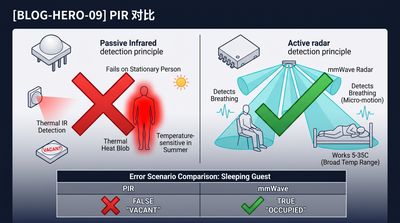
With the right commercial presence detector, correctly integrated with the enterprise systems, the deployment can deliver a level of occupancy awareness that is impossible to achieve with PIR-based motion detectors, and can justify the higher unit cost through improved energy efficiency, better occupant and guest experience, and more accurate occupancy data for enterprise analytics.
Part of this article content is generated by AI and optimized for professional accuracy and readability.
blog.inArticleCta.title
blog.inArticleCta.description
contentGraph.title
contentGraph.description
contentGraph.sections.products
2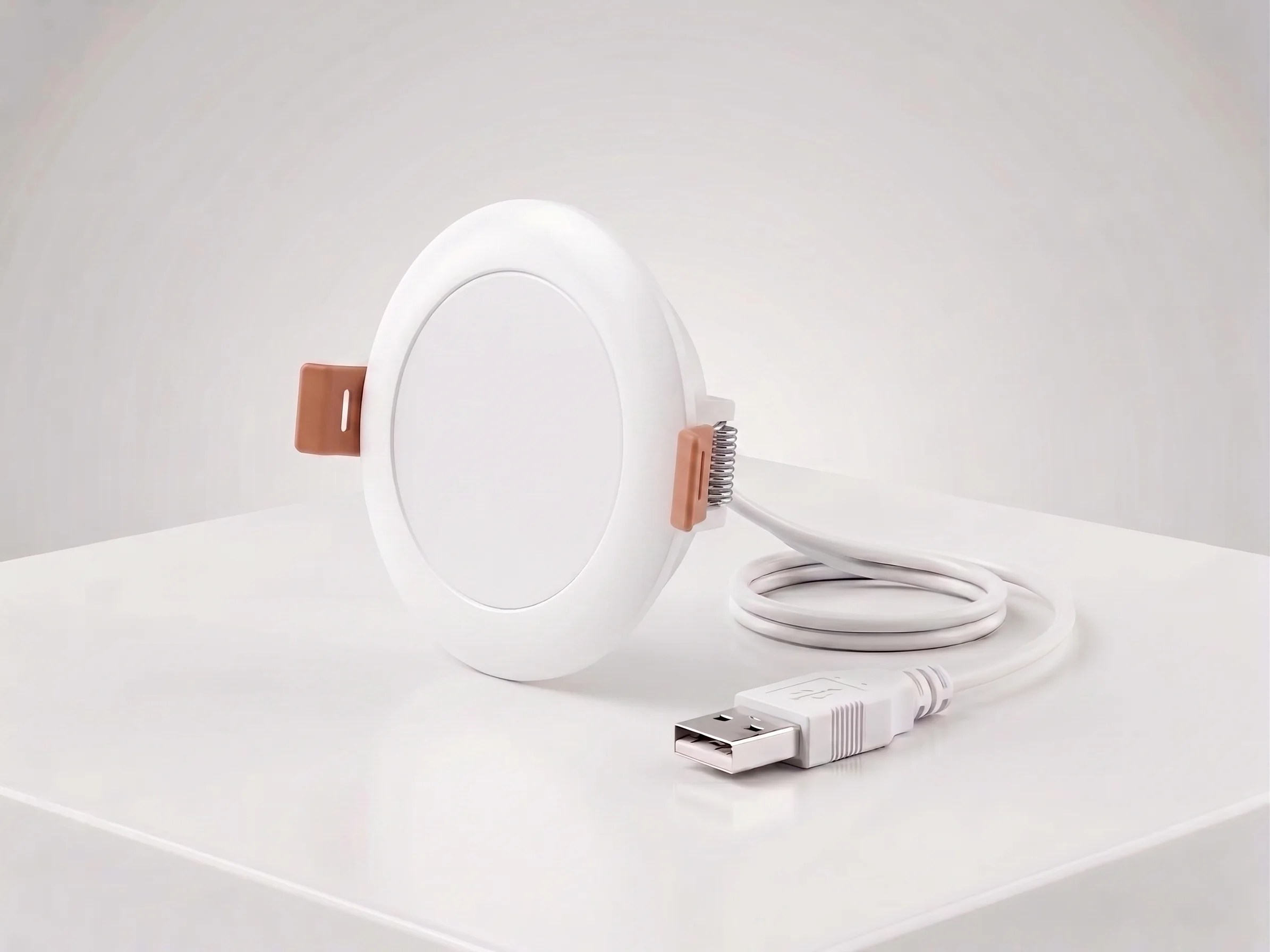
Sensor Kehadiran Manusia mmWave Pasang Plafon — Zigbee
Sensor kehadiran mmWave 24GHz pita lebar untuk plafon: deteksi gerak 10m, mikro-gerak 2,5m, deteksi napas. Sudut 120°, DC5V, Zigbee 3.0, untuk kamar hotel.
contentGraph.reasons.explicit
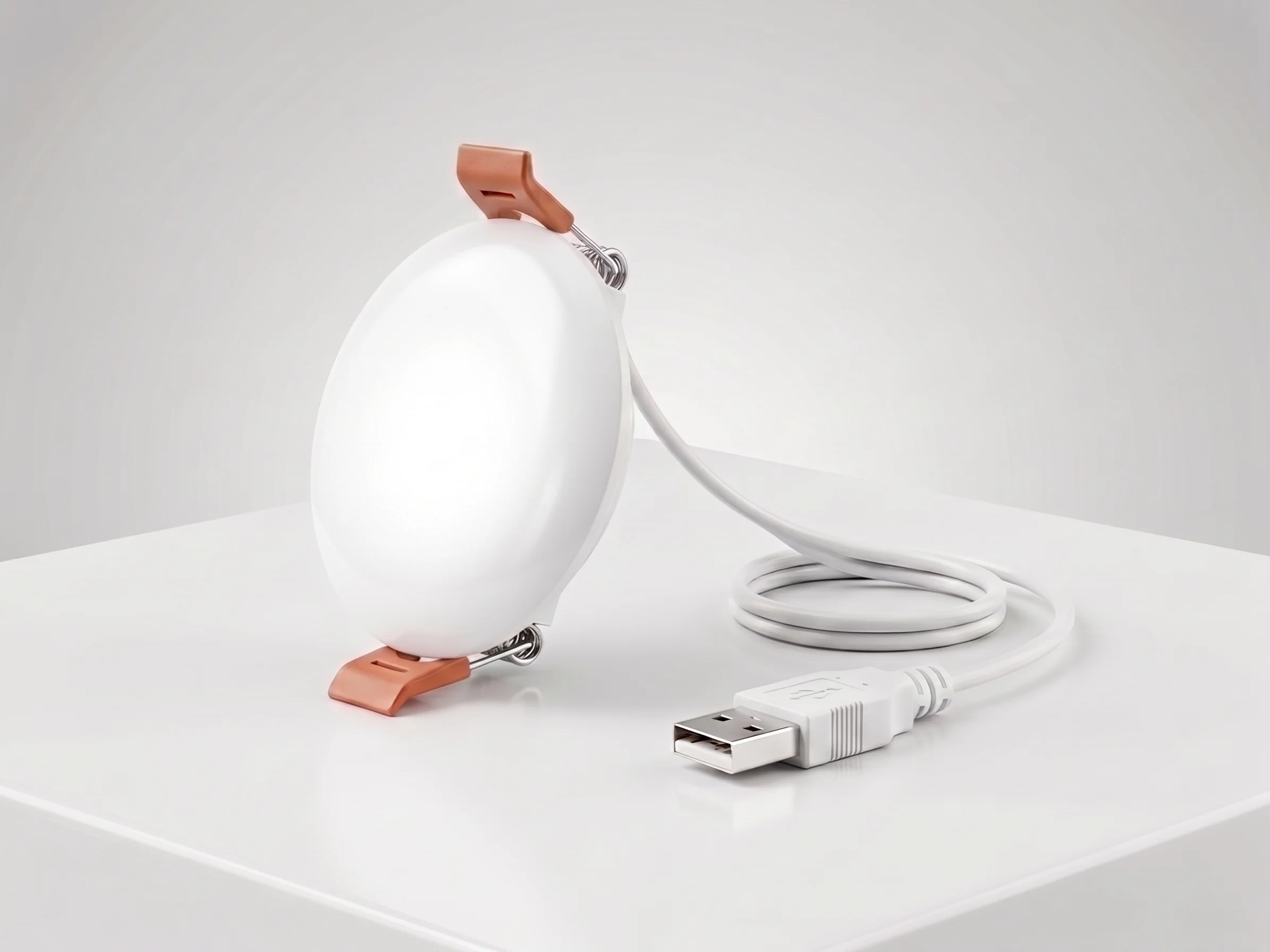
Sensor Kehadiran Manusia mmWave Plafon — WiFi
Sensor kehadiran mmWave 24GHz plafon, deteksi gerak 10m, mikro-gerak 2.5m, pernapasan. Sudut 120°, DC5V, WiFi 2.4GHz. Tanpa gateway, ideal retrofit hotel.
contentGraph.reasons.explicit
contentGraph.sections.solutions
1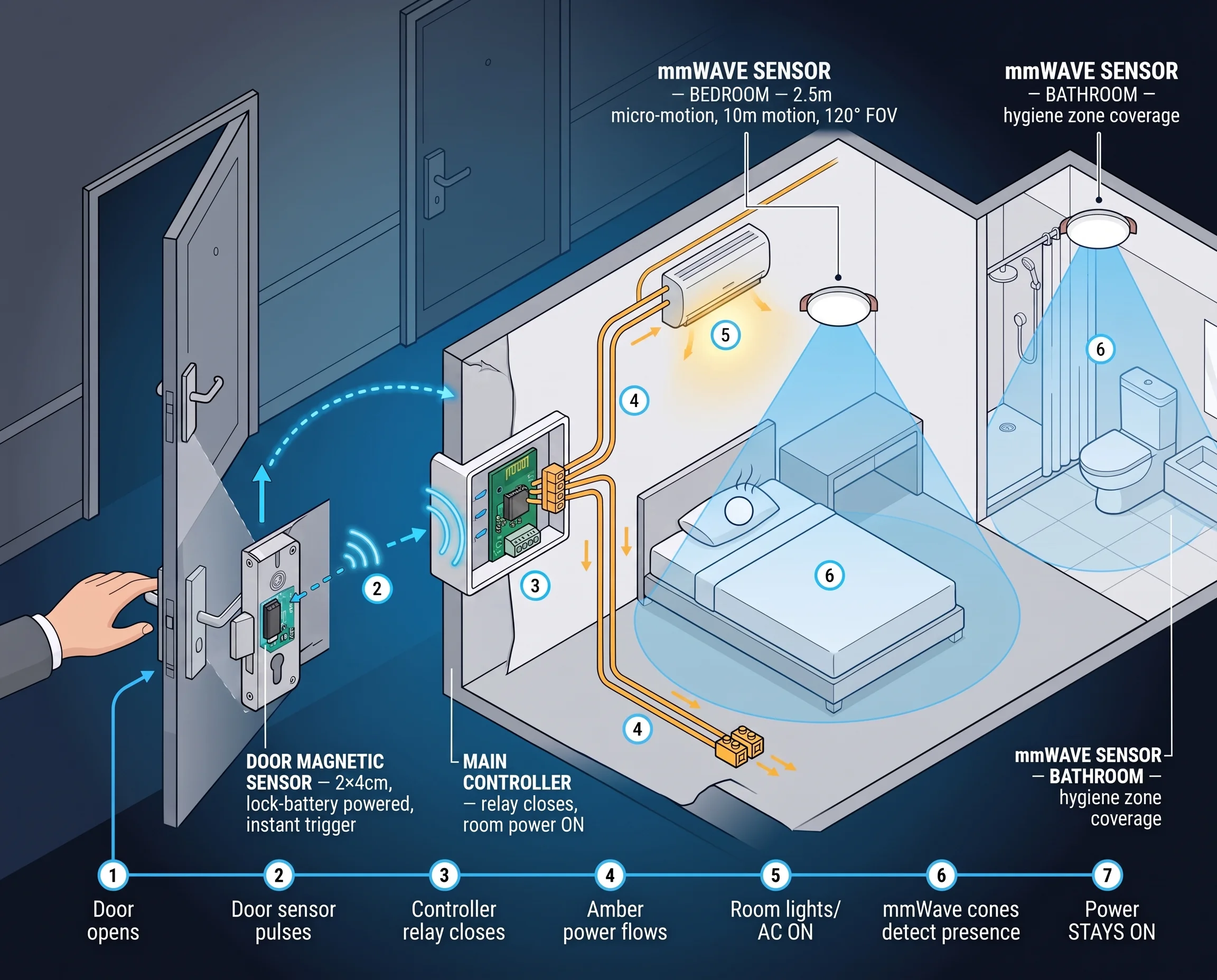
Solusi Sensor Okupansi & Gerak Kamar Hotel
Sensor okupansi radar mmWave untuk kamar hotel: deteksi tamu yang tidur, jadwalkan housekeeping, hemat energi HVAC 20-40% tanpa alarm kosong palsu.
contentGraph.reasons.productContext
contentGraph.sections.blog
3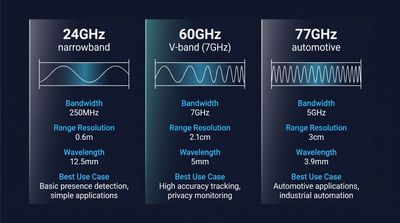
Sensor mmWave 60GHz vs 24GHz vs 77GHz: Memilih Frekuensi yang Tepat untuk Deteksi Kehadiran Komersial
Bandingkan sensor mmWave 60GHz, 24GHz, dan 77GHz untuk deteksi kehadiran komersial. Spesifikasi teknis, jangkauan deteksi, privasi, dan panduan sourcing OEM.
contentGraph.reasons.productContext
Apa Itu Sensor Kehadiran Elektronik? Teknologi dan Akurasi
Pelajari apa itu sensor kehadiran elektronik, cara mendeteksi manusia diam, dan perbedaannya dengan sensor gerak PIR. Membahas mmWave, akurasi, dan penerapan.
contentGraph.reasons.productContext
Cara Integrasi Sensor Kehadiran mmWave dengan Home Assistant
Panduan lengkap kontrol lokal perangkat mmWave: konfigurasi MQTT/Matter, skrip otomasi, kalibrasi, dan tips integrasi sensor kehadiran plafon OEM.
contentGraph.reasons.productContext
nextStep.blog.title
nextStep.blog.description
- nextStep.blog.points.one
- nextStep.blog.points.two
- nextStep.blog.points.three