Zigbee Presence Sensor: Complete Guide to mmWave-Based Zigbee Detection 2026
A complete guide to Zigbee presence sensors. Learn about Zigbee 3.0 mesh networking, mmWave radar detection, and how to choose the right Zigbee presence sensor.
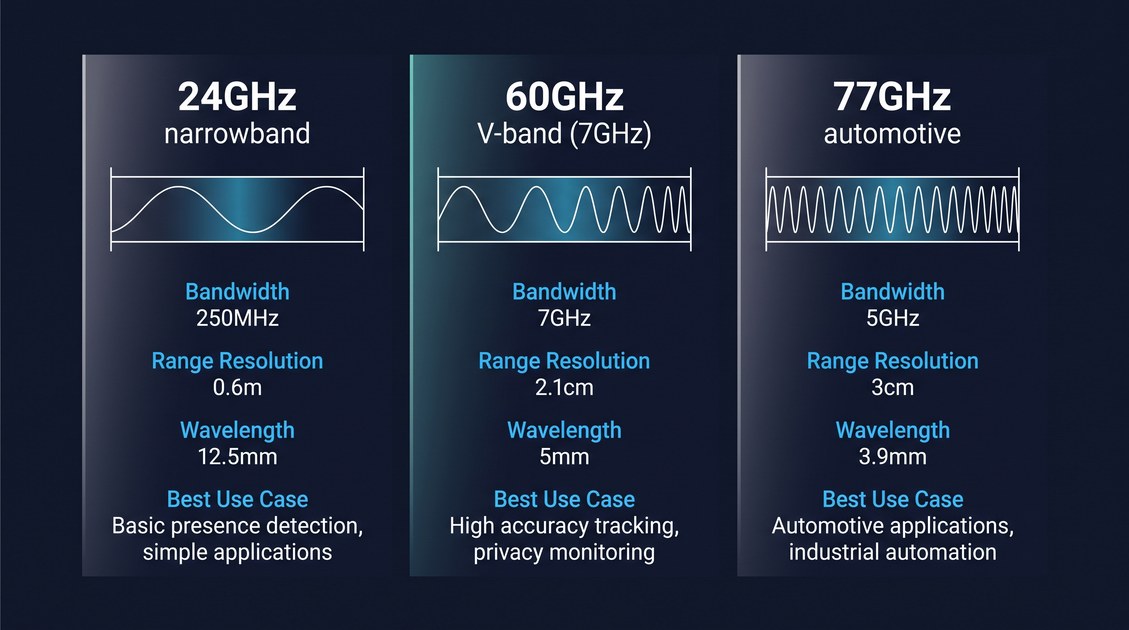
A Zigbee presence sensor is a presence detection device that combines millimeter-wave (mmWave) radar technology — most commonly operating at 60 GHz (57–64 GHz) with 7 GHz of bandwidth — with Zigbee 3.0 wireless mesh networking protocol (based on IEEE 802.15.4, operating at 2.4 GHz) to detect both moving and stationary human occupants and to transmit the occupancy data over a Zigbee mesh network to a Zigbee coordinator (smart home hub or property management gateway). The Zigbee presence sensor has become the dominant form factor for hotel room deployments and for many smart home platforms, because the Zigbee protocol provides low power consumption (enabling battery-powered deployments with 12–18 month battery life), mesh networking capability (providing redundancy and extended range), and native integration with major building management systems and smart home platforms. The mmWave radar component detects both moving and stationary human occupants by sensing the micro-Doppler signature of human breathing at 0.2–0.5 Hz from ranges of 6–8 meters, achieving a stationary-occupant true positive rate above 99% in controlled testing and above 95% in real-world deployment.
This guide provides a comprehensive overview of the Zigbee presence sensor, covering the Zigbee 3.0 protocol, the technology, the deployment patterns, and the selection criteria for choosing the right Zigbee presence sensor for a specific application.
Zigbee Presence Sensor: The Zigbee 3.0 Protocol
The Zigbee 3.0 protocol is a low-power, low-bandwidth, mesh-networking wireless technology designed for smart home and building automation.
Zigbee Presence Sensor: Zigbee Basics
Zigbee is based on the IEEE 802.15.4 standard, operating at 2.4 GHz (the same band as WiFi and Bluetooth). The 2.4 GHz frequency provides good range and wall penetration, but is congested (WiFi, Bluetooth, and other devices all use the same band), so Zigbee uses techniques like channel selection (channels 11, 15, 20, 25) and frequency agility to avoid interference.
The Zigbee 3.0 protocol provides:
- Low power consumption: suitable for battery-powered deployments
- Mesh networking: each device can route messages through its neighbors, extending the effective range
- Self-healing: if a single device fails, the network automatically finds an alternate path
- Standardized clusters: the "Occupancy Sensing" cluster (0x0406) is the standard way to report occupancy state
- Security: AES-128 encryption, S2 security framework
- Interoperability: Zigbee 3.0 devices from different vendors can work together (when certified)
Zigbee Presence Sensor: Mesh Network Behavior
The mesh behavior of a Zigbee presence sensor network is determined by the Zigbee routing protocol, which is based on AODV (Ad hoc On-Demand Distance Vector). When a Zigbee presence sensor has an occupancy event to report, it attempts to route the message to the coordinator via the shortest available path, using neighbor sensors as intermediate routers. If the preferred path fails (because a neighbor device is offline or out of range), the device automatically discovers an alternate path, providing self-healing capability.
This mesh behavior is particularly valuable in hotel deployments where Zigbee presence sensors are installed in every room and a single failed device should not disrupt the occupancy data for adjacent rooms.
Zigbee Presence Sensor: Network Capacity and Latency
A practical concern in large Zigbee presence sensor deployments is network capacity and latency. Each Zigbee presence sensor, when it transmits an occupancy event, occupies a small amount of airtime on the 2.4 GHz channel. If hundreds of devices attempt to transmit simultaneously during a building-wide event (such as a shift change in an office building), the network can become congested and messages can be delayed or dropped.
The Zigbee 3.0 protocol includes several mechanisms to manage this: transmission scheduling, message priority, and automatic backoff. In a well-designed Zigbee presence sensor deployment, the network should be configured with enough Zigbee coordinators (typically 1 coordinator per 50–100 sensors) and enough available 2.4 GHz channels to handle peak event rates.
The latency from occupancy event to coordinator receipt in a typical Zigbee presence sensor deployment is between 0.5 and 3 seconds, depending on the network load and the number of hops between the sensor and the coordinator.
Zigbee Presence Sensor: Technology and Architecture
The Zigbee presence sensor combines mmWave radar technology with Zigbee connectivity.
Zigbee Presence Sensor: The mmWave Radar Component
The mmWave radar component of a Zigbee presence sensor is typically a 60 GHz FMCW (frequency-modulated continuous wave) transceiver with a 2×2 or 3×3 MIMO antenna array. The transceiver consumes approximately 0.5–1.0 W when active and performs the computationally intensive task of extracting the breathing micro-Doppler signature from the radar return.
Zigbee Presence Sensor: The Zigbee Radio Component
The Zigbee radio component of a Zigbee presence sensor is based on a 2.4 GHz IEEE 802.15.4 transceiver. The radio consumes approximately 0.02–0.05 W when transmitting and a few microwatts when sleeping in standby. The Zigbee 3.0 protocol provides low power consumption, mesh networking, and standardized clusters for occupancy sensing.
Zigbee Presence Sensor: Duty Cycling and Power Management
A key design challenge for a Zigbee presence sensor, particularly in battery-powered implementations, is duty cycling the radar. The radar cannot run continuously at full power if the device is expected to run for years on a battery, because 1 W of continuous radar consumption would deplete a typical AA cell in weeks.
The solution used in most commercial Zigbee presence sensors is a duty cycle that balances power consumption with detection latency: the radar wakes up for a short burst (typically 50–200 milliseconds) every 1–5 seconds, performs a rapid presence check, and then returns to sleep. The Zigbee radio remains in standby (listening for incoming messages from the coordinator) most of the time and only wakes up to transmit when the occupancy state has changed.
In a mains-powered deployment, the duty cycle can be more aggressive (radar wakes every 0.5–1 second) to reduce detection latency. In a battery-powered deployment, the radar typically wakes every 2–3 seconds, resulting in a detection latency of 1–2 seconds.
Zigbee Presence Sensor: Deployment Patterns
The Zigbee presence sensor is deployed in a variety of patterns.
Zigbee Presence Sensor: Hotel Deployment
For hotel deployments, the Zigbee presence sensor is typically mounted on the ceiling in each room and is connected via Zigbee to a Zigbee gateway that bridges to the building management system. The sensor is mains-powered (from the room's lighting circuit) and is installed during the room's construction or renovation.
The Zigbee mesh network provides redundancy and extended range, with each sensor able to route messages through its neighbors. The Zigbee network typically supports 50–100 sensors per gateway, with a latency of 0.5–3 seconds for the occupancy data to reach the gateway.
Zigbee Presence Sensor: Residential Smart Home Deployment
For residential smart home deployments, the Zigbee presence sensor is typically mounted on the ceiling in the living room, bedroom, and hallway, and is connected via Zigbee to the home's smart home hub (SmartThings, Home Assistant with a Zigbee stick, Hubitat, or similar). The sensor is mains-powered (via a USB power adapter) or battery-powered (for retrofit deployments), and is configured through the smart home hub's app.
The choice between mains and battery power depends on the installation location and the homeowner's preference. For new construction, mains power is the most common. For retrofit deployments, battery power is the most common, with a 12–18 month battery life on a CR123A cell.
Zigbee Presence Sensor: Selection Criteria
Selecting the right Zigbee presence sensor for a specific application requires evaluating several criteria.
Zigbee Presence Sensor: Detection Performance
The detection performance is the most important criterion. Key metrics include the stationary-occupant TPR (above 99% in controlled testing, above 95% in real-world deployment), the FPR (below 1% over a 24-hour period), the detection range (6–8 m for stationary occupants, 8–12 m for moving occupants), and the detection latency (below 3 seconds).
Zigbee Presence Sensor: Zigbee Compatibility
The Zigbee presence sensor should be Zigbee 3.0 certified, ensuring interoperability with other Zigbee devices. Key specifications to verify include:
- Zigbee version: Zigbee 3.0 (the current standard)
- Zigbee security: AES-128 encryption, S2 security framework
- Zigbee clusters: the "Occupancy Sensing" cluster (0x0406)
- Coordinator compatibility: compatibility with the major Zigbee coordinators (SmartThings, Home Assistant, Hubitat)
Zigbee Presence Sensor: Power Options
The Zigbee presence sensor should support the power options required for the deployment. For most hotel deployments, mains power is the most common. For most residential deployments, either mains or battery power is acceptable.
Zigbee Presence Sensor: Certifications
The Zigbee presence sensor should carry the required certifications for the target market: FCC, CE, RoHS, and any regional certifications.
Zigbee Presence Sensor: Recommended Products
The recommended product for Zigbee presence sensor deployments is the ceiling-presence-sensor-zigbee, which provides 24GHz wideband mmWave radar detection, Zigbee 3.0 connectivity, full certification (CE, FCC, RoHS), and integration with major building management systems and smart home platforms.
Zigbee Presence Sensor: Final Recommendation
The Zigbee presence sensor is the default form factor for hotel room deployments and for many smart home platforms, because the Zigbee protocol provides low power consumption, mesh networking, and native integration with major building management systems and smart home platforms. The 60 GHz mmWave radar is the default technology, providing reliable stationary-occupant detection, an excellent privacy profile, and a compact form factor.
For a procurement team or a consumer selecting a Zigbee presence sensor, the right approach is to start with a clear definition of the application requirements, then evaluate the available sensors against those requirements, then select a vendor with a proven track record in the target vertical. The recommended product for most hotel and residential deployments is the ceiling-presence-sensor-zigbee from a vendor with a strong product portfolio and proven deployment track record.
With the right Zigbee presence sensor, correctly installed and integrated, the sensor can deliver a level of occupancy awareness that is impossible to achieve with PIR-based motion sensors, and can justify the higher unit cost through improved energy efficiency, better occupant experience, and more accurate occupancy data for downstream analytics.
Not sure which sensor fits your project?
Talk to our mmWave application engineers for a free consultation.
Find the right presence sensor for your hotel project
Compare the 3 protocols, check hotel-specific case studies, and download the installation guide
Related products
2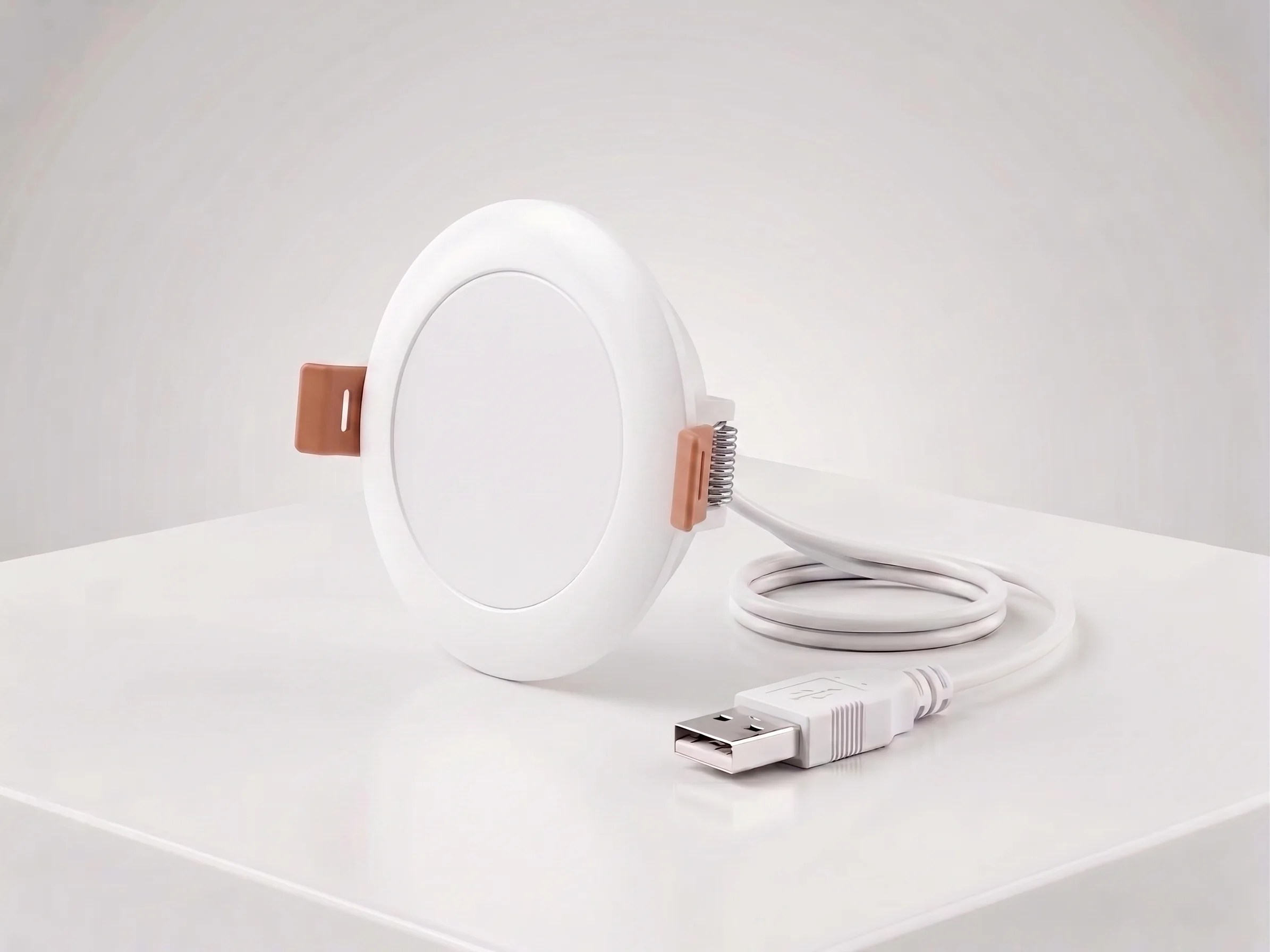
Ceiling Mount mmWave Human Presence Sensor — Zigbee
24GHz wideband mmWave ceiling presence sensor with 10m motion detection, 2.5m micro-motion, and breathing detection. 120° field, DC5V, Zigbee 3.0. For hotel room occupancy and commercial automation.
This page already points to it as the next recommended reference.
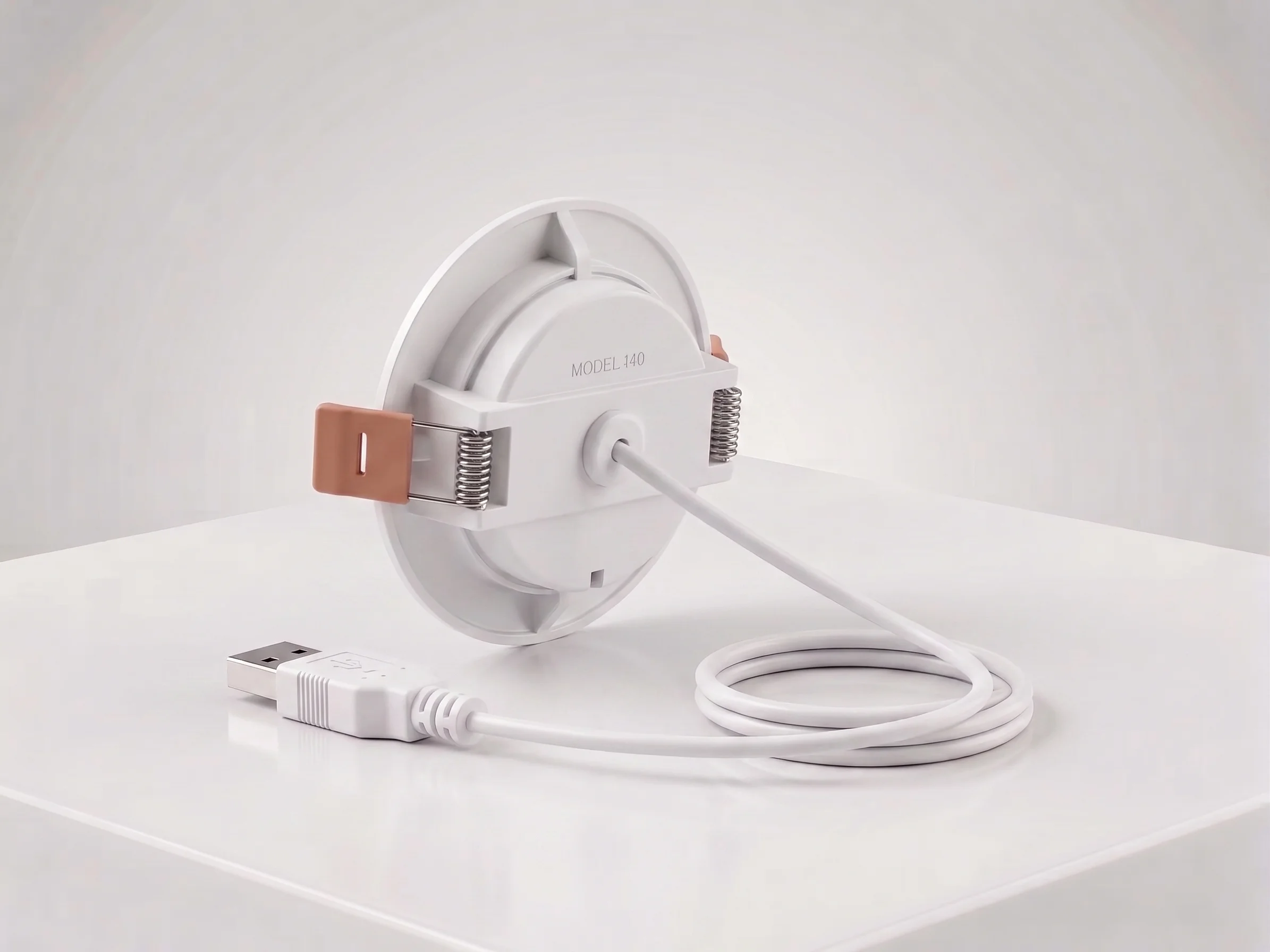
Ceiling Mount mmWave Human Presence Sensor — Matter over Thread
24GHz wideband mmWave ceiling presence sensor with 10m motion, 2.5m micro-motion, and breathing detection. 120° field, DC5V, Matter over Thread. Works natively with Apple Home, Google Home, and Alexa.
This page already points to it as the next recommended reference.
Related solutions
1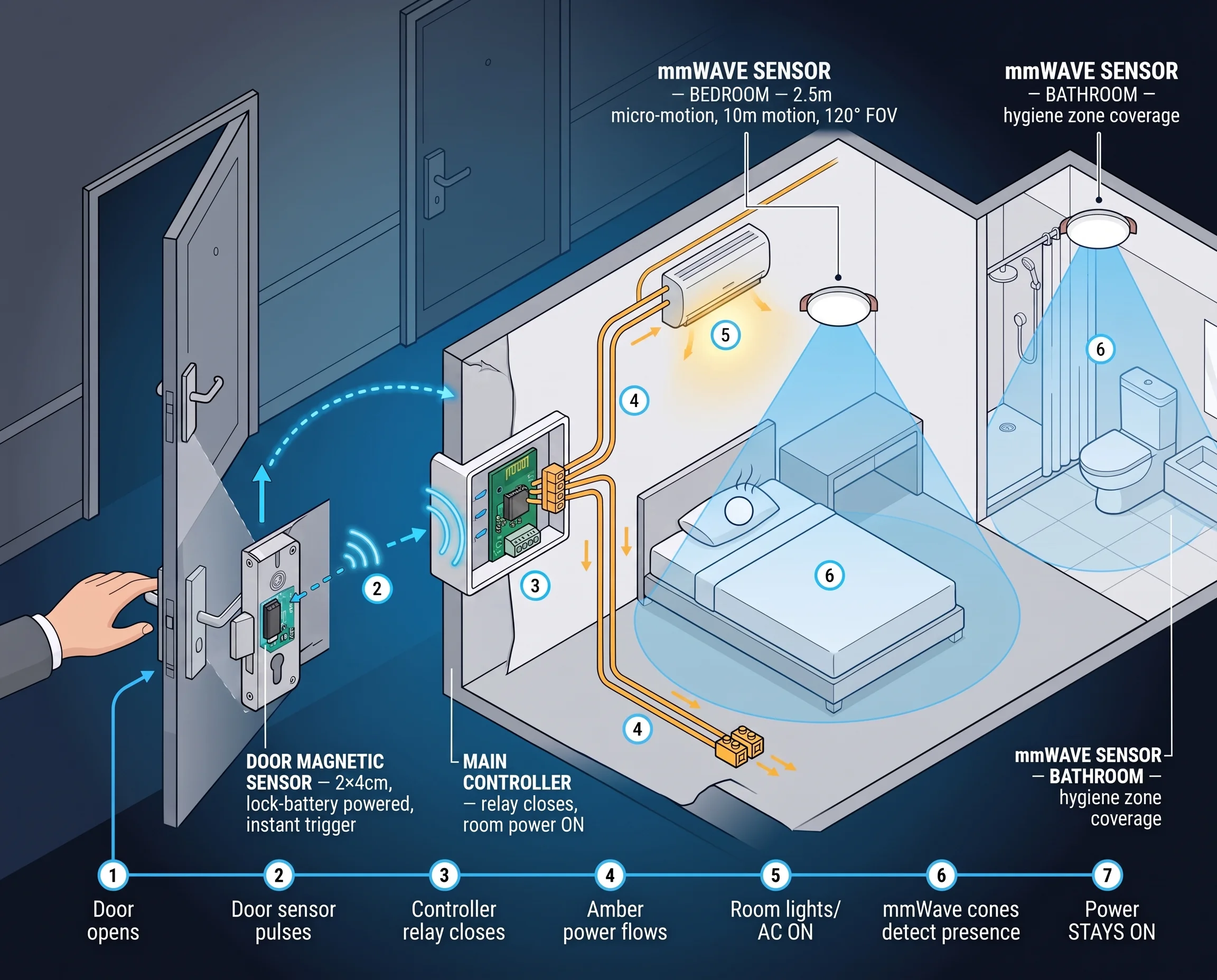
Hotel Room Occupancy & Motion Sensor Solution
mmWave radar presence sensors for hotel room occupancy, housekeeping scheduling, and HVAC energy saving. Detect true occupancy — even when the guest is asleep — with our ceiling-mount hotel room motion sensor.
It supports the same product context: Ceiling Mount mmWave Human Presence Sensor — Zigbee, Ceiling Mount mmWave Human Presence Sensor — Matter over Thread.
Related blog posts
3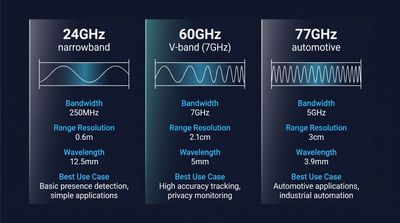
60GHz vs 24GHz vs 77GHz mmWave Sensors: Choosing the Right Frequency for Commercial Presence Detection
Compare 60GHz, 24GHz, and 77GHz mmWave sensors for commercial presence detection. Technical specs, detection range, privacy, and OEM sourcing guidance.
It supports the same product context: Ceiling Mount mmWave Human Presence Sensor — Zigbee.
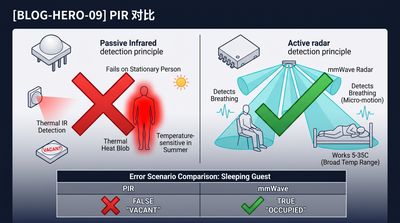
What Is an Electronic Presence Sensor? Technology, Accuracy, and How It Differs From a Motion Sensor
Learn what an electronic presence sensor is, how it detects stationary humans, and how it differs from a PIR motion sensor. Covers mmWave, accuracy, and use cases.
It supports the same product context: Ceiling Mount mmWave Human Presence Sensor — Zigbee, Ceiling Mount mmWave Human Presence Sensor — Matter over Thread.
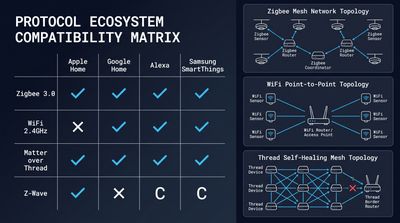
How to Integrate mmWave Presence Sensors With Home Assistant (Local Control Guide)
Step-by-step local control setup guide for mmWave devices, covering MQTT/Matter config, automation scripts, calibration and OEM ceiling presence sensor integration tips.
It supports the same product context: Ceiling Mount mmWave Human Presence Sensor — Matter over Thread, Ceiling Mount mmWave Human Presence Sensor — Zigbee.
Specify your hotel project with our engineers
Send your room count, ceiling type, and protocol preference. We will return a sample plan and quote within 24 business hours.
- Move from general guidance into a product or application discussion.
- Use RFQ when pricing, drawings, MOQ, or launch timing needs structure.
- Keep a direct contact path visible for fast clarifications and handoff.