Wholesale Price Sensor mmWave: A 2026 Procurement Guide for Bulk Orders
Learn about mmWave sensor wholesale pricing, MOQs, tiered pricing structures, and how to negotiate bulk orders from suppliers for OEM and system integrator deployments.
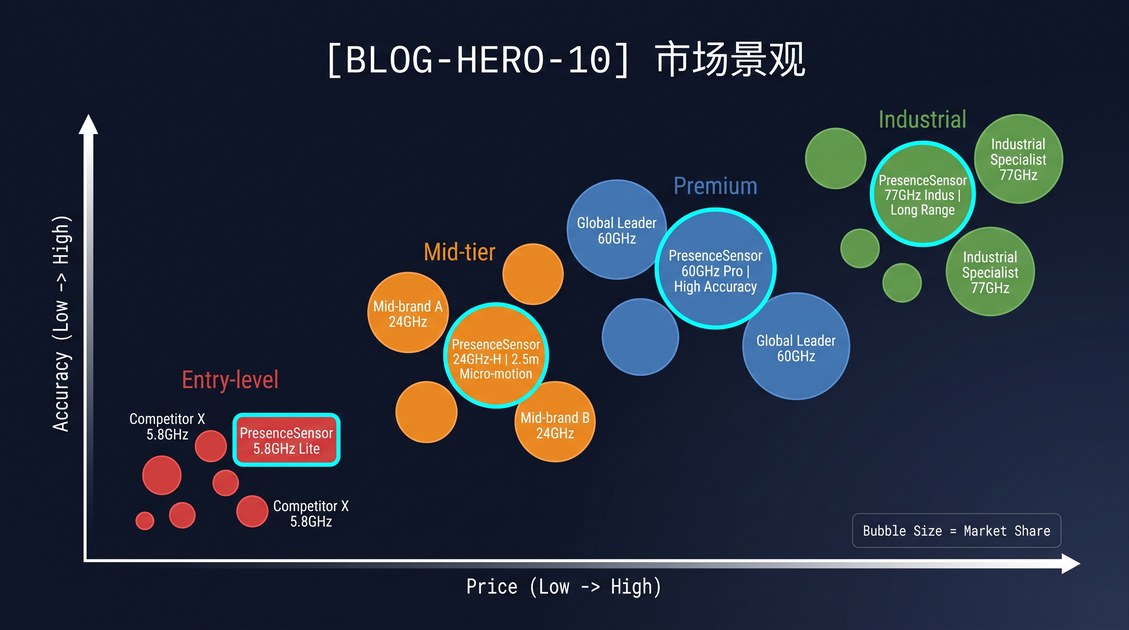
The wholesale price sensor mmWave market has matured significantly since 2020, with tiered pricing now well-established across three volume tiers that serve OEMs, system integrators, and high-volume procurement teams: 1,000-unit lot size at $6–18 per module for the mmWave radio plus antenna assembly, 10,000-unit lot size at $4–12 per module, and 100,000-unit lot size at $3–8 per module, with the specific price point within each band determined by frequency (24 GHz is cheapest, 77 GHz is most expensive), antenna configuration (2×2 MIMO vs 3×3 MIMO vs 4×4 MIMO), certification scope (FCC/CE only vs automotive qualification), and bundling (standalone module vs module with pre-certified reference design). The mmWave chipset — the silicon transceiver that emits and receives the millimeter-wave signal — typically represents 40–60% of the module cost, with the remaining 40–60% covering the antenna array, the RF front-end (power amplifiers, low-noise amplifiers, filters), the baseband processor (for FMCW chirp generation and FFT processing), the power management circuitry, and the factory calibration and testing overhead. Understanding how these cost components vary across volume tiers and how they can be optimized through value-engineering is the foundation of a successful mmWave sensor bulk procurement strategy.
For an OEM building a commercial presence detector, a system integrator deploying sensors across a hotel chain or office portfolio, or a procurement team negotiating with suppliers, the wholesale price sensor mmWave decision is not just about finding the lowest per-unit cost. The procurement must consider total cost of ownership (hardware, installation, integration, certification, and ongoing operations), supply chain resilience (single-source vs multi-sourcing, regional stocking), and the trade-offs between module-only purchase and reference-design licensing. This guide provides a transparent, data-driven view of current mmWave sensor wholesale pricing, explains how pricing is structured across volume tiers, identifies the cost drivers that can be negotiated, and offers a framework for evaluating suppliers and structuring a bulk order that meets both budget and performance requirements.
Wholesale Price Sensor mmWave: Current Market Pricing in 2026
The mmWave sensor market has settled into a predictable pricing structure across the three major industrial-scientific-medical (ISM) frequency bands used for commercial applications: 24 GHz (24.0–24.25 GHz narrowband ISM or 24.05–24.25 GHz UWB), 60 GHz (57–64 GHz), and 77 GHz (76–81 GHz). Each band has a different cost structure driven by chipset pricing, regulatory certification costs, and market dynamics.
Wholesale Price Sensor mmWave: 24 GHz Pricing (Cost-Optimized for Motion-Only Applications)
The 24 GHz ISM band is the cheapest option for wholesale price sensor mmWave procurement, driven by a mature chipset ecosystem with multiple vendors (Texas Instruments, Infineon, Calterah, SGR, and several Chinese fabless vendors) and by the fact that the antenna design is simpler (the 12.5 mm wavelength allows larger patch antennas with looser manufacturing tolerances). A typical 24 GHz mmWave module — 2×2 MIMO antenna array, 250 MHz bandwidth, basic FMCW chirp generation, and on-chip FFT processing — wholesale prices as follows:
- 1,000-unit lot: $3–8 per module
- 10,000-unit lot: $2–5 per module
- 100,000-unit lot: $1.5–4 per module
The lower end of these price bands typically applies to modules with minimal on-module processing (the FMCW chirp generation and FFT are done off-module by a separate baseband processor), while the higher end applies to modules with integrated processing. A 24 GHz module at the low end ($1.5–2 at 100K units) is often appropriate for motion-only applications where stationary-occupant detection is not required, such as stairwell vacancy sensors, outdoor motion detectors, and basic security applications. The higher-end 24 GHz modules ($4–5 at 100K units) may offer wider bandwidth (up to 5 GHz in the UWB segment) and better micro-motion sensitivity, but even the best 24 GHz modules cannot match the stationary-occupant detection accuracy of 60 GHz modules because of the narrower bandwidth.
A key procurement consideration for 24 GHz modules is the regulatory phase-out of the UWB allocation in Europe, which was deprecated for new automotive designs in 2022 and is increasingly restricted for other applications. For a global deployment, the 250 MHz narrowband ISM allocation is the safer choice, but the narrow bandwidth limits stationary-occupant detection. The 24 GHz wholesale price sensor mmWave segment is therefore most appropriate for price-sensitive, motion-only applications where the deployment region is limited to markets that will continue to support 24 GHz UWB, or where the narrowband ISM segment is sufficient.
Wholesale Price Sensor mmWave: 60 GHz Pricing (Default for Stationary-Occupant Detection)
The 60 GHz band (57–64 GHz) has become the default choice for commercial presence detection applications because it provides 7 GHz of bandwidth, which is 28× the bandwidth of the narrowband 24 GHz ISM segment, enabling the fine Doppler resolution needed for breathing detection and stationary-occupant sensing. The 60 GHz chipset ecosystem is dominated by Texas Instruments (IWR6843, IWR6443), Infineon (XENSIV 60 GHz), and Vayyar, with competitive pricing emerging from several Asian vendors. A typical 60 GHz mmWave module — 2×2 or 3×3 MIMO antenna array, 7 GHz bandwidth, integrated FMCW processing, and on-module FFT and classification — wholesale prices as follows:
- 1,000-unit lot: $6–18 per module
- 10,000-unit lot: $4–12 per module
- 100,000-unit lot: $3–8 per module
The spread within each volume tier is determined by several factors that procurement teams can negotiate. At the lower end ($3–4 at 100K units), the module typically has a 2×2 MIMO antenna (limited angular resolution), a limited on-module processing pipeline (FFT but no classification), and basic certification (FCC/CE only). At the higher end ($8–10 at 100K units), the module may have a 3×3 or 4×4 MIMO antenna (fine angular resolution, multi-target capability), on-module machine learning for presence classification (sleeping, sitting, walking, room-empty), and additional certifications (IC in Canada, MIC in Japan, SRRC in China).
The 60 GHz wholesale price sensor mmWave segment is the most competitive and the most innovative, with new product introductions happening quarterly. For an OEM building a commercial presence detector product, 60 GHz is almost always the right frequency band, and the procurement decision is about finding the right balance of antenna configuration, on-module processing capability, and certification scope within the budget.
Wholesale Price Sensor mmWave: 77 GHz Pricing (High-Precision and Industrial Applications)
The 77 GHz band (76–81 GHz) is primarily an automotive band, but it is increasingly being used for high-precision industrial and large-venue applications where long range (20–30 m) and fine angular resolution are required. The chipset ecosystem is dominated by automotive vendors (NXP, Infineon, Texas Instruments, Arbe, Mobileye) and is characterized by longer lead times, automotive-grade qualification requirements (ASIL-B or higher for safety-critical applications), and higher unit costs. A typical 77 GHz mmWave module — 4×4 MIMO antenna array, 5 GHz bandwidth, automotive-grade silicon, and functional safety documentation — wholesale prices as follows:
- 1,000-unit lot: $18–60 per module
- 10,000-unit lot: $15–45 per module
- 100,000-unit lot: $12–35 per module
The higher cost is driven by three factors: the automotive-grade qualification (which requires additional testing, traceability, and quality systems), the more complex antenna design (the 3.9 mm wavelength requires tighter manufacturing tolerances), and the smaller but more specialized supplier base. For a wholesale price sensor mmWave procurement where long range and fine angular resolution are required — such as warehouse zone detection, airport terminal crowd monitoring, or convention center occupancy tracking — 77 GHz may be worth the price premium, but for hotel, office, healthcare, and residential applications, 60 GHz delivers the required performance at 30–80% lower unit cost.
| Frequency band | 1K unit lot | 10K unit lot | 100K unit lot | Primary use case | Chipset cost as % of module |
|---|---|---|---|---|---|
| 24 GHz ISM | $3–8 | $2–5 | $1.5–4 | Motion-only, cost-sensitive | 40–50% |
| 24 GHz UWB | $5–12 | $4–8 | $3–6 | High-precision motion | 45–55% |
| 60 GHz | $6–18 | $4–12 | $3–8 | Stationary occupancy, default choice | 50–60% |
| 77 GHz | $18–60 | $15–45 | $12–35 | Long-range, high-precision | 55–65% |
Wholesale Price Sensor mmWave: Understanding the Cost Breakdown
To negotiate effectively with suppliers, a procurement team must understand what drives the wholesale price sensor mmWave figure and which components can be value-engineered. The cost breakdown of a typical 60 GHz mmWave module is as follows (at 10,000-unit volume):
- mmWave chipset (transceiver): 35–45% of module cost
- Antenna array and RF front-end: 20–30% of module cost
- Baseband processor (FMCW chirp, FFT): 10–15% of module cost
- Power management: 5–8% of module cost
- PCB and mechanical: 5–8% of module cost
- Factory calibration and testing: 5–8% of module cost
- Certification and compliance overhead: 3–5% of module cost
- Profit and overhead: 10–15% of module cost
The single largest cost component is the mmWave chipset, and this is where volume discounts are most significant. A 60 GHz chipset at 1,000-unit volume might cost $4–6 per unit, but the same chipset at 100,000-unit volume might cost $2–3 per unit, creating a substantial margin for the module vendor to pass through to the customer as a volume discount. The antenna array and RF front-end (power amplifiers, low-noise amplifiers, bandpass filters, baluns) is the second-largest component, and this is where manufacturing efficiency and yield improvements can drive cost reduction at high volume.
Wholesale Price Sensor mmWave: Chipset Pricing and Volume Discounts
The mmWave chipset market has settled into a clear pricing structure across volume tiers. For a 60 GHz FMCW transceiver with integrated baseband processing:
- 1,000-unit lot: $4–8 per chipset
- 10,000-unit lot: $3–5 per chipset
- 100,000-unit lot: $2–4 per chipset
- 1,000,000-unit lot: $1.5–3 per chipset
The chipset pricing varies significantly by vendor and by feature set. A Texas Instruments IWR6843 (a mature 60 GHz transceiver with integrated processing) might be at the higher end of these price bands, while a newer, more integrated 60 GHz chipset from an Asian vendor might be at the lower end. A 77 GHz automotive-grade chipset (ASIL-B qualified) typically costs 3–5× more than an equivalent 60 GHz chipset at the same volume.
For an OEM building a custom mmWave sensor design, the most cost-effective procurement path is often to qualify at least two chipset vendors and to negotiate volume pricing with both, using the threat of switching to the second vendor to drive down the first vendor's price. The wholesale price sensor mmWave ecosystem has enough competitive pressure that dual-sourcing is feasible for 60 GHz modules, though 77 GHz modules are still primarily single-source due to the automotive qualification requirements.
Wholesale Price Sensor mmWave: Antenna Array and RF Front-End Costs
The antenna array and RF front-end costs are driven by the number of antenna elements, the substrate material (Rogers vs FR4), and the complexity of the RF circuitry. A 2×2 MIMO antenna array at 60 GHz requires four patch antennas (two transmit, two receive) and associated baluns and matching networks, and might cost $1–2 at volume. A 4×4 MIMO array requires eight patch antennas and more complex RF routing, and might cost $2–3 at volume. The RF front-end (power amplifiers for transmit, low-noise amplifiers for receive, bandpass filters to reject out-of-band interference) adds another $1–2 to the bill of materials.
The substrate material choice is a significant cost driver. Rogers material (a specialized high-frequency laminate that handles 60 GHz signals with low loss) costs 5–10× more than standard FR4, but FR4 has higher loss at 60 GHz and can degrade performance. Some vendors use a hybrid approach: Rogers for the antenna and RF feed, FR4 for the rest of the PCB. The substrate choice is a negotiation point with the supplier — for many indoor presence detection applications, FR4 with careful RF design may be acceptable, which can reduce the antenna and RF front-end cost by 30–50%.
Wholesale Price Sensor mmWave: Factory Calibration and Testing Overhead
An mmWave module requires factory calibration to compensate for manufacturing variations in the antenna pattern, the RF front-end gain and phase, and the ADC offsets. This calibration involves testing each module against known targets at various ranges and angles, and storing calibration coefficients in the module's non-volatile memory. The calibration process takes 1–3 minutes per module and requires specialized test equipment (vector network analyzers, calibrated radar targets), which adds cost.
At low volume (1,000 units), the calibration overhead can represent 5–10% of the module cost. At high volume (100,000 units), the calibration process is automated, and the cost per module drops to 1–3%. However, some suppliers include the calibration overhead in their module pricing even at high volume, which is a negotiable item. A procurement team can ask the supplier to quote with and without calibration (for the rare case where the OEM will perform calibration in-house), and can negotiate the calibration methodology to reduce cost (e.g., reduce the number of calibration test points if the application does not require high angular accuracy).
Wholesale Price Sensor mmWave: Volume Tiers and MOQ Considerations
The wholesale price sensor mmWave market has standardized on three volume tiers, each with its own minimum order quantity (MOQ) and pricing model. Understanding these tiers and their associated MOQs is essential for a procurement team planning a bulk order.
Wholesale Price Sensor mmWave: Tier 1 — Prototyping and Pilot Deployments (1K–2,500 Units)
The first volume tier is for prototyping, pilot deployments, and low-volume production runs. The typical MOQ in this tier is 500–1,000 units, and the pricing reflects the supplier's need to recover the setup and overhead costs of a small production run. The wholesale price sensor mmWave figure in this tier is typically 30–80% higher than the high-volume pricing for the same module.
For an OEM evaluating a new mmWave sensor design, this tier is used for building the first engineering samples and for conducting a limited pilot deployment (e.g., 50 sensors in 10 hotel rooms) before committing to higher volume. The MOQ may seem high for a pilot, but the supplier's production setup (test fixtures, calibration equipment, programming stations) is the same for 1,000 units as for 100,000 units, and the supplier cannot amortize this setup across a run of only 50 units.
A procurement strategy for this tier is to combine orders across multiple projects within the organization to reach the MOQ, or to partner with other OEMs in a joint buy to reach the MOQ. Some suppliers are willing to offer a "split MOQ" where multiple SKUs (e.g., a Zigbee module and a WiFi module) are combined to reach the MOQ, but this requires negotiation and is not standard practice.
Wholesale Price Sensor mmWave: Tier 2 — Production Deployments (2,500–25,000 Units)
The second volume tier is for production deployments. The typical MOQ in this tier is 2,500–5,000 units, and the wholesale price sensor mmWave figure is 20–40% lower than the Tier 1 pricing. This tier is where most hotel chain deployments (100–500 rooms), office building deployments (200–1,000 sensors), and healthcare facility deployments (50–200 sensors) land.
The Tier 2 pricing reflects the supplier's ability to amortize the setup costs across a larger run and to benefit from volume discounts on components (especially the mmWave chipset). A procurement team in this tier can often negotiate additional concessions: extended payment terms (net 60 days instead of net 30), a price-protection clause (if the supplier reduces the price for another customer within 6 months, the price is retroactively reduced), and a right of first refusal on capacity reservations (the supplier will not sell out of capacity to other customers before satisfying the OEM's forecast).
Wholesale Price Sensor mmWave: Tier 3 — High-Volume Production (25,000+ Units)
The third volume tier is for high-volume production runs. The typical MOQ in this tier is 10,000–25,000 units, and the wholesale price sensor mmWave figure is 30–50% lower than the Tier 2 pricing. This tier is where large hotel chains (1,000+ rooms), commercial real estate portfolios (2,000+ sensors), and OEMs shipping millions of units per year land.
The Tier 3 pricing reflects the supplier's ability to optimize the production line for high volume, to qualify second-source components to reduce cost, and to pass through component-level volume discounts from the chipset vendors. A procurement team in this tier has significant leverage and can negotiate custom engineering (custom antenna pattern, custom RF front-end, custom firmware features), dedicated production lines, and multi-year supply agreements with scheduled price reductions. The supplier may also offer a "capacity reservation" at a lower price in exchange for a committed volume forecast, which can be attractive for both the OEM (guaranteed capacity) and the supplier (predictable production planning).
Wholesale Price Sensor mmWave: Module vs Reference Design Procurement
When procuring mmWave sensors for bulk deployment, a procurement team must decide between two procurement models: purchasing stand-alone modules (the mmWave radio, antenna, and processing on a small PCB) and integrating them into a custom housing and firmware, or purchasing a reference design (a complete product design including the mmWave module, the microcontroller, the connectivity hardware, the housing, and the certified firmware) and branding it as their own. Each model has different cost structures and trade-offs.
Wholesale Price Sensor mmWave: Stand-Alone Module Procurement
In the stand-alone module procurement model, the OEM purchases the mmWave module from a supplier (at the wholesale price sensor mmWave figures discussed above) and then designs their own PCB, microcontroller, connectivity (Zigbee, WiFi, Matter, etc.), housing, and firmware. The module supplier provides the mmWave module with a documented interface (typically SPI or I2C for configuration, and GPIO for interrupts), and the OEM's engineering team integrates it into their product.
The advantage of this model is that the OEM has full control over the product design and can differentiate on features (custom housing, custom UI, custom integration with their target system). The disadvantage is that the OEM must absorb the engineering cost of designing the PCB and firmware, the certification cost (FCC, CE, and any regional certifications), and the manufacturing cost of the rest of the product. For an OEM with a strong internal engineering team and a product line where the mmWave module is just one component among many (e.g., a smart thermostat with integrated mmWave presence detection), the stand-alone module model is often the right choice.
Wholesale Price Sensor mmWave: Reference Design Procurement
In the reference design procurement model, the OEM purchases a complete, certified product design from the mmWave sensor vendor (or from a design house that has licensed the vendor's module). The reference design includes the mmWave module, the microcontroller, the connectivity hardware (e.g., a Zigbee radio), the housing (mechanical CAD files), and the certified firmware. The OEM's manufacturing partner produces the product according to the reference design, and the OEM adds their own branding and possibly minor customization.
The advantage of this model is that the OEM gets a turnkey product with pre-completed certification and a predictable engineering timeline. The wholesale price sensor mmWave figure is higher (the reference design typically costs 50–100% more than the stand-alone module, at equivalent volume), but the OEM avoids the certification cost (which can be $20,000–$100,000 for FCC/CE/RoHS certification plus any regional certifications), avoids the engineering risk (the reference design is already proven in production), and gets to market faster. For an OEM that is new to mmWave sensors, or that is entering a new vertical (e.g., a smart home vendor expanding into commercial presence detection), the reference design model can be the right choice despite the higher unit cost.
Wholesale Price Sensor mmWave: Negotiation Framework
Negotiating the wholesale price sensor mmWave figure with suppliers requires a structured approach that goes beyond simply asking for a lower price. The most successful procurement teams negotiate on multiple dimensions simultaneously, creating a package that meets both budget and strategic objectives.
Wholesale Price Sensor mmWave: Price Volume Curve Negotiation
The first dimension to negotiate is the price volume curve — the price at each volume tier. A supplier's initial quote will typically include price points for 1K, 10K, and 100K units. A procurement team should ask for additional data points (2.5K, 5K, 25K, 50K) to interpolate the curve, and should negotiate the slope of the curve. The goal is to ensure that the price reductions between tiers are proportional to the volume increases.
A common supplier tactic is to provide steep discounts between 1K and 10K units but shallower discounts between 10K and 100K units. A procurement team can counter by asking for more aggressive discounts at the higher volume tiers, on the basis that the supplier's setup costs are already amortized and the volume discounts on components are proportionally larger. The negotiation should also address whether the price at a given volume tier is guaranteed for that entire volume tier (i.e., the price for 10,000 units applies to the entire 10,000 units, not just to the first 5,000), which is a typical supplier practice that should be clarified.
Wholesale Price Sensor mmWave: Payment Terms and Cash Flow
The second dimension to negotiate is payment terms. A supplier's standard payment terms are often net 30 days, but a procurement team with a strong balance sheet can negotiate net 60 or net 90 days, which improves cash flow. For high-volume orders (Tier 3), some suppliers offer early payment discounts (e.g., 2% discount if paid in 10 days) which can reduce the effective wholesale price sensor mmWave figure by 2–3%.
For long-term supply agreements, some suppliers offer annual price reviews with predefined adjustment clauses (e.g., the price may increase by no more than the inflation rate, or by no more than the increase in commodity costs). These clauses can protect the OEM from unexpected price increases while still allowing the supplier to cover cost increases.
Wholesale Price Sensor mmWave: Value-Engineering and Cost Reduction
The third dimension to negotiate is value-engineering — working with the supplier to reduce the bill of materials cost without significantly impacting performance. Common value-engineering opportunities include:
- Substrate material: Switching from Rogers to FR4 for the PCB, which can reduce the PCB cost by 30–50% if the RF design can be optimized for FR4.
- Antenna elements: Reducing the number of antenna elements (e.g., from 4×4 MIMO to 2×2 MIMO) if the application does not require fine angular resolution.
- On-module processing: Moving some processing from the module to an external microcontroller (e.g., offloading classification to the application processor) if the module's processing power is underutilized.
- Certification scope: Limiting the certification to FCC/CE only if regional certifications are not immediately required, and adding them later.
- Testing calibration: Reducing the number of calibration test points if the application does not require high precision.
A supplier may be reluctant to propose value-engineering because it reduces their own margin, but a procurement team that comes to the negotiation with a technical understanding of the mmWave module and with specific value-engineering proposals can often achieve 10–20% cost reduction without impacting product performance.
Wholesale Price Sensor mmWave: Multi-Year Supply Agreements
For Tier 3 deployments (25,000+ units per year), a procurement team should negotiate a multi-year supply agreement that includes scheduled price reductions. The structure typically looks like this:
- Year 1: baseline pricing (the negotiated Tier 3 pricing)
- Year 2: price reduction of 5–10%
- Year 3: price reduction of another 3–8%
The exact reduction percentages are determined by the expected learning curve in manufacturing and by the expected component cost reductions from the chipset vendors. A multi-year agreement provides price predictability for the OEM's product planning and provides the supplier with a committed volume forecast that allows them to optimize their production planning and to invest in capacity expansion.
A key clause to negotiate in a multi-year agreement is "most-favored-nation" status: if the supplier offers a lower price to another customer for the same module at equivalent volume, the price is automatically reduced for the OEM. This protects the OEM from being undercut after committing to a long-term agreement.
Wholesale Price Sensor mmWave: Regional Supply and Logistics Considerations
The wholesale price sensor mmWave figure is not just the module price — it also includes logistics, customs duties, and regional compliance costs. A procurement team must consider where the sensors will be manufactured, where they will be shipped from, and what the landed cost will be.
Wholesale Price Sensor mmWave: Manufacturing Location
The majority of mmWave sensor manufacturing is concentrated in Asia (China, Taiwan, South Korea, Vietnam) and in Eastern Europe (Poland, Hungary, Czech Republic). Asia has the lowest manufacturing costs and the highest capacity, but longer shipping times to North America and Europe and potential customs delays. Eastern Europe has slightly higher manufacturing costs but shorter shipping times to Europe and lower customs risk.
For a procurement team in North America or Europe, the decision is often between procuring from an Asian manufacturer with lower unit cost but higher shipping costs, and procuring from a regional manufacturer with higher unit cost but lower shipping and customs overhead. The break-even point depends on volume and on the value of the goods — at very high volume, the per-unit shipping cost becomes negligible, and the lower unit cost dominates.
Wholesale Price Sensor mmWave: Customs Duties and Tariffs
The import customs duty for mmWave sensor modules varies by destination country and by country of origin. In the United States, the Harmonized Tariff Schedule (HTS) code for mmWave radio transceivers is 8542.33, which typically carries a duty of 0–2.5% depending on the country of origin and any applicable trade agreements. In the European Union, the customs duty for mmWave modules is typically 0–2.7%. For a procurement team, it is important to clarify with the supplier whether the quoted wholesale price sensor mmWave figure is EXW (ex-works, price at the factory), FOB (free on board, price including loading onto the vessel), or DDP (delivered duty paid, price including shipping, customs, and duties). The difference between EXW and DDP can be 5–15% of the total landed cost.
Wholesale Price Sensor mmWave: Regional Warehousing
For large deployments, a procurement team should negotiate regional warehousing with the supplier. Instead of shipping 10,000 sensors from Asia to a central distribution point in North America, the supplier may maintain a regional warehouse in the United States or Europe with a stocked inventory of the OEM's SKU, allowing just-in-time delivery to the deployment site. The warehousing service typically costs 1–3% of the inventory value per year, but can significantly reduce deployment lead times and can provide a buffer against supply chain disruptions.
Wholesale Price Sensor mmWave: Supplier Evaluation and Qualification
Before committing to a bulk order, a procurement team must evaluate and qualify the mmWave sensor supplier. The evaluation should cover technical capability, manufacturing quality, supply chain resilience, and commercial terms.
Wholesale Price Sensor mmWave: Technical Capability
The technical capability evaluation should confirm that the supplier's mmWave module meets the performance requirements for the target application. Key technical criteria include:
- Frequency band and bandwidth: Confirm the exact frequency range and bandwidth, and verify that they match the application requirements (7 GHz at 60 GHz for stationary-occupant detection, 250 MHz at 24 GHz for motion-only).
- Antenna configuration: Confirm the MIMO configuration (2×2, 3×3, 4×4) and the resulting field of view and angular resolution.
- Detection performance: Request independent test data for stationary-occupant true positive rate, false positive rate, and detection latency, under conditions that match the deployment environment.
- Integration interface: Confirm the documented interface (SPI, I2C, GPIO) and the availability of evaluation boards and software development kits.
- Firmware update capability: Confirm how firmware updates are delivered (over-the-air, wired, factory update) and the frequency of updates.
Wholesale Price Sensor mmWave: Manufacturing Quality
The manufacturing quality evaluation should confirm that the supplier has robust quality systems in place. Key quality criteria include:
- Certifications: Confirm ISO 9001 certification for quality management, and any industry-specific certifications (IATF 16949 for automotive, ISO 13485 for healthcare).
- Yield rate: Ask for the production yield rate (percentage of modules that pass final test). A yield rate below 95% indicates process issues that could cause delivery delays.
- Failure rate: Ask for the field failure rate (percentage of modules that fail after deployment). A failure rate below 0.5% per year is typical for a mature product.
- Warranty and returns: Clarify the warranty period (typically 12–24 months) and the return process for defective units.
Wholesale Price Sensor mmWave: Supply Chain Resilience
The supply chain resilience evaluation should confirm that the supplier can meet volume commitments and can mitigate disruptions. Key supply chain criteria include:
- Chipset sourcing: Confirm whether the mmWave chipset is single-sourced or dual-sourced. For mission-critical deployments, dual-sourcing is preferable.
- Lead time: Confirm the standard lead time at each volume tier. A lead time of 8–12 weeks at 10K volume is typical; a lead time longer than 16 weeks should be questioned.
- Capacity headroom: Confirm that the supplier has excess capacity to accommodate volume increases. A supplier running at 90%+ capacity has limited flexibility to handle forecast increases.
- Geographic risk: Assess the geopolitical risk of the manufacturing location. A supplier with manufacturing in multiple countries (e.g., China and Vietnam) provides more resilience than a supplier with manufacturing in a single country.
Wholesale Price Sensor mmWave: Procurement Checklist
For a procurement team ready to execute a bulk order, the following checklist distills the decision framework above into a actionable procurement process:
- Define the application requirements: detection range, stationary-occupant detection requirement, angular resolution, field of view, power budget, integration requirements.
- Select the frequency band: 24 GHz for motion-only, 60 GHz for stationary occupancy (default), 77 GHz for long-range/high-precision.
- Determine the volume tier: estimate annual volume and identify the target MOQ (1K for prototyping, 2.5K–25K for production, 25K+ for high-volume).
- Request quotes from 2–3 suppliers: specify the volume tiers, the technical requirements, and the delivery terms (EXW/FOB/DDP).
- Evaluate technical capability: review test data, request evaluation units, confirm integration interface.
- Evaluate manufacturing quality: review certifications, ask for yield rate and field failure rate, clarify warranty terms.
- Evaluate supply chain resilience: confirm chipset sourcing, lead time, capacity headroom, geographic risk.
- Negotiate the price volume curve: get price points at multiple volume tiers, negotiate aggressive discounts at higher volumes.
- Negotiate payment terms: target net 60 or net 90 days if possible, negotiate early payment discounts.
- Propose value-engineering opportunities: work with the supplier to reduce BOM cost without impacting performance.
- Negotiate a multi-year supply agreement for Tier 3 volumes, with scheduled price reductions and most-favored-nation status.
- Clarify landed cost: confirm whether the quote is EXW, FOB, or DDP, and calculate the total landed cost including shipping, customs, and duties.
- Plan regional warehousing: negotiate just-in-time delivery from a regional warehouse if the deployment is large and time-sensitive.
- Execute a pilot order: before committing to the full volume, place a pilot order (100–500 units) and verify performance in the actual deployment environment.
- Monitor performance during deployment: track field failure rates, compare against the supplier's quoted failure rate, and address any deviations.
Wholesale Price Sensor mmWave: Market Trends and Future Pricing
The wholesale price sensor mmWave market is expected to see continued pricing pressure downward over the next 3–5 years, driven by three factors: increasing competition from Asian chipset vendors, increasing integration of mmWave transceivers into single-chip solutions, and increasing production volumes as the technology moves from niche to mainstream. A reasonable price projection (assuming no major supply chain disruptions) is:
- 2026: $3–8 at 100K units (60 GHz)
- 2027: $2.5–6 at 100K units
- 2028: $2–5 at 100K units
- 2029: $1.5–4 at 100K units
These projections are based on the expected learning curve in manufacturing and on the expected entry of new chipset vendors into the 60 GHz market. For a procurement team planning a multi-year deployment, these projections can be used to negotiate scheduled price reductions in a supply agreement.
A second important trend is the increasing availability of pre-integrated reference designs, which will reduce the engineering and certification burden for OEMs and may accelerate the adoption of mmWave sensors in new verticals. The wholesale price sensor mmWave figure for a reference design is expected to decline more slowly than the price for stand-alone modules, because the value of the turnkey solution (certification, proven design, time-to-market) is relatively constant even as module prices decline.
Wholesale Price Sensor mmWave: Final Recommendation
The wholesale price sensor mmWave market has matured to the point where transparent, competitive pricing is available across three volume tiers, and where a well-specified bulk order can be negotiated at a predictable price point with clear terms. For an OEM building a commercial presence detector, a system integrator deploying sensors across a hotel chain or office portfolio, or a procurement team evaluating suppliers, the right approach is to start with a clear definition of the application requirements (detection range, stationary-occupant detection, angular resolution), select the appropriate frequency band (60 GHz is the default for most applications), estimate the annual volume to identify the target MOQ, and then request quotes from 2–3 suppliers with a clear specification of the technical requirements and the desired delivery terms.
The negotiation should focus on multiple dimensions simultaneously: the price volume curve, payment terms, value-engineering opportunities, and for high-volume orders, a multi-year supply agreement with scheduled price reductions and most-favored-nation status. The landed cost (including shipping, customs, and duties) should be calculated for each supplier quote to enable an apples-to-apples comparison, and regional warehousing should be negotiated for large deployments to reduce lead times and provide supply chain resilience.
With this structured approach, a procurement team can achieve a wholesale price sensor mmWave figure that meets budget requirements while ensuring technical performance, manufacturing quality, and supply chain reliability. The mmWave sensor market is competitive and maturing, and a well-executed bulk order can lock in favorable pricing for multiple years while securing the capacity and quality needed for a successful deployment.
Part of this article content is generated by AI and optimized for professional accuracy and readability.
Not sure which sensor fits your project?
Talk to our mmWave application engineers for a free consultation.
Find the right presence sensor for your hotel project
Compare the 3 protocols, check hotel-specific case studies, and download the installation guide
Related products
2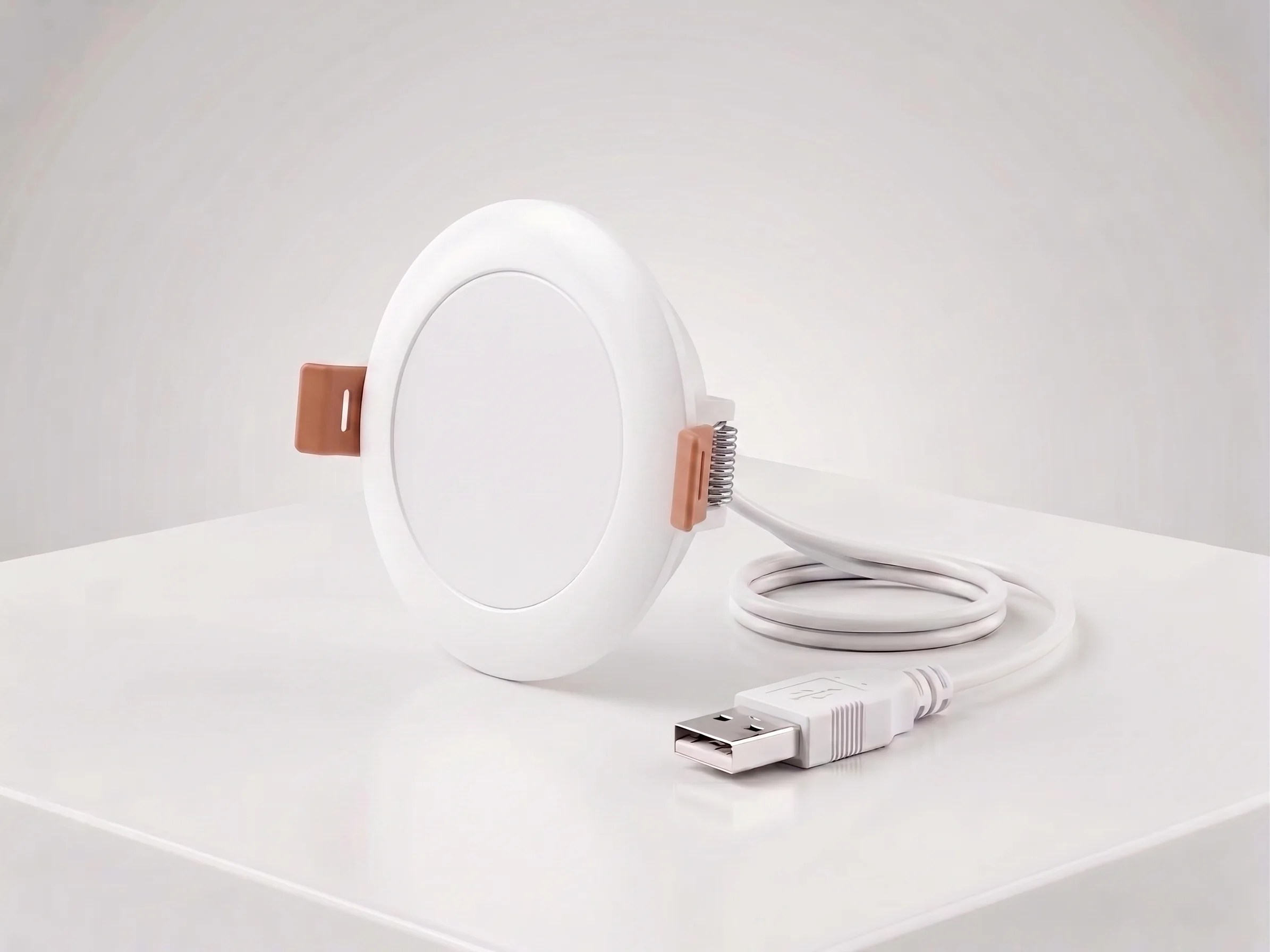
Ceiling Mount mmWave Human Presence Sensor — Zigbee
24GHz wideband mmWave ceiling presence sensor with 10m motion detection, 2.5m micro-motion, and breathing detection. 120° field, DC5V, Zigbee 3.0. For hotel room occupancy and commercial automation.
This page already points to it as the next recommended reference.
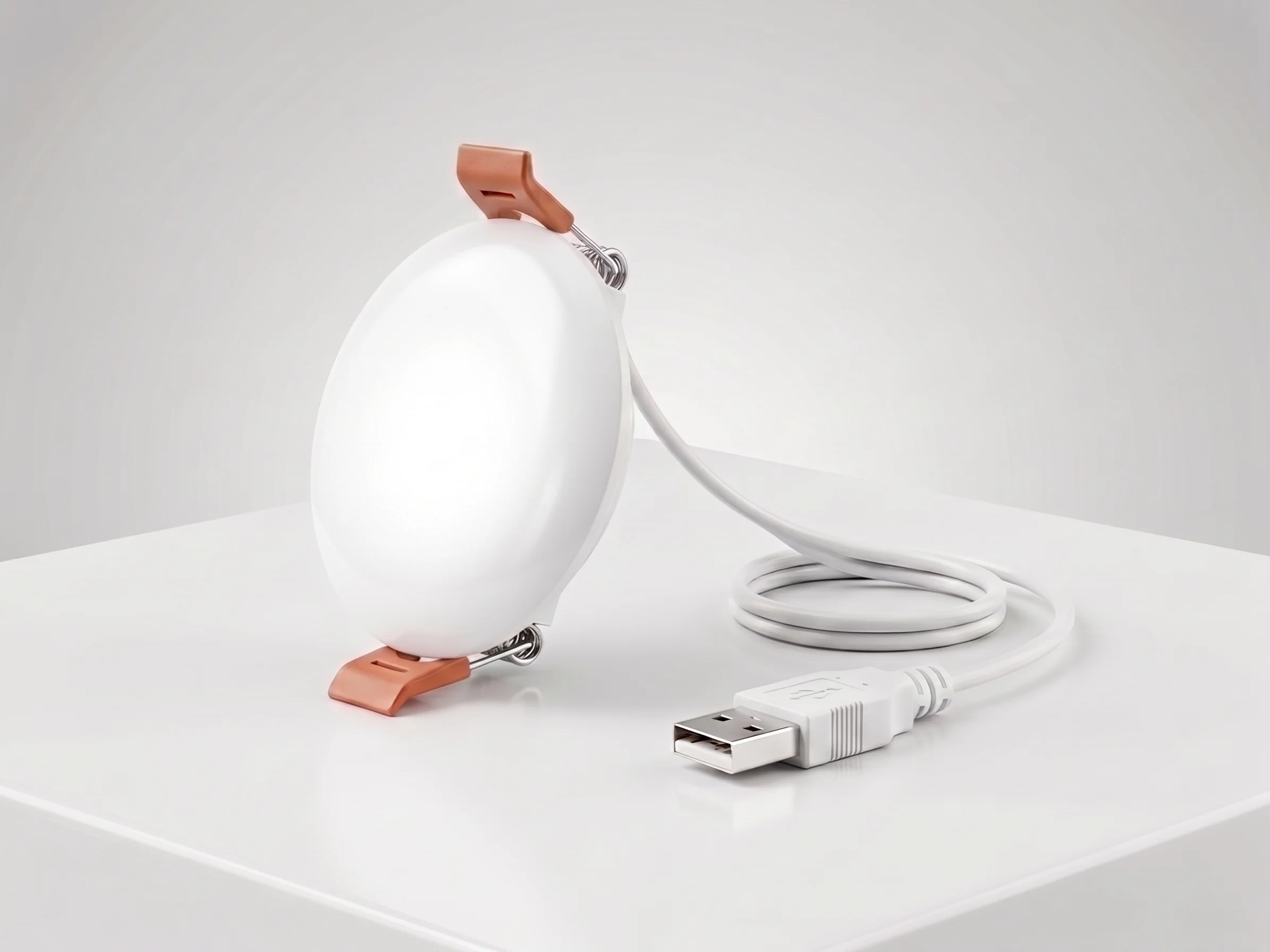
Ceiling Mount mmWave Human Presence Sensor — WiFi
24GHz wideband mmWave ceiling presence sensor with 10m motion detection, 2.5m micro-motion, and breathing detection. 120° field, DC5V, WiFi 2.4GHz. No gateway required for retrofit hotel and apartment projects.
This page already points to it as the next recommended reference.
Related solutions
1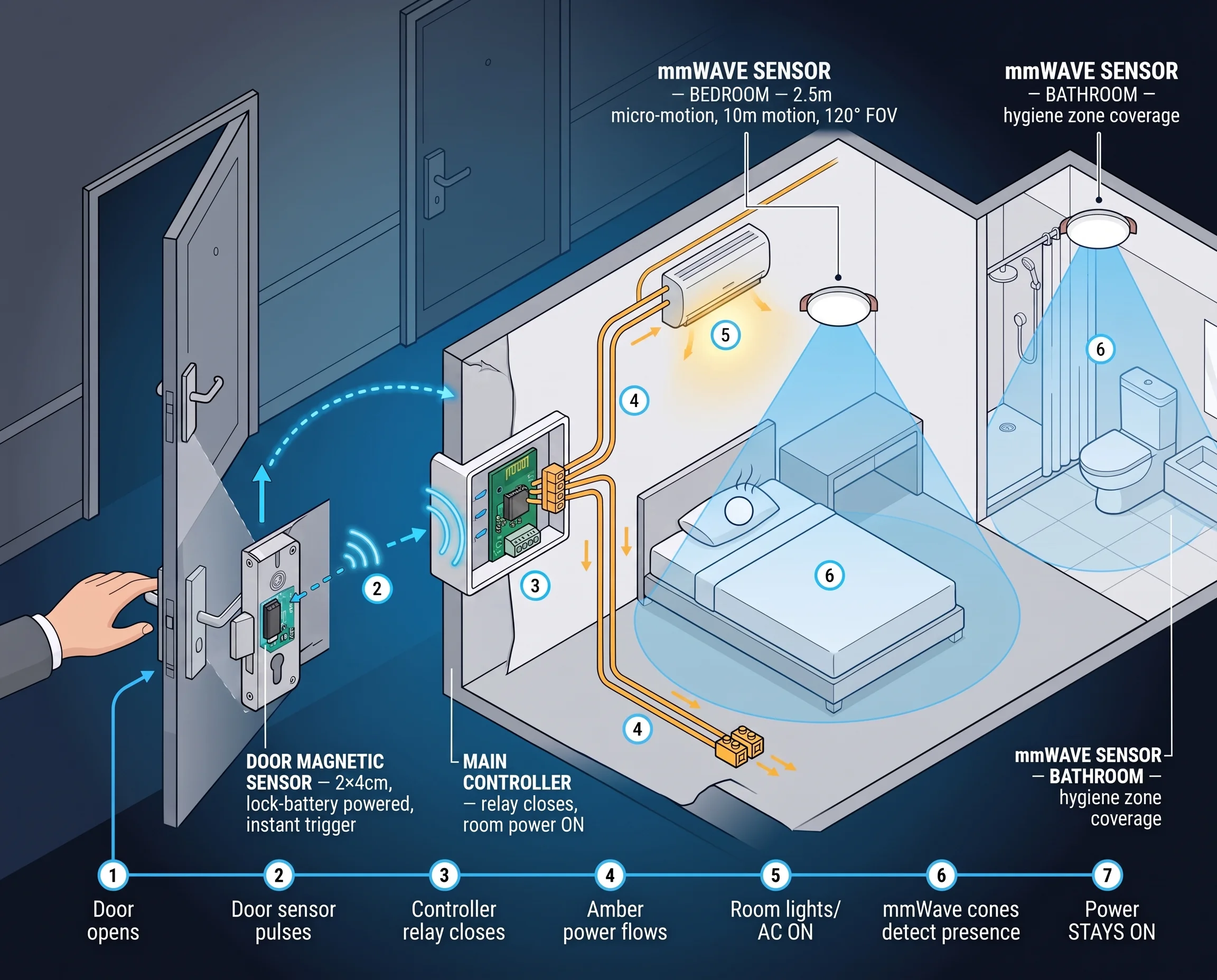
Hotel Room Occupancy & Motion Sensor Solution
mmWave radar presence sensors for hotel room occupancy, housekeeping scheduling, and HVAC energy saving. Detect true occupancy — even when the guest is asleep — with our ceiling-mount hotel room motion sensor.
It supports the same product context: Ceiling Mount mmWave Human Presence Sensor — Zigbee, Ceiling Mount mmWave Human Presence Sensor — WiFi.
Related blog posts
3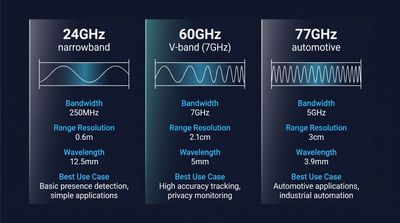
60GHz vs 24GHz vs 77GHz mmWave Sensors: Choosing the Right Frequency for Commercial Presence Detection
Compare 60GHz, 24GHz, and 77GHz mmWave sensors for commercial presence detection. Technical specs, detection range, privacy, and OEM sourcing guidance.
It supports the same product context: Ceiling Mount mmWave Human Presence Sensor — Zigbee, Ceiling Mount mmWave Human Presence Sensor — WiFi.
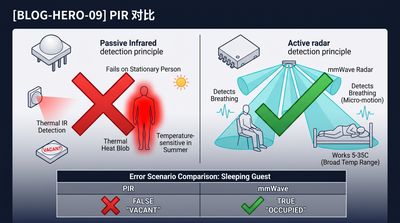
What Is an Electronic Presence Sensor? Technology, Accuracy, and How It Differs From a Motion Sensor
Learn what an electronic presence sensor is, how it detects stationary humans, and how it differs from a PIR motion sensor. Covers mmWave, accuracy, and use cases.
It supports the same product context: Ceiling Mount mmWave Human Presence Sensor — Zigbee, Ceiling Mount mmWave Human Presence Sensor — WiFi.
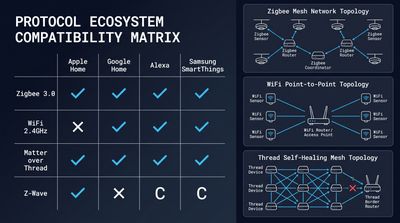
How to Integrate mmWave Presence Sensors With Home Assistant (Local Control Guide)
Step-by-step local control setup guide for mmWave devices, covering MQTT/Matter config, automation scripts, calibration and OEM ceiling presence sensor integration tips.
It supports the same product context: Ceiling Mount mmWave Human Presence Sensor — WiFi, Ceiling Mount mmWave Human Presence Sensor — Zigbee.
Specify your hotel project with our engineers
Send your room count, ceiling type, and protocol preference. We will return a sample plan and quote within 24 business hours.
- Move from general guidance into a product or application discussion.
- Use RFQ when pricing, drawings, MOQ, or launch timing needs structure.
- Keep a direct contact path visible for fast clarifications and handoff.