Radar Sensor for Human Detection for Sale: 2026 Buying Guide
A guide to buying radar sensor for human detection for sale. Covers procurement channels, wholesale pricing, technical specifications, and supplier selection.
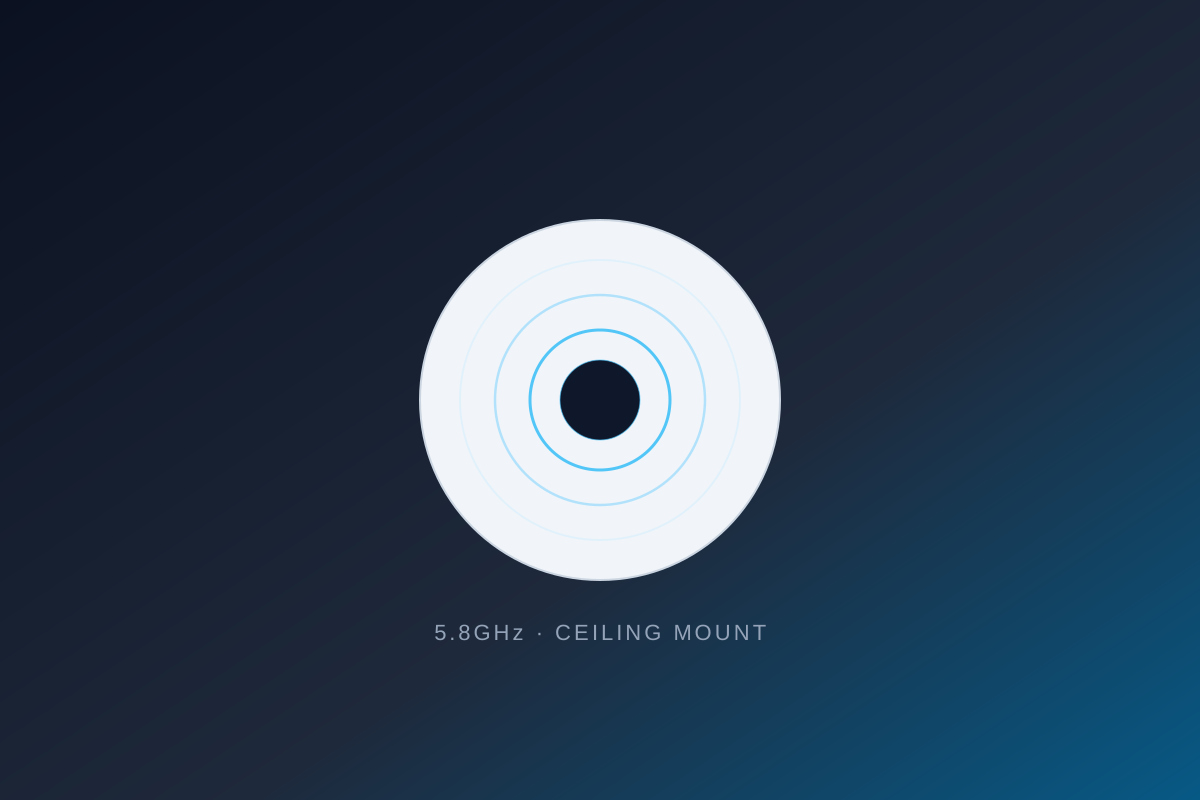
A radar sensor for human detection for sale is a millimeter-wave (mmWave) radar device designed specifically to detect the presence of human occupants in indoor environments, available for purchase through retail consumer channels (Amazon, eBay, AliExpress) at $50–150 per finished unit, through specialized distributor channels (industrial automation, building automation, presence detection distributors) at $40–120 per unit, and through OEM direct channels (manufacturers, industrial supply chains) at $30–100 per unit at high volumes, with the specific price and quality depending on the frequency band (24 GHz, 60 GHz, or 77 GHz), the antenna configuration (2×2, 3×3, or 4×4 MIMO), the integration options (Zigbee, WiFi, Matter, BACnet), the certification scope (FCC, CE, RoHS, regional certifications), and the level of technical support and warranty included. The radar sensor for human detection market in 2026 is dominated by 60 GHz mmWave radar devices, which have become the default choice for human detection applications because they provide 7 GHz of bandwidth, enabling 2.1 cm range resolution and micro-Doppler detection of human breathing at 0.2–0.5 Hz from ranges of 6–8 meters, with a stationary-occupant true positive rate above 99% in controlled testing.
The "for sale" component of this keyword indicates a clear commercial purchase intent, distinguishing these searchers from those who are researching the technology in general. This guide provides a comprehensive overview of the procurement landscape for radar sensors for human detection, covering the different sales channels, the product categories, the pricing structure, and the selection criteria for choosing the right radar sensor for a specific deployment.
Radar Sensor for Human Detection for Sale: Sales Channels
The radar sensor for human detection for sale market uses three primary sales channels, each with different advantages and disadvantages.
Retail Consumer Channels
The retail consumer channel is where individual homeowners and small business owners purchase radar sensors for human detection, typically through e-commerce platforms (Amazon, eBay, AliExpress, AliBaba), consumer electronics retailers (Best Buy, Currys PC World), and the vendor's own online store. These channels are characterized by:
- Ease of purchase: simple online checkout, fast shipping, easy returns
- Consumer-friendly pricing: $50–150 per finished unit
- Limited technical documentation: datasheets and user manuals may be minimal
- Limited manufacturer support: support is typically limited to consumer forums or email
- Wide product variety: consumer-focused products from multiple vendors
The retail consumer channel is the right choice for residential smart home deployments, for small office or home office (SOHO) deployments, and for evaluation or prototyping where the buyer is comfortable with limited technical support.
Specialized Distributor Channels
The specialized distributor channel is where system integrators, electrical contractors, and small OEMs purchase radar sensors for human detection, typically through specialized distributors in the presence detection, building automation, industrial automation, or IoT supply chains. These channels are characterized by:
- Better technical support: distributors often have application engineers who can assist with selection and integration
- Integration assistance: distributors may have experience integrating the sensors with specific BMS, BMS, or smart home platforms
- Volume-based pricing: pricing scales with order volume, typically at 10–20% below retail for small volumes
- More detailed documentation: datasheets, application notes, and integration guides are available
- Established relationship: the distributor can provide a stable supply chain for ongoing deployments
The specialized distributor channel is the right choice for hotel chains, office building operators, and healthcare facilities that are deploying tens to hundreds of sensors and need integration assistance.
OEM Direct Channels
The OEM direct channel is where large OEMs, hotel chains, and commercial real estate operators purchase radar sensors for human detection directly from manufacturers or through their established industrial supply chains. These channels are characterized by:
- Lowest pricing: volume-based pricing at 30–50% below retail for large volumes
- Full technical documentation: complete datasheets, design guides, reference designs
- Engineering support: manufacturer application engineers can assist with design and integration
- Custom engineering possibility: large customers can work with the manufacturer on custom features or form factors
- Supply agreement possibility: long-term supply agreements with scheduled price reductions
The OEM direct channel is the right choice for OEMs designing radar sensors for human detection into their products, for hotel chains deploying thousands of sensors, and for commercial real estate operators standardizing on a single platform across their portfolio.
Radar Sensor for Human Detection for Sale: Product Categories
The radar sensor for human detection for sale market includes three major product categories.
Consumer-Grade Finished Products
Consumer-grade finished products are designed for residential smart home applications, with emphasis on ease of use, smart home platform integration, and consumer-friendly pricing. These products include:
Aqara FP2: ceiling-mounted 60 GHz mmWave sensor with multi-zone presence detection, fall detection, and integration with Apple HomeKit, Amazon Alexa, Google Home, and IFTTT. Price: $40–80.
Xiaomi mmWave sensors: various form factors with integration with the Mi Home ecosystem. Price: $30–60.
Tuya-based devices: generic mmWave sensors manufactured in China and sold under multiple brands, typically with WiFi connectivity and integration with the Tuya platform. Price: $20–40.
These products are characterized by WiFi or Zigbee connectivity, integration with major smart home platforms, consumer-friendly packaging, limited configuration options, and no data-privacy by design documentation.
Commercial-Grade Finished Products
Commercial-grade finished products are designed for hotel, office, and healthcare deployments, with emphasis on reliability, compliance, and integration with building management systems and building management systems. These products include:
PresenceSensor ceiling-presence-sensor-zigbee: ceiling-mounted 24GHz wideband mmWave sensor with Zigbee 3.0 connectivity, data-privacy by design, and room-occupancy signal output to BMS and third-party platforms. Price: $50–100.
Honeywell, Siemens, Schneider Electric mmWave sensors: ceiling-mounted and wall-mounted sensors with integration with the vendor's BMS. Price: $100–200.
These products are characterized by Zigbee, WiFi, or Matter connectivity, full certification (FCC, CE, RoHS, GDPR/CCPA documentation), occupancy-signal output to BMS and BMS, technical documentation and application notes, and manufacturer support and warranty.
Industrial-Grade Modules and Chipsets
Industrial-grade modules and chipsets are designed for OEMs designing custom products, with emphasis on technical specifications, reference designs, and engineering support. These products include:
Texas Instruments IWR6843 evaluation board: development kit for the IWR6843 60 GHz transceiver. Price: $500–1000.
Infineon XENSIV evaluation kits: development kits for the BGT60 and BGT61 60 GHz transceivers. Price: $200–500.
Vayyar modules: integrated mmWave modules with on-board processing and software development kit. Price: $100–300 per module.
Calterah, SGR chipsets and modules: cost-effective 60 GHz solutions. Price: $2–5 per chipset, $8–15 per module at volume.
These products are characterized by complete technical documentation, reference designs and application notes, software development kits, manufacturer engineering support, and high sensitivity to supply chain and regulatory compliance.
Radar Sensor for Human Detection for Sale: Technical Specifications
When purchasing a radar sensor for human detection, the procurement team should evaluate the following technical specifications.
Frequency Band
For indoor human detection applications, 60 GHz is the default choice, providing 7 GHz of bandwidth and micro-Doppler detection of human breathing. For cost-sensitive applications, 24 GHz may be sufficient. For long-range industrial applications, 77 GHz may be appropriate.
Antenna Configuration
A 3×3 MIMO antenna array provides fine angular resolution and multi-target tracking, which is important for office and conference room applications. A 2×2 MIMO array is sufficient for simple hotel room and residential applications.
Detection Performance
The detection performance is characterized by:
- Stationary-occupant true positive rate: above 99% in controlled testing, above 95% in real-world deployment
- False positive rate: below 1% over a 24-hour period
- Detection range: 6–8 m for stationary occupants, 8–12 m for moving occupants
- Field of view: ±60° azimuth, ±40° elevation for a typical ceiling-mounted sensor
- Detection latency: below 3 seconds for most applications
Connectivity
The connectivity should match the existing infrastructure and the integration requirements:
- Zigbee: for hotel deployments with BMS integration
- WiFi: for office deployments with BMS integration
- Matter: for residential smart home deployments with cross-ecosystem compatibility
- BACnet: for BMS integration
- Ethernet (with PoE): for office deployments with Ethernet cabling
Certifications
The radar sensor for human detection should carry the required certifications for the target market: FCC, CE, RoHS, and any regional certifications. For healthcare deployments, additional certifications may be required (ISO 13485, IEC 60601).
Radar Sensor for Human Detection for Sale: Pricing Structure
The pricing for radar sensors for human detection depends on the channel, the product category, and the volume.
Retail Pricing (1–10 Units)
- Consumer-grade finished products: $30–100 per unit
- Commercial-grade finished products: $80–200 per unit
- Industrial-grade modules: $50–300 per module
Volume Pricing (100–1,000 Units)
- Consumer-grade finished products: $20–80 per unit
- Commercial-grade finished products: $50–150 per unit
- Industrial-grade modules: $20–100 per module
High-Volume Pricing (10,000+ Units)
- 60 GHz module: $3–8 per module
- Commercial-grade finished product: $30–60 per unit
Radar Sensor for Human Detection for Sale: Procurement Process
The procurement process for a radar sensor for human detection depends on the channel and the product category.
Retail Consumer Procurement
For retail consumer procurement, the process is straightforward: define the requirements, search for candidate products, evaluate reviews, make the purchase, and install and test.
Specialized Distributor Procurement
For specialized distributor procurement, the process is more structured: define the requirements, identify candidate distributors, request quotes, evaluate proposals, select a distributor, place the order, and receive and test.
OEM Direct Procurement
For OEM direct procurement, the process is the most structured: define detailed requirements, identify candidate manufacturers, request RFPs, evaluate proposals, conduct due diligence, negotiate the contract, execute a pilot order, and scale production.
Radar Sensor for Human Detection for Sale: Common Pitfalls
Several common pitfalls can undermine a radar sensor for human detection procurement:
- Choosing the wrong channel: buying through retail when you need engineering support, or buying through OEM direct when you only need a few units
- Not verifying the stationary-occupant TPR: accepting marketing claims without independent test data
- Ignoring compliance requirements: failing to ensure that the product carries the required certifications
- Not considering the total landed cost: failing to account for shipping, customs, and duties
- Overlooking support requirements: assuming that the manufacturer or distributor will provide integration assistance when it may not be included
Radar Sensor for Human Detection for Sale: Future Trends
The radar sensor for human detection for sale market is evolving rapidly:
- Price compression: increased competition is driving down prices
- Matter adoption: the emergence of Matter is creating new product opportunities
- Single-chip integration: the integration of mmWave transceivers and wireless radios into single-chip solutions is reducing cost
- On-device machine learning: modern radar sensors are including on-device ML for improved accuracy
Radar Sensor for Human Detection for Sale: Final Recommendation
The radar sensor for human detection for sale market offers multiple procurement channels and product categories, and the right choice depends on the buyer's technical capability, the deployment scale, and the support requirements. For a residential smart home deployment, the retail consumer channel with a consumer-grade finished product (Aqara FP2, Xiaomi, Tuya) is the right choice. For a hotel or office deployment with tens to hundreds of sensors, the specialized distributor channel with a commercial-grade finished product (PresenceSensor, Honeywell, Siemens) is the right choice. For an OEM designing a custom product or a large-scale deployment with thousands of sensors, the OEM direct channel with an industrial-grade module or chipset (Texas Instruments, Infineon, Vayyar) is the right choice.
Regardless of the channel, the procurement team should start with a clear definition of the requirements, should verify the stationary-occupant TPR and FPR with independent test data, should ensure that the product carries the required certifications, and should conduct a pilot deployment before committing to a full order. With this structured approach, the procurement team can secure a high-quality radar sensor for human detection that meets the deployment requirements and provides a reliable return on investment.
Part of this article content is generated by AI and optimized for professional accuracy and readability.
Not sure which sensor fits your project?
Talk to our mmWave application engineers for a free consultation.
Related blog posts
24GHz mmWave Radar Sensor Manufacturer: How to Choose the Right Supplier
A guide to 24GHz mmWave radar sensor manufacturers. Covers supplier evaluation, chipset vendors, pricing, and how to select the right 24 GHz manufacturer.
Human Radar Sensor Wholesale: Bulk Procurement Guide for B2B Buyers
A guide to human radar sensor wholesale procurement. Covers pricing tiers, MOQ, supplier evaluation, and how to source quality mmWave presence detectors in bulk.
mmWave Sensors Factory: How to Find the Right Manufacturing Partner
A guide to mmWave sensors factories. Covers factory evaluation, manufacturing capabilities, quality systems, and how to find the right production partner.
Find the right presence sensor for your hotel project
Compare the 3 protocols, check hotel-specific case studies, and download the installation guide
Related products
2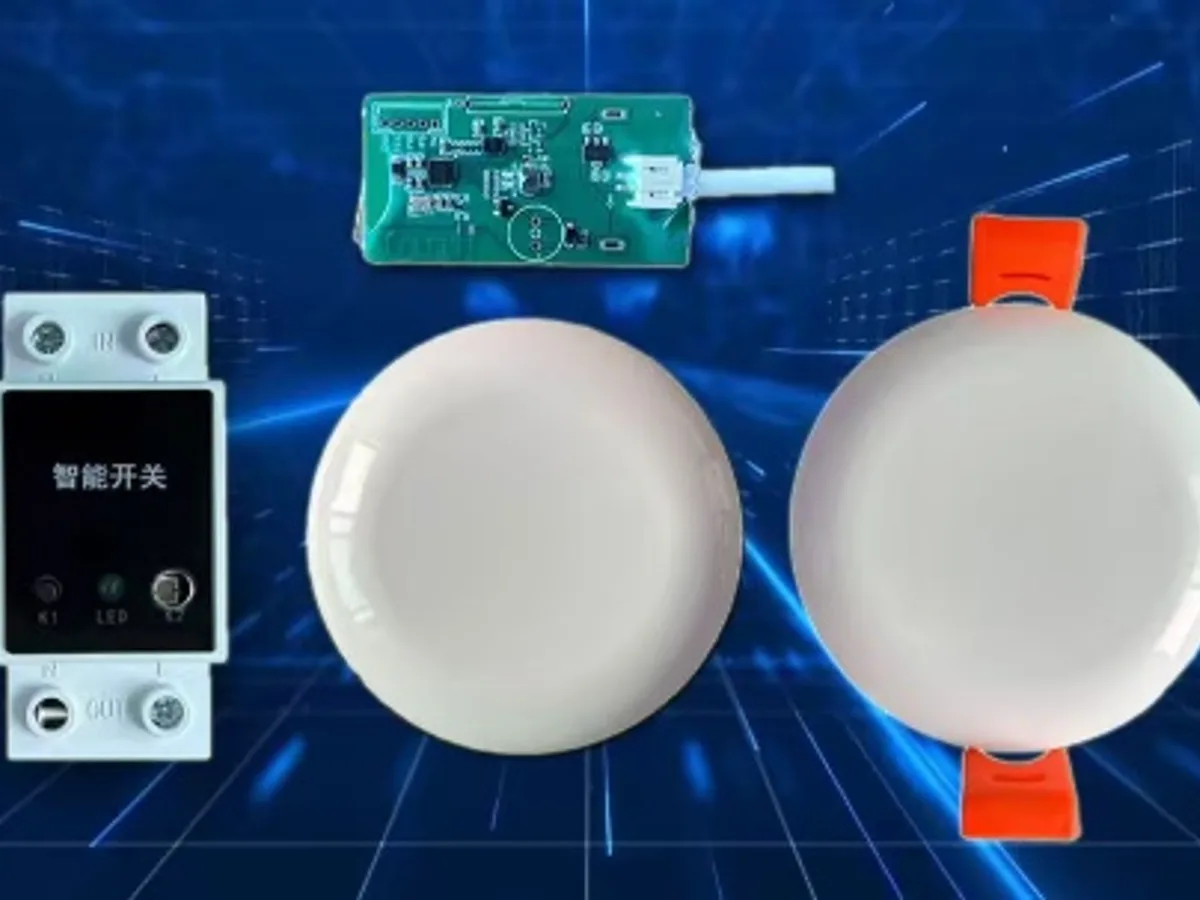
Ceiling Mount mmWave Human Presence Sensor — Zigbee
24GHz wideband mmWave ceiling presence sensor with 10m motion detection, 2.5m micro-motion, and breathing detection. 120° field, DC5V, Zigbee 3.0. For hotel room occupancy and commercial automation.
This page already points to it as the next recommended reference.
Ceiling Mount mmWave Human Presence Sensor — WiFi
24GHz wideband mmWave ceiling presence sensor with 10m motion detection, 2.5m micro-motion, and breathing detection. 120° field, DC5V, WiFi 2.4GHz. No gateway required for retrofit hotel and apartment projects.
This page already points to it as the next recommended reference.
Related solutions
1
Hotel Room Occupancy & Motion Sensor Solution
mmWave radar presence sensors for hotel room occupancy, housekeeping scheduling, and HVAC energy saving. Detect true occupancy — even when the guest is asleep — with our ceiling-mount hotel room motion sensor.
It supports the same product context: Ceiling Mount mmWave Human Presence Sensor — Zigbee, Ceiling Mount mmWave Human Presence Sensor — WiFi.
Related blog posts
3Best Presence Sensor for Hotel and Commercial Automation in 2026
A practical guide to choosing the best presence sensor for hotel room occupancy, smart office, and building automation. Compare mmWave presence sensors, PIR presence detectors, and Zigbee/WiFi/Matter presence sensors by detection range, breathing sensing, and protocol.
It supports the same product context: Ceiling Mount mmWave Human Presence Sensor — Zigbee, Ceiling Mount mmWave Human Presence Sensor — WiFi.
Sensor mmWave Wholesaler: Bulk Procurement Guide for 2026
A guide to sensor mmWave wholesaler procurement. Covers tiered pricing, MOQ, supplier evaluation, and how to find the right wholesale partner.
It supports the same product context: Ceiling Mount mmWave Human Presence Sensor — Zigbee, Ceiling Mount mmWave Human Presence Sensor — WiFi.
mmWave Radar Sensor Manufacturer: Top Suppliers Compared for 2026
A guide to mmWave radar sensor manufacturers. Covers supplier evaluation, leading vendors, pricing, and selection criteria for OEM production.
It supports the same product context: Ceiling Mount mmWave Human Presence Sensor — Zigbee, Ceiling Mount mmWave Human Presence Sensor — WiFi.
Specify your hotel project with our engineers
Send your room count, ceiling type, and protocol preference. We will return a sample plan and quote within 24 business hours.
- Move from general guidance into a product or application discussion.
- Use RFQ when pricing, drawings, MOQ, or launch timing needs structure.
- Keep a direct contact path visible for fast clarifications and handoff.