Presens Sensor: The Common Misspelling That Leads to mmWave Presence Detection
A guide to "presens sensor" and why it is a common misspelling of presence sensor. Learn what presence sensors are, how they work, and how to find the right one.
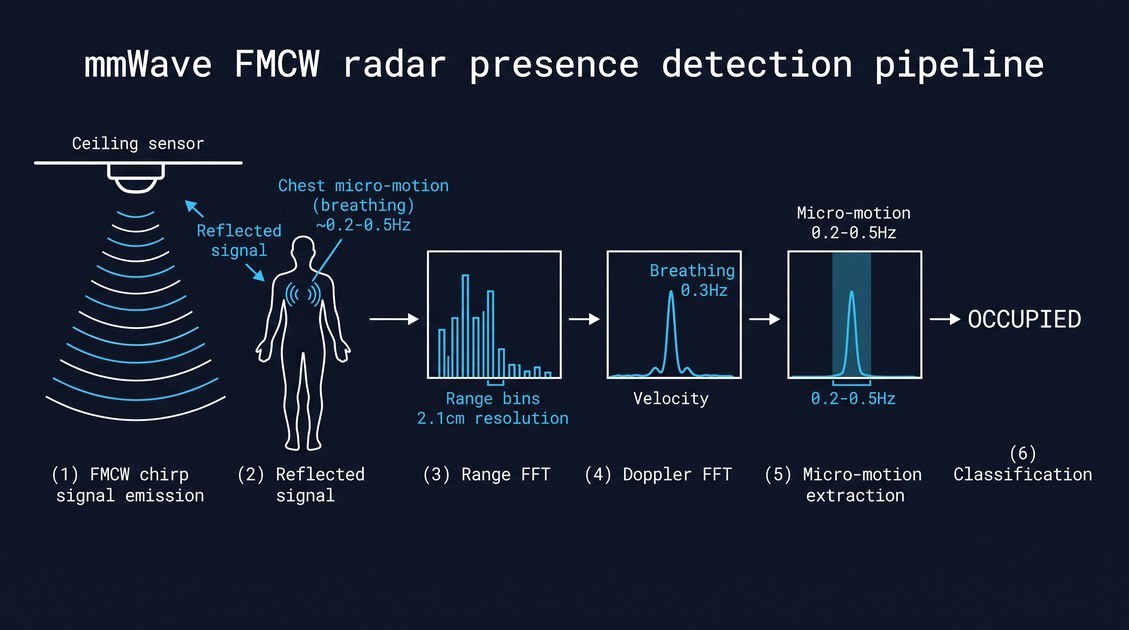
A presens sensor is a common misspelling of the term "presence sensor," a millimeter-wave radar device that detects whether one or more human occupants are currently present within a defined space, including the case where the person is sitting motionless, lying down, or sleeping with no visible movement. The correct term — presence sensor — refers to an active electronic sensing device that emits its own signal (most commonly a 60 GHz millimeter-wave radar signal with 7 GHz of bandwidth) and analyzes the reflection to determine occupancy state, micro-motion such as breathing at 0.2–0.5 Hz, and in some cases precise location within a room. The defining capability of a presence sensor is the reliable detection of a stationary human at ranges of 6–8 meters with a true positive rate typically above 99% in controlled testing, a level of accuracy that passive infrared (PIR) motion sensors cannot approach because they fundamentally require macro-motion to fire. The misspelling "presens sensor" appears frequently in search queries because it is an easy phonetic error — the word "presence" has multiple syllables and the letter "c" can be dropped in rapid typing — but it consistently reflects the same underlying intent: the searcher is looking for a presence sensor, whether for hotel room housekeeping coordination, office HVAC control, healthcare fall detection, or residential smart home automation.
The purpose of this article is to provide accurate, comprehensive information about presence sensors to anyone who arrives here via the misspelling "presens sensor." Rather than redirecting the searcher or providing a minimal disambiguation page, this guide serves the searcher's actual intent by explaining what presence sensors are, how they work, what accuracy benchmarks to expect, and how to choose the right one for a given application. Whether you are an engineer, a procurement specialist, a system integrator, or a homeowner, this guide will give you a clear understanding of the presence sensor technology and a framework for making the right selection.
Presens Sensor: The Correct Term and Its Meaning
The correct term is "presence sensor," and it refers to a specific class of occupancy detection device that is fundamentally different from a motion sensor. The confusion between "presens sensor" and "presence sensor" is not just a spelling matter — it reflects a deeper confusion between presence detection and motion detection that affects how the device is specified, installed, and expected to perform.
Presens Sensor vs Presence Sensor: Understanding the Terminology
The term "presence sensor" (often misspelled as "presens sensor") refers to a device that can determine whether a human is currently present in a defined detection zone, regardless of whether the human is moving. The key word is "presence" — the device detects the state of being present, not the event of moving. This is a critical distinction because a human who is sleeping, sitting, or reading is still present but is not moving in a way that a motion sensor can detect.
A motion sensor, by contrast, detects the event of motion. The most common motion sensor is a passive infrared (PIR) sensor, which detects changes in infrared radiation across its field of view. A PIR sensor fires when a warm body moves from one sensing zone to another, but it does not fire when a warm body is stationary. This means that a PIR-based motion sensor in a hotel room will report "no motion" within 10–30 minutes after the last movement, even if the room is occupied by a sleeping guest.
The "presens sensor" misspelling often leads to a search for a motion sensor, and many of the search results for the misspelling are actually motion sensor products. This is a problem because the searcher who types "presens sensor" is typically looking for a true presence sensor — a device that can detect a stationary occupant — and a motion sensor will not meet their needs. This guide is designed to clarify the distinction and to help the searcher find the right product.
Presens Sensor: The Technology Behind Presence Detection
The technology behind a modern presence sensor (the correct term for what is often searched as "presens sensor") is millimeter-wave (mmWave) radar. The most common frequency band for commercial presence sensors is 60 GHz (57–64 GHz), which provides 7 GHz of bandwidth and enables the detection of the micro-Doppler signature of human breathing.
The mmWave radar presence sensor works by emitting a frequency-modulated continuous wave (FMCW) chirp that sweeps across the 7 GHz bandwidth in 50–200 microseconds. The reflected signal from objects in the detection zone is mixed with a copy of the transmitted chirp, producing a beat signal whose frequency is proportional to the range of the target. By performing a Fast Fourier Transform (FFT) on the beat signal, the sensor can determine the range of every object in the detection zone with a resolution of approximately 2.1 cm.
The sensor then analyzes the phase of the beat signal across successive chirps to determine the velocity of the targets. A stationary person produces a beat signal with a slowly varying phase (due to the micro-motion of breathing), while a stationary chair produces a beat signal with a constant phase. By analyzing the phase variation (the micro-Doppler signature), the presence sensor can distinguish a stationary human from a stationary object, enabling true presence detection.
Presens Sensor: How mmWave Radar Detects Stationary Occupants
The detection of stationary occupants is the defining capability of a true presence sensor, and it is the capability that distinguishes a presence sensor from a motion sensor. Understanding how this works is essential for anyone searching for a "presens sensor."
Presens Sensor: The Micro-Doppler Signature of Breathing
When a person is sitting still or sleeping, their body produces a Doppler return that is dominated by the periodic motion of the chest wall during breathing. The amplitude of this motion is on the order of 5–20 mm for a typical adult, and the frequency is 0.2–0.5 Hz (12–30 breaths per minute). This is a very low Doppler frequency, but it is well within the resolution of an FMCW radar signal processor that has 7 GHz of bandwidth.
A well-designed presence sensor uses signal processing techniques — typically a combination of FFT analysis, time-frequency decomposition, and machine learning classification — to extract the breathing signature from the radar return, distinguish it from background noise (HVAC airflow, building vibration, fan motion), and use it as a positive indicator of human presence. The result is a sensor that can reliably confirm the presence of a sleeping adult at 4 m with a true positive rate above 99% in controlled testing, and above 95% in real-world hotel-room deployment.
Presens Sensor: Why PIR Sensors Cannot Detect Stationary Occupants
A passive infrared (PIR) sensor, which is the most common type of motion sensor, cannot detect stationary occupants. The PIR sensor detects changes in infrared radiation across its field of view, and a stationary person does not produce a change in the radiation pattern. The PIR sensor therefore reports "no motion" within 10–30 minutes after the last movement, even if the room is occupied.
This is the fundamental limitation that makes a PIR sensor unsuitable for presence detection applications. For applications where the occupant may be stationary for extended periods (hotel rooms, offices, healthcare patient rooms, residential bedrooms), a PIR sensor will fail to detect the occupant, leading to the "light turned off while I was sitting still" problem that is the single most common complaint about PIR-based occupancy products.
Presens Sensor: The Accuracy of mmWave Presence Sensors
The accuracy of a modern 60 GHz mmWave presence sensor is characterized by several key metrics:
- Stationary-occupant true positive rate: above 99% in controlled testing, above 95% in real-world deployment
- Stationary-occupant false negative rate: below 1% in controlled testing, below 5% in real-world deployment
- Moving-occupant detection latency: below 1 second
- False positive rate: below 1% over a 24-hour period in a typical indoor environment
- Detection range: 6–8 m for a ceiling-mounted sensor
These accuracy levels are what make the mmWave presence sensor a viable replacement for PIR-based motion sensors in any application where stationary-occupant detection matters. The "presens sensor" searcher who is looking for a device that can detect a sleeping guest, a sitting office worker, or a resting patient will find that the mmWave presence sensor is the right technology.
Presens Sensor: Applications Where Presence Detection Matters
The applications where a true presence sensor (the correct term for what is often searched as "presens sensor") matters are those where the occupant may be stationary for extended periods. The following sections describe the major application categories.
Presens Sensor: Hotel Room Presence Detection
Hotel rooms are the canonical application for presence sensors. A 60 GHz ceiling-mounted presence sensor can reliably detect whether a guest is in the room throughout their stay, including when they are sleeping, sitting at the desk, or using the bathroom. The occupancy data feeds the building management system for housekeeping coordination (do not disturb when occupied, schedule housekeeping when checkout confirmed) and the HVAC system for energy management (comfort mode when occupied, setback mode when empty).
Presens Sensor: Office and Conference Room Presence Detection
Offices use presence sensors for per-room HVAC and lighting control, conference room availability detection, and space utilization analytics. A presence sensor in an individual office detects whether the office is occupied and adjusts the HVAC and lighting accordingly, with the benefit that a person working quietly at their desk is still detected as present.
Presens Sensor: Healthcare and Assisted Living Presence Detection
Healthcare facilities use presence sensors for fall detection, bed-exit alerting, and occupancy-based environmental control in patient rooms. The privacy profile of mmWave radar (no images, non-invasive) makes it suitable for deployment in private spaces where camera-based sensing would be inappropriate.
Presens Sensor: Residential Smart Home Presence Detection
Residential smart homes use presence sensors for occupancy-based lighting, HVAC control, and security monitoring. The most compelling use case for residential presence sensors is the prevention of the "light turned off while reading" problem that plagues PIR-based motion sensors. A consumer who has experienced the frustration of a light cycling off every few minutes while they are sitting still is often willing to pay a premium for a sensor that actually detects presence.
Presens Sensor: How to Choose the Right Presence Sensor
For a searcher who has arrived at this article via the misspelling "presens sensor," the following framework will help narrow down the choice of a presence sensor.
Presens Sensor: Frequency Band
The frequency band is the first decision. For indoor presence detection applications, 60 GHz is the default choice, providing the micro-motion sensitivity needed for stationary-occupant detection. For cost-sensitive motion-only applications, 24 GHz may be sufficient. For long-range industrial applications, 77 GHz may be appropriate.
Presens Sensor: Form Factor
The form factor is determined by the deployment environment. For hotel rooms, offices, and residential rooms, a ceiling-mounted presence sensor is the preferred form factor, providing a 360-degree field of view and clear line of sight to all occupants. For corridors and entryways, a wall-mounted sensor may be preferred.
Presens Sensor: Connectivity
The connectivity is determined by the existing infrastructure and the integration requirements. For hotel deployments, Zigbee is the most common. For office deployments, WiFi or PoE with BACnet is common. For residential deployments, Matter or Zigbee is the most common.
Presens Sensor: Certifications
The presence sensor should carry the required certifications for the target market: FCC, CE, RoHS, and any regional certifications. For healthcare deployments, additional certifications may be required.
Presens Sensor: Common Questions
Presens Sensor: Is a Presence Sensor the Same as a Motion Sensor?
No. A presence sensor can detect stationary occupants (by detecting the micro-motion of breathing), while a motion sensor can only detect moving occupants. The "presens sensor" searcher who is looking for a device that can detect a sleeping guest, a sitting office worker, or a resting patient needs a presence sensor, not a motion sensor.
Presens Sensor: How Much Does a Presence Sensor Cost?
A modern 60 GHz mmWave presence sensor typically costs between $50 and $150 at retail, depending on the features and the connectivity. This is significantly more expensive than a PIR-based motion sensor ($10–30), but the higher cost is justified for applications where stationary-occupant detection is required.
Presens Sensor: Can a Presence Sensor See Through Walls?
A 60 GHz presence sensor cannot see through typical interior walls (drywall, wood framing, glass). The 5 mm wavelength at 60 GHz is strongly absorbed by these materials, and the oxygen absorption in the 60 GHz band further reduces the signal that can penetrate a wall. This is a privacy advantage for hotel and residential deployments.
Presens Sensor: Is a Presence Sensor Safe?
Yes. A presence sensor operates at very low radiated power (typically less than 10 mW, well below the output power of a WiFi router) and uses unlicensed ISM frequencies that have been extensively studied for safety.
Presens Sensor: Final Recommendation
For anyone who has arrived at this article via the misspelling "presens sensor," the correct term is "presence sensor," and the right technology for most applications is a 60 GHz mmWave radar presence sensor. This device can reliably detect both moving and stationary occupants, can achieve a stationary-occupant true positive rate above 99% in controlled testing, and is available in ceiling-mounted and wall-mounted form factors with Zigbee, WiFi, and Matter connectivity.
The recommended products for most applications are the ceiling-presence-sensor-zigbee (for hotel and residential deployments), the ceiling-presence-sensor-wifi (for office and residential deployments), and the ceiling-presence-sensor-matter (for residential smart home deployments). These products provide the stationary-occupant detection capability that the "presens sensor" searcher is looking for, with the connectivity and certifications required for commercial and residential deployment.
With the right presence sensor, correctly installed and integrated, the searcher can achieve a level of occupancy awareness that is impossible to achieve with PIR-based motion sensors, and can justify the higher unit cost through improved energy efficiency, better occupant experience, and more accurate occupancy data for downstream analytics.
Part of this article content is generated by AI and optimized for professional accuracy and readability.
Not sure which sensor fits your project?
Talk to our mmWave application engineers for a free consultation.
Find the right presence sensor for your hotel project
Compare the 3 protocols, check hotel-specific case studies, and download the installation guide
Related products
2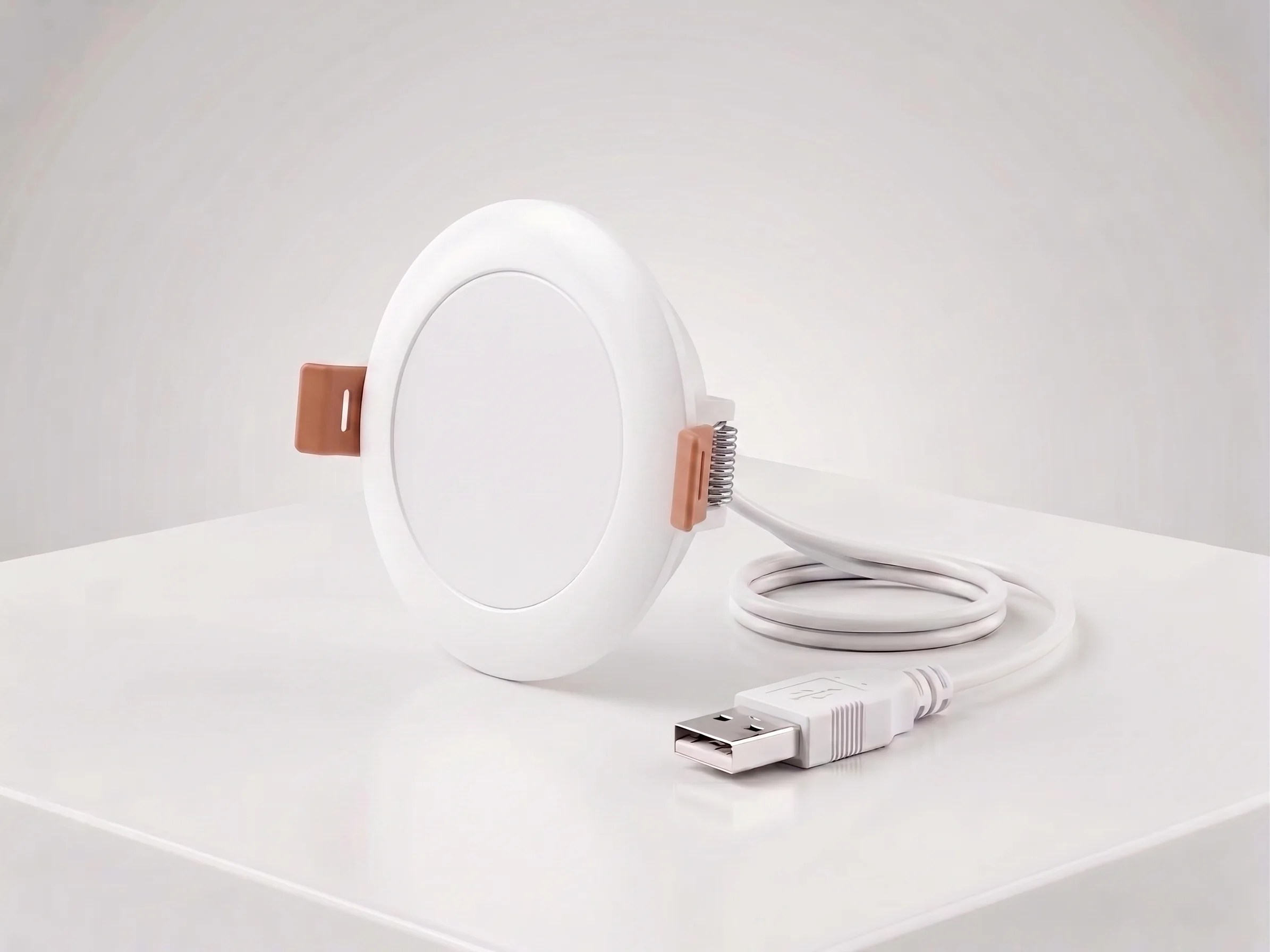
Ceiling Mount mmWave Human Presence Sensor — Zigbee
24GHz wideband mmWave ceiling presence sensor with 10m motion detection, 2.5m micro-motion, and breathing detection. 120° field, DC5V, Zigbee 3.0. For hotel room occupancy and commercial automation.
This page already points to it as the next recommended reference.
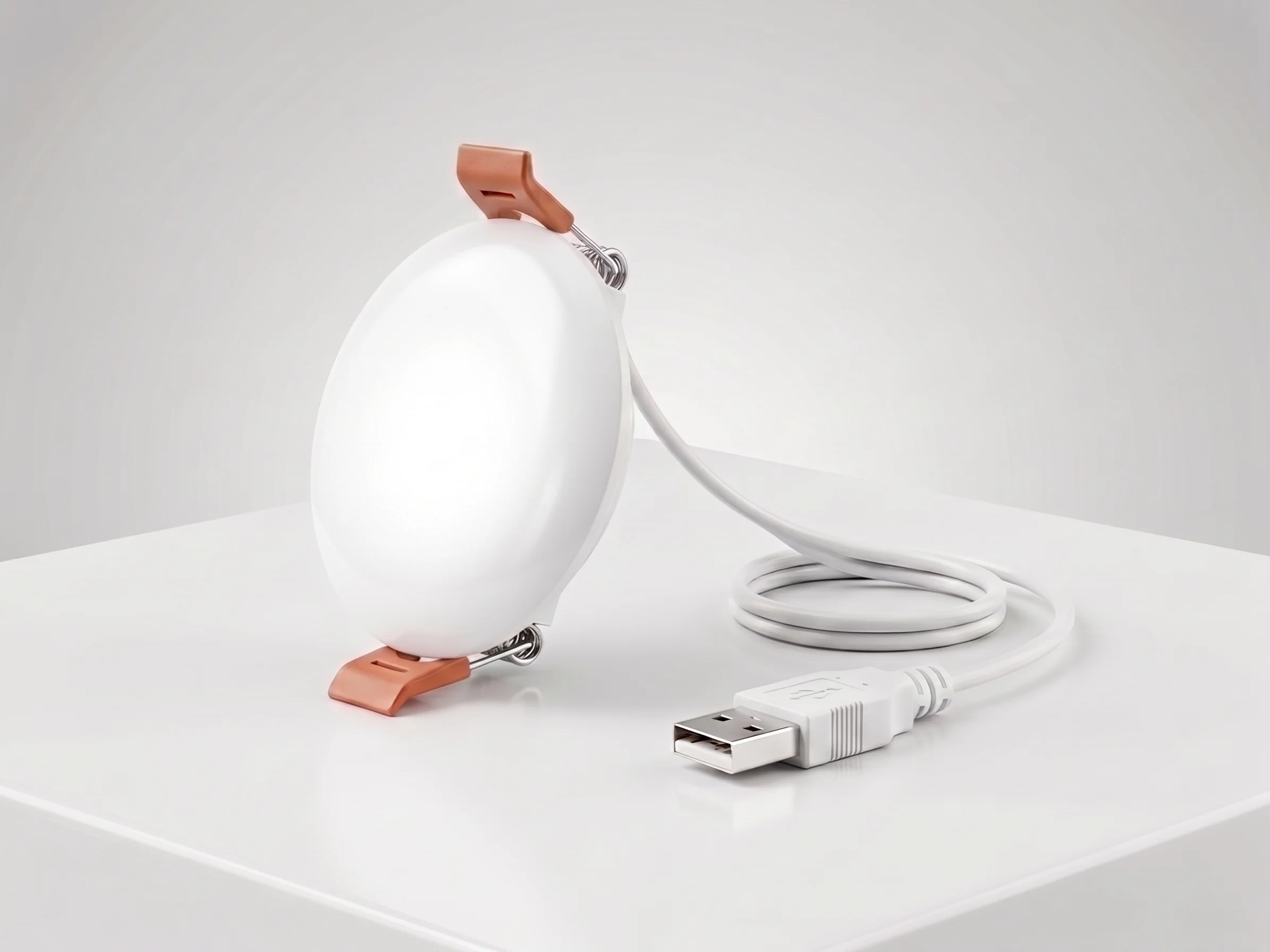
Ceiling Mount mmWave Human Presence Sensor — WiFi
24GHz wideband mmWave ceiling presence sensor with 10m motion detection, 2.5m micro-motion, and breathing detection. 120° field, DC5V, WiFi 2.4GHz. No gateway required for retrofit hotel and apartment projects.
This page already points to it as the next recommended reference.
Related solutions
1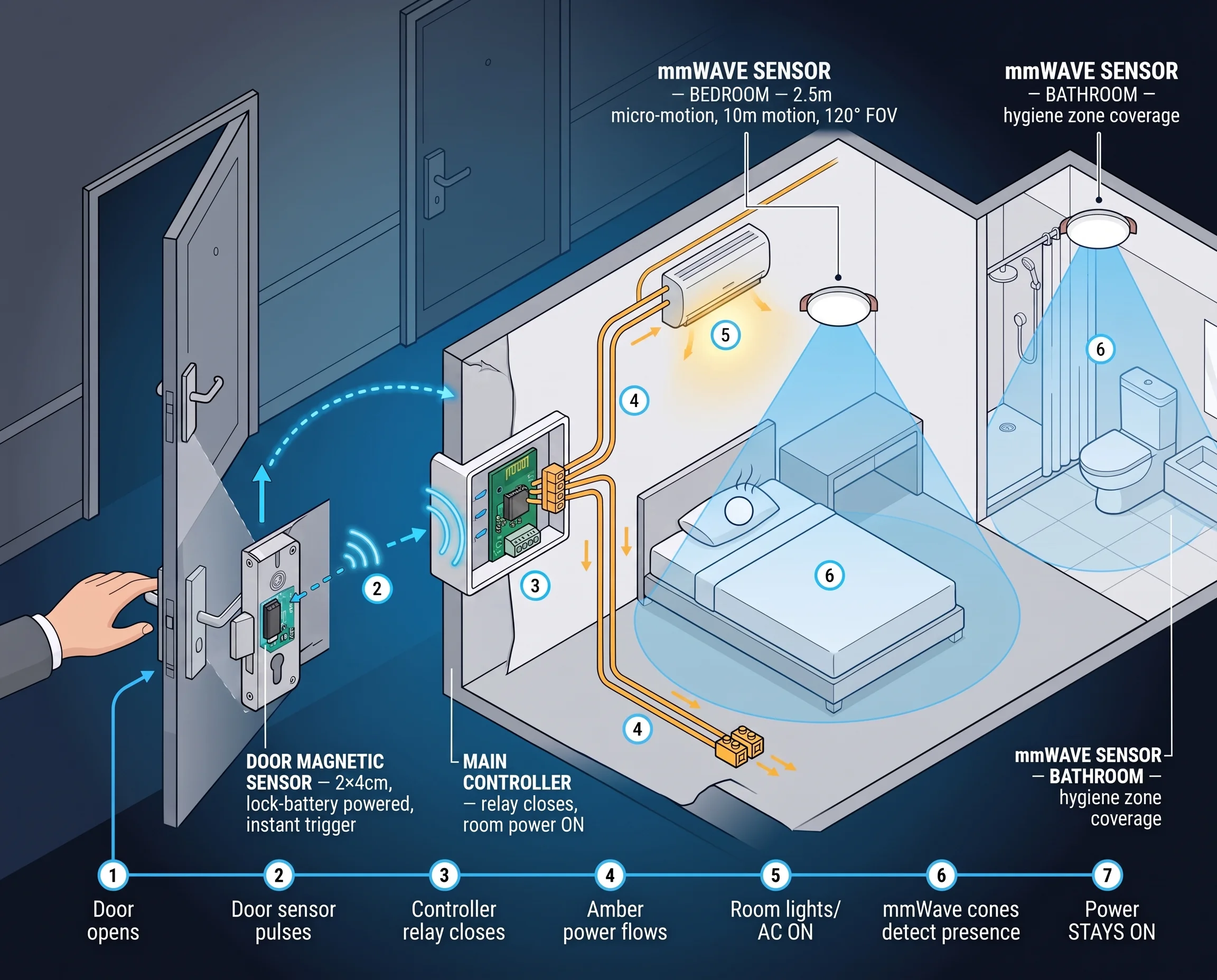
Hotel Room Occupancy & Motion Sensor Solution
mmWave radar presence sensors for hotel room occupancy, housekeeping scheduling, and HVAC energy saving. Detect true occupancy — even when the guest is asleep — with our ceiling-mount hotel room motion sensor.
It supports the same product context: Ceiling Mount mmWave Human Presence Sensor — Zigbee, Ceiling Mount mmWave Human Presence Sensor — WiFi.
Related blog posts
3
60GHz vs 24GHz vs 77GHz mmWave Sensors: Choosing the Right Frequency for Commercial Presence Detection
Compare 60GHz, 24GHz, and 77GHz mmWave sensors for commercial presence detection. Technical specs, detection range, privacy, and OEM sourcing guidance.
It supports the same product context: Ceiling Mount mmWave Human Presence Sensor — Zigbee, Ceiling Mount mmWave Human Presence Sensor — WiFi.
What Is an Electronic Presence Sensor? Technology, Accuracy, and How It Differs From a Motion Sensor
Learn what an electronic presence sensor is, how it detects stationary humans, and how it differs from a PIR motion sensor. Covers mmWave, accuracy, and use cases.
It supports the same product context: Ceiling Mount mmWave Human Presence Sensor — Zigbee, Ceiling Mount mmWave Human Presence Sensor — WiFi.
How to Integrate mmWave Presence Sensors With Home Assistant (Local Control Guide)
Step-by-step local control setup guide for mmWave devices, covering MQTT/Matter config, automation scripts, calibration and OEM ceiling presence sensor integration tips.
It supports the same product context: Ceiling Mount mmWave Human Presence Sensor — WiFi, Ceiling Mount mmWave Human Presence Sensor — Zigbee.
Specify your hotel project with our engineers
Send your room count, ceiling type, and protocol preference. We will return a sample plan and quote within 24 business hours.
- Move from general guidance into a product or application discussion.
- Use RFQ when pricing, drawings, MOQ, or launch timing needs structure.
- Keep a direct contact path visible for fast clarifications and handoff.