Presence Sensor Module: Complete Guide to mmWave Integration for OEMs
A complete guide to presence sensor modules. Learn about mmWave module technology, integration, and how to choose the right module for OEM product design.
A presence sensor module is a production-ready millimeter-wave (mmWave) radar device designed for OEM integration into custom products, combining the mmWave transceiver chipset, the antenna array, the RF front-end, the baseband processor, and the power management circuitry on a single PCB, with a documented interface (typically SPI, I2C, or UART for configuration, and GPIO for interrupts) and reference firmware. A presence sensor module at 60 GHz (57–64 GHz) with 7 GHz of bandwidth and a 2×2 or 3×3 MIMO antenna array achieves 2.1 cm range resolution and micro-Doppler detection of human breathing at 0.2–0.5 Hz from ranges of 6–8 meters, with a stationary-occupant true positive rate above 99% in controlled testing and above 95% in real-world deployment. The wholesale pricing for a 60 GHz presence sensor module is typically $6–18 per module at 1,000-unit volume, $4–12 per module at 10,000-unit volume, and $3–8 per module at 100,000-unit volume, with the specific price point within each band determined by the antenna configuration, the on-module processing capability, and the certification scope.
This guide provides a comprehensive overview of the presence sensor module, covering the technology, the integration options, the leading vendors, the pricing structure, and the selection criteria for choosing the right module for a specific OEM product design.
Presence Sensor Module: Leading Vendors
The presence sensor module market is served by several leading vendors.
Presence Sensor Module: Vayyar
Vayyar is a leading presence sensor module vendor that offers 60 GHz mmWave modules with on-module processing, machine learning classification, and a comprehensive software development kit. Vayyar's modules are used in fall detection, presence detection, and automotive applications, and the company has a strong reputation for technical capability and product quality.
Pricing for Vayyar modules at 10,000-unit volume is typically $15–25 per module, reflecting the high level of integration and the included software. Vayyar provides global technical support and has a strong presence in the senior care and automotive markets.
Presence Sensor Module: Calterah, SGR, Siflower
Calterah, SGR, and Siflower are Asian presence sensor module vendors that offer integrated 60 GHz mmWave modules at competitive prices. These modules are typically priced at $8–15 per module at 10,000-unit volume, competitive with Western module vendors but with more limited global support.
Presence Sensor Module: Infineon Reference Modules
Infineon offers pre-integrated reference modules based on its XENSIV chipsets, providing OEMs with a starting point for product development. These modules are typically priced at $10–20 per module at 10,000-unit volume, and include reference firmware and application notes.
Presence Sensor Module: Texas Instruments Evaluation Modules
Texas Instruments offers evaluation modules based on its IWR6843 chipset, providing OEMs with a starting point for product development. These modules are typically priced at $200–500 for evaluation, and the production modules based on the TI chipset are priced at $6–18 per module at 1,000-unit volume.
| Module vendor | 10K unit price | On-module ML | Best for |
|---|---|---|---|
| Vayyar | $15–25 | Yes | Senior care, automotive |
| Calterah | $8–15 | Limited | Cost-sensitive applications |
| SGR | $8–15 | Limited | Cost-sensitive applications |
| Infineon reference | $10–20 | Limited | OEM reference designs |
| TI evaluation | $200–500 (evaluation) | Limited | OEM evaluation |
Presence Sensor Module: Integration Options
The presence sensor module can be integrated into a custom OEM product in several ways.
Presence Sensor Module: Stand-Alone Module Integration
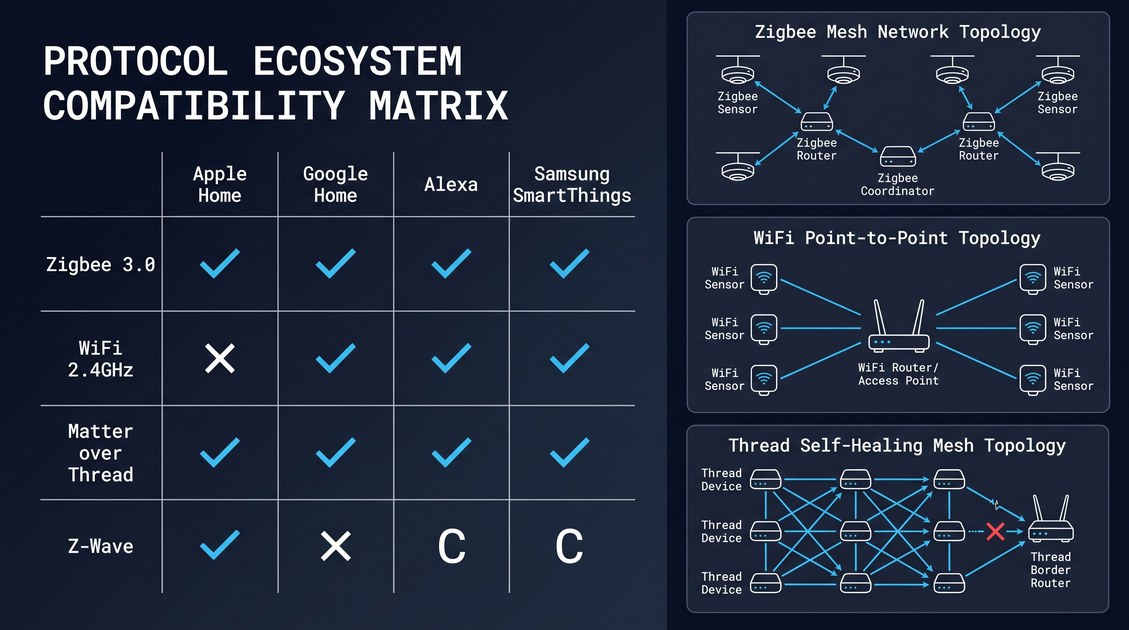
In the stand-alone module integration approach, the OEM purchases the presence sensor module from a vendor and designs their own PCB, microcontroller, connectivity (Zigbee, WiFi, Matter, etc.), housing, and firmware. The module vendor provides the presence sensor module with a documented interface (typically SPI, I2C, or UART for configuration, and GPIO for interrupts), and the OEM's engineering team integrates it into their product.
The advantage of this approach is that the OEM has full control over the product design and can differentiate on features (custom housing, custom UI, custom integration with their target system). The disadvantage is that the OEM must absorb the engineering cost of designing the PCB and firmware, the certification cost (FCC, CE, and any regional certifications), and the manufacturing cost of the rest of the product.
Presence Sensor Module: Reference Design Integration
In the reference design integration approach, the OEM purchases a complete, certified product design from the presence sensor module vendor. The reference design includes the module, the microcontroller, the connectivity hardware, the housing (mechanical CAD files), and the certified firmware. The OEM's manufacturing partner produces the product according to the reference design, and the OEM adds their own branding and possibly minor customization.
The advantage of this approach is that the OEM gets a turnkey product with pre-completed certification and a predictable engineering timeline. The wholesale price is higher (the reference design typically costs 50–100% more than the stand-alone module, at equivalent volume), but the OEM avoids the certification cost, avoids the engineering risk, and gets to market faster.
Presence Sensor Module: Custom Module Integration
In the custom module integration approach, the OEM works with the presence sensor module vendor to design a custom module that meets the OEM's specific requirements. The custom module may have a different antenna pattern, a different form factor, or additional features (custom firmware, custom processing) that are not available in the standard module.
The advantage of this approach is that the OEM gets a module that is exactly what they need, with no compromises. The disadvantage is the engineering cost and the time to market, and the higher MOQ required for a custom module.
Presence Sensor Module: Technical Specifications
When evaluating a presence sensor module, the OEM should consider the following technical specifications.
Presence Sensor Module: Frequency Band and Bandwidth
The frequency band and bandwidth determine the range resolution and the micro-Doppler sensitivity. For indoor presence detection, 60 GHz with 7 GHz of bandwidth is the default, providing 2.1 cm range resolution and micro-Doppler detection of human breathing.
Presence Sensor Module: Antenna Configuration
The antenna configuration determines the angular resolution and the multi-target tracking capability. A 2×2 MIMO array provides basic angular resolution, while a 3×3 MIMO array provides finer angular resolution and the ability to resolve multiple targets.
Presence Sensor Module: Detection Performance
The detection performance is characterized by:
- Stationary-occupant true positive rate: above 99% in controlled testing, above 95% in real-world deployment
- False positive rate: below 1% over a 24-hour period
- Detection range: 6–8 m for stationary occupants, 8–12 m for moving occupants
- Field of view: ±60° azimuth, ±40° elevation for a typical ceiling-mounted configuration
- Detection latency: below 3 seconds
Presence Sensor Module: Interface and Integration
The presence sensor module should have a documented interface that is easy to integrate. Common interfaces include:
- SPI: for configuration and data transmission
- I2C: for configuration and data transmission
- UART: for serial communication
- GPIO: for interrupts and simple control signals
The module should also provide reference firmware and application notes to guide the OEM through the integration process.
Presence Sensor Module: Power Consumption
The power consumption of the presence sensor module determines the power source options and the battery life (for battery-powered applications). The active power consumption is typically 0.5–1.0 W, with a few milliwatts in standby (for duty-cycled configurations).
Presence Sensor Module: Pricing Structure
The pricing for a presence sensor module depends on the vendor, the features, and the volume.
Presence Sensor Module: Volume Tiers
- 1,000-unit lot: $6–18 per module
- 10,000-unit lot: $4–12 per module
- 100,000-unit lot: $3–8 per module
- 1,000,000-unit lot: $1.5–4 per module
Presence Sensor Module: Cost Breakdown
The cost breakdown of a typical 60 GHz presence sensor module at 10,000-unit volume is:
- mmWave chipset (transceiver): 35–45% of module cost
- Antenna array and RF front-end: 20–30% of module cost
- Baseband processor: 10–15% of module cost
- Power management: 5–8% of module cost
- PCB and mechanical: 5–8% of module cost
- Factory calibration and testing: 5–8% of module cost
- Profit and overhead: 10–15% of module cost
Presence Sensor Module: Selection Criteria
Selecting the right presence sensor module for an OEM product requires evaluating several criteria.
Presence Sensor Module: Technical Fit
The module must meet the application requirements for detection performance, form factor, power consumption, and interface. The vendor should provide independent test data for the key performance metrics.
Presence Sensor Module: Integration Support
The vendor should provide strong integration support, including documentation, application notes, reference designs, and responsive engineering assistance. A vendor with a proven track record in the target vertical is preferred.
Presence Sensor Module: Supply Chain Resilience
The vendor should have a robust supply chain, with dual-sourced components for critical parts, a reasonable lead time (8–12 weeks at 10K volume), and manufacturing in multiple countries to mitigate geographic risk.
Presence Sensor Module: Commercial Terms
The vendor should offer fair and flexible commercial terms, including transparent volume-based pricing, reasonable MOQ, net 30 to net 90 payment terms, and a 12–24 month warranty.
Presence Sensor Module: Final Recommendation
The presence sensor module is the right choice for OEMs designing custom products with mmWave presence detection capability, including smart thermostats, smart lighting fixtures, security panels, and other products where presence detection is one component among many. The 60 GHz band is the default frequency for most applications, providing reliable stationary-occupant detection, an excellent privacy profile, and a compact form factor.
For an OEM selecting a presence sensor module, the right approach is to start with a clear definition of the application requirements, then identify a shortlist of qualified module vendors (Vayyar, Calterah, SGR, Infineon, Texas Instruments), then evaluate each vendor across the four dimensions (technical fit, integration support, supply chain resilience, commercial terms), and then select the vendor that scores best across all dimensions. A pilot order (50–500 modules) should be executed before committing to a full production order, to verify the module's performance and the vendor's claims.
With the right presence sensor module, correctly integrated into the OEM's product, the product can deliver a level of occupancy awareness that is impossible to achieve with PIR-based motion sensors, and can justify the higher module cost through improved product performance and a better user experience.
Part of this article content is generated by AI and optimized for professional accuracy and readability.
Not sure which sensor fits your project?
Talk to our mmWave application engineers for a free consultation.
Find the right presence sensor for your hotel project
Compare the 3 protocols, check hotel-specific case studies, and download the installation guide
Related products
2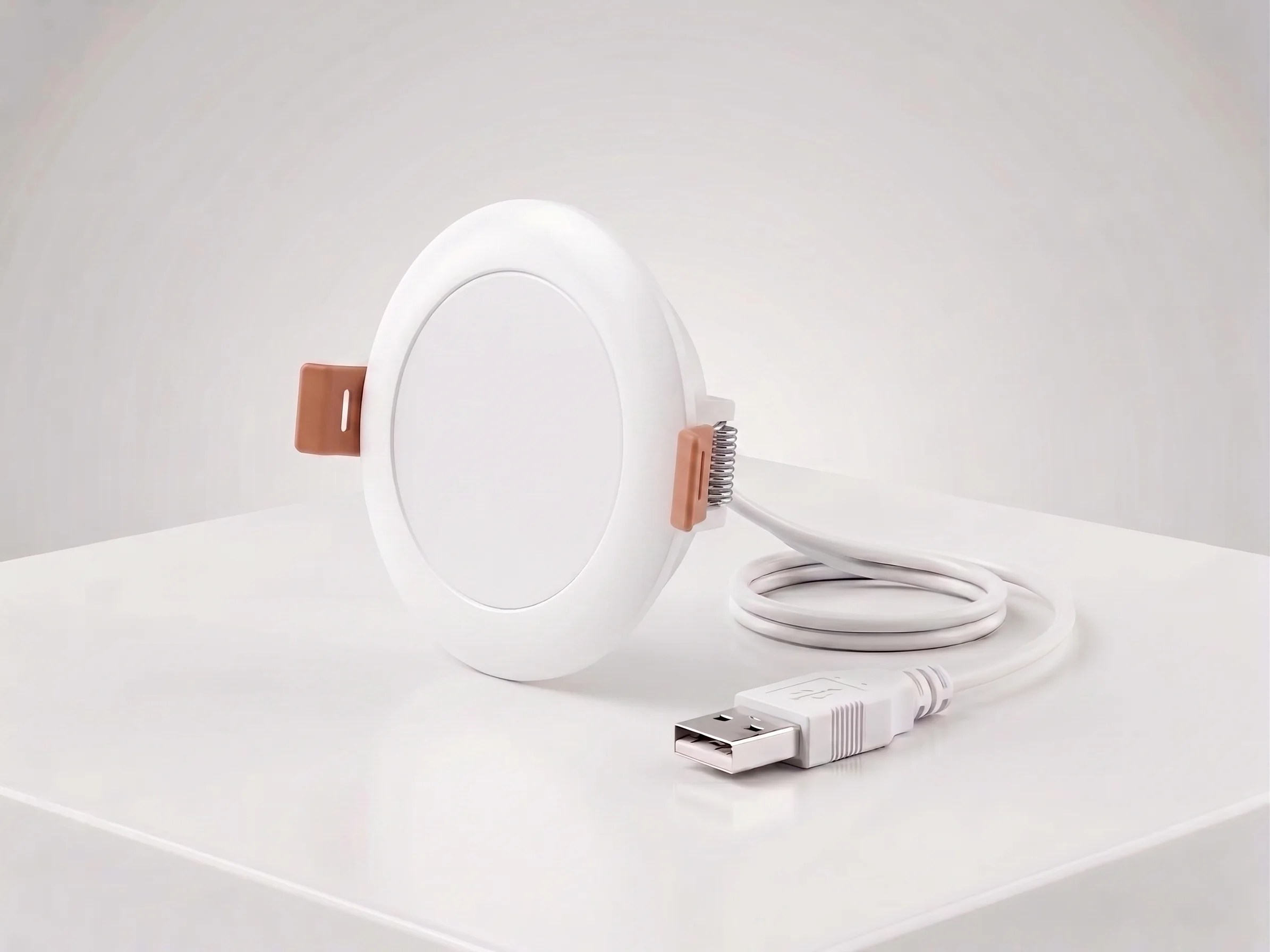
Ceiling Mount mmWave Human Presence Sensor — Zigbee
24GHz wideband mmWave ceiling presence sensor with 10m motion detection, 2.5m micro-motion, and breathing detection. 120° field, DC5V, Zigbee 3.0. For hotel room occupancy and commercial automation.
This page already points to it as the next recommended reference.
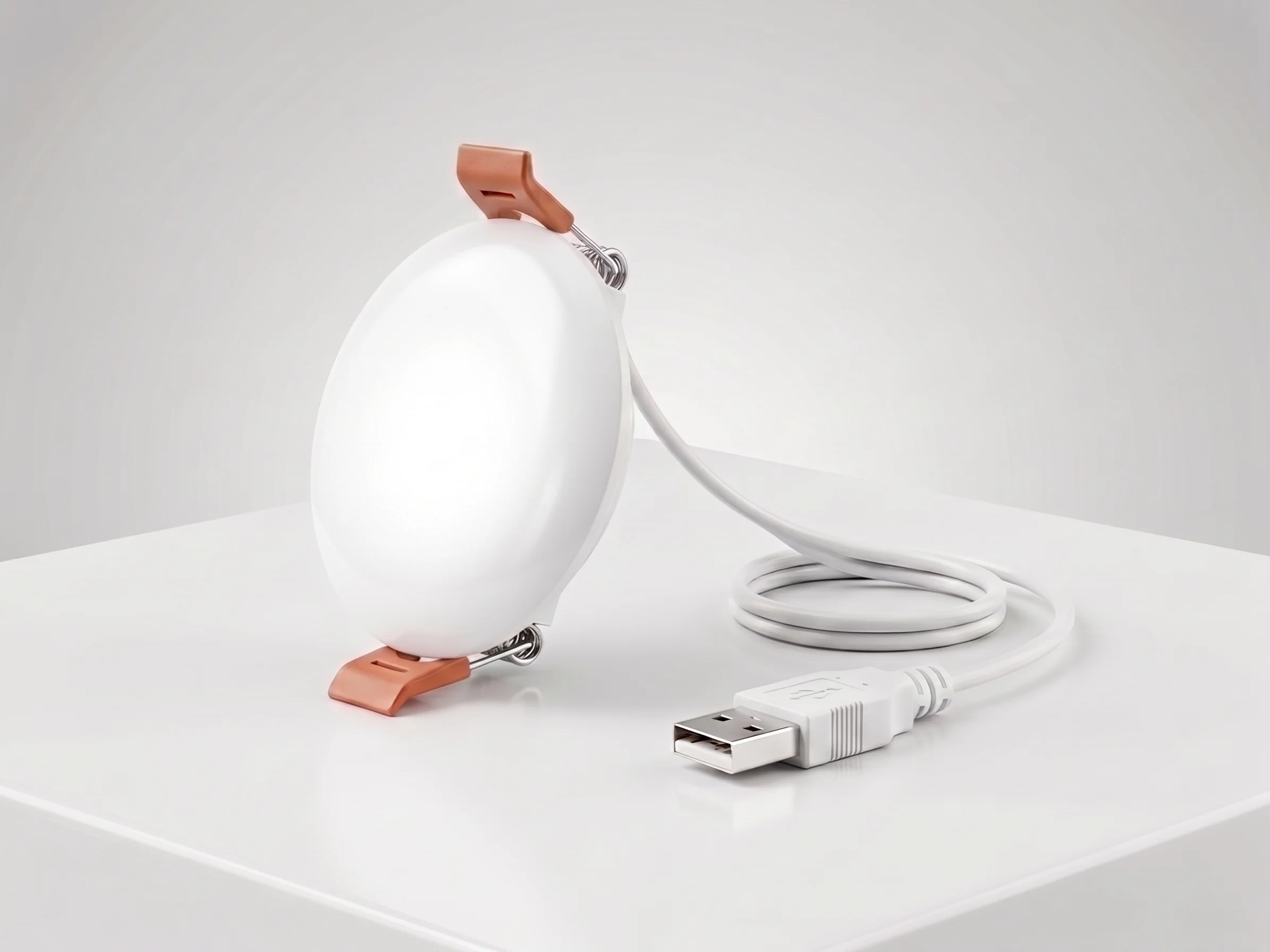
Ceiling Mount mmWave Human Presence Sensor — WiFi
24GHz wideband mmWave ceiling presence sensor with 10m motion detection, 2.5m micro-motion, and breathing detection. 120° field, DC5V, WiFi 2.4GHz. No gateway required for retrofit hotel and apartment projects.
This page already points to it as the next recommended reference.
Related solutions
1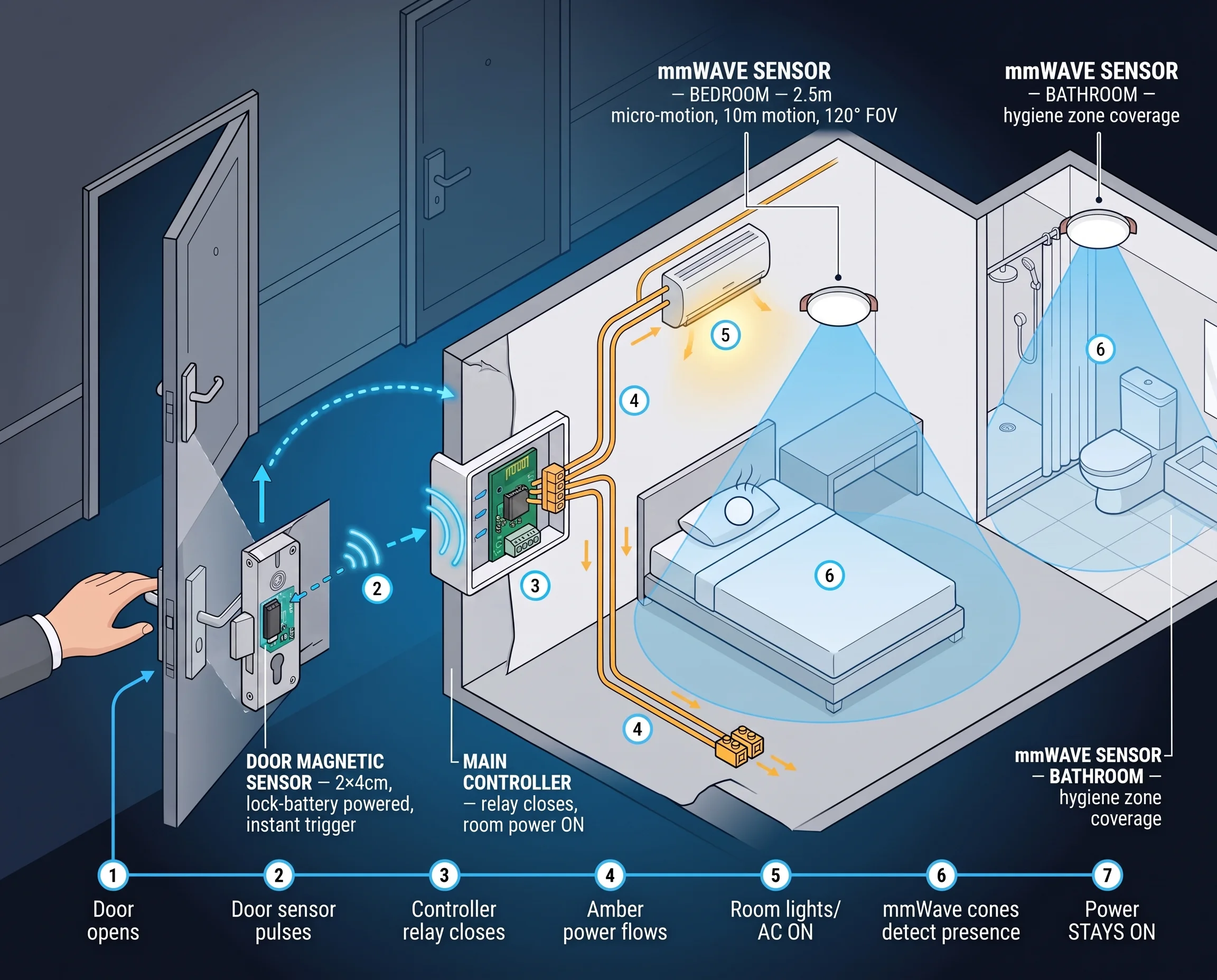
Hotel Room Occupancy & Motion Sensor Solution
mmWave radar presence sensors for hotel room occupancy, housekeeping scheduling, and HVAC energy saving. Detect true occupancy — even when the guest is asleep — with our ceiling-mount hotel room motion sensor.
It supports the same product context: Ceiling Mount mmWave Human Presence Sensor — Zigbee, Ceiling Mount mmWave Human Presence Sensor — WiFi.
Related blog posts
3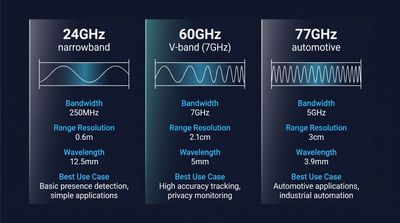
60GHz vs 24GHz vs 77GHz mmWave Sensors: Choosing the Right Frequency for Commercial Presence Detection
Compare 60GHz, 24GHz, and 77GHz mmWave sensors for commercial presence detection. Technical specs, detection range, privacy, and OEM sourcing guidance.
It supports the same product context: Ceiling Mount mmWave Human Presence Sensor — Zigbee, Ceiling Mount mmWave Human Presence Sensor — WiFi.
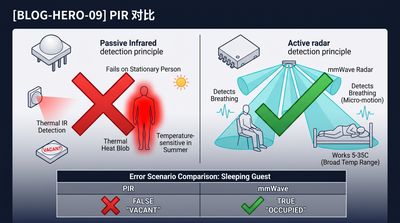
What Is an Electronic Presence Sensor? Technology, Accuracy, and How It Differs From a Motion Sensor
Learn what an electronic presence sensor is, how it detects stationary humans, and how it differs from a PIR motion sensor. Covers mmWave, accuracy, and use cases.
It supports the same product context: Ceiling Mount mmWave Human Presence Sensor — Zigbee, Ceiling Mount mmWave Human Presence Sensor — WiFi.
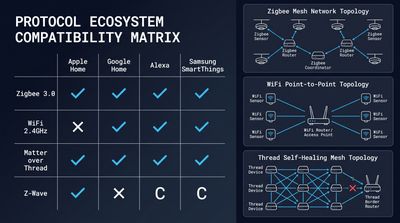
How to Integrate mmWave Presence Sensors With Home Assistant (Local Control Guide)
Step-by-step local control setup guide for mmWave devices, covering MQTT/Matter config, automation scripts, calibration and OEM ceiling presence sensor integration tips.
It supports the same product context: Ceiling Mount mmWave Human Presence Sensor — WiFi, Ceiling Mount mmWave Human Presence Sensor — Zigbee.
Specify your hotel project with our engineers
Send your room count, ceiling type, and protocol preference. We will return a sample plan and quote within 24 business hours.
- Move from general guidance into a product or application discussion.
- Use RFQ when pricing, drawings, MOQ, or launch timing needs structure.
- Keep a direct contact path visible for fast clarifications and handoff.