Presence Detectors: Complete Guide to mmWave Occupancy Detection Technology 2026
A complete guide to presence detectors. Learn about mmWave radar technology, applications, performance benchmarks, and how to choose the right detector.
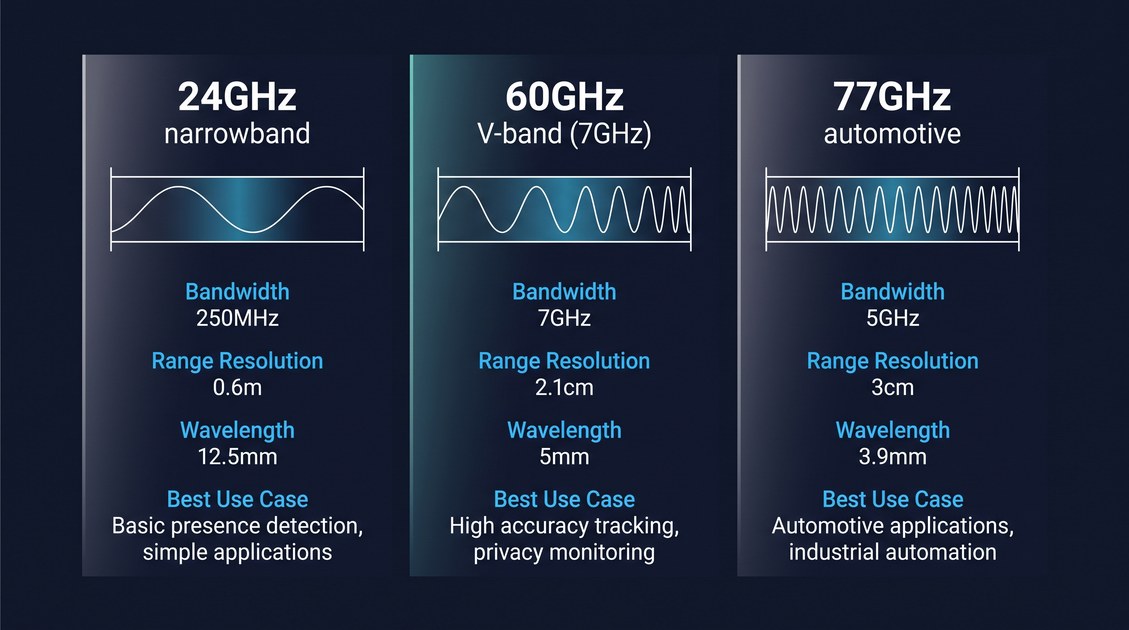
Presence detectors are electronic devices designed to determine whether one or more human occupants are currently present within a defined detection zone, with the capability to detect both moving and stationary occupants (including sleeping, sitting, and reading persons) by using active sensing technology — most commonly millimeter-wave (mmWave) radar at 60 GHz (57–64 GHz) with 7 GHz of bandwidth. Modern presence detectors achieve a stationary-occupant true positive rate above 99% in controlled testing and above 95% in real-world deployment, with a false positive rate below 1% over a 24-hour period. The presence detector is fundamentally different from a passive infrared (PIR) motion sensor, which only fires when a warm body moves across its field of view and is unable to detect a stationary person. The "detectors" plural in the keyword phrase reflects the typical procurement and deployment scenario, where multiple presence detectors are deployed across a property to provide building-wide or portfolio-wide occupancy data.
This guide provides a comprehensive overview of presence detectors, covering the technology, the performance characteristics, the major application verticals, and the selection criteria for choosing the right presence detector for a specific deployment.
Presence Detectors: Technology
The technology behind modern presence detectors is millimeter-wave (mmWave) radar.
Presence Detectors: How They Work
A presence detector works by emitting a signal and analyzing the reflected signal. The basic process is:
- Signal emission: the sensor's transmitter emits a signal (typically an FMCW chirp) that sweeps across a defined frequency band
- Signal reflection: the signal reflects off objects in the detection zone
- Signal reception: the sensor's receiver detects the reflected signal
- Signal analysis: the sensor's processor analyzes the reflected signal to determine the range, velocity, and angular position of each object
- Classification: the sensor's on-board machine learning classifier categorizes the targets
Presence Detectors: FMCW Processing
The 60 GHz band (57–64 GHz) provides 7 GHz of unlicensed bandwidth, which enables 2.1 cm range resolution and micro-Doppler detection of human breathing. The 5 mm wavelength allows for very compact antenna arrays (a 3×3 MIMO array fits in a 20×20 mm PCB area), enabling the 70 mm diameter ceiling puck form factor.
Presence Detectors: Micro-Doppler and Breathing Detection
The micro-Doppler signature of human breathing is the key to detecting stationary occupants. The periodic motion of the chest wall during breathing (amplitude 5–20 mm, frequency 0.2–0.5 Hz) produces a Doppler modulation that is clearly detectable by a 60 GHz mmWave detector with 7 GHz of bandwidth.
A well-designed presence detector uses signal processing techniques to extract the breathing signature from the radar return, distinguish it from background noise, and use it as a positive indicator of human presence. The result is a detector that can reliably confirm the presence of a sleeping adult at 4 m with a true positive rate above 99% in controlled testing.
Presence Detectors: Performance Metrics
The performance of a presence detector is characterized by several key metrics.
Presence Detectors: Stationary-Occupant True Positive Rate
The stationary-occupant TPR is above 99% in controlled testing and above 95% in real-world deployment.
Presence Detectors: False Positive Rate
The FPR is below 1% over a 24-hour period.
Presence Detectors: Detection Range
The detection range of a 60 GHz presence detector is 6–8 m for stationary occupants and 8–12 m for moving occupants when ceiling-mounted at 2.5–3.0 m.
Presence Detectors: Detection Latency
The detection latency is typically 0.5–3 seconds.
Presence Detectors: Applications
Presence detectors are deployed in a wide range of applications.
Presence Detectors: Hotel Room Deployment
Hotel rooms are the canonical application. A 60 GHz ceiling-mounted presence detector can reliably detect whether a guest is in the room throughout their stay, including when they are sleeping, and feeds the occupancy data to the building management system.
Presence Detectors: Office and Conference Room Deployment
Offices use presence detectors for per-room HVAC and lighting control, conference room availability detection, and space utilization analytics.
Presence Detectors: Healthcare and Patient Room Deployment
Healthcare facilities use presence detectors for fall detection, bed-exit alerting, and occupancy-based environmental control. The privacy profile of mmWave radar makes it suitable for deployment in private spaces.
Presence Detectors: Residential Smart Home Deployment
Residential smart homes use presence detectors for occupancy-based lighting, HVAC control, and security monitoring.
Presence Detectors: Selection Criteria
Selecting the right presence detectors for a specific deployment requires evaluating several criteria.
Presence Detectors: Detection Performance
The detection performance is the most important criterion. Key metrics include the stationary-occupant TPR, the FPR, the detection range, and the detection latency.
Presence Detectors: Form Factor
For most applications, a ceiling-mounted sensor (70 mm diameter ceiling puck) is the right choice.
Presence Detectors: Connectivity
The connectivity should match the existing infrastructure. For hotel deployments, Zigbee is the most common. For office deployments, WiFi or PoE with BACnet is common. For residential deployments, Matter or Zigbee is the most common.
Presence Detectors: Certifications
The presence detectors should carry the required certifications for the target market: FCC, CE, RoHS, GDPR, CCPA, and any regional certifications.
Presence Detectors: Recommended Products
The recommended products for presence detector deployments are the ceiling-presence-sensor-zigbee, ceiling-presence-sensor-wifi, and ceiling-presence-sensor-matter, which provide 24GHz wideband mmWave radar detection, multiple connectivity options, full certification, and occupancy-signal output to BMS, BMS, and smart home platforms.
Presence Detectors: Final Recommendation
Presence detectors are the foundation of modern building automation, smart home, and commercial deployment. The 60 GHz mmWave radar is the default technology, providing reliable stationary-occupant detection, an excellent privacy profile, and a compact form factor.
For a procurement team or a consumer selecting presence detectors, the right approach is to start with a clear definition of the deployment requirements, then evaluate the available detectors against those requirements, then select a vendor with a proven track record in the target vertical. With the right presence detectors, correctly installed and integrated, the deployment can deliver a level of occupancy awareness that is impossible to achieve with PIR-based motion sensors, and can justify the higher unit cost through improved energy efficiency, better occupant experience, and more accurate occupancy data for downstream analytics.
Not sure which sensor fits your project?
Talk to our mmWave application engineers for a free consultation.
Find the right presence sensor for your hotel project
Compare the 3 protocols, check hotel-specific case studies, and download the installation guide
Related products
3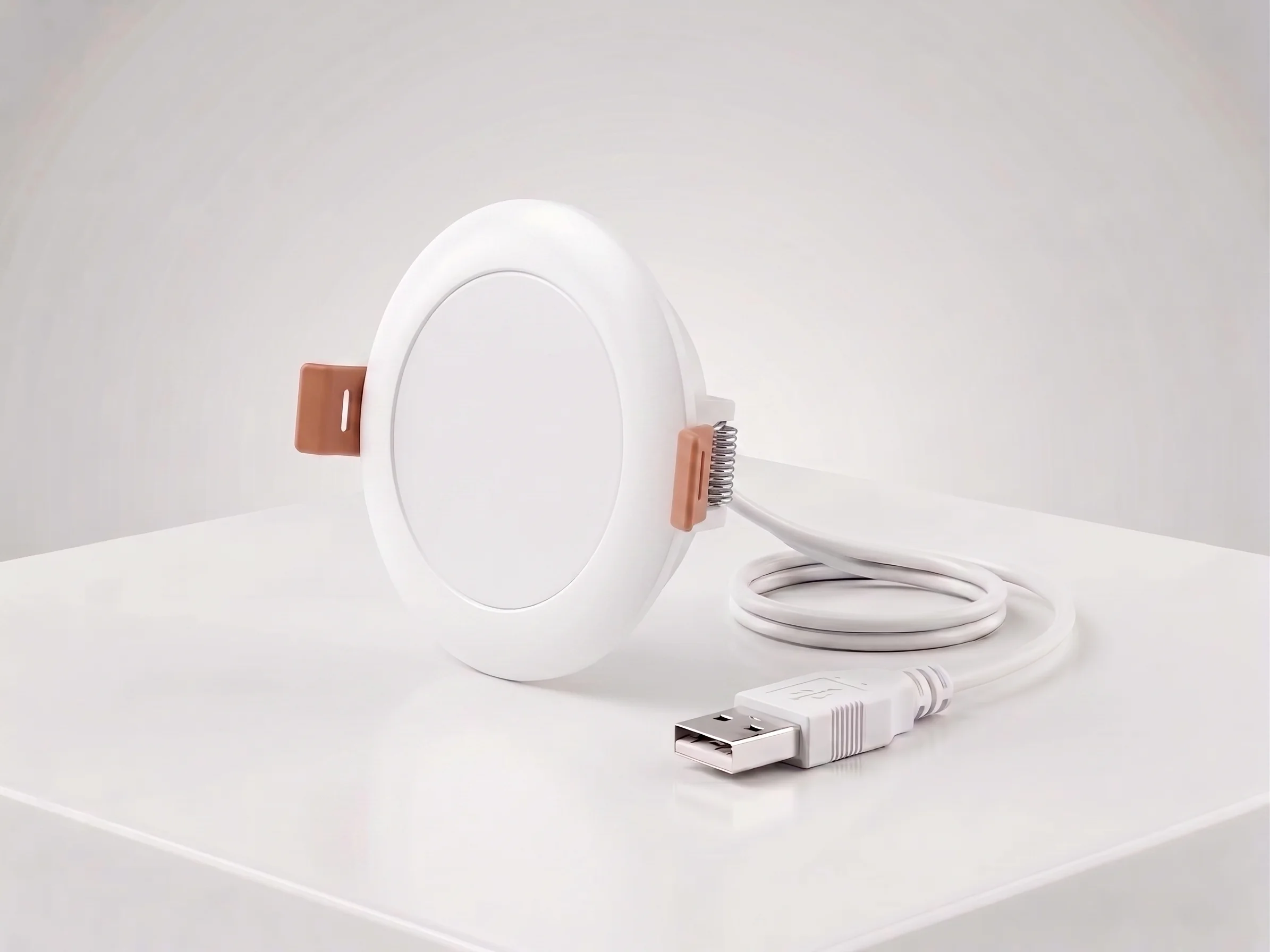
Ceiling Mount mmWave Human Presence Sensor — Zigbee
24GHz wideband mmWave ceiling presence sensor with 10m motion detection, 2.5m micro-motion, and breathing detection. 120° field, DC5V, Zigbee 3.0. For hotel room occupancy and commercial automation.
This page already points to it as the next recommended reference.
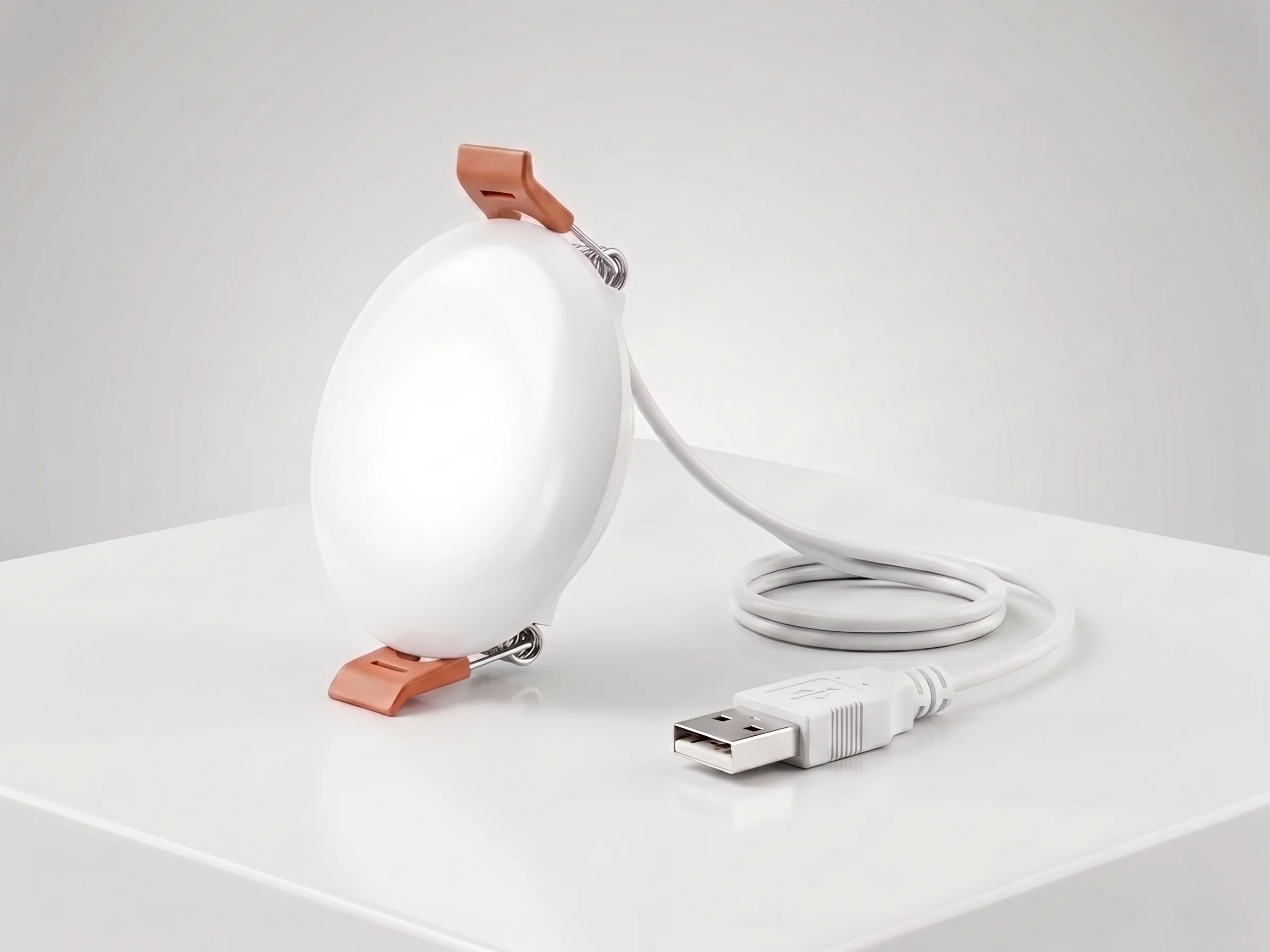
Ceiling Mount mmWave Human Presence Sensor — WiFi
24GHz wideband mmWave ceiling presence sensor with 10m motion detection, 2.5m micro-motion, and breathing detection. 120° field, DC5V, WiFi 2.4GHz. No gateway required for retrofit hotel and apartment projects.
This page already points to it as the next recommended reference.
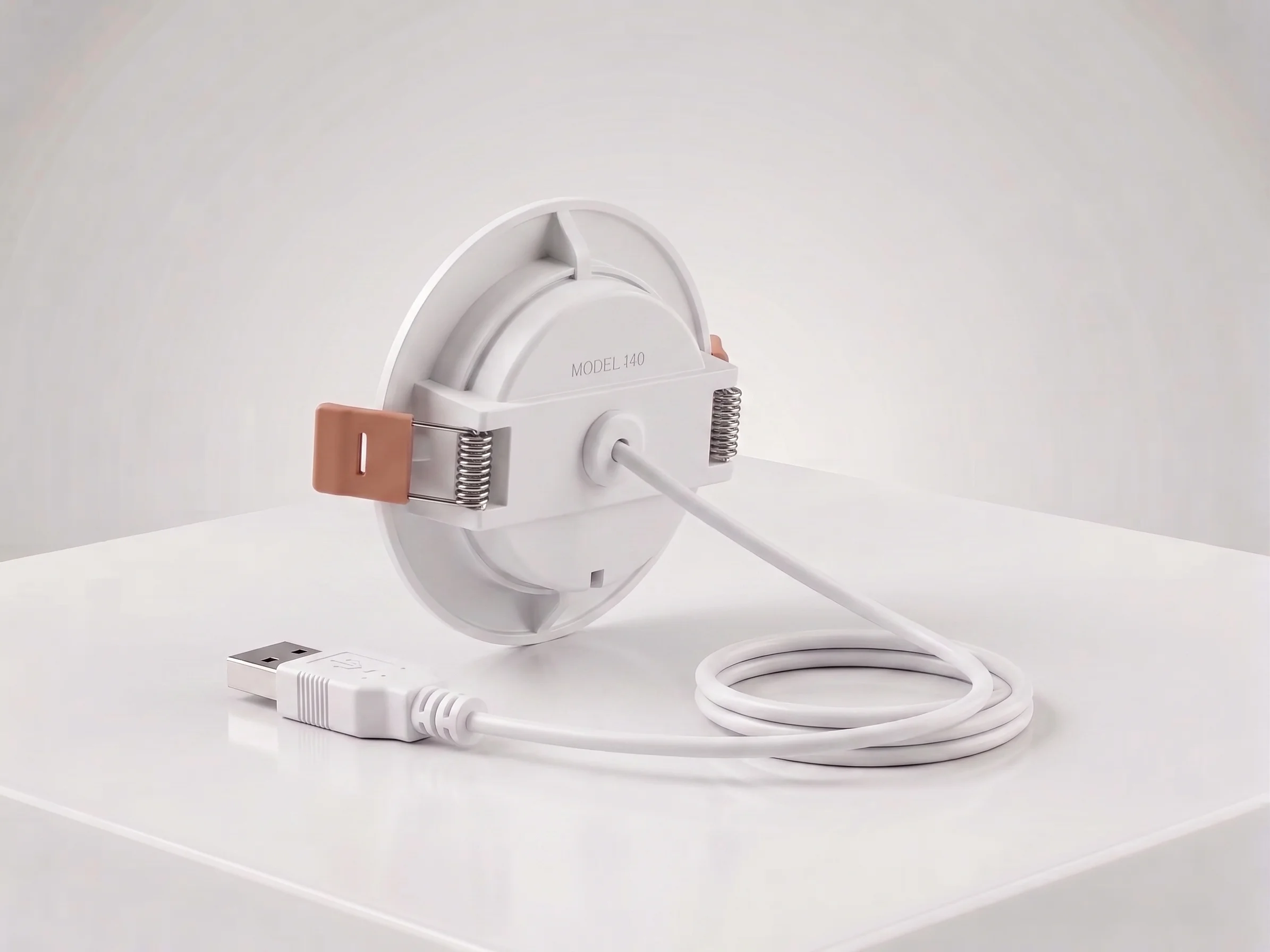
Ceiling Mount mmWave Human Presence Sensor — Matter over Thread
24GHz wideband mmWave ceiling presence sensor with 10m motion, 2.5m micro-motion, and breathing detection. 120° field, DC5V, Matter over Thread. Works natively with Apple Home, Google Home, and Alexa.
This page already points to it as the next recommended reference.
Related solutions
1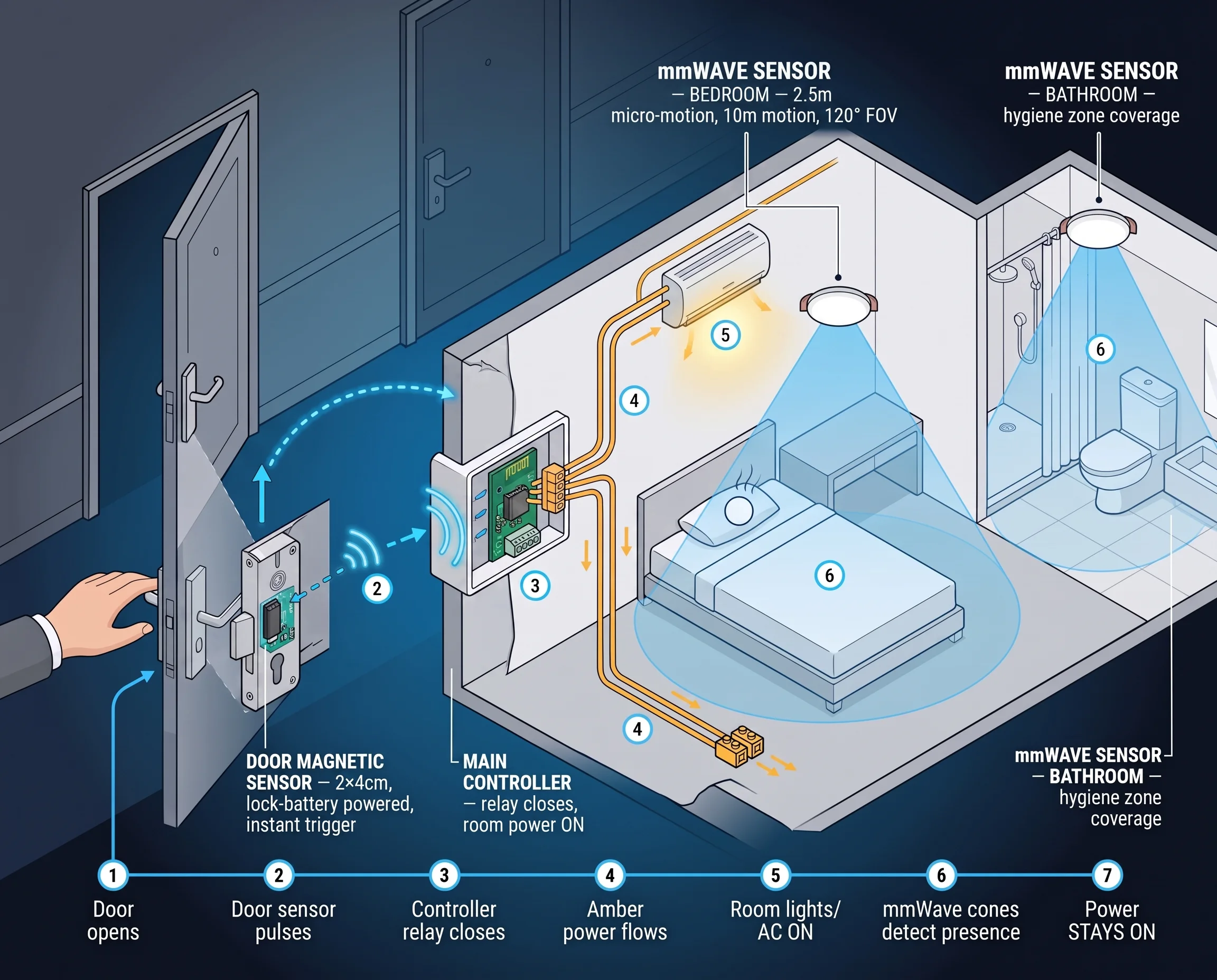
Hotel Room Occupancy & Motion Sensor Solution
mmWave radar presence sensors for hotel room occupancy, housekeeping scheduling, and HVAC energy saving. Detect true occupancy — even when the guest is asleep — with our ceiling-mount hotel room motion sensor.
It supports the same product context: Ceiling Mount mmWave Human Presence Sensor — Zigbee, Ceiling Mount mmWave Human Presence Sensor — WiFi, Ceiling Mount mmWave Human Presence Sensor — Matter over Thread.
Related blog posts
3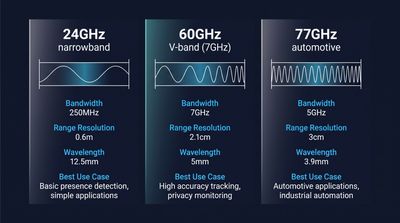
60GHz vs 24GHz vs 77GHz mmWave Sensors: Choosing the Right Frequency for Commercial Presence Detection
Compare 60GHz, 24GHz, and 77GHz mmWave sensors for commercial presence detection. Technical specs, detection range, privacy, and OEM sourcing guidance.
It supports the same product context: Ceiling Mount mmWave Human Presence Sensor — Zigbee, Ceiling Mount mmWave Human Presence Sensor — WiFi.
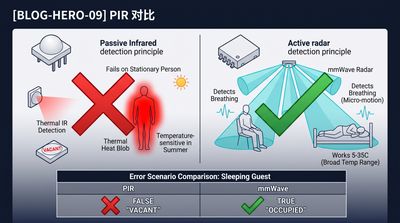
What Is an Electronic Presence Sensor? Technology, Accuracy, and How It Differs From a Motion Sensor
Learn what an electronic presence sensor is, how it detects stationary humans, and how it differs from a PIR motion sensor. Covers mmWave, accuracy, and use cases.
It supports the same product context: Ceiling Mount mmWave Human Presence Sensor — Zigbee, Ceiling Mount mmWave Human Presence Sensor — WiFi, Ceiling Mount mmWave Human Presence Sensor — Matter over Thread.
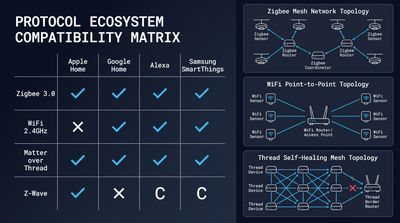
How to Integrate mmWave Presence Sensors With Home Assistant (Local Control Guide)
Step-by-step local control setup guide for mmWave devices, covering MQTT/Matter config, automation scripts, calibration and OEM ceiling presence sensor integration tips.
It supports the same product context: Ceiling Mount mmWave Human Presence Sensor — Matter over Thread, Ceiling Mount mmWave Human Presence Sensor — WiFi, Ceiling Mount mmWave Human Presence Sensor — Zigbee.
Specify your hotel project with our engineers
Send your room count, ceiling type, and protocol preference. We will return a sample plan and quote within 24 business hours.
- Move from general guidance into a product or application discussion.
- Use RFQ when pricing, drawings, MOQ, or launch timing needs structure.
- Keep a direct contact path visible for fast clarifications and handoff.