Presence Detector vs Motion Detector: Complete Comparison and Selection Guide 2026
A complete comparison of presence detectors and motion detectors. Learn the key differences, when to use each, and how to choose the right detector for your application.
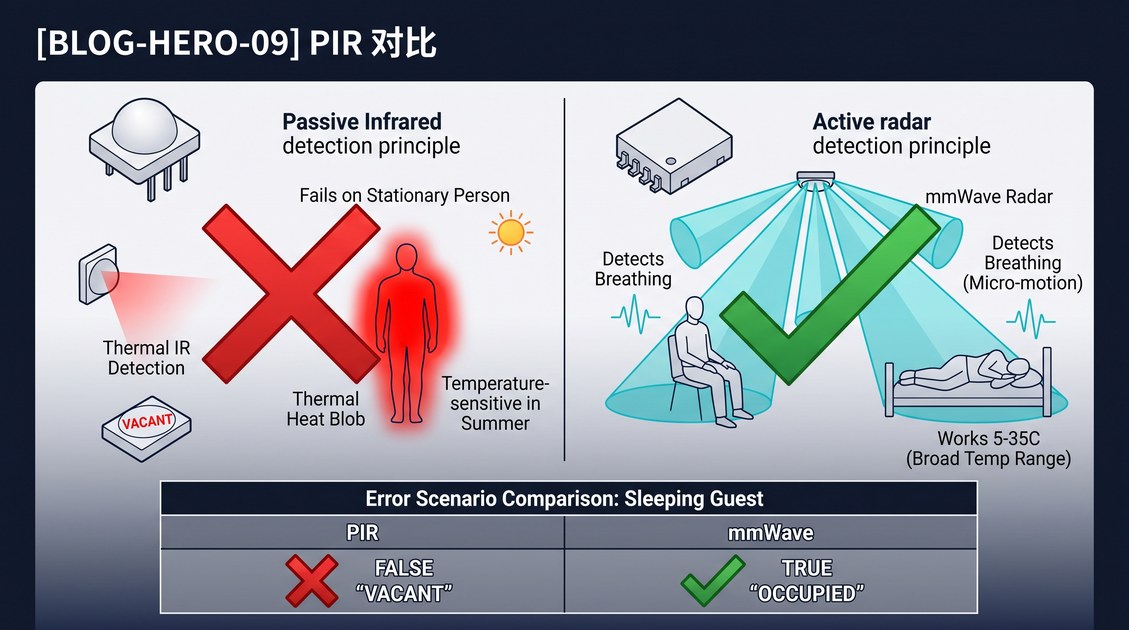
The comparison between a presence detector and a motion detector is one of the most important decisions in any building automation, smart home, or commercial deployment. A presence detector (using mmWave radar technology at 60 GHz) can detect both moving and stationary human occupants by sensing the micro-Doppler signature of human breathing at 0.2–0.5 Hz, achieving a stationary-occupant true positive rate above 99% in controlled testing. A motion detector (using passive infrared, or PIR, technology) can only detect moving human occupants, reporting "no motion" within 10–30 minutes after the last movement, even if the room is occupied. The choice between a presence detector and a motion detector depends on the application requirements: for applications where the occupant may be still for extended periods (hotel rooms, offices, healthcare, residential), a presence detector is the right choice. For applications where motion detection is sufficient (stairwells, corridors, basic security), a motion detector is the right choice and is significantly less expensive.
This guide provides a comprehensive comparison of presence detectors and motion detectors, covering the technology, the performance characteristics, the applications where each excels, and the selection criteria for choosing the right detector for a specific application.
Presence Detector vs Motion Detector: The Fundamental Difference
The fundamental difference between a presence detector and a motion detector is the detection principle: a presence detector detects the state of being present, while a motion detector detects the event of motion.
Presence Detector vs Motion Detector: The Detection Principle
A presence detector uses active sensing technology — most commonly mmWave radar at 60 GHz — to emit a signal and analyze the reflection. The signal processing extracts the range, velocity, and angular position of every target in the detection zone, and a machine learning classifier categorizes the targets as human present, no human present, or activity type. The presence detector can detect a stationary human by sensing the micro-Doppler signature of breathing.
A motion detector uses passive sensing technology — most commonly PIR — to detect changes in infrared radiation across its field of view. The PIR sensor fires when a warm body moves from one sensing zone to another, but it does not fire when a warm body is stationary. A motion detector cannot detect a stationary human.
Presence Detector vs Motion Detector: The Practical Implications
The practical implications of this fundamental difference are significant. A PIR motion detector in a hotel room will report "no motion" within 10–30 minutes after the last movement, even if the room is occupied by a sleeping guest. The HVAC system, which is triggered by motion events, will revert to setback mode during the night, and the housekeeping system will conclude the room is empty and may dispatch a housekeeper, who may enter the room while the guest is sleeping.
A presence detector in the same hotel room will report "occupied" the entire time the guest is in the room, because it can detect the micro-motion of breathing. The HVAC system will remain in comfort mode throughout the night, and the housekeeping system will wait for the actual checkout (when the guest leaves the room and the presence detector reports "empty") before dispatching a housekeeper.
Presence Detector vs Motion Detector: Technology Comparison
The two technologies are based on fundamentally different physical principles.
Presence Detector vs Motion Detector: mmWave Radar (Presence)
mmWave radar (60 GHz) is the dominant technology for presence detectors. The technology provides:
- 7 GHz of bandwidth, enabling 2.1 cm range resolution
- Micro-Doppler detection of human breathing at 0.2–0.5 Hz
- 5 mm wavelength, allowing compact antenna arrays (3×3 MIMO in a 20×20 mm PCB area)
- High oxygen absorption at 60 GHz, providing a natural privacy barrier
A 60 GHz presence detector achieves a stationary-occupant true positive rate above 99% in controlled testing and above 95% in real-world deployment, with a false positive rate below 1% over a 24-hour period.
Presence Detector vs Motion Detector: PIR (Motion)
PIR (passive infrared) is the dominant technology for motion detectors. The technology provides:
- Detection of warm body movement across the sensor's field of view
- No active signal emission, so no power consumption in standby
- Very low cost ($0.5–2 per component, $10–30 at retail)
- Simple on/off output
A PIR motion detector cannot detect stationary occupants, regardless of the sensitivity or the quality of the sensor. The fundamental limitation is the physical principle: a stationary warm body does not change the infrared radiation pattern across the sensor's field of view.
Presence Detector vs Motion Detector: Performance Comparison
The performance comparison between presence detectors and motion detectors reveals the fundamental trade-off.
| Attribute | Presence Detector (mmWave 60 GHz) | Motion Detector (PIR) |
|---|---|---|
| Stationary occupant detection | Yes (breathing) | No (motion only) |
| Moving occupant detection | Yes | Yes |
| Detection range | 6–8 m stationary, 8–12 m moving | 5–12 m (line of sight) |
| Field of view | ±60° azimuth, ±40° elevation | Wide, lens-dependent |
| False positive rate | <1% per day | 0.5–2% per day |
| Detection latency | 0.5–3 seconds | <1 second |
| Power consumption | 0.5–1.0 W active | <100 μA standby |
| Cost (retail) | $50–150 | $10–30 |
| Cost (component) | $6–18 per module | $0.5–2 per component |
| Battery life | 12–18 months (CR123A) | 3–5 years (coin cell) |
| Privacy | Excellent (no images) | Excellent (no images) |
Presence Detector vs Motion Detector: When to Use Each
The choice between a presence detector and a motion detector depends on the application requirements.
Presence Detector vs Motion Detector: When to Use a Presence Detector
Use a presence detector when the application requires:
- Stationary-occupant detection: applications where the occupant may be still for extended periods (hotel rooms, offices, healthcare patient rooms, residential bedrooms and living rooms)
- Reliable energy management: applications where the HVAC or lighting must respond to actual occupancy, not just to recent motion
- Housekeeping coordination: applications where the housekeeping system must coordinate with the actual occupancy of the room
- Fall detection: applications where the detection of a person who has fallen and is lying motionless is critical
- Sleep monitoring: applications where the detection of a sleeping person is required
Presence Detector vs Motion Detector: When to Use a Motion Detector
Use a motion detector when the application requires:
- Motion-based control only: applications where motion-based control is sufficient (stairwell lighting control, corridor lighting control, basic security)
- Lowest cost: applications where the cost is the primary consideration and motion-based control is acceptable
- Long battery life: applications where the sensor must run for years on a coin cell battery
- Simple integration: applications where a simple on/off output is sufficient and no complex signal processing is required
Presence Detector vs Motion Detector: Hybrid Solutions
In some applications, a hybrid solution combining a presence detector and a motion detector can provide the best of both worlds.
Presence Detector vs Motion Detector: Dual-Technology Sensors
A dual-technology sensor combines a presence detector (mmWave radar) and a motion detector (PIR) in a single device. The PIR sensor provides fast motion detection with low power consumption, and the mmWave radar provides stationary-occupant detection. The dual-technology approach can reduce false positives (the sensor only reports presence when both technologies agree) and can extend the coverage area.
The dual-technology approach is particularly valuable for security applications where false positives can lead to alarm fatigue, and for outdoor applications where the combination of motion-based and presence-based detection provides more reliable coverage.
Presence Detector vs Motion Detector: Cost Comparison
The cost comparison reveals the trade-off between capability and cost.
Presence Detector vs Motion Detector: Retail Pricing
- PIR motion detector: $10–30 at retail
- mmWave presence detector: $50–150 at retail
The presence detector is typically 3–10× more expensive than the motion detector at retail. The higher cost is justified for applications that require stationary-occupant detection, but it is not justified for applications where motion-based control is sufficient.
Presence Detector vs Motion Detector: Component Pricing
- PIR component: $0.5–2 per component
- mmWave module: $6–18 per module at 1,000-unit volume
The component-level pricing shows the same ratio: the presence detector is significantly more expensive than the motion detector at the component level. The cost differential is driven by the higher complexity of the mmWave radar (transceiver, antenna array, RF front-end, baseband processor) compared to the PIR sensor (single thermal detector with simple analog front-end).
Presence Detector vs Motion Detector: Selection Decision Framework
The following decision framework helps select the right detector for a specific application.
Presence Detector vs Motion Detector: Step 1 — Define the Application
The first step is to define the application and the specific requirements: where will the sensor be installed, what is the expected occupant behavior, what downstream systems will consume the data, and what are the privacy and compliance requirements.
Presence Detector vs Motion Detector: Step 2 — Determine the Detection Requirements
The second step is to determine the detection requirements: is stationary-occupant detection required, or is motion-based detection sufficient? If stationary-occupant detection is required, a presence detector is the right choice. If motion-based detection is sufficient, a motion detector is the right choice.
Presence Detector vs Motion Detector: Step 3 — Evaluate the Trade-Offs
The third step is to evaluate the trade-offs: a presence detector is 3–10× more expensive than a motion detector, but it provides significantly better detection accuracy for stationary occupants. The trade-off is justified for applications that require stationary-occupant detection.
Presence Detector vs Motion Detector: Step 4 — Select the Detector
The fourth step is to select the detector based on the requirements and the trade-offs. For most indoor applications (hotel rooms, offices, healthcare, residential), a presence detector is the right choice. For applications where motion-based control is sufficient (stairwells, corridors, basic security), a motion detector is the right choice.
Presence Detector vs Motion Detector: Final Recommendation
The choice between a presence detector and a motion detector is one of the most important decisions in any building automation, smart home, or commercial deployment. A presence detector (using mmWave radar technology at 60 GHz) is the right choice for any application where stationary-occupant detection is required, while a motion detector (using PIR technology) is the right choice for applications where motion-based control is sufficient.
For most indoor applications (hotel rooms, offices, healthcare, residential), a presence detector is the recommended choice, and the recommended products are the ceiling-presence-sensor-zigbee, ceiling-presence-sensor-wifi, and ceiling-presence-sensor-matter from vendors with strong product portfolios and proven deployment track records. With the right presence detector, the deployment can deliver a level of occupancy awareness that is impossible to achieve with motion detectors, and can justify the higher unit cost through improved energy efficiency, better occupant experience, and more accurate occupancy data for downstream analytics.
For applications where motion-based control is sufficient (stairwells, corridors, basic security), a motion detector is the recommended choice, and a high-quality PIR motion detector from an established vendor is the right product. With the right motion detector, the deployment can deliver reliable motion-based control at a lower cost, and the lower cost is appropriate for the simpler application requirements.
Part of this article content is generated by AI and optimized for professional accuracy and readability.
Not sure which sensor fits your project?
Talk to our mmWave application engineers for a free consultation.
Find the right presence sensor for your hotel project
Compare the 3 protocols, check hotel-specific case studies, and download the installation guide
Related products
3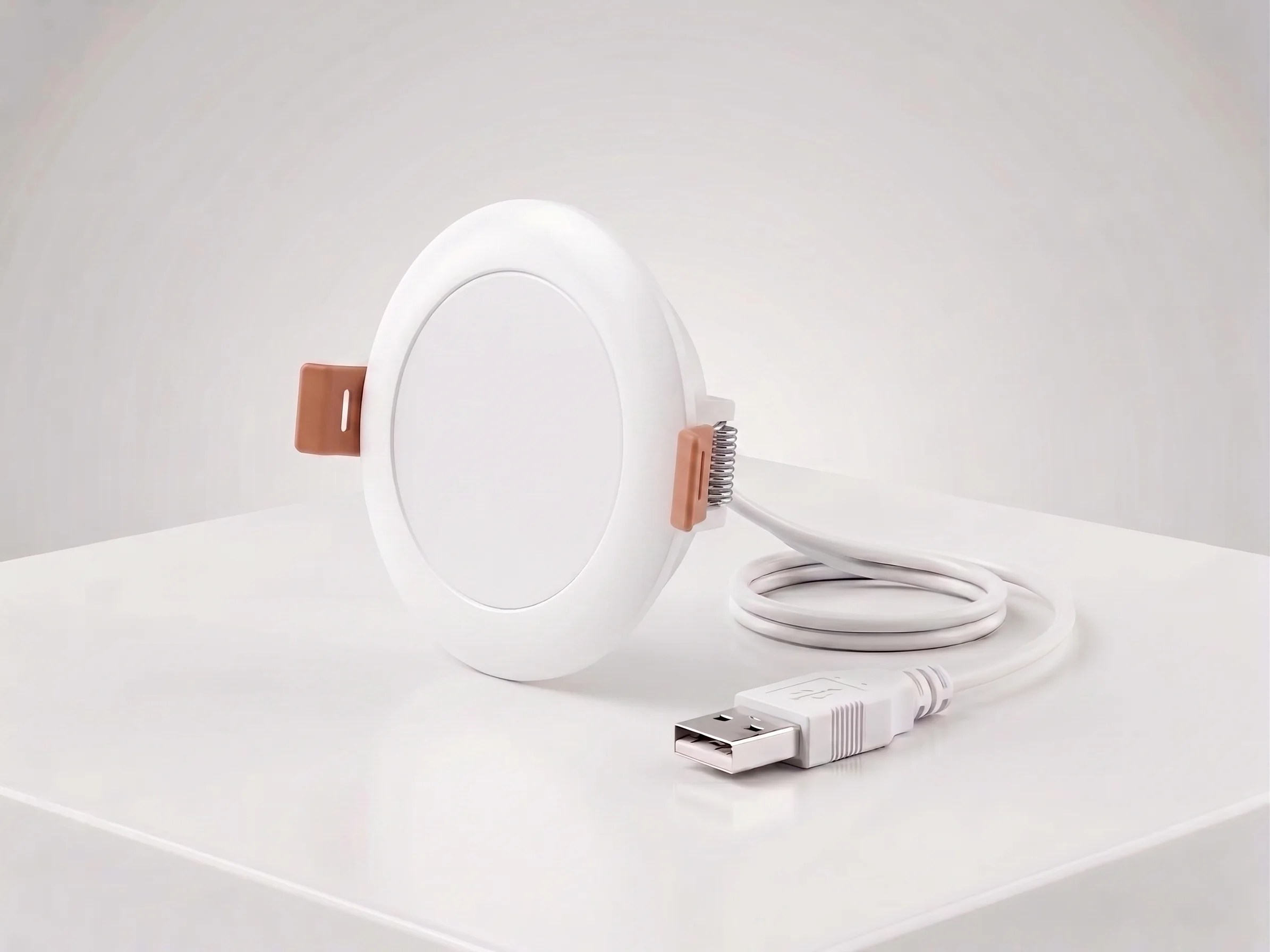
Ceiling Mount mmWave Human Presence Sensor — Zigbee
24GHz wideband mmWave ceiling presence sensor with 10m motion detection, 2.5m micro-motion, and breathing detection. 120° field, DC5V, Zigbee 3.0. For hotel room occupancy and commercial automation.
This page already points to it as the next recommended reference.
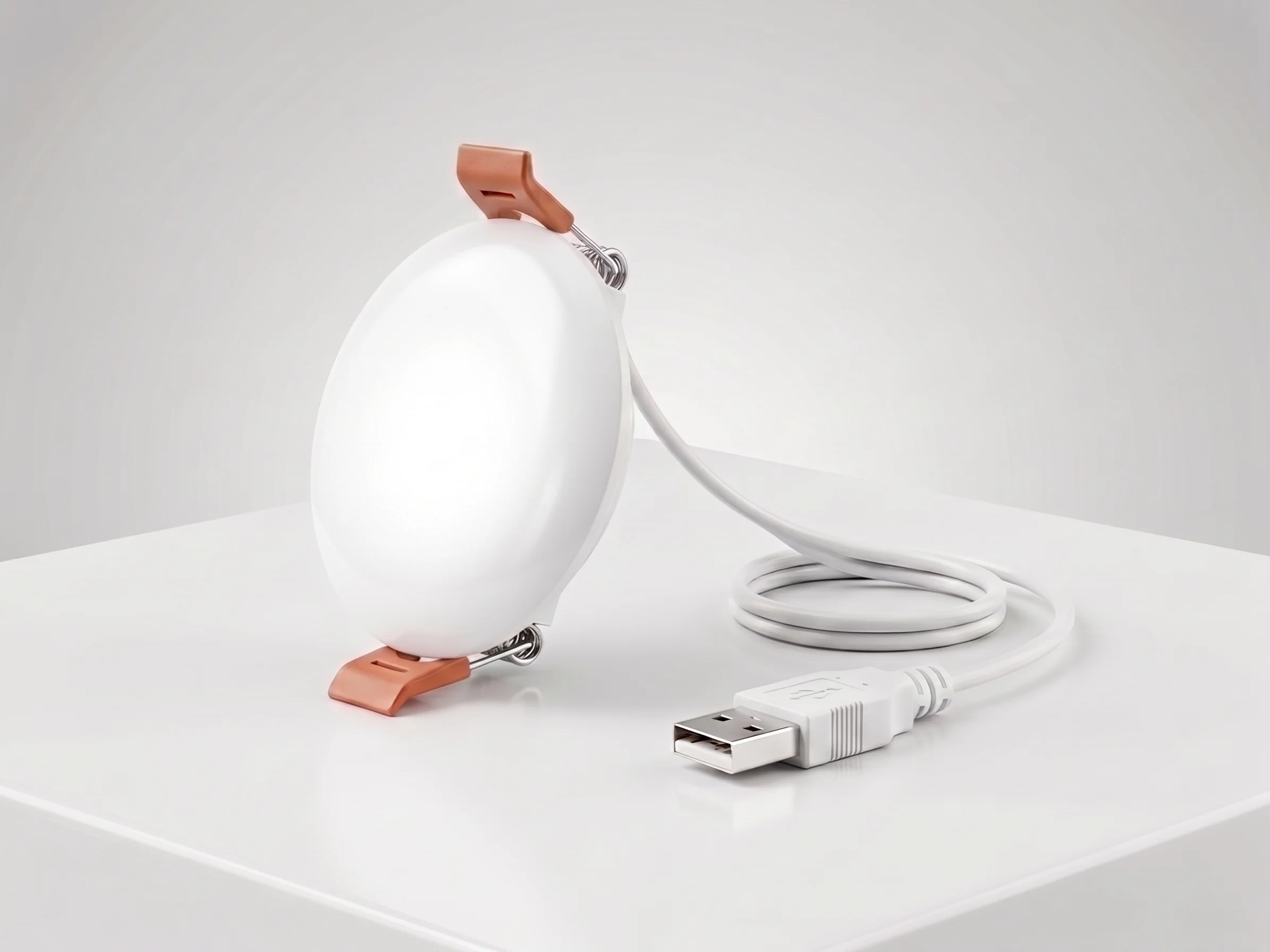
Ceiling Mount mmWave Human Presence Sensor — WiFi
24GHz wideband mmWave ceiling presence sensor with 10m motion detection, 2.5m micro-motion, and breathing detection. 120° field, DC5V, WiFi 2.4GHz. No gateway required for retrofit hotel and apartment projects.
This page already points to it as the next recommended reference.
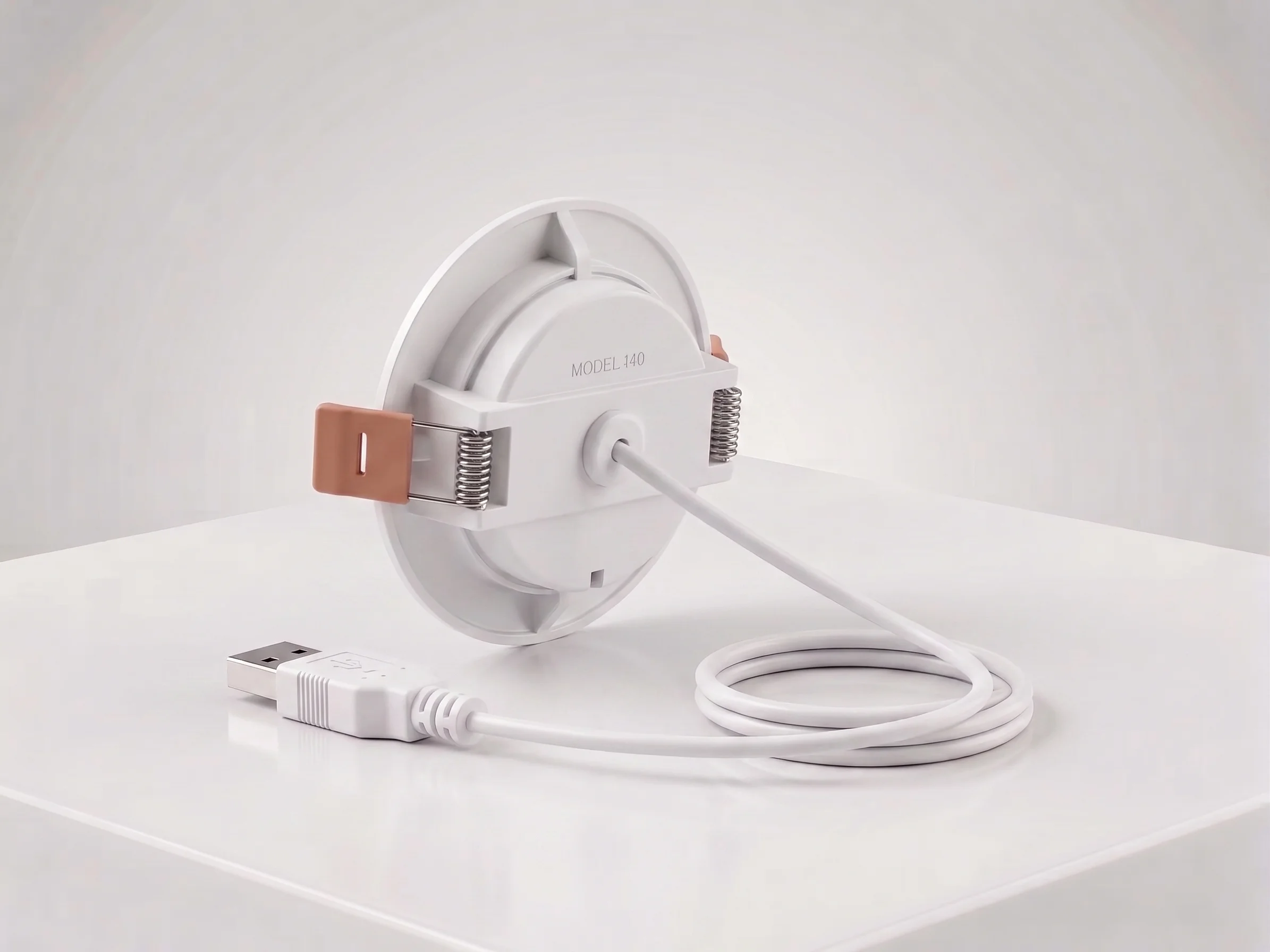
Ceiling Mount mmWave Human Presence Sensor — Matter over Thread
24GHz wideband mmWave ceiling presence sensor with 10m motion, 2.5m micro-motion, and breathing detection. 120° field, DC5V, Matter over Thread. Works natively with Apple Home, Google Home, and Alexa.
This page already points to it as the next recommended reference.
Related solutions
1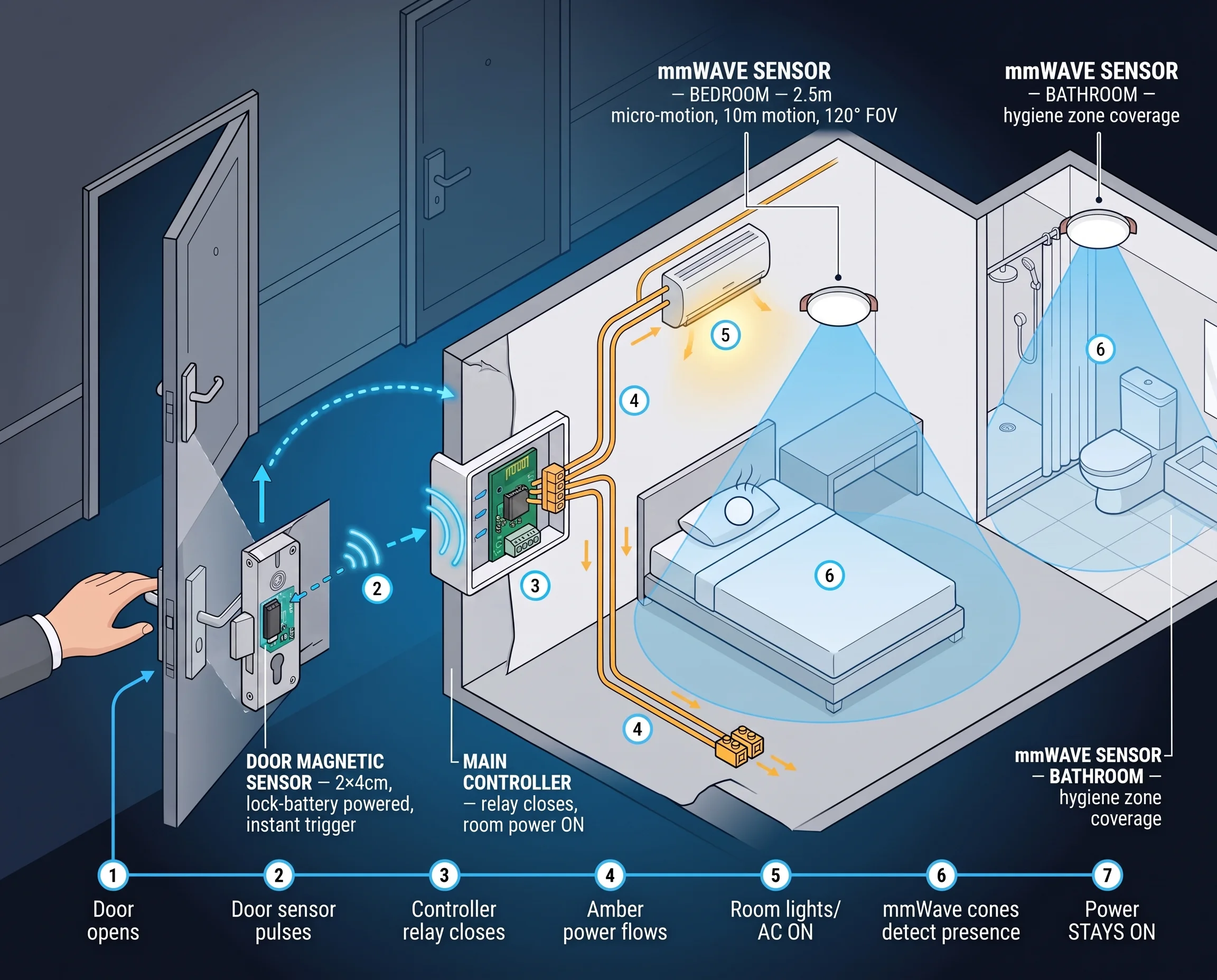
Hotel Room Occupancy & Motion Sensor Solution
mmWave radar presence sensors for hotel room occupancy, housekeeping scheduling, and HVAC energy saving. Detect true occupancy — even when the guest is asleep — with our ceiling-mount hotel room motion sensor.
It supports the same product context: Ceiling Mount mmWave Human Presence Sensor — Zigbee, Ceiling Mount mmWave Human Presence Sensor — WiFi, Ceiling Mount mmWave Human Presence Sensor — Matter over Thread.
Related blog posts
3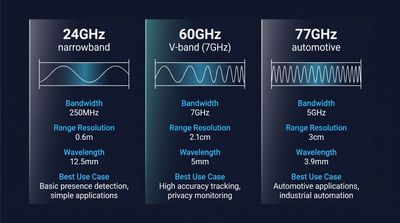
60GHz vs 24GHz vs 77GHz mmWave Sensors: Choosing the Right Frequency for Commercial Presence Detection
Compare 60GHz, 24GHz, and 77GHz mmWave sensors for commercial presence detection. Technical specs, detection range, privacy, and OEM sourcing guidance.
It supports the same product context: Ceiling Mount mmWave Human Presence Sensor — Zigbee, Ceiling Mount mmWave Human Presence Sensor — WiFi.
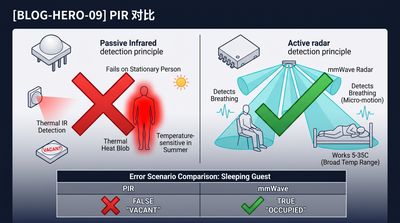
What Is an Electronic Presence Sensor? Technology, Accuracy, and How It Differs From a Motion Sensor
Learn what an electronic presence sensor is, how it detects stationary humans, and how it differs from a PIR motion sensor. Covers mmWave, accuracy, and use cases.
It supports the same product context: Ceiling Mount mmWave Human Presence Sensor — Zigbee, Ceiling Mount mmWave Human Presence Sensor — WiFi, Ceiling Mount mmWave Human Presence Sensor — Matter over Thread.
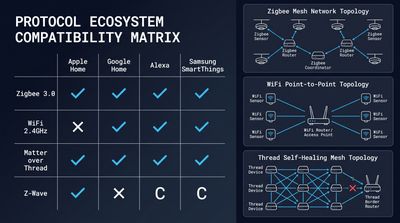
How to Integrate mmWave Presence Sensors With Home Assistant (Local Control Guide)
Step-by-step local control setup guide for mmWave devices, covering MQTT/Matter config, automation scripts, calibration and OEM ceiling presence sensor integration tips.
It supports the same product context: Ceiling Mount mmWave Human Presence Sensor — Matter over Thread, Ceiling Mount mmWave Human Presence Sensor — WiFi, Ceiling Mount mmWave Human Presence Sensor — Zigbee.
Specify your hotel project with our engineers
Send your room count, ceiling type, and protocol preference. We will return a sample plan and quote within 24 business hours.
- Move from general guidance into a product or application discussion.
- Use RFQ when pricing, drawings, MOQ, or launch timing needs structure.
- Keep a direct contact path visible for fast clarifications and handoff.