Presence Data and Sensors: How Occupancy Data Drives Building Automation
A guide to presence data and sensors. Learn how occupancy data is collected, processed, and used to drive HVAC, lighting, and analytics systems.
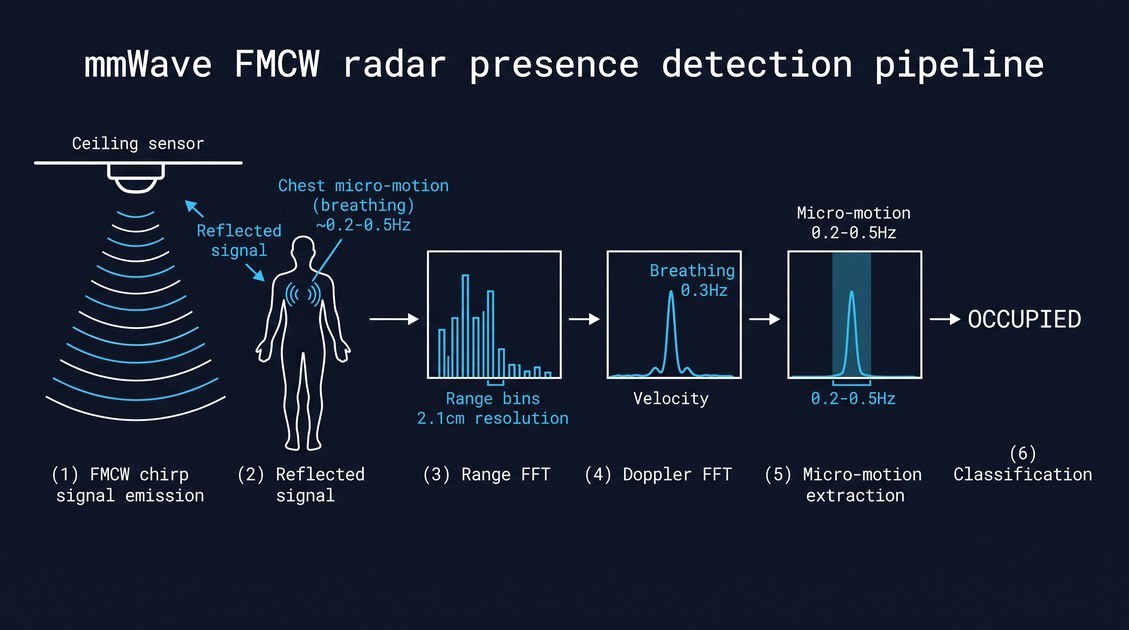
Presence data and sensors refer to the occupancy information collected by presence detection devices (typically 60 GHz mmWave radar sensors) and the downstream systems that consume this data to drive building automation, energy management, space utilization analytics, and security monitoring. A presence sensor collects raw occupancy data — typically a binary "occupied / not occupied" state, and in some cases additional information such as the number of occupants, the location of the occupants within the room, and the activity of the occupants (sleeping, sitting, walking, falling) — and transmits this data to a downstream system (building management system, building management system, scheduling platform, or cloud analytics platform) via a wireless protocol (Zigbee, WiFi, Matter) or a wired protocol (BACnet, Modbus, Ethernet). The presence data is then used to drive automated actions (HVAC setpoint adjustment, lighting control, housekeeping dispatch) and to provide analytics (space utilization, energy consumption, occupancy patterns) that inform long-term decisions about the building and the organization.
This guide provides a comprehensive overview of presence data and sensors, covering the data collection process, the data processing pipeline, the downstream applications, and the privacy and compliance considerations.
Presence Data and Sensors: Data Collection
The presence data collection process starts with the presence sensor, which detects the occupancy state and transmits the data to a downstream system.
Presence Data and Sensors: The Sensor's Data Output
A modern 60 GHz mmWave presence sensor collects and outputs the following data:
- Binary occupancy state: "occupied" or "not occupied" — the most basic and most common output
- Occupancy count: the number of occupants in the detection zone (for sensors with multi-target tracking capability)
- Occupant location: the location of the occupants within the room (for sensors with fine angular resolution)
- Activity classification: the activity of the occupants (sleeping, sitting, walking, falling) — for sensors with on-board machine learning
- Event timestamps: the time of each occupancy state change
The sensor typically transmits this data to a downstream system via a wireless protocol (Zigbee, WiFi, Matter) or a wired protocol (BACnet, Modbus, Ethernet), with the data format determined by the protocol and the sensor's implementation.
Presence Data and Sensors: Data Transmission Frequency
The sensor transmits the presence data to the downstream system based on the occupancy state change:
- On state change: the sensor transmits the data immediately when the occupancy state changes (from "occupied" to "not occupied" or vice versa). This is the most common transmission mode, as it minimizes the network traffic and the power consumption.
- Periodic: the sensor transmits the data periodically (e.g., every 5 minutes) to confirm the current state, even if there has been no change. This is used for applications that require a regular heartbeat to confirm that the sensor is still operational.
- On event: the sensor transmits the data on specific events (e.g., a fall detection event, a bed-exit event), in addition to the state change transmissions.
Presence Data and Sensors: Data Processing Pipeline
The presence data processing pipeline transforms the raw sensor data into actionable information for the downstream systems.
Presence Data and Sensors: Data Aggregation
The first step in the data processing pipeline is data aggregation, which combines the data from multiple sensors into a unified view of the building's occupancy. The aggregation is typically done by a gateway or a cloud platform, which receives the data from each sensor and aggregates it into a building-wide or portfolio-wide view.
The aggregation may include:
- Room-level aggregation: combining the data from all sensors in a room into a single room occupancy state
- Floor-level aggregation: combining the data from all rooms on a floor into a floor occupancy summary
- Building-level aggregation: combining the data from all floors into a building occupancy summary
- Portfolio-level aggregation: combining the data from all buildings into a portfolio occupancy summary
Presence Data and Sensors: Data Analytics
The second step in the data processing pipeline is data analytics, which extracts insights from the aggregated occupancy data. The analytics may include:
- Space utilization analysis: how the building's space is being used, including which rooms are consistently occupied, which are consistently empty, and which times of day have peak occupancy
- Energy consumption analysis: the correlation between occupancy and energy consumption, used to identify opportunities for energy savings
- Occupancy pattern analysis: the patterns of occupancy over time, used to inform staffing, cleaning schedules, and space planning
- Anomaly detection: the detection of unusual occupancy patterns that may indicate a problem (e.g., a room that is consistently occupied outside of business hours may indicate a security issue)
Presence Data and Sensors: Downstream Applications
The presence data is used by a variety of downstream applications.
Presence Data and Sensors: HVAC Control
The HVAC control application uses the presence data to adjust the HVAC setpoints based on actual occupancy. The HVAC is in comfort mode when the room is occupied, and in setback mode when the room is empty. The energy savings from occupancy-based HVAC control are typically 20–40% per room.
Presence Data and Sensors: Lighting Control
The lighting control application uses the presence data to turn the lights on when the room is occupied and off when the room is empty. The lighting control may also include daylight harvesting (dimming the lights when there is sufficient natural light) and scene control (selecting a lighting scene based on the activity).
Presence Data and Sensors: Housekeeping Coordination
The housekeeping coordination application (for hotels) uses the presence data to optimize the housekeeping schedule. Rooms that are unoccupied can be cleaned immediately, rooms that are occupied can be deferred, and rooms where the guest has checked out can be prioritized.
Presence Data and Sensors: Scheduling Platform Integration
The scheduling platform integration (for offices) uses the presence data to provide real-time room availability. The scheduling platform (Microsoft 365, Google Workspace, Robin, Envoy) shows the real-time occupancy state of each conference room, eliminating the "ghost meeting" problem and the "stolen meeting" problem.
Presence Data and Sensors: Security Monitoring
The security monitoring application uses the presence data to detect intruders when the building is supposed to be empty. The presence data is compared to the expected occupancy (based on the schedule, the access control system, or the alarm system), and any unexpected occupancy triggers an alert.
Presence Data and Sensors: Space Utilization Analytics
The space utilization analytics application uses the presence data to provide insights into how the building's space is being used. The analytics can inform decisions about space planning, consolidation, and cleaning schedules.
Presence Data and Sensors: Privacy and Compliance
The collection and processing of presence data raises privacy and compliance considerations, especially in jurisdictions with comprehensive data protection laws.
Presence Data and Sensors: GDPR Compliance
In the European Union, the General Data Protection Regulation (GDPR) regulates the processing of personal data. A presence data system that collects only anonymous occupancy events (without linking the events to identifiable individuals) is generally outside the scope of personal data.
However, if the presence data is linked to identifiable individuals (e.g., a hotel room number linked to a guest booking, or an office room linked to an employee badge), the system may be in scope of personal data, and the organization must implement appropriate technical and organizational measures to protect the data.
Presence Data and Sensors: CCPA Compliance
In California, the California Consumer Privacy Act (CCPA) regulates the processing of personal information. The same principle applies: a presence data system that collects only anonymous occupancy events is generally outside the scope of personal information.
Presence Data and Sensors: Data Minimization
The key principle for privacy-compliant presence data systems is data minimization: the system should collect only the data necessary for the intended functions, and should not collect any personally identifiable information (PII). The system should:
- Process the raw radar data on-device: the sensor should perform all radar processing on-device and should only transmit the classified occupancy state to the downstream system
- Store the occupancy data without linking to identifiable individuals: the occupancy events should be stored separately from any guest or employee identity, with the linkage only established at the application layer for specific use cases
- Discard the raw data after a short period: the raw radar data should be discarded within seconds of generation, and only the classified events should be retained
Presence Data and Sensors: SB-327 Compliance
In California, the SB-327 IoT security law requires manufacturers of connected devices (including presence sensors) to implement "reasonable security features" appropriate to the device. The presence data system should implement appropriate authentication, credential management, and update mechanisms to comply with SB-327.
Presence Data and Sensors: Architecture
The architecture of a presence data system typically includes the following components:
Presence Data and Sensors: The Sensor Layer
The sensor layer consists of the presence sensors (60 GHz mmWave radar sensors) installed in each room. The sensors detect the occupancy state and transmit the data to the gateway.
Presence Data and Sensors: The Gateway Layer
The gateway layer consists of the gateways (Zigbee coordinators, WiFi access points, or dedicated gateways) that receive the data from the sensors and forward it to the cloud platform or the building management system. The gateway may also perform some data aggregation and processing.
Presence Data and Sensors: The Cloud Platform Layer
The cloud platform layer consists of the cloud-based platform that receives the data from the gateways, aggregates it, and provides the analytics and the integration with the downstream applications. The cloud platform may be a vendor-specific platform (e.g., the PresenceSensor cloud platform) or an open platform (e.g., Microsoft Azure IoT, AWS IoT Core).
Presence Data and Sensors: The Application Layer
The application layer consists of the downstream applications that consume the presence data: the HVAC control system, the lighting control system, the housekeeping management system, the scheduling platform, the security monitoring system, and the space utilization analytics dashboard.
Presence Data and Sensors: Final Recommendation
Presence data and sensors are the foundation of modern building automation, enabling occupancy-based HVAC and lighting control, housekeeping coordination, scheduling platform integration, security monitoring, and space utilization analytics. The 60 GHz mmWave radar is the dominant sensor technology, providing reliable stationary-occupant detection and an excellent privacy profile.
For an organization planning a presence data system deployment, the right approach is to start with a clear definition of the application requirements (which downstream applications will consume the data, what data is needed, what privacy and compliance requirements apply), then design the system architecture (sensor layer, gateway layer, cloud platform layer, application layer), then select the sensors and the platform that meet the requirements. With the right system, correctly designed and integrated, the presence data system can deliver significant value through energy savings, operational efficiency, and improved occupant experience.
Part of this article content is generated by AI and optimized for professional accuracy and readability.
Not sure which sensor fits your project?
Talk to our mmWave application engineers for a free consultation.
Find the right presence sensor for your hotel project
Compare the 3 protocols, check hotel-specific case studies, and download the installation guide
Related products
2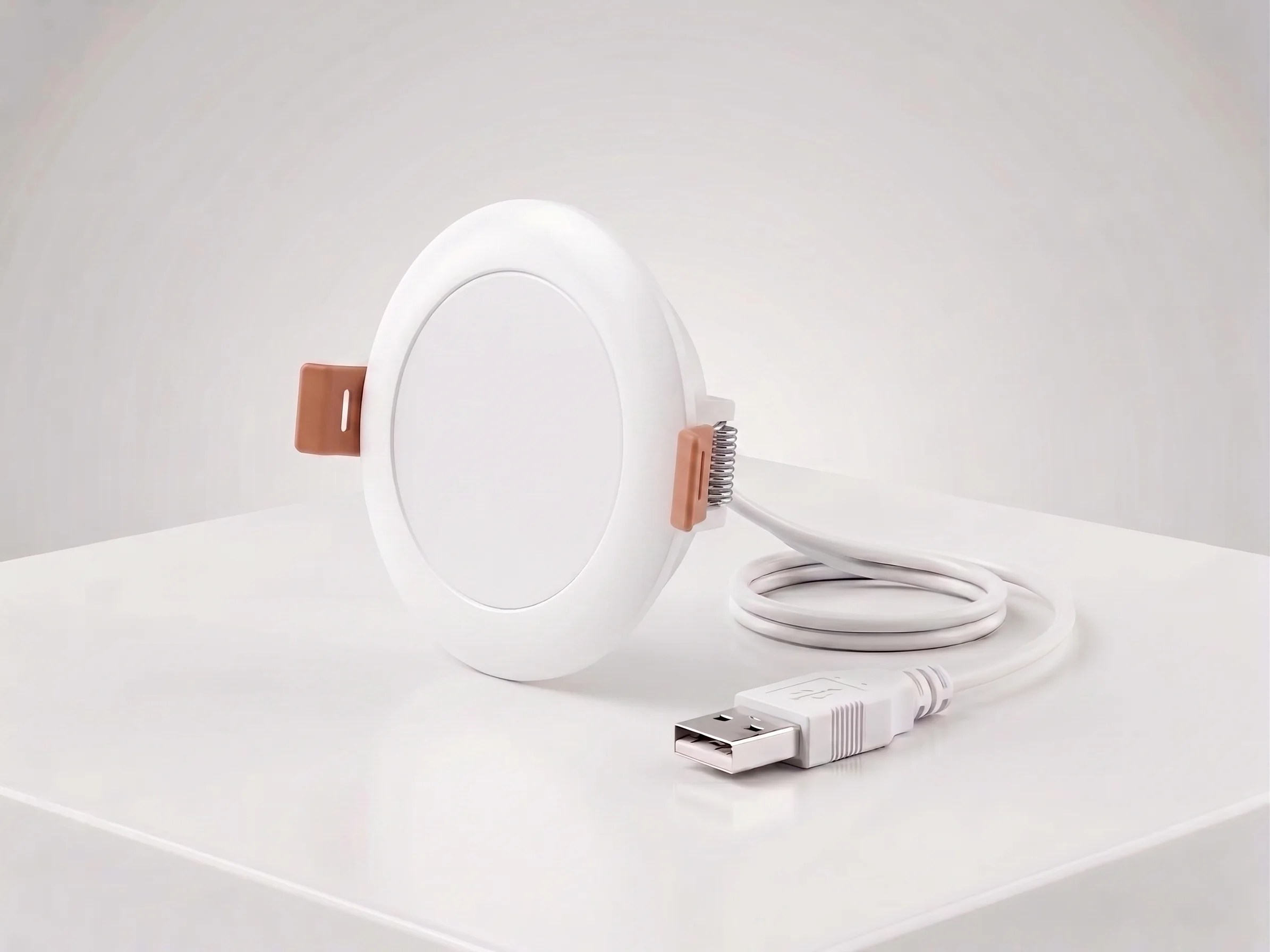
Ceiling Mount mmWave Human Presence Sensor — Zigbee
24GHz wideband mmWave ceiling presence sensor with 10m motion detection, 2.5m micro-motion, and breathing detection. 120° field, DC5V, Zigbee 3.0. For hotel room occupancy and commercial automation.
This page already points to it as the next recommended reference.
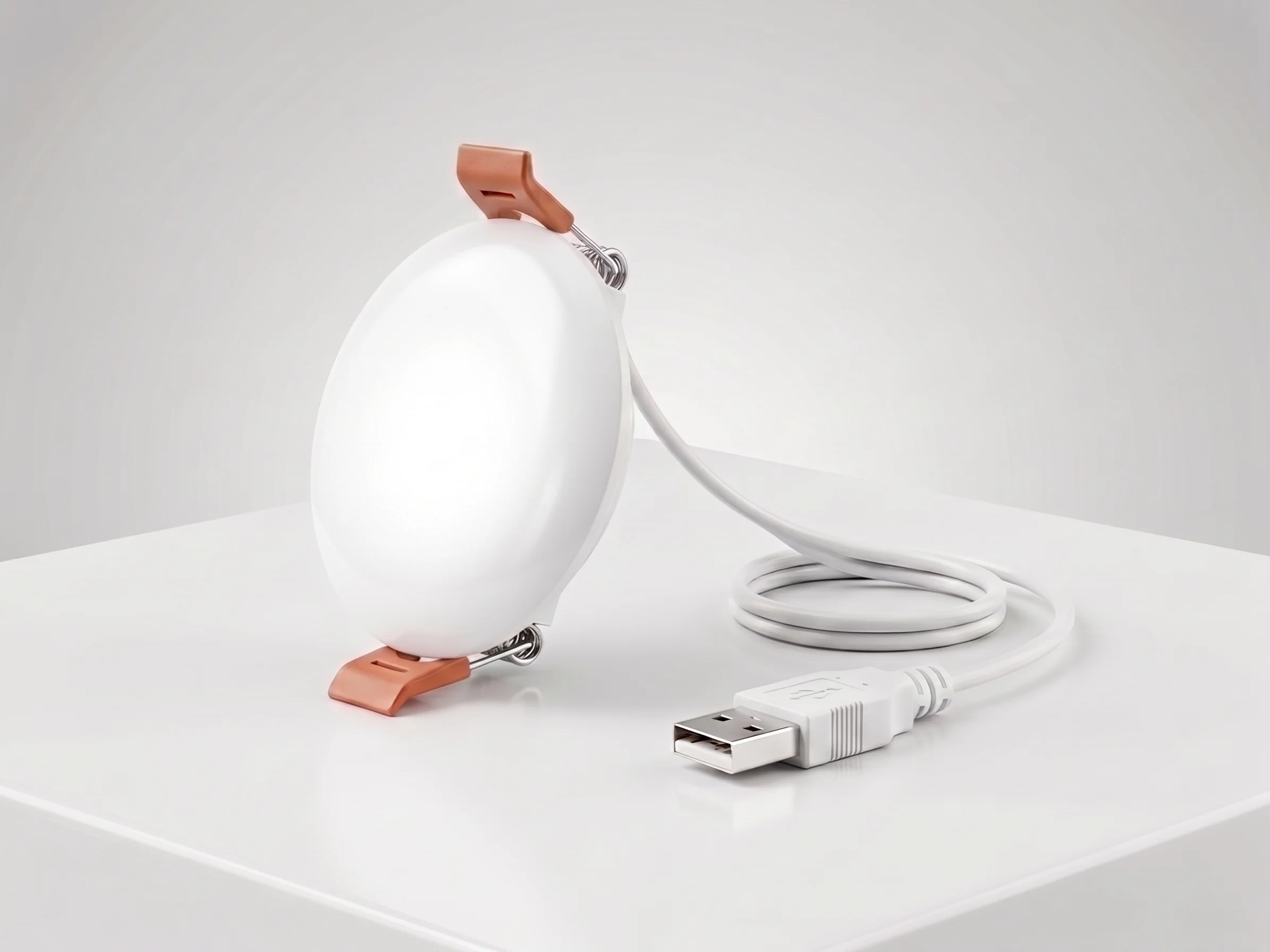
Ceiling Mount mmWave Human Presence Sensor — WiFi
24GHz wideband mmWave ceiling presence sensor with 10m motion detection, 2.5m micro-motion, and breathing detection. 120° field, DC5V, WiFi 2.4GHz. No gateway required for retrofit hotel and apartment projects.
This page already points to it as the next recommended reference.
Related solutions
1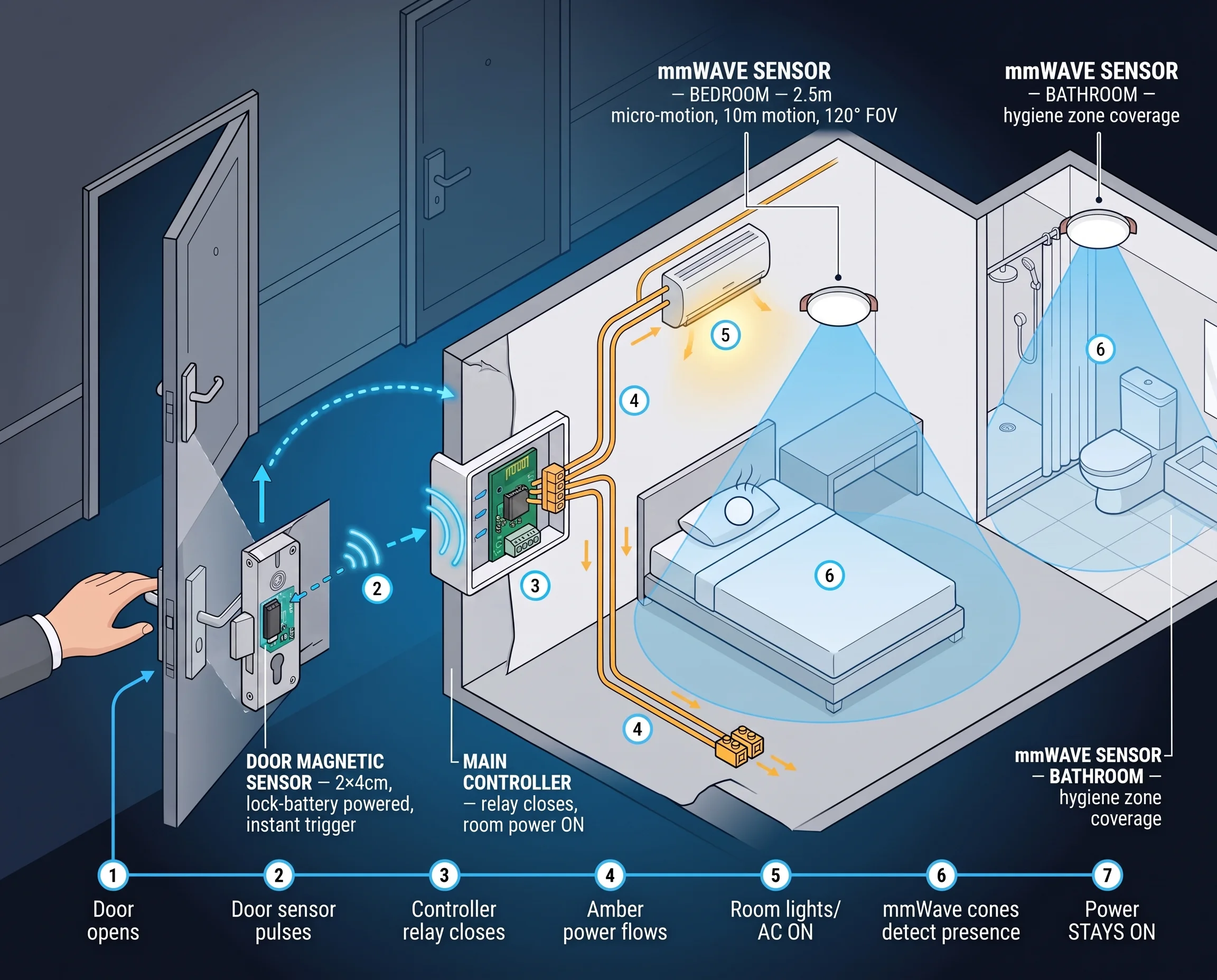
Hotel Room Occupancy & Motion Sensor Solution
mmWave radar presence sensors for hotel room occupancy, housekeeping scheduling, and HVAC energy saving. Detect true occupancy — even when the guest is asleep — with our ceiling-mount hotel room motion sensor.
It supports the same product context: Ceiling Mount mmWave Human Presence Sensor — Zigbee, Ceiling Mount mmWave Human Presence Sensor — WiFi.
Related blog posts
3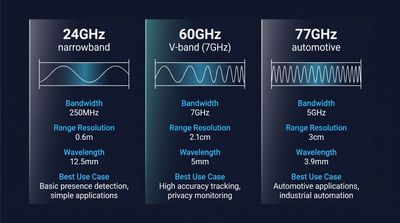
60GHz vs 24GHz vs 77GHz mmWave Sensors: Choosing the Right Frequency for Commercial Presence Detection
Compare 60GHz, 24GHz, and 77GHz mmWave sensors for commercial presence detection. Technical specs, detection range, privacy, and OEM sourcing guidance.
It supports the same product context: Ceiling Mount mmWave Human Presence Sensor — Zigbee, Ceiling Mount mmWave Human Presence Sensor — WiFi.
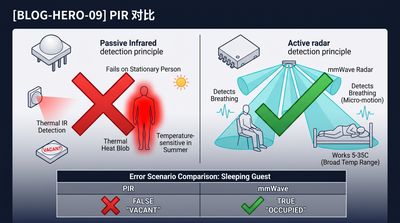
What Is an Electronic Presence Sensor? Technology, Accuracy, and How It Differs From a Motion Sensor
Learn what an electronic presence sensor is, how it detects stationary humans, and how it differs from a PIR motion sensor. Covers mmWave, accuracy, and use cases.
It supports the same product context: Ceiling Mount mmWave Human Presence Sensor — Zigbee, Ceiling Mount mmWave Human Presence Sensor — WiFi.
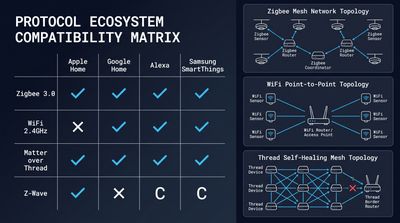
How to Integrate mmWave Presence Sensors With Home Assistant (Local Control Guide)
Step-by-step local control setup guide for mmWave devices, covering MQTT/Matter config, automation scripts, calibration and OEM ceiling presence sensor integration tips.
It supports the same product context: Ceiling Mount mmWave Human Presence Sensor — WiFi, Ceiling Mount mmWave Human Presence Sensor — Zigbee.
Specify your hotel project with our engineers
Send your room count, ceiling type, and protocol preference. We will return a sample plan and quote within 24 business hours.
- Move from general guidance into a product or application discussion.
- Use RFQ when pricing, drawings, MOQ, or launch timing needs structure.
- Keep a direct contact path visible for fast clarifications and handoff.