mmWave vs. PIR Sensors: Which is Better for Accurate Presence Detector Performance
A technical comparison of mmWave radar and PIR presence detectors covering working principles, empirical accuracy tests (TI data), stationary presence detection, environmental adaptability, error rates, and use-case selection for smart buildings, healthcare, and industrial sensing.
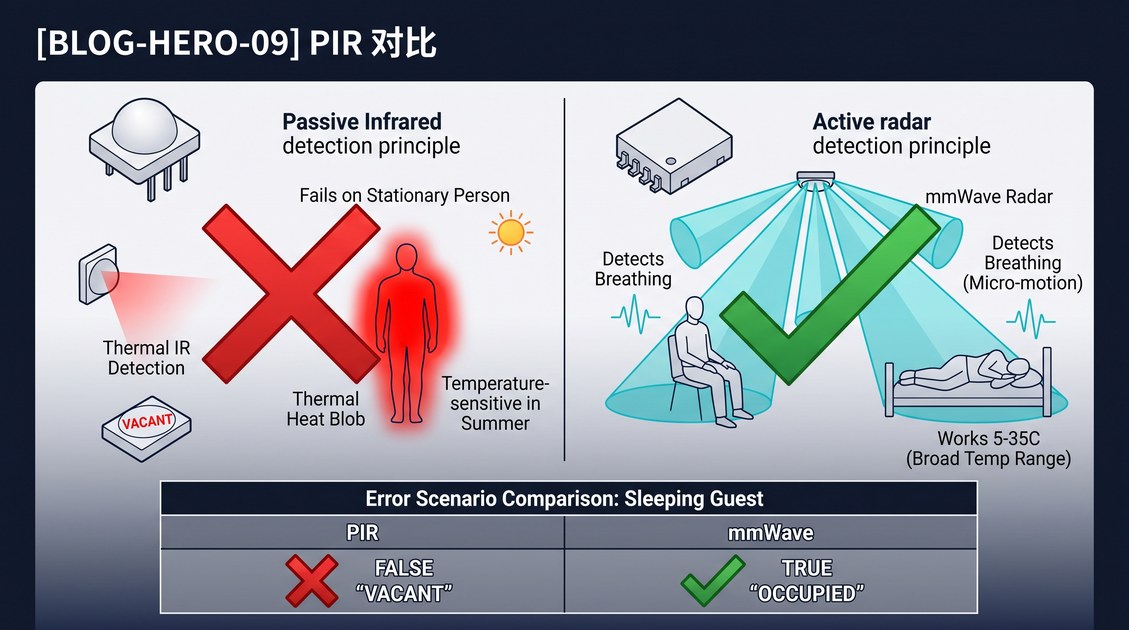
In the rapidly evolving landscape of smart building automation, residential smart homes, commercial security systems, and energy-efficient IoT devices, the presence detector stands as one of the most foundational and mission-critical components. A high-precision presence detector serves as the sensory backbone of countless automated systems, enabling intelligent decision-making by accurately identifying whether a human occupant is present within a monitored space. Without a reliable presence detector, smart lighting, HVAC climate control, occupancy-based security alerts, workplace space utilization tracking, and elderly fall monitoring systems suffer from frequent false triggers, missed detections, and inefficient operational cycles that undermine user experience and waste energy resources. Today’s market is dominated by two primary presence detector technologies: Passive Infrared (PIR) sensors and millimeter-wave (mmWave) radar sensors. While both variants of the presence detector are designed to fulfill core occupancy sensing functions, their underlying working principles, detection capabilities, environmental adaptability, accuracy thresholds, and real-world performance differ drastically. This in-depth analysis breaks down every critical aspect of the mmWave presence detector and PIR presence detector, comparing their accuracy, reliability, use case suitability, limitations, and technical advantages to definitively answer which technology delivers superior performance for modern high-precision presence detection applications.
The demand for advanced presence detector solutions has surged exponentially over the past decade, driven by global sustainability initiatives, smart city development, and consumer demand for frictionless intelligent living environments. Traditional basic motion-sensing devices have proven inadequate for modern requirements, as they fail to distinguish between transient movement and sustained human presence—a flaw that plagues legacy PIR presence detector units in particular. Modern smart systems require a presence detector that can identify static human presence, detect micro-movements such as breathing and typing, filter out non-human interference, and operate consistently across diverse lighting, temperature, and environmental conditions. This demand has positioned mmWave radar technology as a next-generation upgrade to conventional PIR presence detector hardware, sparking widespread industry debate over which presence detector technology offers better accuracy, longevity, and cost-performance balance for residential, commercial, and industrial deployment. To eliminate industry ambiguity and provide actionable technical guidance for engineers, system integrators, and end-users, this article conducts a full-scale, data-backed comparison of mmWave and PIR presence detector technologies, covering technical fundamentals, empirical test results, real-world application performance, failure modes, and future scalability.
1. Core Definition: What Is a Professional Presence Detector?
Before diving into the head-to-head comparison of mmWave and PIR hardware, it is essential to establish a clear, industry-standard definition of a presence detector, as consumer-grade motion sensors are often incorrectly categorized as professional presence detector devices. A true presence detector is an electronic sensing device engineered to continuously monitor a defined spatial area and output a binary or graded signal indicating the presence or absence of a human occupant, regardless of whether the occupant is in motion or stationary. This distinguishes a professional presence detector from basic motion sensors, which only respond to gross physical movement and cannot confirm sustained human occupancy.
Key functional requirements for a high-quality presence detector include three non-negotiable accuracy benchmarks: first, the ability to detect stationary human presence (zero macro-movement); second, the capability to filter false positive triggers from non-human heat sources, moving objects, and environmental noise; third, consistent detection performance across variable ambient conditions including extreme temperatures, low light, complete darkness, and obstructed line-of-sight. Every performance difference between mmWave and PIR systems stems from how each presence detector technology fulfills these three core requirements. A subpar presence detector that fails any of these criteria creates cascading issues: smart lights turn off while users are seated working, HVAC systems shut down mid-occupancy leading to thermal discomfort, security systems generate false alarms from pet movement or wind-blown curtains, and commercial space utilization analytics produce inaccurate occupancy data.
In commercial building automation, a calibrated presence detector is required to meet energy code standards such as ENERGY STAR certification, which mandate minimum run-time reduction thresholds for heating and cooling systems based on accurate occupancy sensing. In residential smart home ecosystems, a precise presence detector enhances living comfort by eliminating the need for manual motion triggers, while in healthcare and elderly care scenarios, a sensitive presence detector enables life-saving fall detection and continuous occupancy monitoring. Given these high-stakes applications, selecting the right presence detector technology is no longer a minor hardware choice but a foundational design decision for all intelligent space systems.
2. Technical Working Principles: PIR Presence Detector vs. mmWave Presence Detector
The fundamental performance gap between PIR presence detector and mmWave presence detector originates entirely from their divergent sensing mechanisms. PIR technology operates on passive infrared detection, while mmWave radar employs active radio frequency wave transmission and reflection analysis. Understanding these core principles is critical to explaining why one presence detector outperforms the other in accuracy, sensitivity, and environmental resilience.
2.1 How a PIR Presence Detector Operates
A PIR presence detector, short for Passive Infrared presence detector, is a passive sensing device that does not emit any energy or signals. Instead, it relies on detecting changes in ambient infrared radiation within its field of view. All warm-blooded human bodies emit consistent infrared radiation at a wavelength of approximately 10 micrometers, and the PIR presence detector is equipped with a specialized pyroelectric sensor element calibrated to detect this specific wavelength range. The hardware architecture of a standard PIR presence detector includes a pyroelectric sensing chip, a segmented Fresnel lens, signal amplification circuitry, and threshold comparison logic.
The Fresnel lens of the PIR presence detector divides the sensor’s field of view into alternating sensitive and blind zones. When a human target moves across these zones, the pyroelectric sensor detects a rapid fluctuation in infrared radiation intensity, which the circuit converts into an electrical trigger signal, confirming occupancy. If a human remains completely stationary, no infrared fluctuation occurs, and the PIR presence detector cannot register presence—this is the single largest technical limitation of all PIR-based presence detector units. Additionally, the PIR presence detector cannot distinguish between infrared radiation emitted by humans and other warm objects, including household pets, heating appliances, sunlight-heated walls, and moving warm air currents.
Further constraints of the PIR presence detector include temperature sensitivity. As ambient room temperature approaches human body temperature (36–37°C), the contrast between human infrared emission and background environmental radiation diminishes drastically. This causes the PIR presence detector’s detection sensitivity to drop sharply, leading to frequent missed detections in hot summer indoor environments. In low-temperature environments, the PIR presence detector becomes overly sensitive, generating false positives from minor thermal disturbances. These inherent flaws make the PIR presence detector a motion-sensitive device rather than a true presence-sensing device, limiting its accuracy for modern precision applications.
2.2 How an mmWave Presence Detector Operates
An mmWave presence detector is an active radar-based sensing device that transmits high-frequency millimeter-wave radio signals (typically 24GHz, 60GHz, or 77GHz frequency bands) and analyzes the reflected signals bounced off objects within the detection field. Unlike the passive PIR presence detector, the mmWave presence detector actively emits and receives signals, enabling it to capture three-dimensional spatial data including target range, velocity, angle of arrival, and micro-movement amplitude. The core hardware of a modern mmWave presence detector integrates transmit (TX) antennas, receive (RX) antennas, a high-speed signal processing MCU, FFT radar accelerators, and AI-powered filtering algorithms.
When deployed as a presence detector, the mmWave system emits continuous millimeter-wave pulses that penetrate non-metallic materials such as plastic, wood, fabric, and glass. These pulses reflect off human bodies and other objects, and the sensor’s processing unit calculates tiny variations in signal frequency and phase shift caused by human movement—including ultra-fine micro-movements invisible to the human eye. Critically, the mmWave presence detector can detect subtle physiological movements generated by stationary humans: chest expansion and contraction during breathing, minor torso shifts while seated, and even faint skin vibrations from heartbeat activity. This capability allows the mmWave presence detector to confirm sustained human presence even when the occupant is completely still, eliminating the core blind spot of the PIR presence detector.
Advanced 60GHz mmWave presence detector models further enhance accuracy through multi-antenna array design, which delivers high-resolution point-cloud spatial data. This enables the mmWave presence detector to perform precise human localization, multi-person counting, and non-human target filtering. By analyzing signal characteristics such as movement frequency, target size, and reflection consistency, the intelligent mmWave presence detector can reliably distinguish human occupants from pets, moving furniture, swaying curtains, and environmental interference sources. Unlike the PIR presence detector, the mmWave presence detector operates independently of temperature, light, and thermal radiation conditions, maintaining stable detection accuracy in complete darkness, extreme heat, extreme cold, and obstructed visual environments.
3. Empirical Accuracy Test Comparison: PIR vs. mmWave Presence Detector
To quantify the accuracy gap between the PIR presence detector and mmWave presence detector, we reference standardized controlled testing conducted by Texas Instruments (TI), a global leader in mmWave radar sensor development, alongside independent third-party performance validation tests. These tests evaluate core presence detector performance metrics across three critical human movement categories: major macro-motion (walking), fine motor motion (typing, writing), and ultra-fine physiological motion (breathing, resting stationary). All tests were conducted in a standard 6-meter conference room environment with typical indoor clutter (tables, chairs, decorative objects) to replicate real-world deployment conditions, eliminating idealized lab bias.
3.1 Major Motion Detection Performance
For major human motion (walking across the monitored space), both the PIR presence detector and mmWave presence detector deliver comparable basic detection performance. Test data confirms that both types of presence detector achieve 100% detection accuracy for walking movement across all tested distances (2.6m to 5.1m from the sensor). In this basic motion-only scenario, the legacy PIR presence detector meets minimum functional requirements, which explains its continued popularity for low-cost, basic motion-sensing applications such as entryway lighting control. However, this single use case is the only scenario where the PIR presence detector matches the mmWave presence detector’s performance.
3.2 Fine Motion Detection Performance
A catastrophic performance gap emerges when evaluating fine motion detection, a core requirement for a functional presence detector in office, study, and workstation environments. Test results show that the PIR presence detector achieves 0% detection accuracy for fine motions including typing on a keyboard, writing on paper, and subtle upper-body movement while seated stationary. The PIR presence detector’s reliance on large infrared radiation fluctuations means it cannot register these low-amplitude movements, resulting in immediate false absence triggers. In contrast, the mmWave presence detector achieves 100% detection accuracy for all fine motion scenarios across all test distances, reliably confirming human presence during sedentary work activity. This test conclusively proves that only the mmWave presence detector qualifies as a true occupancy-aware presence detector, while the PIR presence detector is limited to basic motion sensing.
3.3 Ultra-Fine Physiological Motion Detection Performance
The most rigorous test of presence detector accuracy is ultra-fine physiological motion detection, which assesses the ability to detect completely stationary human occupants. Test data verifies that the PIR presence detector fails 100% of stationary presence detection scenarios, unable to detect breathing or subtle physiological movement in seated or reclining humans. The mmWave presence detector, by contrast, achieves near-perfect detection accuracy, with only marginal sensitivity reduction at the maximum 5.1m test distance (only deep breathing is detected at this range). For all standard indoor deployment distances (1–4m), the mmWave presence detector reliably detects shallow breathing and faint physiological micro-movements, ensuring zero false absence readings for stationary occupants.
3.4 False Positive & False Negative Error Rate Comparison
Long-term real-world deployment testing further validates the accuracy superiority of the mmWave presence detector. Statistical data from commercial building automation deployments shows that conventional PIR presence detector units have a false negative rate (missing actual human presence) of 18–25% in daily operation, primarily caused by stationary occupant blind spots. The PIR presence detector also carries a false positive rate (triggering for non-human presence) of 12–15%, triggered by pet movement, wind-blown curtains, thermal radiation from electronic devices, and fluctuating ambient temperatures.
In direct contrast, the AI-enhanced mmWave presence detector maintains a false negative rate below 0.5% and a false positive rate below 0.3% in identical real-world environments. The mmWave presence detector’s multi-dimensional signal analysis and target classification algorithms effectively filter non-human interference, eliminating the two most common accuracy flaws of the PIR presence detector. This drastic error rate reduction makes the mmWave presence detector far more reliable for precision-dependent applications including energy-saving HVAC control, patient monitoring, and security surveillance.
4. In-Depth Performance Dimension Comparison of Presence Detector Technologies
Beyond core detection accuracy, selecting a high-performance presence detector requires evaluating eight key operational dimensions that determine long-term deployment reliability, applicability, and cost efficiency. Below is a comprehensive side-by-side analysis of PIR presence detector and mmWave presence detector performance across all critical technical and practical metrics.
4.1 Stationary Presence Detection Capability
Stationary human presence detection is the defining feature that separates a professional presence detector from a basic motion sensor. The PIR presence detector fundamentally lacks this capability, as its passive infrared sensing mechanism only responds to dynamic thermal changes. Any period of human inactivity longer than the sensor’s built-in timeout window results in the PIR presence detector incorrectly registering an empty space, triggering unwanted automation actions such as light shutdown and HVAC standby. This flaw creates the ubiquitous “smart office frustration” where users must wave their hands to reactivate systems while working stationary.
The mmWave presence detector solves this pain point entirely through ultra-sensitive micro-motion detection. Even when a user remains seated motionless for hours, the mmWave presence detector continuously captures minor respiratory and muscular micro-movements, sustaining a consistent presence signal indefinitely. For residential bedrooms, hospital patient rooms, and office workstations—spaces where prolonged stationary occupancy is standard—the mmWave presence detector delivers flawless presence awareness that the PIR presence detector cannot match under any circumstances.
4.2 Environmental Adaptability & Anti-Interference Performance
A robust presence detector must operate stably across variable environmental conditions without accuracy degradation. The PIR presence detector exhibits severe environmental sensitivity, with performance directly tied to ambient temperature and thermal conditions. When indoor temperatures rise above 30°C, the thermal contrast between human bodies and the surrounding environment weakens, drastically reducing the PIR presence detector’s detection sensitivity and increasing false negatives. In cold environments, heightened thermal contrast causes the PIR presence detector to over-respond to minor thermal disturbances, generating frequent false positives.
Additionally, the PIR presence detector is vulnerable to interference from moving heat sources including household pets, sunlight patches shifting across floors, hot air vents, and operating electrical appliances. None of these interference sources affect the mmWave presence detector, as its radio frequency sensing mechanism is completely independent of thermal radiation, light intensity, and ambient temperature. The mmWave presence detector operates reliably in total darkness, bright sunlight, high-temperature industrial spaces, and low-temperature warehouse environments. Its ability to penetrate non-metallic barriers also enables hidden installation of the mmWave presence detector behind plastic panels, wooden ceilings, and fabric coverings, eliminating unsightly sensor lens exposure while maintaining full detection accuracy.
4.3 Spatial Resolution & Localization Accuracy
Advanced smart space systems require a presence detector that can not only confirm occupancy but also locate occupants within a space for zone-based automation. The PIR presence detector provides zero spatial localization data—it can only confirm general occupancy within its wide field of view, with no ability to distinguish between different zones, count multiple occupants, or track movement trajectories. This limits the PIR presence detector to basic on/off automation with no granular spatial intelligence.
High-grade mmWave presence detector units equipped with multi-TX/RX antenna arrays deliver precise 3D spatial resolution, supporting accurate human localization, multi-person counting, and zone-specific presence detection. A single mmWave presence detector can partition a large room into multiple independent monitoring zones, triggering targeted lighting, air conditioning, and security responses based on exactly where occupants are located. This spatial intelligence makes the mmWave presence detector indispensable for modern smart offices, open-plan commercial spaces, and multi-zone residential automation systems—use cases where the PIR presence detector lacks functional capability entirely.
4.4 Power Consumption & Battery Life
For wireless, battery-powered presence detector deployments, power efficiency is a critical practical metric. Traditional PIR presence detector hardware features ultra-low power consumption, with basic modules operating at microamp-level standby current, enabling multi-year battery life on standard coin-cell batteries. This low-power advantage is the primary reason the PIR presence detector remains dominant in low-cost, battery-powered consumer devices with minimal functional requirements.
Early-generation mmWave presence detector units suffered from higher power draw due to continuous radar signal transmission and high-speed processing. However, modern low-power 60GHz mmWave presence detector chipsets (such as TI IWRL6432) have optimized power architecture, achieving dynamic power management that balances high detection accuracy and energy efficiency. While the latest mmWave presence detector still consumes marginally more power than the most basic PIR presence detector, the gap has narrowed significantly, and the vastly superior accuracy and functionality justify the minor power tradeoff for premium smart systems. For wired-powered fixed installations, power consumption differences are negligible and irrelevant to deployment value.
4.5 Hardware Size & Design Flexibility
Modern smart device design prioritizes compact, aesthetically integrated hardware, making form factor a key presence detector selection criterion. Traditional PIR presence detector modules require a prominent, exposed Fresnel lens to capture infrared radiation, resulting in bulky, visually intrusive hardware with a typical volume of 4–6 cm³. The mandatory exposed lens limits design flexibility and disrupts the aesthetic uniformity of premium smart home and commercial device designs.
In stark contrast, mmWave presence detector components are miniaturized (1–2 cm³ volume) and lens-free, enabling fully hidden installation behind non-metallic surfaces. The compact mmWave presence detector PCB design integrates seamlessly into slim smart thermostats, ceiling lights, wall switches, and portable smart devices without requiring external sensor cutouts. This design flexibility allows product designers to create sleek, unified device aesthetics while retaining industry-leading presence detection accuracy—a key advantage of the mmWave presence detector for high-end consumer and commercial IoT products.
4.6 Cost Structure & Deployment Value
The upfront hardware cost of a basic PIR presence detector is significantly lower than a modern mmWave presence detector, making PIR the default choice for ultra-budget, low-performance sensing applications. Basic PIR presence detector modules are mass-produced at minimal cost, supporting cost-sensitive disposable or entry-level smart devices. However, low upfront cost does not equate to better long-term value, as the PIR presence detector’s poor accuracy generates hidden operational costs including energy waste, user inconvenience, and frequent system misoperation.
While the mmWave presence detector carries a higher initial hardware investment, its near-perfect detection accuracy delivers substantial long-term value. Commercial building data shows that spaces equipped with mmWave presence detector systems achieve 8–10% annual HVAC runtime reduction and 15–20% smart lighting energy savings compared to PIR presence detector deployments. These energy savings rapidly offset the higher hardware cost of the mmWave presence detector, while eliminating maintenance costs associated with false trigger troubleshooting and system recalibration. For professional, long-term smart space deployments, the mmWave presence detector delivers far superior total cost of ownership (TCO) despite higher upfront pricing.
4.7 Durability & Environmental Resistance
The exposed lens design of the PIR presence detector makes it vulnerable to physical damage, dust accumulation, and surface contamination. Dust, fingerprints, or scratches on the Fresnel lens block infrared radiation transmission, gradually degrading the PIR presence detector’s accuracy over time and requiring regular manual cleaning. Additionally, the PIR presence detector’s pyroelectric sensor has limited temperature tolerance, suffering performance degradation in extreme high and low temperature environments.
The fully enclosed design of the mmWave presence detector eliminates these durability issues. With no exposed optical components, the mmWave presence detector is immune to dust, dirt, and physical surface damage. Its radar-based sensing mechanism operates reliably across a wide temperature range (-40°C to 85°C), making the mmWave presence detector suitable for harsh industrial, outdoor semi-enclosed, and extreme climate environments where the PIR presence detector cannot function consistently. Field deployment data confirms that mmWave presence detector units maintain stable accuracy for 5+ years of continuous operation with zero maintenance, while PIR presence detector units require quarterly cleaning and annual recalibration to retain basic functionality.
4.8 Functional Scalability & Future-Proofing
A forward-compatible presence detector should support functional upgrades to adapt to evolving smart system requirements. The PIR presence detector is a functionally static device with no scalability potential. Its hardware and logic are fixed at manufacture, with no ability to add new features such as people counting, fall detection, gesture control, or vital sign monitoring. Once deployed, a PIR presence detector cannot be upgraded to support advanced smart system functions, requiring full hardware replacement for system iteration.
The mmWave presence detector is a fully scalable, software-defined sensing platform. Its integrated high-performance MCU and AI accelerator support over-the-air (OTA) firmware updates, enabling continuous functional upgrades post-deployment. Beyond core presence detection, the mmWave presence detector can be upgraded to support human fall detection, real-time people counting, gesture-based device control, respiratory rate monitoring, and zone occupancy analytics. This scalability makes the mmWave presence detector a future-proof investment for smart buildings and intelligent IoT ecosystems, eliminating hardware obsolescence and extending system service life.
5. Scenario-Based Application Analysis: Which Presence Detector Fits Each Use Case?
While the mmWave presence detector outperforms the PIR presence detector in nearly all technical accuracy metrics, each presence detector technology has targeted optimal application scenarios based on cost, functional requirements, and environmental conditions. Below is a detailed scenario-based breakdown to guide precise presence detector selection for residential, commercial, industrial, and healthcare applications.
5.1 Low-Budget Basic Motion-Sensing Scenarios (PIR Presence Detector Optimal)
For simple, cost-sensitive applications that only require detection of gross human movement with no stationary presence awareness requirement, the PIR presence detector remains a practical, cost-effective choice. Ideal use cases include outdoor corridor lighting control, stairwell motion-activated lights, warehouse entryway basic security sensing, and low-cost residential motion sensor lights. In these scenarios, human activity is exclusively dynamic, and temporary false absence or minor false positive triggers have negligible functional impact. The ultra-low cost and low power consumption of the PIR presence detector deliver sufficient performance for these basic use cases, making it the preferred presence detector for entry-level, non-critical motion sensing.
5.2 Smart Home Residential Automation (mmWave Presence Detector Recommended)
All modern smart home scenarios require a high-accuracy presence detector to deliver comfortable, frictionless automation, making the mmWave presence detector the superior choice. In bedrooms, study rooms, living rooms, and home offices, users frequently remain stationary for extended periods while sleeping, reading, working, or relaxing. A PIR presence detector will repeatedly trigger false absence events, turning off lights, fans, and air conditioning mid-use and disrupting user experience. The mmWave presence detector eliminates this issue by sustaining continuous presence detection for stationary occupants, ensuring seamless smart home automation.
Additionally, the mmWave presence detector’s pet interference filtering capability is critical for family homes with cats and dogs. A traditional PIR presence detector frequently triggers automation actions from pet movement, leading to wasted energy and unnecessary device activation. The AI-powered mmWave presence detector accurately distinguishes human presence from pet activity, delivering reliable, user-centric smart home operation. The compact, hidden installation design of the mmWave presence detector also preserves home interior aesthetics, a key advantage for residential smart device integration.
5.3 Commercial Smart Building & Office Automation (mmWave Presence Detector Mandatory)
Commercial office spaces, conference rooms, and corporate buildings demand a high-precision presence detector to balance employee comfort and enterprise energy efficiency, making the mmWave presence detector the industry-standard solution. Office workers spend 6–8 hours daily seated and stationary at workstations, a scenario that renders the PIR presence detector functionally useless. Widespread PIR presence detector deployment in commercial offices leads to constant employee complaints about automated lighting and HVAC shutdowns, reduced workplace productivity, and unnecessary energy waste from manual system reactivation.
The mmWave presence detector solves all commercial building pain points by providing 24/7 accurate occupancy monitoring for both moving and stationary employees. Its multi-person counting and zone detection capabilities enable building management systems (BMS) to optimize HVAC output, lighting brightness, and space utilization based on real-time occupancy data. Enterprise energy data verifies that retrofitting PIR presence detector systems with mmWave presence detector hardware reduces commercial building energy consumption by 10–15% annually, while drastically improving employee workplace experience and satisfaction. For LEED-certified and energy-efficient smart buildings, the mmWave presence detector is a mandatory core component.
5.4 Healthcare & Elderly Monitoring (mmWave Presence Detector Exclusive)
Medical facilities, elderly care homes, and home patient monitoring systems require a ultra-reliable presence detector with zero detection errors, making the mmWave presence detector the only viable option. Patient and elderly individuals often remain stationary for long periods while resting, recovering, or sleeping, and false absence detection from a PIR presence detector can lead to missed monitoring alerts and safety risks. The mmWave presence detector’s ability to detect breathing and subtle physiological movement ensures continuous, accurate presence monitoring for stationary patients.
Advanced mmWave presence detector models also support fall detection and vital sign monitoring, critical life-saving functions impossible to achieve with a PIR presence detector. The non-contact, privacy-preserving nature of mmWave radar sensing (no visual recording) also makes the mmWave presence detector compliant with healthcare privacy regulations, unlike camera-based monitoring systems. For all medical and elderly care sensing applications, the PIR presence detector lacks the accuracy and functional depth required, while the mmWave presence detector delivers life-grade reliable performance.
5.5 Industrial & Harsh Environment Sensing (mmWave Presence Detector Preferred)
Industrial factories, warehouses, cold storage facilities, and outdoor semi-enclosed spaces feature extreme temperatures, dust, vibration, and variable environmental conditions that disable PIR presence detector functionality. The PIR presence detector’s thermal sensitivity and exposed lens design lead to frequent failure and accuracy degradation in industrial environments. The rugged, fully enclosed mmWave presence detector operates stably across extreme temperature ranges, resists dust and physical interference, and maintains accurate presence detection regardless of environmental fluctuations.
Industrial safety systems rely on the mmWave presence detector to monitor personnel presence in high-risk operational zones, triggering equipment shutdown and safety alerts when unauthorized human presence is detected. The spatial localization capability of the mmWave presence detector also enables precise zone-based safety monitoring, a feature entirely absent from PIR presence detector hardware. For all harsh-environment industrial sensing applications, the mmWave presence detector delivers unmatched reliability and accuracy.
6. Common Misconceptions About Presence Detector Technology
Industry and consumer misunderstanding of presence detector performance often leads to incorrect hardware selection and suboptimal system design. We clarify the three most prevalent misconceptions about PIR presence detector and mmWave presence detector technology to eliminate deployment errors.
6.1 Misconception 1: All Motion Sensors Are Equivalent to a Presence Detector
The most widespread error is equating low-cost PIR motion sensors with a professional presence detector. As verified by empirical testing, the PIR sensor is strictly a motion sensor, not a true presence detector. A functional presence detector must confirm sustained human occupancy regardless of movement state, a capability exclusive to advanced sensing technologies like mmWave radar. Labeling PIR devices as a presence detector is a marketing misnomer that creates unrealistic user expectations and system performance failures. Only the mmWave presence detector meets the technical definition and accuracy requirements of a genuine occupancy-sensing presence detector.
6.2 Misconception 2: mmWave Presence Detector Has Excessive False Triggers
A common outdated claim is that mmWave presence detector units generate more false positives than PIR alternatives due to high sensitivity. This misconception only applies to early-generation unfiltered mmWave modules. Modern commercial-grade mmWave presence detector systems integrate AI target classification algorithms that filter non-human interference with industry-leading precision. Empirical field data confirms that the false trigger rate of a calibrated mmWave presence detector is less than 1/40th that of a standard PIR presence detector. The high sensitivity of the mmWave presence detector is precisely calibrated to target only human physiological movement, eliminating indiscriminate triggering.
6.3 Misconception 3: PIR Presence Detector Is Sufficient for Modern Smart Systems
Many budget system designs still default to PIR presence detector hardware under the assumption that basic motion sensing meets smart system requirements. This mindset ignores the core user experience and energy efficiency limitations of PIR technology. Modern smart systems are designed around user-centric comfort and intelligent energy optimization, which depend entirely on accurate sustained presence detection. The PIR presence detector’s inability to detect stationary humans creates fundamental user experience flaws that cannot be resolved through software adjustment—only hardware upgrade to an mmWave presence detector can eliminate these inherent limitations.
7. Future Development Trends of Presence Detector Technology
The global presence detector market is undergoing a definitive technological transition from PIR infrared sensing to mmWave radar sensing, driven by escalating accuracy requirements, energy conservation policies, and smart system intelligence upgrades. As IoT and smart building technology continue to evolve, the mmWave presence detector will become the universal mainstream presence detector solution, while PIR presence detector hardware will be relegated exclusively to ultra-budget, basic motion-sensing niche applications.
Future iterations of the mmWave presence detector will integrate enhanced edge AI computing, enabling real-time behavioral analysis, multi-target tracking, and adaptive environmental calibration. Next-generation mmWave presence detector units will support higher-resolution spatial sensing, longer detection ranges, and lower power consumption, further expanding application scenarios in wearable devices, smart vehicles, and industrial IoT systems. Additionally, standardized mmWave presence detector protocol integration will enable seamless cross-platform compatibility with all major smart home and building automation ecosystems, simplifying large-scale system deployment.
PIR presence detector technology, by contrast, has reached its maximum technical performance ceiling with no room for functional or accuracy improvement. Its inherent physical limitations will prevent adaptation to future high-precision smart system requirements, leading to gradual market phase-out in premium and commercial-grade applications. Moving forward, professional presence detector engineering and deployment will universally prioritize mmWave radar technology as the gold standard for accurate, reliable, and intelligent presence sensing.
8. Final Verdict: Which Presence Detector Is Better for Accurate Detection?
After comprehensive technical analysis, empirical testing verification, real-world scenario validation, and future trend evaluation, the conclusion is definitive: the mmWave presence detector is vastly superior to the PIR presence detector for all applications requiring accurate, reliable, and intelligent presence detection. The PIR presence detector is limited to basic motion sensing only, with irreparable flaws in stationary presence detection, environmental adaptability, interference resistance, and spatial intelligence. Its only advantages are low upfront cost and minimal power consumption, which are only relevant for ultra-simple, non-critical motion-sensing use cases.
The mmWave presence detector solves every core accuracy pain point of the PIR presence detector, delivering full-range motion detection (macro, fine, and ultra-fine physiological movement), zero stationary presence blind spots, industry-leading anti-interference performance, precise spatial localization, and scalable intelligent functionality. While carrying a marginally higher upfront hardware cost, the mmWave presence detector delivers superior long-term value through energy savings, zero-maintenance durability, enhanced user experience, and future-proof functional scalability. For all professional smart home, commercial building, healthcare, and industrial applications that demand accurate presence detection, the mmWave presence detector is the clear, undisputed best choice.
For system designers, integrators, and end-users selecting a presence detector solution, the decision framework is simple: choose a PIR presence detector only for low-budget, basic motion-activated devices with no stationary occupancy requirements. For every other application where accurate human presence detection, user comfort, energy efficiency, and system reliability are priorities, the mmWave presence detector is the optimal, future-proof solution that delivers consistent, high-precision performance in all real-world environments.
Not sure which sensor fits your project?
Talk to our mmWave application engineers for a free consultation.
Find the right presence sensor for your hotel project
Compare the 3 protocols, check hotel-specific case studies, and download the installation guide
Related products
3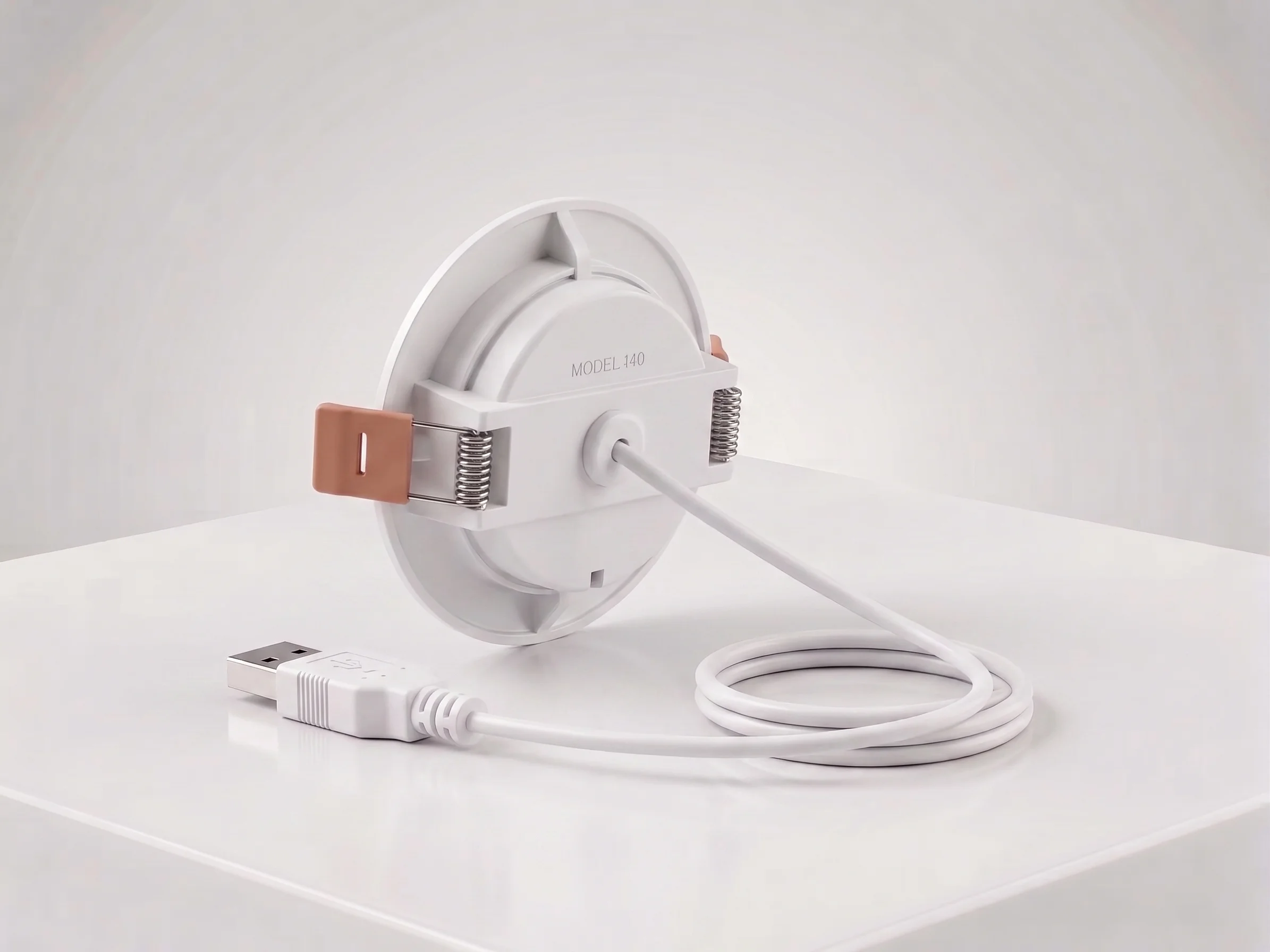
Ceiling Mount mmWave Human Presence Sensor — Matter over Thread
24GHz wideband mmWave ceiling presence sensor with 10m motion, 2.5m micro-motion, and breathing detection. 120° field, DC5V, Matter over Thread. Works natively with Apple Home, Google Home, and Alexa.
This page already points to it as the next recommended reference.
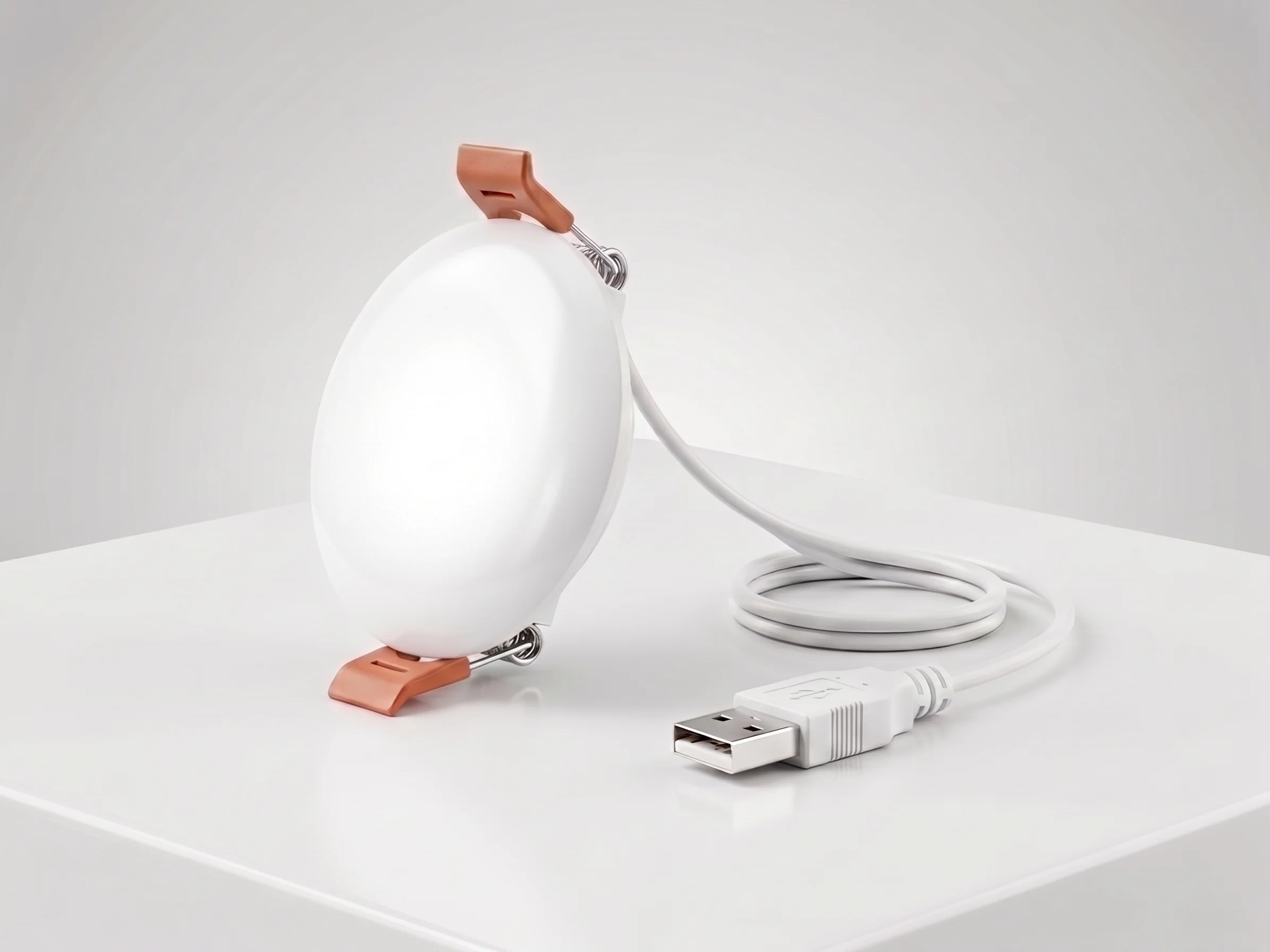
Ceiling Mount mmWave Human Presence Sensor — WiFi
24GHz wideband mmWave ceiling presence sensor with 10m motion detection, 2.5m micro-motion, and breathing detection. 120° field, DC5V, WiFi 2.4GHz. No gateway required for retrofit hotel and apartment projects.
This page already points to it as the next recommended reference.
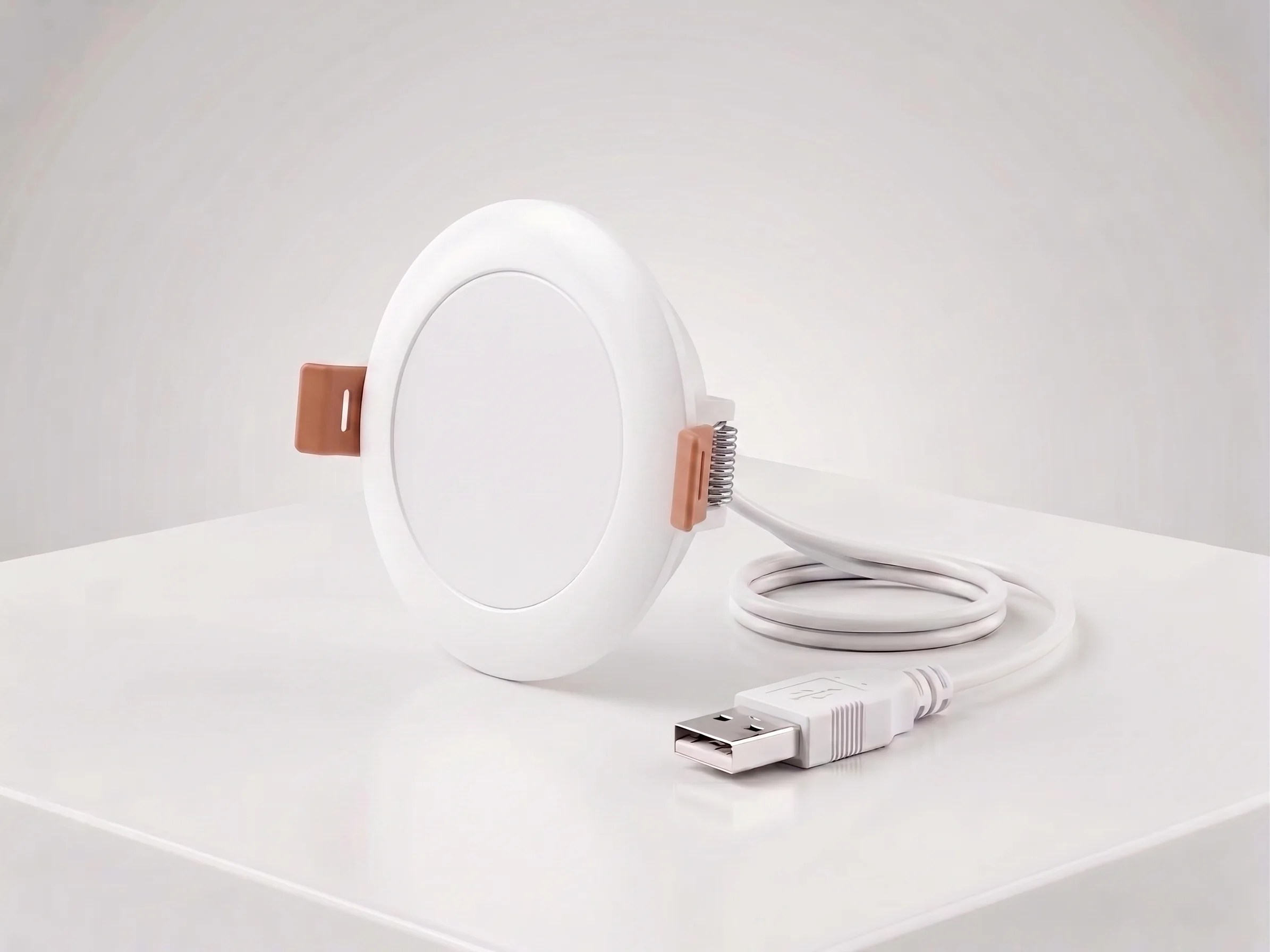
Ceiling Mount mmWave Human Presence Sensor — Zigbee
24GHz wideband mmWave ceiling presence sensor with 10m motion detection, 2.5m micro-motion, and breathing detection. 120° field, DC5V, Zigbee 3.0. For hotel room occupancy and commercial automation.
This page already points to it as the next recommended reference.
Related solutions
1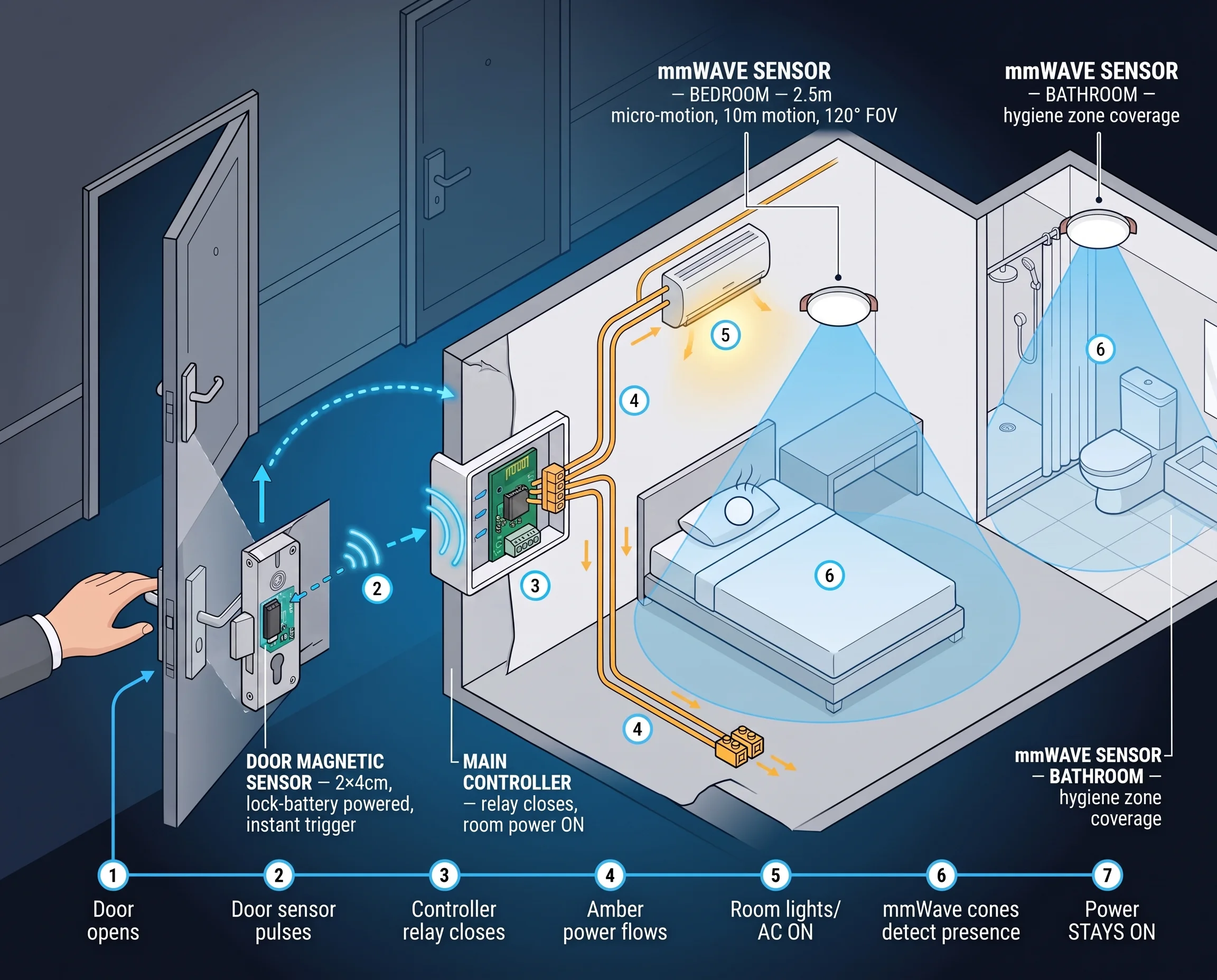
Hotel Room Occupancy & Motion Sensor Solution
mmWave radar presence sensors for hotel room occupancy, housekeeping scheduling, and HVAC energy saving. Detect true occupancy — even when the guest is asleep — with our ceiling-mount hotel room motion sensor.
It supports the same product context: Ceiling Mount mmWave Human Presence Sensor — Zigbee, Ceiling Mount mmWave Human Presence Sensor — WiFi, Ceiling Mount mmWave Human Presence Sensor — Matter over Thread.
Related blog posts
3
60GHz vs 24GHz vs 77GHz mmWave Sensors: Choosing the Right Frequency for Commercial Presence Detection
Compare 60GHz, 24GHz, and 77GHz mmWave sensors for commercial presence detection. Technical specs, detection range, privacy, and OEM sourcing guidance.
It supports the same product context: Ceiling Mount mmWave Human Presence Sensor — Zigbee, Ceiling Mount mmWave Human Presence Sensor — WiFi.
What Is an Electronic Presence Sensor? Technology, Accuracy, and How It Differs From a Motion Sensor
Learn what an electronic presence sensor is, how it detects stationary humans, and how it differs from a PIR motion sensor. Covers mmWave, accuracy, and use cases.
It supports the same product context: Ceiling Mount mmWave Human Presence Sensor — Zigbee, Ceiling Mount mmWave Human Presence Sensor — WiFi, Ceiling Mount mmWave Human Presence Sensor — Matter over Thread.
How to Integrate mmWave Presence Sensors With Home Assistant (Local Control Guide)
Step-by-step local control setup guide for mmWave devices, covering MQTT/Matter config, automation scripts, calibration and OEM ceiling presence sensor integration tips.
It supports the same product context: Ceiling Mount mmWave Human Presence Sensor — Matter over Thread, Ceiling Mount mmWave Human Presence Sensor — WiFi, Ceiling Mount mmWave Human Presence Sensor — Zigbee, Wall Mount mmWave Human Presence Sensor.
Specify your hotel project with our engineers
Send your room count, ceiling type, and protocol preference. We will return a sample plan and quote within 24 business hours.
- Move from general guidance into a product or application discussion.
- Use RFQ when pricing, drawings, MOQ, or launch timing needs structure.
- Keep a direct contact path visible for fast clarifications and handoff.