mmWave Sensors and Modules Market: 2026 Industry Analysis and Outlook
A complete guide to the mmWave sensors and modules market in 2026. Covers market size, growth drivers, key segments, regional analysis, and future outlook.
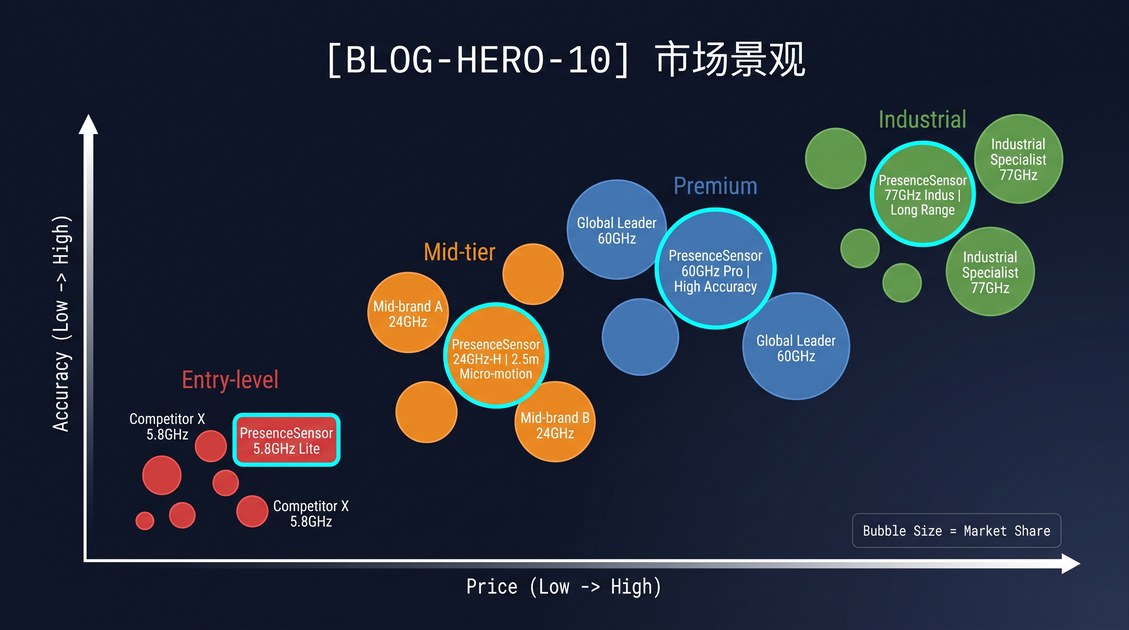
The mmWave sensors and modules market in 2026 is a rapidly growing segment of the broader semiconductor and sensor industry, valued at approximately $3.5–4.5 billion globally with a projected compound annual growth rate (CAGR) of 18–25% over the next five years, driven by the expansion of the automotive radar market (with 77 GHz radar becoming standard in new vehicles for advanced driver assistance systems), the rapid growth of the indoor presence detection market (with 60 GHz mmWave radar displacing PIR sensors in hotel rooms, offices, healthcare facilities, and residential smart homes), and the emergence of new applications in industrial sensing, healthcare monitoring, and public space monitoring. The market is segmented by frequency band (24 GHz, 60 GHz, 77 GHz), by product type (chipsets, modules, finished products), by application (automotive, industrial, consumer, healthcare, public space), and by region (North America, Europe, Asia-Pacific, rest of world). The Asia-Pacific region is the largest market by volume, driven by the concentration of mmWave sensor manufacturing in China, Taiwan, and South Korea, and by the strong demand from Chinese hotel chains, office operators, and smart home vendors.
This guide provides a comprehensive analysis of the mmWave sensors and modules market in 2026, covering the market size, the growth drivers, the key segments, the regional analysis, the competitive landscape, and the future outlook. Whether you are an investor evaluating the market opportunity, a procurement specialist planning a sourcing strategy, or a product manager evaluating the market for a new product, this guide will help you understand the dynamics of the mmWave sensors and modules market.
mmWave Sensors and Modules Market: Market Size and Growth
The mmWave sensors and modules market is in a rapid growth phase, driven by multiple application segments.
Market Size in 2026
The global mmWave sensors and modules market in 2026 is estimated at $3.5–4.5 billion, with the following segment breakdown:
- Automotive radar (77 GHz): $1.8–2.3 billion, the largest segment
- Industrial sensing (24 GHz, 77 GHz): $0.5–0.7 billion
- Consumer presence detection (60 GHz): $0.5–0.8 billion, the fastest-growing segment
- Healthcare monitoring (60 GHz): $0.2–0.3 billion
- Public space and smart city (60 GHz, 77 GHz): $0.3–0.5 billion
- Other applications: $0.2–0.3 billion
Market Growth Drivers
The mmWave sensors and modules market is driven by several key factors:
- Automotive ADAS mandates: new vehicle safety standards in the European Union, the United States, and other major markets are requiring features like automatic emergency braking and blind spot detection, which depend on 77 GHz radar
- Indoor presence detection adoption: the displacement of PIR sensors by 60 GHz mmWave sensors in hotel rooms, offices, healthcare facilities, and residential smart homes is driving rapid growth in the consumer presence detection segment
- Industrial automation: the growth of industrial automation, including robotic systems and smart factories, is driving demand for mmWave sensors for collision avoidance, level sensing, and worker safety
- Aging population: the aging population in developed markets is driving demand for mmWave sensors in fall detection, patient monitoring, and aging-in-place applications
- Smart city initiatives: government and private sector investments in smart city infrastructure are driving demand for mmWave sensors in traffic monitoring, parking management, and crowd monitoring
Market Growth Projections
The mmWave sensors and modules market is projected to grow at a CAGR of 18–25% over the next five years, reaching $8–15 billion by 2031. The consumer presence detection segment is projected to grow the fastest (30–40% CAGR), driven by the ongoing displacement of PIR sensors in hotel, office, healthcare, and residential applications. The automotive radar segment is projected to grow at a steady 15–20% CAGR, driven by the continued expansion of ADAS adoption globally.
mmWave Sensors and Modules Market: Key Segments
The mmWave sensors and modules market is segmented by frequency band, product type, application, and region.
Segmentation by Frequency Band
- 24 GHz band (24.0–24.25 GHz): approximately 20% of the market, used primarily for cost-sensitive motion-only applications
- 60 GHz band (57–64 GHz): approximately 35% of the market, the dominant band for indoor presence detection
- 77 GHz band (76–81 GHz): approximately 45% of the market, the dominant band for automotive radar and long-range industrial applications
Segmentation by Product Type
- Chipsets: approximately 40% of the market by revenue, supplied by semiconductor vendors (TI, Infineon, NXP, Calterah, SGR)
- Modules: approximately 30% of the market, supplied by module vendors (Vayyar, Calterah, SGR, Siflower)
- Finished products: approximately 30% of the market, supplied by finished product vendors (PresenceSensor, Aqara, Honeywell, Siemens, Schneider Electric)
Segmentation by Application
- Automotive: approximately 50% of the market, the largest application segment
- Industrial: approximately 15% of the market
- Consumer presence detection: approximately 12% of the market, the fastest-growing segment
- Healthcare: approximately 8% of the market
- Public space and smart city: approximately 10% of the market
- Other: approximately 5% of the market
Segmentation by Region
- Asia-Pacific: approximately 50% of the market by volume (35% by revenue), driven by the concentration of mmWave sensor manufacturing and by the strong demand from Chinese hotel chains, office operators, and smart home vendors
- North America: approximately 25% of the market by revenue, driven by the strong demand from US hotel chains, office operators, and smart home platforms
- Europe: approximately 25% of the market by revenue, driven by the strong demand from European hotel chains, office operators, and healthcare facilities
- Rest of world: approximately 15% of the market by revenue
mmWave Sensors and Modules Market: Competitive Landscape
The mmWave sensors and modules market is served by a diverse set of competitors, ranging from large semiconductor companies to specialized module vendors to finished product vendors.
Semiconductor Vendors
- Texas Instruments: the dominant 60 GHz mmWave sensor manufacturer, with the IWR6843, IWR6443, and IWR1843 transceivers
- Infineon: a leading 24 GHz and 60 GHz mmWave sensor manufacturer, with the XENSIV product line
- NXP: the dominant 77 GHz automotive radar chipset manufacturer, with the TEF82xx and SAF85xx product lines
- Calterah: a Chinese fabless vendor with 60 GHz mmWave chipsets at competitive prices
- SGR: a Chinese fabless vendor with 60 GHz mmWave chipsets at competitive prices
Module Vendors
- Vayyar: a leading module vendor with 60 GHz mmWave modules, on-module ML, and a comprehensive SDK
- Calterah, SGR, Siflower: Asian module vendors offering integrated 60 GHz modules
Finished Product Vendors
- PresenceSensor: a leading commercial presence sensor vendor, with the ceiling-presence-sensor-zigbee, ceiling-presence-sensor-wifi, and ceiling-presence-sensor-matter SKUs
- Aqara: a consumer-focused mmWave sensor vendor, with the FP2 being the flagship product
- Honeywell, Siemens, Schneider Electric: building automation vendors with mmWave presence sensors integrated with their BMS platforms
- Verdant (Copeland): a hospitality-focused energy management vendor with integrated occupancy sensing
mmWave Sensors and Modules Market: Key Trends
The mmWave sensors and modules market is being shaped by several key trends.
Single-Chip Integration
The increasing integration of mmWave transceivers and wireless radios into single-chip solutions is reducing the cost and enabling smaller form factors. Several vendors have announced or shipped single-chip 60 GHz solutions that integrate the radio, the baseband, and a microcontroller in a single package.
On-Device Machine Learning
The increasing use of on-device machine learning inference is improving detection accuracy and enabling new capabilities (activity recognition, fall detection, gait analysis). Several vendors have announced mmWave sensors with on-device ML inference engines.
Matter Adoption
The emergence of the Matter smart home standard is creating new product opportunities in the residential segment. Several mmWave sensor vendors have announced Matter support, and a few products are already shipping with Matter support.
Multi-Sensor Convergence
The convergence of mmWave radar with other sensing modalities (CO₂, light, temperature/humidity, acoustic) is enabling new multi-sensor devices. Several vendors have announced multi-sensor ceiling devices that combine mmWave radar with other sensors.
Chinese Market Growth
The Chinese market for mmWave sensors is growing rapidly, driven by the strong demand from Chinese hotel chains (Huazhu, Jin Jiang, BTG-Homeinns), office operators (Vanke, China Resources), and smart home vendors (Xiaomi, Tuya, Aqara). The Chinese market is expected to be the largest single market for mmWave sensors by 2028.
mmWave Sensors and Modules Market: Regional Analysis
The mmWave sensors and modules market varies significantly by region.
North America
The North American market is driven by the strong demand from US hotel chains (Marriott, Hilton, IHG, Hyatt), office operators (large corporations, government agencies, co-working operators), and smart home platforms (Apple HomeKit, Amazon Alexa, Google Home). The market is mature and growing at a steady 15–20% CAGR.
Europe
The European market is driven by the strong demand from European hotel chains (Accor, NH, Meliá, Barceló), office operators, and healthcare facilities. The market is also driven by the GDPR-compliant data handling requirements, which favor mmWave radar (with on-device processing and minimal data transmission) over camera-based sensors.
Asia-Pacific
The Asia-Pacific market is the largest and fastest-growing region, driven by:
- China: the concentration of mmWave sensor manufacturing and the strong demand from Chinese hotel chains, office operators, and smart home vendors
- Japan: the aging population is driving demand for fall detection and patient monitoring
- South Korea: the strong electronics industry and the smart home adoption
- Australia: the hospitality and smart home markets
The Asia-Pacific market is growing at 25–35% CAGR, the highest of any region.
Rest of World
The rest of world market (Latin America, Middle East, Africa) is in the early adoption phase, with growing demand from the hospitality and smart home markets.
mmWave Sensors and Modules Market: Future Outlook
The mmWave sensors and modules market is expected to continue its rapid growth over the next five years, with the following projections:
- 2026: $3.5–4.5 billion
- 2027: $4.5–6 billion
- 2028: $5.5–7.5 billion
- 2029: $7–10 billion
- 2030: $8.5–12 billion
- 2031: $10–15 billion
The key growth drivers are:
- The continued expansion of ADAS adoption globally, driving demand for 77 GHz radar
- The displacement of PIR sensors by 60 GHz mmWave sensors in hotel, office, healthcare, and residential applications
- The growth of industrial automation, driving demand for 24 GHz and 60 GHz mmWave sensors
- The aging population in developed markets, driving demand for fall detection and patient monitoring
- The growth of smart city initiatives, driving demand for public space monitoring
mmWave Sensors and Modules Market: Final Recommendation
The mmWave sensors and modules market is a rapidly growing market with strong fundamentals and a positive long-term outlook. For an investor evaluating the market opportunity, the consumer presence detection segment is the most attractive growth opportunity, with a 30–40% CAGR and significant runway for the displacement of PIR sensors. For a procurement specialist planning a sourcing strategy, the 60 GHz mmWave segment is the most relevant, with multiple chipset vendors, module vendors, and finished product vendors to choose from, and with pricing expected to continue declining as the chipset ecosystem matures.
For a product manager evaluating the market for a new product, the consumer presence detection segment is the most attractive, with a large and growing addressable market, a clear value proposition (reliable stationary-occupant detection, excellent privacy profile), and a maturing chipset ecosystem that enables rapid product development at competitive costs. The recommended approach is to focus on the 60 GHz band, to select a chipset vendor with a mature software ecosystem (TI, Infineon), and to develop a product that addresses a specific vertical (hotel, office, healthcare, or residential) with the appropriate features and certifications.
Part of this article content is generated by AI and optimized for professional accuracy and readability.
Not sure which sensor fits your project?
Talk to our mmWave application engineers for a free consultation.
Find the right presence sensor for your hotel project
Compare the 3 protocols, check hotel-specific case studies, and download the installation guide
Related products
2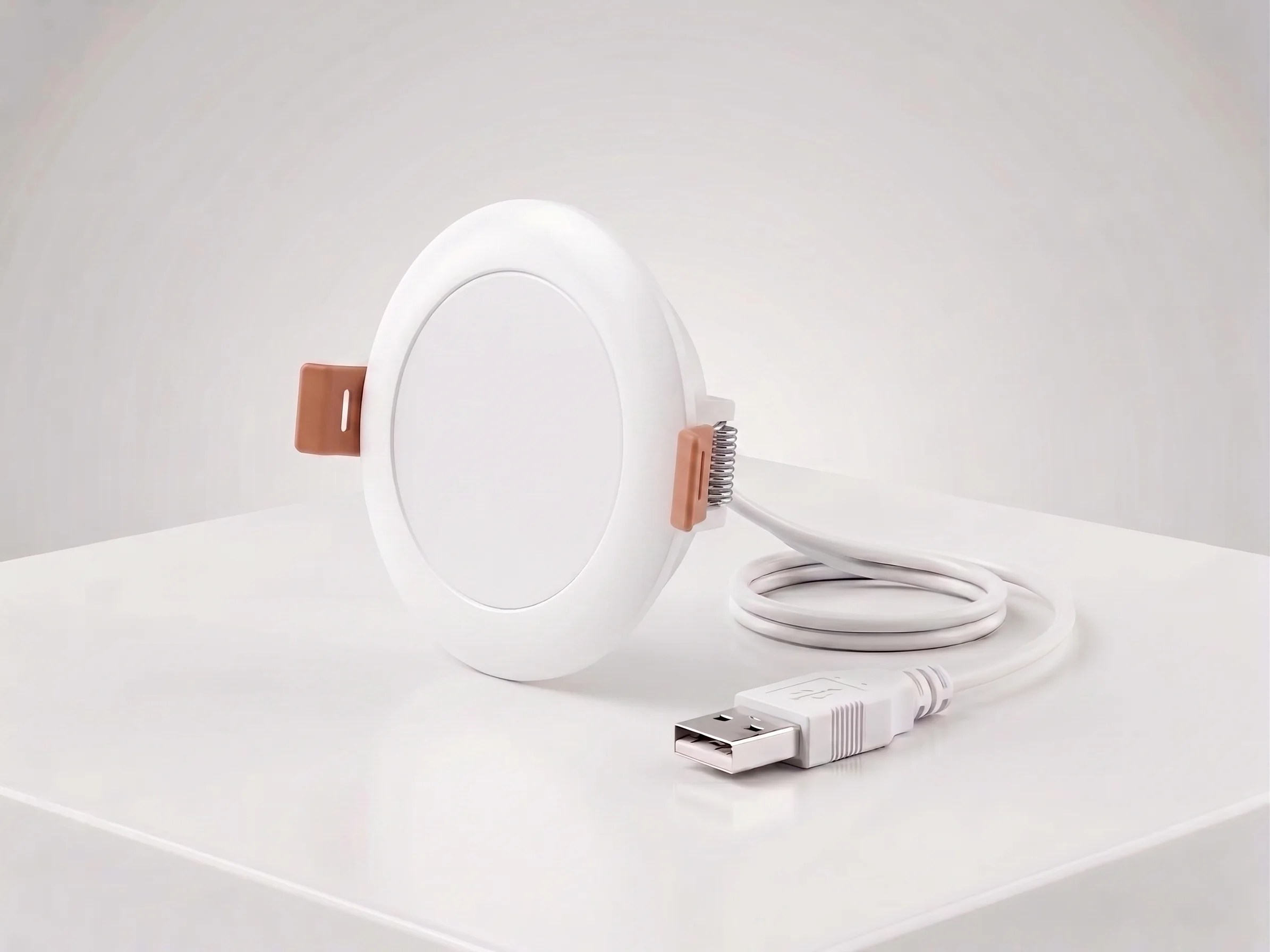
Ceiling Mount mmWave Human Presence Sensor — Zigbee
24GHz wideband mmWave ceiling presence sensor with 10m motion detection, 2.5m micro-motion, and breathing detection. 120° field, DC5V, Zigbee 3.0. For hotel room occupancy and commercial automation.
This page already points to it as the next recommended reference.
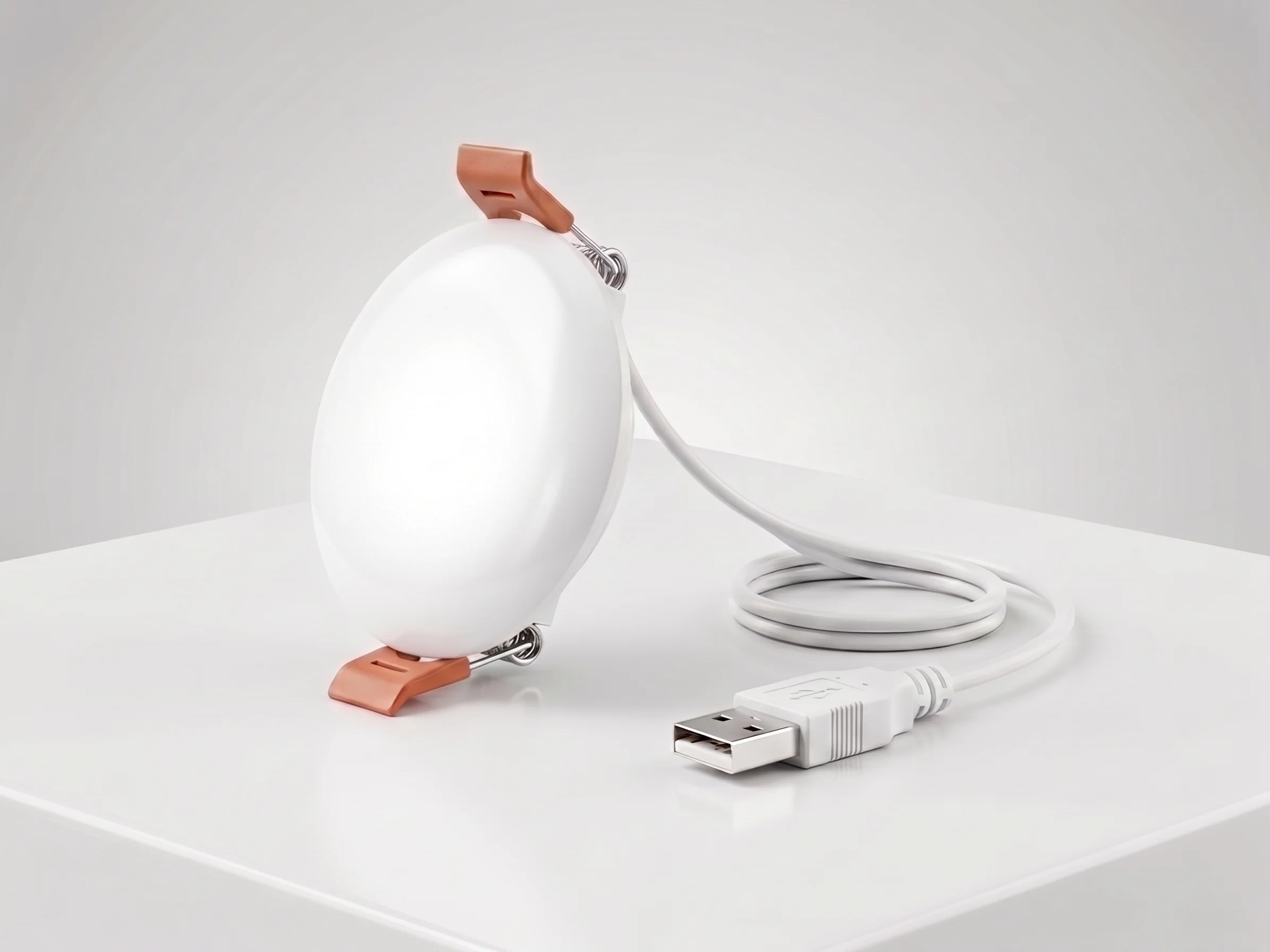
Ceiling Mount mmWave Human Presence Sensor — WiFi
24GHz wideband mmWave ceiling presence sensor with 10m motion detection, 2.5m micro-motion, and breathing detection. 120° field, DC5V, WiFi 2.4GHz. No gateway required for retrofit hotel and apartment projects.
This page already points to it as the next recommended reference.
Related solutions
1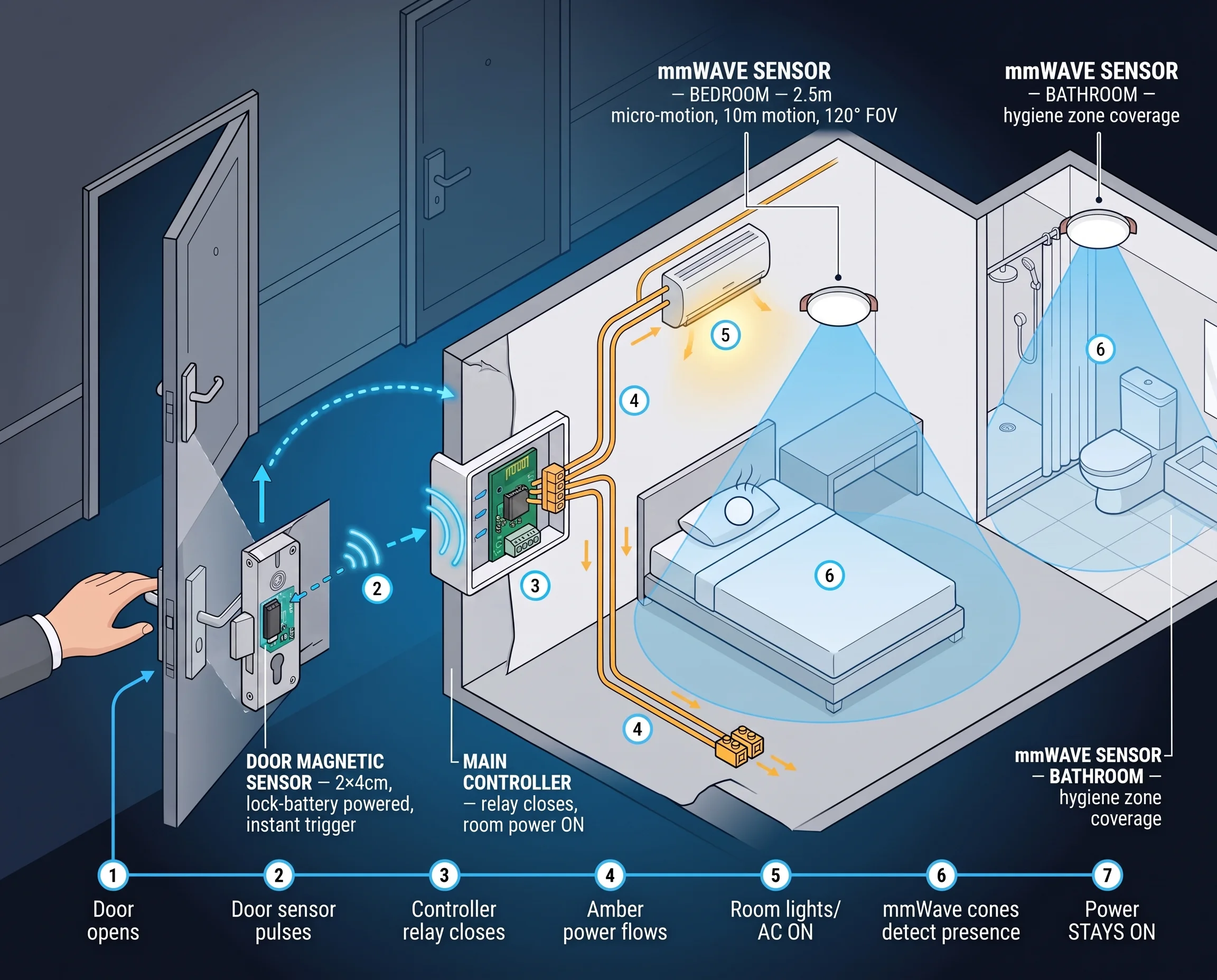
Hotel Room Occupancy & Motion Sensor Solution
mmWave radar presence sensors for hotel room occupancy, housekeeping scheduling, and HVAC energy saving. Detect true occupancy — even when the guest is asleep — with our ceiling-mount hotel room motion sensor.
It supports the same product context: Ceiling Mount mmWave Human Presence Sensor — Zigbee, Ceiling Mount mmWave Human Presence Sensor — WiFi.
Related blog posts
3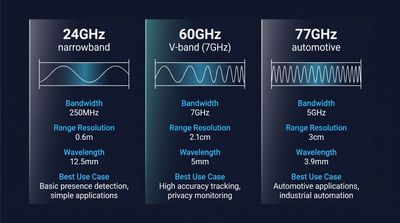
60GHz vs 24GHz vs 77GHz mmWave Sensors: Choosing the Right Frequency for Commercial Presence Detection
Compare 60GHz, 24GHz, and 77GHz mmWave sensors for commercial presence detection. Technical specs, detection range, privacy, and OEM sourcing guidance.
It supports the same product context: Ceiling Mount mmWave Human Presence Sensor — Zigbee, Ceiling Mount mmWave Human Presence Sensor — WiFi.
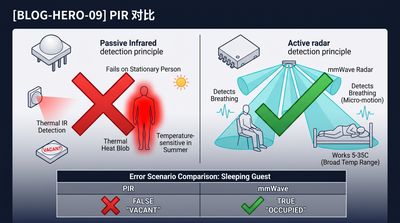
What Is an Electronic Presence Sensor? Technology, Accuracy, and How It Differs From a Motion Sensor
Learn what an electronic presence sensor is, how it detects stationary humans, and how it differs from a PIR motion sensor. Covers mmWave, accuracy, and use cases.
It supports the same product context: Ceiling Mount mmWave Human Presence Sensor — Zigbee, Ceiling Mount mmWave Human Presence Sensor — WiFi.
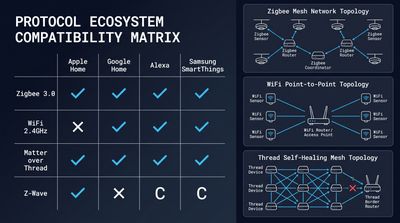
How to Integrate mmWave Presence Sensors With Home Assistant (Local Control Guide)
Step-by-step local control setup guide for mmWave devices, covering MQTT/Matter config, automation scripts, calibration and OEM ceiling presence sensor integration tips.
It supports the same product context: Ceiling Mount mmWave Human Presence Sensor — WiFi, Ceiling Mount mmWave Human Presence Sensor — Zigbee.
Specify your hotel project with our engineers
Send your room count, ceiling type, and protocol preference. We will return a sample plan and quote within 24 business hours.
- Move from general guidance into a product or application discussion.
- Use RFQ when pricing, drawings, MOQ, or launch timing needs structure.
- Keep a direct contact path visible for fast clarifications and handoff.