mmWave Detector Manufacturer: Top Suppliers Compared 2026
A guide to mmWave detector manufacturers. Covers supplier evaluation, leading vendors, pricing, and how to select the right manufacturer for OEM production.
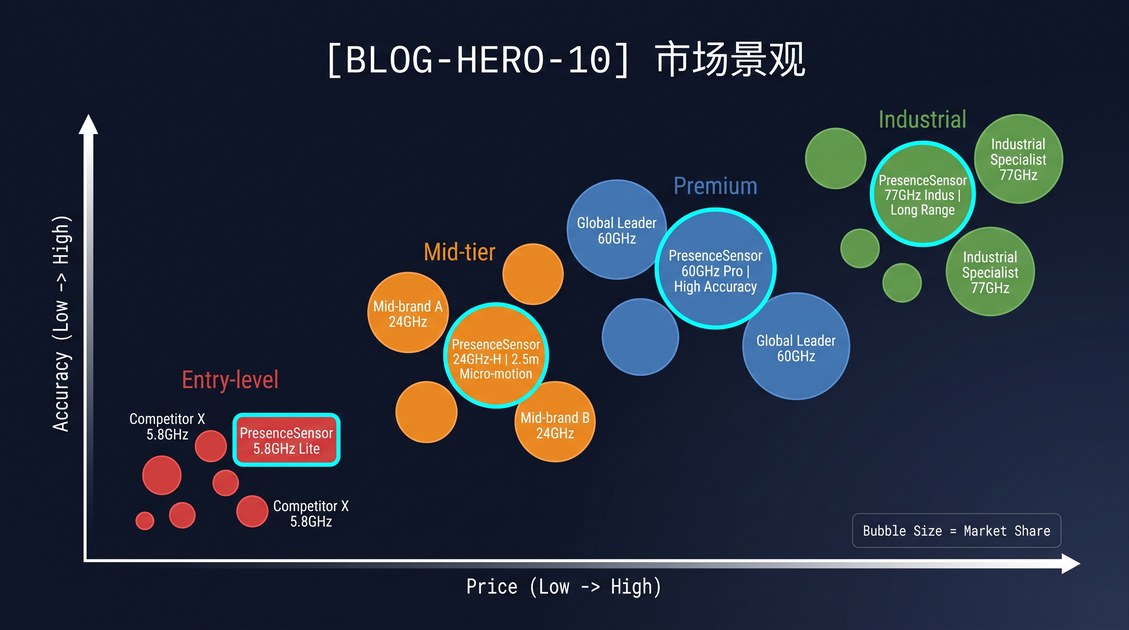
An mmWave detector manufacturer is a company that designs and produces millimeter-wave radar devices for detecting human presence, motion, and micro-motion in commercial, industrial, and residential applications, with products ranging from bare silicon chipsets (at $2–8 per chipset at 10,000-unit volume) to integrated modules (at $6–25 per module at 10,000-unit volume) to finished detector products (at $50–150 per unit at 1,000-unit volume). The mmWave detector manufacturer market in 2026 is organized into three distinct categories: chipset vendors (Texas Instruments, Infineon, NXP, Calterah, SGR) that supply the underlying silicon, module vendors (Vayyar, Calterah, SGR, Siflower) that integrate the chipset with antennas and RF front-end, and finished product vendors (PresenceSensor, Aqara, Honeywell, Siemens, Schneider Electric) that supply certified, ready-to-deploy mmWave presence detectors. Each manufacturer category serves different customer segments with different needs, and selecting the right mmWave detector manufacturer depends on the buyer's technical capability, the deployment scale, the support requirements, and the regulatory and compliance obligations.
The mmWave detector manufacturer market has matured significantly since 2020, with the 60 GHz band becoming the dominant frequency for indoor presence detection and the chipset ecosystem expanding to include multiple competitive vendors. This guide provides a comprehensive overview of the mmWave detector manufacturer landscape, covering the leading manufacturers in each category, the pricing structure, the quality evaluation criteria, and the selection framework.
mmWave Detector Manufacturer: Chipset Vendors
The chipset vendors supply the underlying mmWave transceiver silicon that is the core of every mmWave presence detector.
mmWave Detector Manufacturer: Texas Instruments
Texas Instruments (TI) is the dominant 60 GHz mmWave detector manufacturer, with a comprehensive product line that includes the IWR6843, IWR6443, and IWR1843 transceivers. The IWR6843 is the most widely used 60 GHz FMCW transceiver for commercial presence detection applications, with integrated DSP, on-chip FFT, and a mature software development kit (SDK).
Pricing for TI's 60 GHz chipsets at 10,000-unit volume is typically $4–8 per chipset. TI maintains regional stocking through major distributors (Mouser, Digi-Key, Arrow) and provides extensive technical documentation and reference designs.
The advantages of TI as an mmWave detector manufacturer include the mature software ecosystem, the comprehensive reference designs, the global technical support, and the strong brand recognition. The disadvantages include the higher chipset cost compared to some Asian vendors and the relatively conservative product roadmap.
mmWave Detector Manufacturer: Infineon
Infineon's XENSIV 60 GHz product line includes the BGT60 series and BGT61 series FMCW transceivers, which are designed for presence detection and gesture recognition applications. Infineon has a strong position in the 24 GHz market and is expanding in 60 GHz, with a particular focus on automotive-qualified designs.
Pricing for Infineon's 60 GHz chipsets at 10,000-unit volume is typically $4–8 per chipset, competitive with TI. Infineon provides a software development kit and reference designs, and has a strong presence in the European market.
The advantages of Infineon include the automotive heritage, the strong European presence, and the competitive pricing. The disadvantages include a less mature software ecosystem compared to TI for some applications.
mmWave Detector Manufacturer: NXP
NXP is the dominant mmWave detector manufacturer in the 77 GHz automotive radar market, with the TEF82xx and SAF85xx product lines. NXP is less active in the 60 GHz commercial market, but its 77 GHz chipsets are used in some industrial and large-venue presence detection applications.
Pricing for NXP's 77 GHz chipsets at 10,000-unit volume is typically $15–40 per chipset, reflecting the automotive-grade qualification and the higher cost of the 77 GHz silicon.
mmWave Detector Manufacturer: Calterah and SGR
Calterah and SGR are Chinese fabless chipset vendors that offer 60 GHz FMCW transceivers at competitive prices. Calterah's CAL60 series and SGR's SGR series are widely used in the Asian commercial market and are gaining market share globally.
Pricing for Asian chipset vendors' 60 GHz chipsets at 10,000-unit volume is typically $2–5 per chipset, significantly lower than TI or Infineon. The disadvantages include less mature software ecosystems, more limited global technical support, and potential concerns about long-term supply stability.
| Chipset vendor | Primary band | 10K unit price | Software ecosystem | Best for |
|---|---|---|---|---|
| Texas Instruments | 60 GHz | $4–8 | Excellent | OEM custom designs |
| Infineon | 24/60 GHz | $4–8 | Good | European market, automotive |
| NXP | 77 GHz | $15–40 | Good | Automotive, industrial |
| Calterah | 60 GHz | $2–5 | Fair | Cost-sensitive OEM |
| SGR | 60 GHz | $2–5 | Fair | Cost-sensitive OEM |
mmWave Detector Manufacturer: Module Vendors
The module vendors integrate the mmWave chipset with antennas, RF front-end, and baseband processing into production-ready modules.
mmWave Detector Manufacturer: Vayyar
Vayyar is a leading module vendor that offers 60 GHz mmWave modules with on-module processing, machine learning classification, and a comprehensive software development kit. Vayyar's modules are used in fall detection, presence detection, and automotive applications.
Pricing for Vayyar modules at 10,000-unit volume is typically $15–25 per module, reflecting the high level of integration and the included software.
mmWave Detector Manufacturer: Asian Module Vendors
Calterah, SGR, and Siflower (another Asian vendor) offer integrated mmWave modules that combine the chipset with antennas and RF front-end. These modules are typically priced at $8–15 per module at 10,000-unit volume, competitive with Western module vendors but with more limited global support.
mmWave Detector Manufacturer: Infineon Reference Modules
Infineon offers pre-integrated reference modules based on its XENSIV chipsets, providing OEMs with a starting point for product development. These modules are typically priced at $10–20 per module at 10,000-unit volume, and include reference firmware and application notes.
| Module vendor | 10K unit price | On-module ML | Best for |
|---|---|---|---|
| Vayyar | $15–25 | Yes | Senior care, automotive |
| Calterah | $8–15 | Limited | Cost-sensitive applications |
| SGR | $8–15 | Limited | Cost-sensitive applications |
| Infineon reference | $10–20 | Limited | OEM reference designs |
mmWave Detector Manufacturer: Finished Product Vendors
The finished product vendors supply certified, ready-to-deploy mmWave presence detectors with full certification, warranty, and technical support.
mmWave Detector Manufacturer: PresenceSensor
PresenceSensor is a leading finished product vendor that offers ceiling-mounted and wall-mounted mmWave detectors with Zigbee, WiFi, and Matter connectivity. The product line includes the ceiling-presence-sensor-zigbee, ceiling-presence-sensor-wifi, and ceiling-presence-sensor-matter SKUs, with wholesale pricing at $50–100 per unit at 1,000-unit volume.
PresenceSensor's strengths include the broad product line (covering the major connectivity protocols), the strong technical support, the documented data-privacy by design posture, and the integration with major building management systems and building management systems.
mmWave Detector Manufacturer: Aqara
Aqara is a consumer-focused mmWave detector manufacturer, with the FP2 being the flagship product. The FP2 is a ceiling-mounted 60 GHz mmWave sensor with multi-zone presence detection, fall detection, and integration with Apple HomeKit, Amazon Alexa, Google Home, and IFTTT.
Aqara's products are designed primarily for the residential smart home market, but they have been adopted in some small hotel and office deployments. The wholesale pricing for Aqara products at 1,000-unit volume is typically $40–80 per unit.
mmWave Detector Manufacturer: Honeywell, Siemens, Schneider Electric
The major building automation vendors (Honeywell, Siemens, Schneider Electric) all offer mmWave presence detectors as part of their larger BMS portfolios. These products are typically integrated with the vendor's BMS platform and are priced at a premium ($100–200 per unit) compared to standalone products. The advantage is the deep integration with the BMS; the disadvantage is the vendor lock-in.
| Finished product vendor | 1K unit price | Connectivity | Best for |
|---|
| Aqara | $40–80 | WiFi, HomeKit, Alexa | Residential, small hotel | | Honeywell | $100–200 | BMS-integrated | Large commercial BMS | | Siemens | $100–200 | BMS-integrated | Large commercial BMS | | Schneider Electric | $100–200 | BMS-integrated | Large commercial BMS |
mmWave Detector Manufacturer: Selection Framework
Selecting the right mmWave detector manufacturer depends on the procurement team's needs.
mmWave Detector Manufacturer: Step 1 — Determine the Procurement Need
The first step is to determine whether the procurement team needs a chipset, a module, or a finished product. An OEM designing a custom product needs a chipset or a module. A system integrator adding presence detection to an existing product needs a module. An end-user deployment (hotel chain, office operator) needs a finished product.
mmWave Detector Manufacturer: Step 2 — Determine the Frequency Band
The second step is to determine the appropriate frequency band. For indoor presence detection applications, 60 GHz is the default choice. For long-range industrial applications, 77 GHz may be appropriate. For cost-sensitive motion-only applications, 24 GHz may be sufficient.
mmWave Detector Manufacturer: Step 3 — Evaluate the Manufacturer
The third step is to evaluate the manufacturer across the four dimensions (technical capability, manufacturing quality, supply chain resilience, commercial terms) and to request quotes from 2–3 manufacturers for comparison. The evaluation should include a request for independent test data, a review of certifications, and a check of references from existing customers.
mmWave Detector Manufacturer: Step 4 — Execute a Pilot Order
The fourth step is to execute a pilot order (50–500 units) before committing to a full bulk order. The pilot order verifies the manufacturer's claims in the actual deployment environment.
mmWave Detector Manufacturer: Quality Evaluation
Selecting an mmWave detector manufacturer requires evaluating the quality across multiple dimensions.
Certifications
The mmWave detector manufacturer should hold the following certifications:
- ISO 9001: quality management system certification
- IATF 16949: automotive quality management (for 77 GHz manufacturers)
- ISO 13485: medical device quality management (for healthcare-focused manufacturers)
The mmWave detector product should carry the following certifications:
- FCC (US), CE (EU), IC (Canada), RoHS (global), and any regional certifications
- SB-327 (California): for connected devices sold in California
- HIPAA (US healthcare): for devices processing patient data
Manufacturing Quality Metrics
The mmWave detector manufacturer should provide the following quality metrics:
- Production yield rate: above 95%
- Field failure rate: below 0.5% per year
- MTBF: above 100,000 hours (10+ years)
- Warranty period: 12–24 months standard
mmWave Detector Manufacturer: Common Pitfalls
Several common pitfalls can undermine an mmWave detector manufacturer selection:
- Choosing based on price alone: the cheapest manufacturer may not meet the application requirements
- Not verifying the stationary-occupant TPR: accepting marketing claims without independent test data
- Not evaluating chipset sourcing: failing to ask whether the chipset is dual-sourced
- Not considering the integration requirements: a sensor that cannot integrate with the downstream system is useless
- Not conducting a pilot: committing to a full order without first verifying the manufacturer's claims
mmWave Detector Manufacturer: Future Trends
The mmWave detector manufacturer market is evolving rapidly, driven by several trends:
- Single-chip integration: the integration of mmWave transceivers and wireless radios into single-chip solutions is reducing cost
- On-device machine learning: modern mmWave detectors are including on-device ML for improved accuracy
- Matter adoption: the emergence of Matter is creating new product opportunities
- Multi-sensor convergence: the convergence of mmWave with other sensing modalities is enabling new applications
mmWave Detector Manufacturer: Final Recommendation
The mmWave detector manufacturer market offers a range of options for different customer segments. For an OEM designing a custom product, a chipset vendor (TI, Infineon) or a module vendor (Vayyar, Calterah) is the right source. For a system integrator with engineering capability, a module vendor is the right source. For an end-user deployment that needs ready-to-install devices, a finished product vendor (PresenceSensor, Aqara, Honeywell) is the right source.
For a procurement team or a consumer selecting an mmWave detector manufacturer, the right approach is to start with a clear definition of the application requirements, then evaluate the available manufacturers against those requirements, then select a manufacturer with a proven track record in the target vertical, and then execute a pilot before committing to a full deployment. With the right manufacturer, the procurement team can secure competitive pricing, ensure quality and reliability, and establish a long-term relationship that can support the organization's presence detection deployments for years to come.
Part of this article content is generated by AI and optimized for professional accuracy and readability.
Not sure which sensor fits your project?
Talk to our mmWave application engineers for a free consultation.
Find the right presence sensor for your hotel project
Compare the 3 protocols, check hotel-specific case studies, and download the installation guide
Related products
2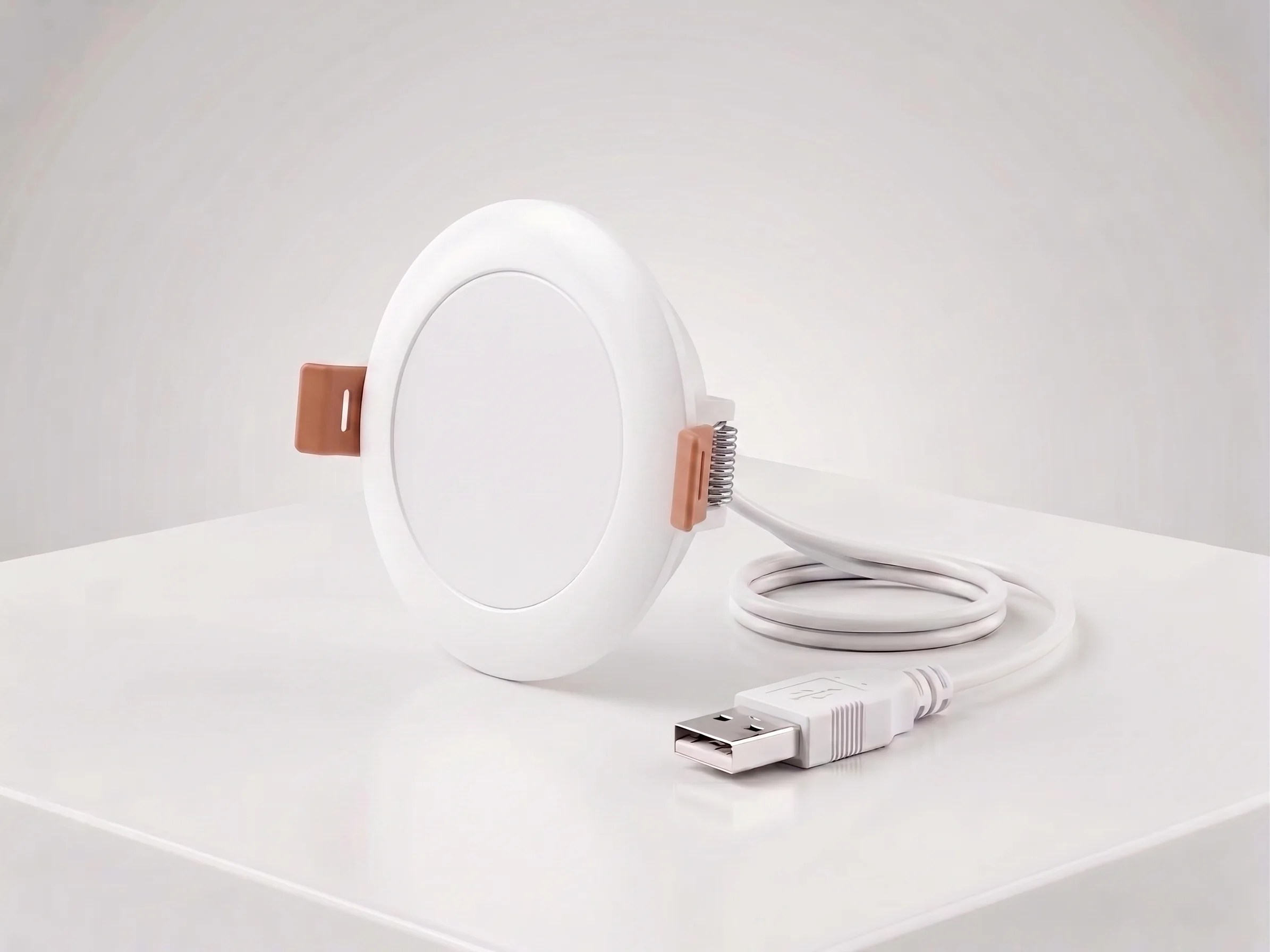
Ceiling Mount mmWave Human Presence Sensor — Zigbee
24GHz wideband mmWave ceiling presence sensor with 10m motion detection, 2.5m micro-motion, and breathing detection. 120° field, DC5V, Zigbee 3.0. For hotel room occupancy and commercial automation.
This page already points to it as the next recommended reference.
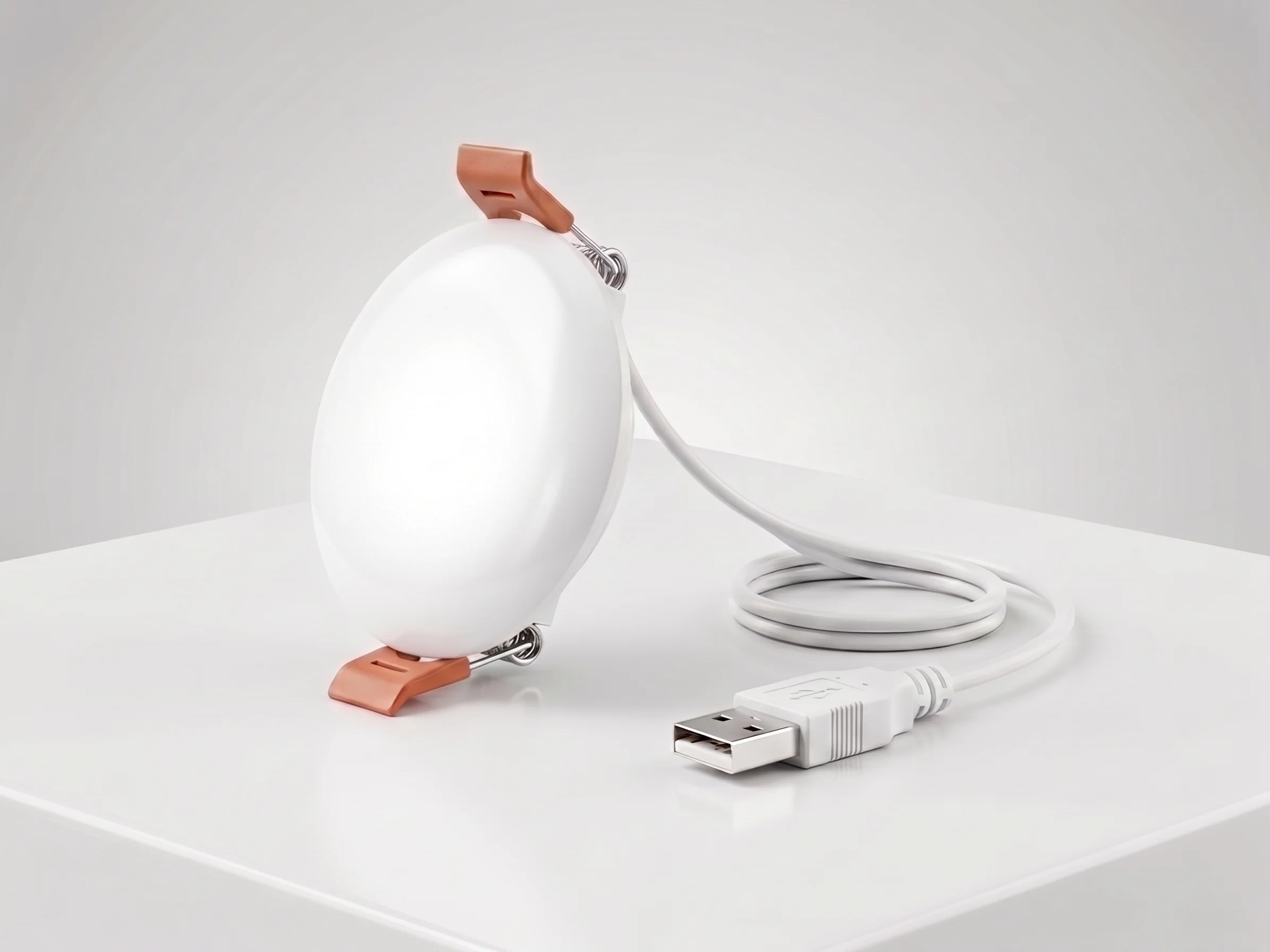
Ceiling Mount mmWave Human Presence Sensor — WiFi
24GHz wideband mmWave ceiling presence sensor with 10m motion detection, 2.5m micro-motion, and breathing detection. 120° field, DC5V, WiFi 2.4GHz. No gateway required for retrofit hotel and apartment projects.
This page already points to it as the next recommended reference.
Related solutions
1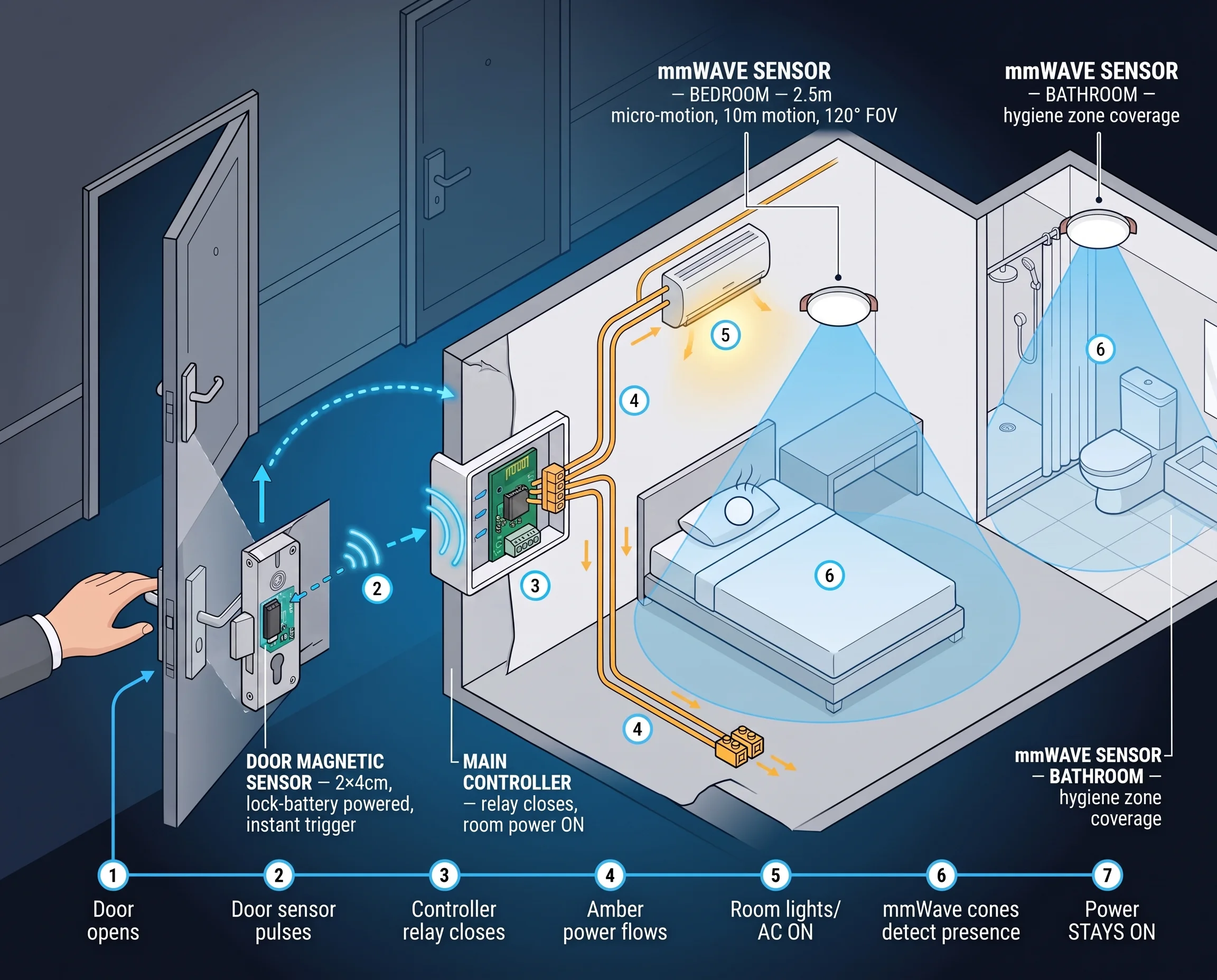
Hotel Room Occupancy & Motion Sensor Solution
mmWave radar presence sensors for hotel room occupancy, housekeeping scheduling, and HVAC energy saving. Detect true occupancy — even when the guest is asleep — with our ceiling-mount hotel room motion sensor.
It supports the same product context: Ceiling Mount mmWave Human Presence Sensor — Zigbee, Ceiling Mount mmWave Human Presence Sensor — WiFi.
Related blog posts
3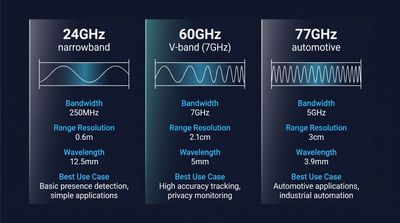
60GHz vs 24GHz vs 77GHz mmWave Sensors: Choosing the Right Frequency for Commercial Presence Detection
Compare 60GHz, 24GHz, and 77GHz mmWave sensors for commercial presence detection. Technical specs, detection range, privacy, and OEM sourcing guidance.
It supports the same product context: Ceiling Mount mmWave Human Presence Sensor — Zigbee, Ceiling Mount mmWave Human Presence Sensor — WiFi.
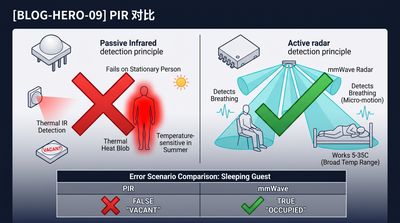
What Is an Electronic Presence Sensor? Technology, Accuracy, and How It Differs From a Motion Sensor
Learn what an electronic presence sensor is, how it detects stationary humans, and how it differs from a PIR motion sensor. Covers mmWave, accuracy, and use cases.
It supports the same product context: Ceiling Mount mmWave Human Presence Sensor — Zigbee, Ceiling Mount mmWave Human Presence Sensor — WiFi.
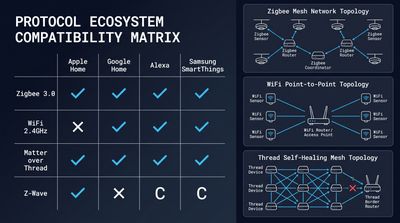
How to Integrate mmWave Presence Sensors With Home Assistant (Local Control Guide)
Step-by-step local control setup guide for mmWave devices, covering MQTT/Matter config, automation scripts, calibration and OEM ceiling presence sensor integration tips.
It supports the same product context: Ceiling Mount mmWave Human Presence Sensor — WiFi, Ceiling Mount mmWave Human Presence Sensor — Zigbee.
Specify your hotel project with our engineers
Send your room count, ceiling type, and protocol preference. We will return a sample plan and quote within 24 business hours.
- Move from general guidance into a product or application discussion.
- Use RFQ when pricing, drawings, MOQ, or launch timing needs structure.
- Keep a direct contact path visible for fast clarifications and handoff.