mm Wave Radar: A Technical Guide to mmWave Sensing Technology
A technical guide to mm wave radar. Learn about the technology, frequency bands, FMCW processing, and applications in presence detection.
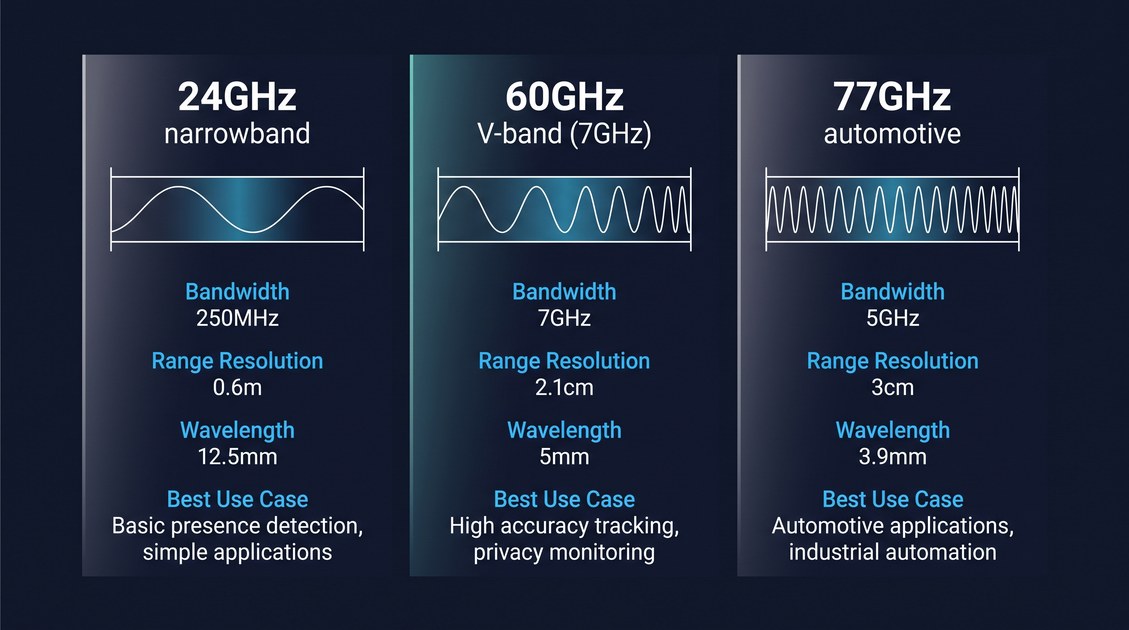
mm wave radar (millimeter wave radar) is a radio detection and ranging technology that uses electromagnetic waves with wavelengths of 1–10 mm (corresponding to frequencies of 30–300 GHz) to detect objects, measure their distance and velocity, and in some cases identify their nature by analyzing the reflected signal. The most common commercial mm wave radar bands are 24 GHz (24.0–24.25 GHz), 60 GHz (57–64 GHz), and 77 GHz (76–81 GHz), with each band offering different trade-offs between range, resolution, antenna size, regulatory environment, and chipset cost. The 60 GHz band has become the dominant frequency for indoor presence detection because it provides 7 GHz of unlicensed bandwidth, which enables 2.1 cm range resolution and micro-Doppler detection of human breathing at 0.2–0.5 Hz from ranges of 6–8 meters. The 77 GHz band is primarily used for automotive radar and long-range industrial applications, while the 24 GHz band is used for cost-sensitive motion-only applications. The mm wave radar is the technology that has enabled the modern presence detection industry, providing the ability to reliably detect both moving and stationary occupants with a single device — a capability that is impossible to achieve with passive infrared (PIR) motion sensors.
The mm wave radar market has grown rapidly since 2020, driven by the demand for accurate occupancy detection in hotel rooms, offices, healthcare facilities, and residential smart homes, as well as by the automotive industry's adoption of mm wave radar for advanced driver assistance systems (ADAS). This guide provides a comprehensive technical overview of mm wave radar, covering the physics, the frequency bands, the FMCW processing, the antenna design, and the major applications.
mm Wave Radar: The Physics
The physics of mm wave radar is governed by the same electromagnetic principles as lower-frequency radio systems, but the short wavelength and the wide bandwidths available in the mmWave frequency range give the technology capabilities that are not achievable at lower frequencies.
mm Wave Radar: Wavelength and Frequency Bands
The wavelength of an electromagnetic wave is inversely proportional to its frequency. At 24 GHz, the wavelength is approximately 12.5 mm; at 60 GHz, it is approximately 5.0 mm; at 77 GHz, it is approximately 3.9 mm. The shorter wavelength at higher frequencies allows smaller antennas for a given gain.
The three major commercial mm wave radar bands are:
- 24 GHz band (24.0–24.25 GHz): the oldest and most mature mmWave band, with a narrowband ISM allocation of 250 MHz. Suitable for motion detection and basic FMCW range resolution.
- 60 GHz band (57–64 GHz): the dominant band for indoor presence detection, with 7 GHz of unlicensed bandwidth. Provides 2.1 cm range resolution and micro-Doppler detection of human breathing.
- 77 GHz band (76–81 GHz): the primary automotive radar band, with 5 GHz of bandwidth. Suitable for long-range radar (20–30 m) and fine angular resolution.
mm Wave Radar: Bandwidth and Range Resolution
The range resolution of a radar system is determined by the bandwidth: c / (2 × B), where c is the speed of light and B is the bandwidth. At 24 GHz with 250 MHz of bandwidth, the range resolution is approximately 0.6 m. At 60 GHz with 7 GHz of bandwidth, the range resolution is approximately 2.1 cm. At 77 GHz with 5 GHz of bandwidth, the range resolution is approximately 3 cm.
The wide bandwidth at 60 GHz and 77 GHz is what enables these systems to detect the micro-motion of human breathing. A person breathing produces a chest wall displacement of 5–20 mm at a frequency of 0.2–0.5 Hz, and detecting this motion requires a range resolution on the order of 5 mm or better.
mm Wave Radar: Atmospheric Attenuation
The atmospheric attenuation of mm wave radar signals varies significantly by frequency. At 24 GHz and 77 GHz, the atmospheric attenuation is relatively low (typically 0.5–1 dB/km). At 60 GHz, the atmospheric attenuation is much higher (~15 dB/km) due to the oxygen absorption resonance at this frequency.
For indoor sensing applications where the maximum range is typically 8–12 m, the atmospheric attenuation at any of these bands is negligible (0.04–0.18 dB at 10 m). However, the high attenuation at 60 GHz does have a beneficial side effect: it prevents 60 GHz signals from propagating between rooms, which is a privacy advantage for hotel and residential deployments.
mm Wave Radar: FMCW Processing
The most common waveform used in commercial mm wave radar is the frequency-modulated continuous wave (FMCW) chirp.
mm Wave Radar: The FMCW Chirp
In an FMCW radar, the transmitter emits a signal whose frequency sweeps linearly across a defined bandwidth over a short period called the chirp duration (typically 50–200 microseconds). The transmitted signal is mixed with a copy of itself (the local oscillator signal), and the reflected signal from a target is also mixed with the local oscillator signal. The result is a beat signal whose frequency is proportional to the range of the target.
By performing a Fast Fourier Transform (FFT) on the beat signal, the radar processor can determine the range of every target in the detection zone with a resolution of c / (2 × B). For a 60 GHz system with 7 GHz of bandwidth, the range resolution is approximately 2.1 cm.
mm Wave Radar: Doppler Processing
In addition to range, an FMCW radar can determine the velocity of a target by analyzing the phase of the beat signal across multiple chirps. A stationary target produces a beat signal with a constant phase across chirps; a moving target produces a beat signal whose phase shifts from chirp to chirp, with the phase shift proportional to the target's velocity.
By performing a second FFT across the chirps of each range bin (a "Doppler FFT"), the radar processor can determine the velocity of every target in the detection zone. The velocity resolution is determined by the wavelength and the frame duration. For a 60 GHz system with a 50 ms frame duration, the velocity resolution is approximately 0.05 m/s.
mm Wave Radar: Micro-Doppler Analysis
The micro-Doppler effect is the phenomenon where the micro-motion of parts of a target produces distinctive Doppler signatures. In human presence detection, the most important micro-Doppler signature is the breathing signature: the periodic chest wall motion at 0.2–0.5 Hz produces a Doppler modulation that is distinct from the background noise and from the Doppler signatures of inanimate objects.
A well-designed mm wave radar presence sensor uses signal processing techniques to extract the breathing signature from the radar return. The processing typically involves:
- Range FFT: determine the range of every target in the detection zone.
- Doppler FFT: determine the velocity of every target at every range.
- Range-Doppler map: produce a 2D map of range vs. velocity.
- Micro-motion extraction: for each range bin that contains a target, analyze the time-varying Doppler signature to identify periodic components (breathing, heartbeat) that indicate a human presence.
- Classification: use a machine learning model (or a rule-based classifier) to classify the target as "human present," "no human present," or "ambiguous."
mm Wave Radar: Antenna Design
The antenna design determines the angular resolution, the field of view, and the form factor of the mm wave radar system.
mm Wave Radar: MIMO Antenna Arrays
Modern mm wave radar systems use multiple-input multiple-output (MIMO) antenna arrays to determine the angular position of targets in the detection zone. A 2×2 MIMO array (two transmit, two receive) provides basic angular resolution in one dimension. A 3×3 MIMO array provides angular resolution in two dimensions with finer resolution. A 4×4 MIMO array provides the finest angular resolution.
For a ceiling-mounted presence sensor, a typical antenna array is a 2×2 or 3×3 MIMO configuration that provides a field of view of approximately ±60° azimuth and ±40° elevation.
mm Wave Radar: Field of View
The field of view of an mm wave radar system is the angular range over which the antenna can effectively transmit and receive signals. A wide field of view is desirable for a ceiling-mounted presence sensor that needs to cover an entire room. A narrow field of view is desirable for a long-range sensor that needs to focus on a specific zone.
Modern mm wave radar systems can steer the beam electronically by adjusting the phase of the signals applied to the transmit antennas. This beam steering allows the radar to focus its energy on a specific direction, which can improve the signal-to-noise ratio for targets in that direction.
mm Wave Radar: Performance Metrics
The performance of an mm wave radar presence sensor is characterized by several key metrics.
mm Wave Radar: Stationary-Occupant Detection
The stationary-occupant true positive rate (TPR) is the percentage of time that a stationary human occupant is correctly reported as present. For a 60 GHz mm wave radar, the TPR is above 99% in controlled testing and above 95% in real-world deployment.
mm Wave Radar: False Positive Rate
The false positive rate is the percentage of time the sensor reports presence when the room is actually empty. For a well-designed mm wave radar, the FPR is below 1% over a 24-hour period in a typical indoor environment.
mm Wave Radar: Detection Range
The detection range of a 60 GHz mm wave radar is 6–8 m for stationary occupants and 8–12 m for moving occupants when ceiling-mounted at 2.5–3.0 m.
mm Wave Radar: Detection Latency
The detection latency is the time between an occupant entering the detection zone and the sensor reporting the change. For an mm wave radar, the latency is typically 0.5–3 seconds.
mm Wave Radar: Applications
The mm wave radar has a wide range of applications across multiple industries.
mm Wave Radar: Presence Detection
The most common application of mm wave radar in 2026 is presence detection for hotels, offices, healthcare facilities, and residential smart homes. A 60 GHz mm wave radar can detect both moving and stationary occupants, enabling true presence detection rather than just motion detection.
mm Wave Radar: Automotive
The 77 GHz mm wave radar is the dominant technology for automotive radar, used for adaptive cruise control, collision avoidance, blind spot detection, and other advanced driver assistance systems (ADAS).
mm Wave Radar: Industrial Sensing
The mm wave radar is used in industrial applications for level sensing (liquids and powders in tanks and silos), conveyor monitoring, and robotic collision avoidance.
mm Wave Radar: Security and Surveillance
The mm wave radar is used for perimeter security, intrusion detection, and through-wall sensing (a controversial application that has both legitimate and privacy concerns).
mm Wave Radar: Healthcare
The mm wave radar is used in healthcare for fall detection, patient monitoring, and vital signs measurement (heart rate, respiration rate).
mm Wave Radar: Chipset Ecosystem
The mm wave radar chipset ecosystem is dominated by a few major vendors.
mm Wave Radar: 60 GHz Chipset Vendors
- Texas Instruments: IWR6843, IWR6443, IWR1843 (60 GHz FMCW transceivers). Dominant 60 GHz chipset vendor.
- Infineon: BGT60, BGT61 series (XENSIV 60 GHz). Strong European presence.
- Calterah, SGR: Chinese fabless vendors with cost-effective 60 GHz chipsets.
- Vayyar: integrated module vendor with on-module processing.
mm Wave Radar: 77 GHz Chipset Vendors
- NXP: TEF82xx, SAF85xx (77 GHz automotive transceivers). Dominant 77 GHz chipset vendor.
- Infineon: RXS816xPL and similar (77 GHz automotive transceivers).
- Texas Instruments: AWR2243, AWR1843, AWR1642 (77/79 GHz automotive transceivers).
- Arbe, Mobileye: emerging 77 GHz chipset vendors for next-generation automotive radar.
mm Wave Radar: Limitations
Despite its many advantages, mm wave radar has several limitations:
mm Wave Radar: Multipath and Ghost Targets
In indoor environments, mm wave radar signals reflect off walls, floors, ceilings, and furniture, creating multipath that can produce ghost targets. Modern signal processing techniques can mitigate multipath, but it remains a consideration.
mm Wave Radar: Environmental Sensitivity
mm wave radar presence sensors can be sensitive to environmental factors including HVAC airflow, heavy curtains, and external vibration. A well-designed sensor includes environmental filtering.
mm Wave Radar: Cost and Complexity
mm wave radar sensors are more complex and more expensive than PIR motion sensors, with module costs of $6–18 at 1K volume for a 60 GHz module. The higher cost is justified for applications that require stationary-occupant detection.
mm Wave Radar: Future Trends
The mm wave radar market is evolving rapidly, with several trends shaping the future:
- Single-chip integration: the integration of mmWave transceivers into single-chip solutions is reducing cost and enabling smaller form factors
- On-device machine learning: the increasing use of on-device ML is improving detection accuracy and enabling new capabilities
- Multi-sensor fusion: the convergence of mmWave radar with other sensing modalities
- 77 GHz for commercial applications: the 77 GHz band is being increasingly used for commercial applications that require long range and fine angular resolution
- AI at the edge: machine learning inference on the radar chip itself, enabling sophisticated classification without requiring a powerful external processor
mm Wave Radar: Final Recommendation
The mm wave radar is the dominant technology for presence detection in 2026, and the 60 GHz band is the default choice for most indoor applications. The technology provides reliable stationary-occupant detection, an excellent privacy profile, and a compact form factor, making it suitable for hotel rooms, offices, healthcare facilities, and residential smart homes.
The recommended products for most applications are the ceiling-presence-sensor-zigbee, ceiling-presence-sensor-wifi, and ceiling-presence-sensor-matter from vendors with strong product portfolios and proven deployment track records.
Part of this article content is generated by AI and optimized for professional accuracy and readability.
Not sure which sensor fits your project?
Talk to our mmWave application engineers for a free consultation.
Find the right presence sensor for your hotel project
Compare the 3 protocols, check hotel-specific case studies, and download the installation guide
Related products
2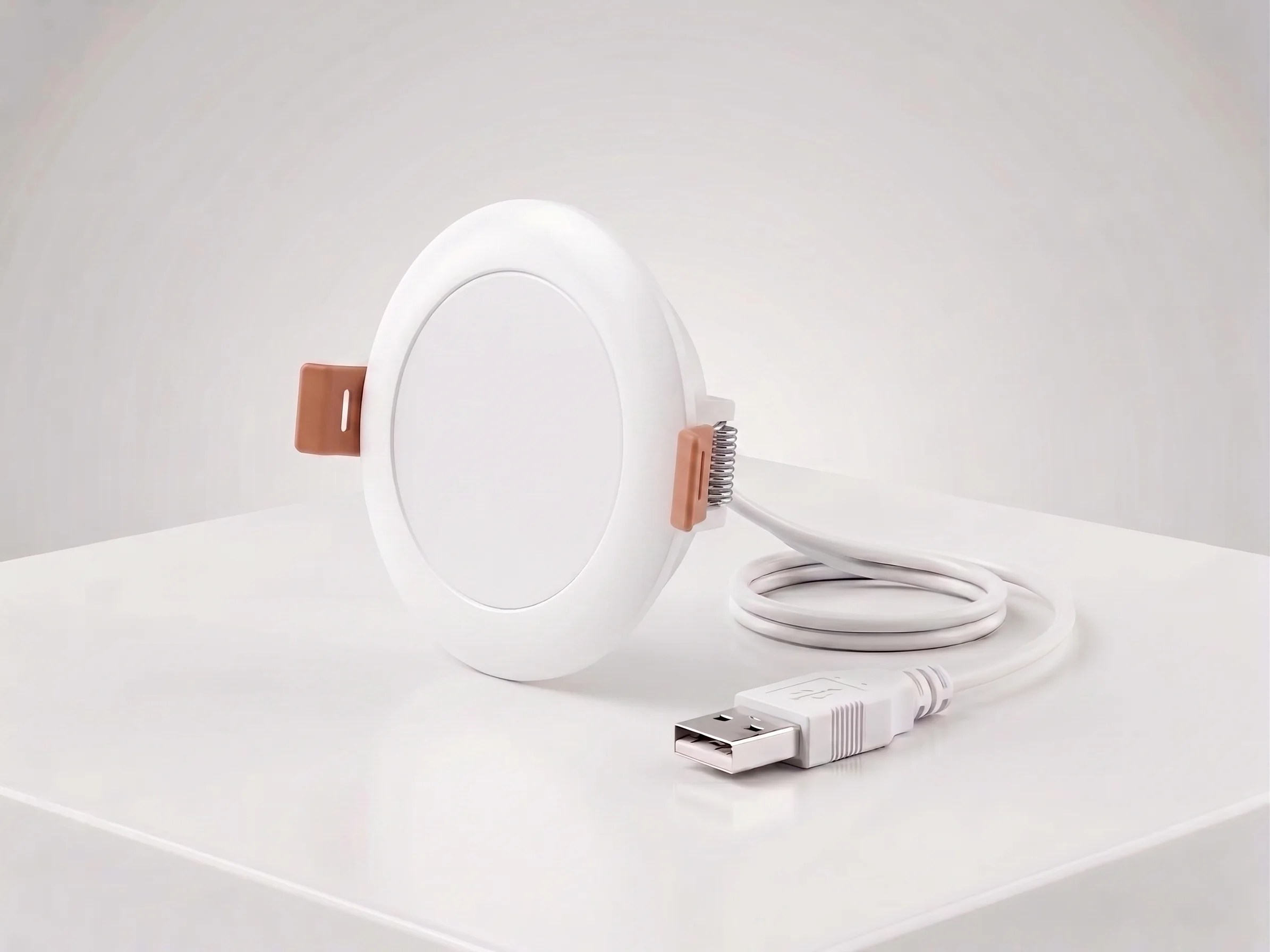
Ceiling Mount mmWave Human Presence Sensor — Zigbee
24GHz wideband mmWave ceiling presence sensor with 10m motion detection, 2.5m micro-motion, and breathing detection. 120° field, DC5V, Zigbee 3.0. For hotel room occupancy and commercial automation.
This page already points to it as the next recommended reference.
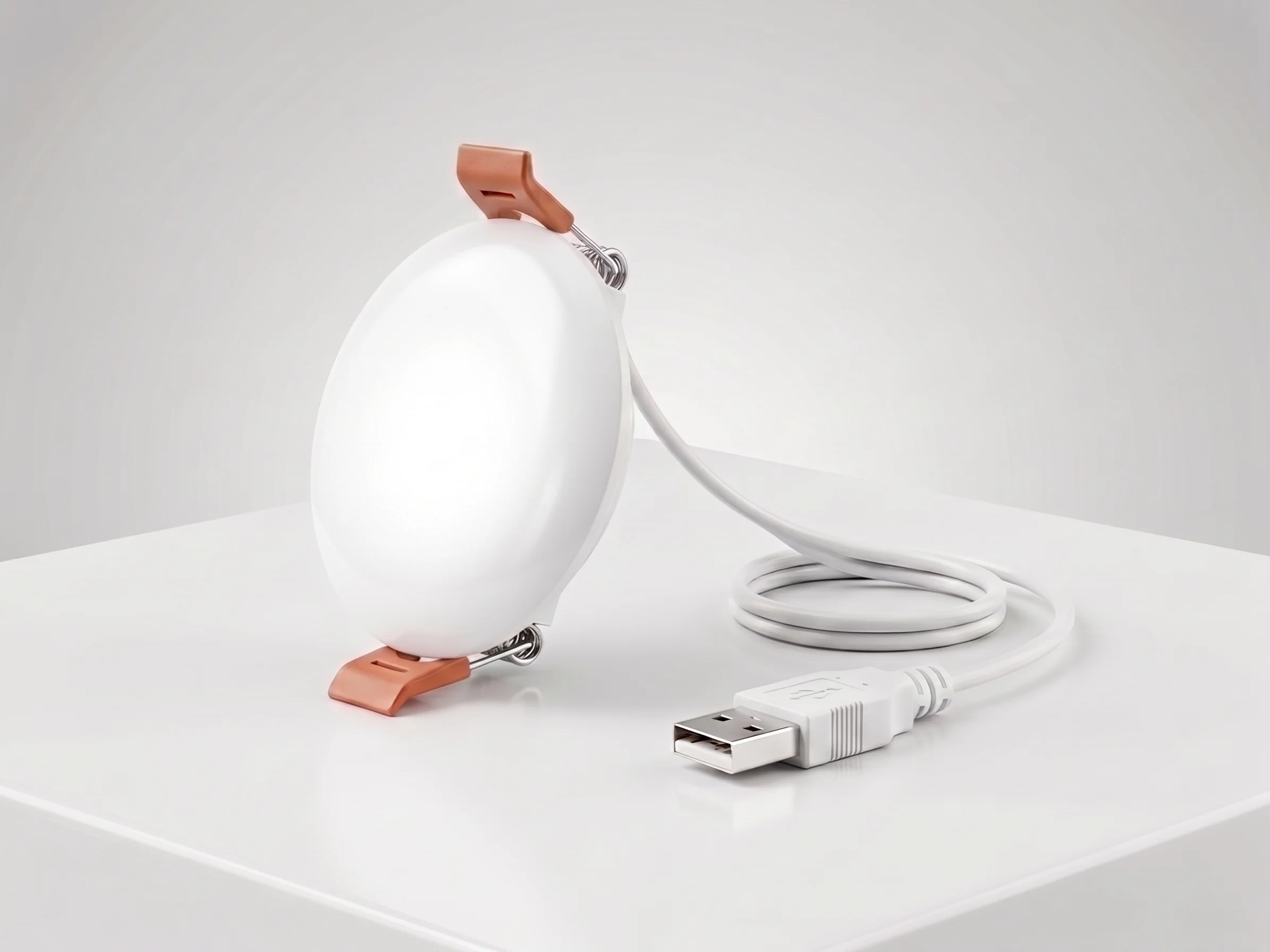
Ceiling Mount mmWave Human Presence Sensor — WiFi
24GHz wideband mmWave ceiling presence sensor with 10m motion detection, 2.5m micro-motion, and breathing detection. 120° field, DC5V, WiFi 2.4GHz. No gateway required for retrofit hotel and apartment projects.
This page already points to it as the next recommended reference.
Related solutions
1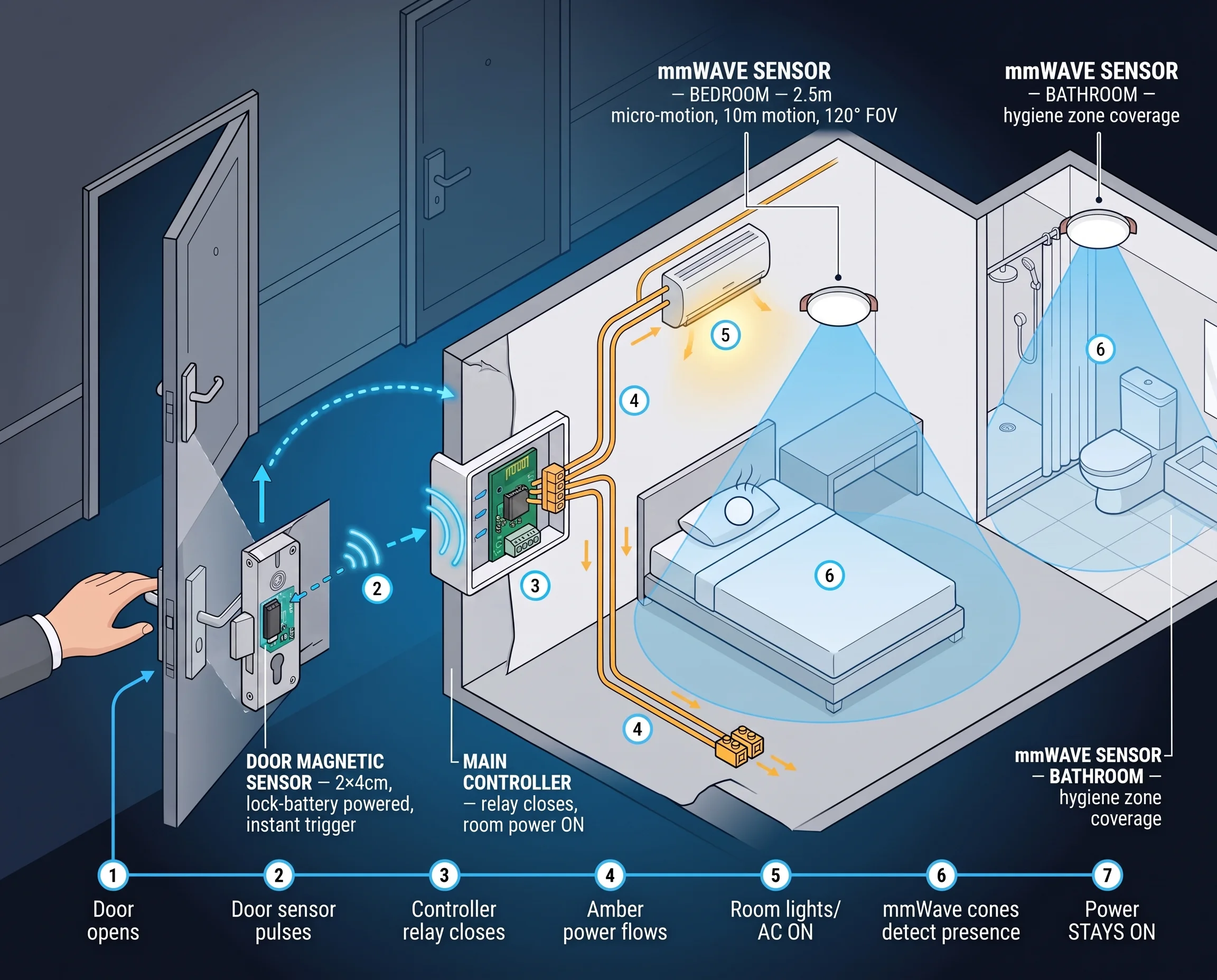
Hotel Room Occupancy & Motion Sensor Solution
mmWave radar presence sensors for hotel room occupancy, housekeeping scheduling, and HVAC energy saving. Detect true occupancy — even when the guest is asleep — with our ceiling-mount hotel room motion sensor.
It supports the same product context: Ceiling Mount mmWave Human Presence Sensor — Zigbee, Ceiling Mount mmWave Human Presence Sensor — WiFi.
Related blog posts
3
60GHz vs 24GHz vs 77GHz mmWave Sensors: Choosing the Right Frequency for Commercial Presence Detection
Compare 60GHz, 24GHz, and 77GHz mmWave sensors for commercial presence detection. Technical specs, detection range, privacy, and OEM sourcing guidance.
It supports the same product context: Ceiling Mount mmWave Human Presence Sensor — Zigbee, Ceiling Mount mmWave Human Presence Sensor — WiFi.
What Is an Electronic Presence Sensor? Technology, Accuracy, and How It Differs From a Motion Sensor
Learn what an electronic presence sensor is, how it detects stationary humans, and how it differs from a PIR motion sensor. Covers mmWave, accuracy, and use cases.
It supports the same product context: Ceiling Mount mmWave Human Presence Sensor — Zigbee, Ceiling Mount mmWave Human Presence Sensor — WiFi.
How to Integrate mmWave Presence Sensors With Home Assistant (Local Control Guide)
Step-by-step local control setup guide for mmWave devices, covering MQTT/Matter config, automation scripts, calibration and OEM ceiling presence sensor integration tips.
It supports the same product context: Ceiling Mount mmWave Human Presence Sensor — WiFi, Ceiling Mount mmWave Human Presence Sensor — Zigbee.
Specify your hotel project with our engineers
Send your room count, ceiling type, and protocol preference. We will return a sample plan and quote within 24 business hours.
- Move from general guidance into a product or application discussion.
- Use RFQ when pricing, drawings, MOQ, or launch timing needs structure.
- Keep a direct contact path visible for fast clarifications and handoff.