Hotel Room Occupancy Sensor: Complete Guide for Hospitality Deployment 2026
A complete guide to hotel room occupancy sensors. Learn how mmWave sensors detect sleeping guests, integrate with BMS, and drive energy savings in hotels.
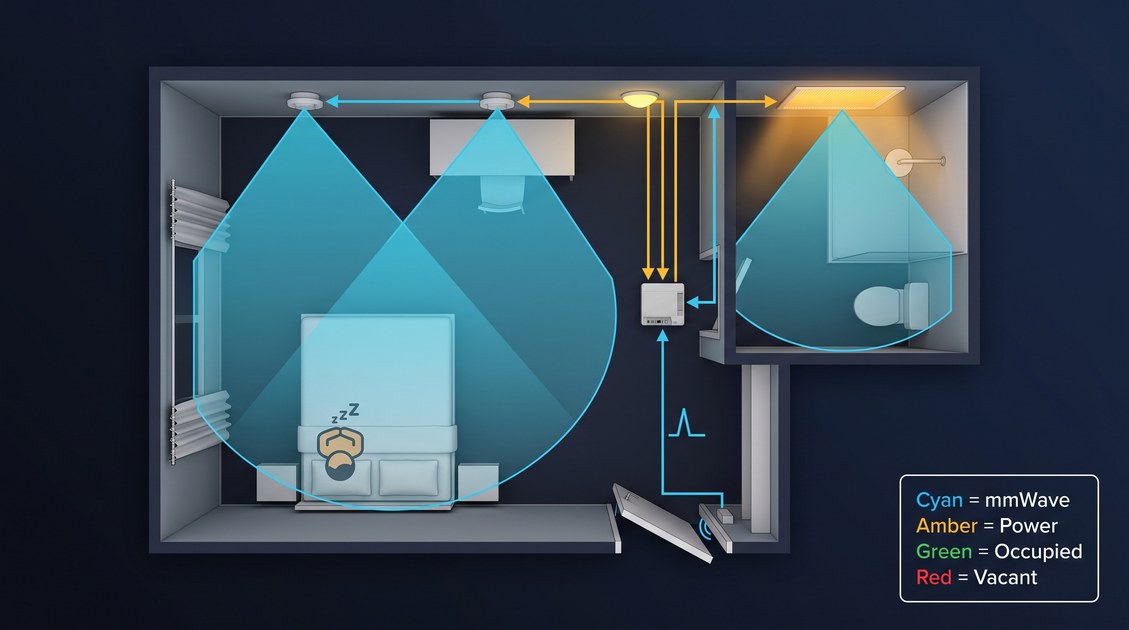
A hotel room occupancy sensor is a presence detection device installed in hotel rooms to determine whether a guest is currently in the room, with the capability to detect both moving and stationary occupants (including sleeping guests) using millimeter-wave (mmWave) radar technology operating at 60 GHz (57–64 GHz) with 7 GHz of bandwidth, achieving a stationary-occupant true positive rate above 99% in controlled testing and above 95% in real-world hotel deployments. The hotel room occupancy sensor is the single most impactful IoT device in the modern hotel, enabling real-time housekeeping coordination (do not disturb when occupied, schedule housekeeping when checkout confirmed), energy management (HVAC in comfort mode when occupied, in setback mode when empty, with typical energy savings of 20–40% per room), guest experience automation (lighting scene on entry, personalized welcome messages, in-room automation), and security monitoring (intrusion detection when the room is supposed to be empty). The dominant technology for the modern hotel room occupancy sensor is 60 GHz mmWave radar, which has displaced the legacy passive infrared (PIR) motion sensor in any hotel deployment where the guest may be still for extended periods (sleeping, reading, watching TV).
The hotel room occupancy sensor is the canonical application for mmWave presence detection, and the use case that has driven the most growth in the commercial presence detection market since 2020. This guide provides a comprehensive overview of the hotel room occupancy sensor, covering the technology, the integration with building management systems, the energy savings, the deployment patterns, and the selection criteria for choosing the right sensor for a hotel chain deployment.
Hotel Room Occupancy Sensor: Why mmWave Is the Right Choice
The hotel room occupancy sensor market has shifted decisively from PIR to mmWave radar in the past five years, driven by the fundamental limitation of PIR sensors in hotel room applications.
The PIR Sensor Problem in Hotel Rooms
A PIR motion sensor in a hotel room fires when a warm body moves across its field of view. The sensor reports "motion detected" when the guest enters the room, and continues to report "motion" whenever the guest moves (sitting up in bed, walking to the bathroom, adjusting the bedding, opening the door). However, after a period of no motion (typically 10–30 minutes), the PIR sensor reports "no motion," and the hotel systems interpret this as the room being empty.
For a hotel room, this is a critical failure mode. A sleeping guest produces no macro-motion for hours, and a PIR sensor will time out and report the room as empty, even though the room is occupied. The downstream consequences are:
- Housekeeping intrusion: the housekeeping system concludes the room is empty and dispatches a housekeeper, who may enter the room while the guest is sleeping
- HVAC setback: the HVAC system reverts to setback mode (less heating or cooling), and the guest may experience a cold or hot room during the night
- Energy waste: the energy savings opportunity is missed because the room is treated as empty when it is actually occupied
The mmWave Radar Solution
A 60 GHz mmWave radar hotel room occupancy sensor can detect the micro-motion of human breathing at 0.2–0.5 Hz from ranges of 6–8 meters, with a stationary-occupant true positive rate above 99% in controlled testing and above 95% in real-world hotel deployment. The sensor reports "occupied" the entire time the guest is in the room, regardless of whether the guest is moving, and the downstream systems can react accordingly.
The mmWave radar hotel room occupancy sensor solves the PIR problem completely: the room is reported as occupied for the entire duration of the guest's stay, the HVAC stays in comfort mode throughout the night, and the housekeeping system waits for the actual checkout (when the guest leaves the room and the sensor reports "empty") before dispatching a housekeeper.
Hotel Room Occupancy Sensor: Integration with building management systems
The hotel room occupancy sensor is most valuable when integrated with the building management system (BMS), the energy management system (EMS), the housekeeping management system, and the in-room automation system.
Hotel Room Occupancy Sensor: BMS integration
The BMS integration enables the hotel room occupancy sensor to provide real-time occupancy data to the front desk and to the housekeeping management system. The integration typically works through a Zigbee gateway or through an API.
When a guest checks in, the BMS records the check-in event and sets the room status to "occupied (expected)." When the hotel room occupancy sensor first detects occupancy, the status is updated to "occupied (confirmed)." When the sensor reports "empty" for a preset period (typically 15–30 minutes) after the check-out time, the status is updated to "vacant dirty" and a housekeeper is dispatched.
The BMS integration eliminates the manual check-in / check-out process for housekeeping, and enables the front desk to verify the actual occupancy of a room in real time (e.g., for confirming whether a guest has actually left the room at checkout time, or for confirming whether a room is actually occupied when a guest reports a problem).
Hotel Room Occupancy Sensor: Energy Management Integration
The EMS integration enables the hotel room occupancy sensor to control the HVAC and the lighting based on actual occupancy. The integration typically works through BACnet, Modbus, or a vendor-specific API.
The HVAC control logic is typically:
- Unoccupied, no booking: HVAC in setback mode (e.g., 78°F cooling / 68°F heating)
- Booked, unoccupied: HVAC in setback mode
- Occupied (confirmed): HVAC in comfort mode (e.g., 74°F cooling / 72°F heating)
- Unoccupied, recently vacated: HVAC in setback mode after a preset period (typically 15–30 minutes)
The lighting control logic is typically:
- Unoccupied, no booking: lights off
- Booked, unoccupied: lights off
- Occupied: lights on when the guest enters, off when the guest leaves (or after a preset period)
The energy savings from occupancy-based HVAC and lighting control are typically 20–40% per room, depending on the local energy costs and the occupancy pattern.
Hotel Room Occupancy Sensor: Housekeeping Integration
The housekeeping integration enables the housekeeping system to dispatch housekeepers based on actual occupancy, rather than based on the check-out time alone. The integration typically works through the BMS or through a separate housekeeping management system.
The housekeeping logic is typically:
- Vacant dirty: dispatch a housekeeper (with a priority based on the check-out time and the next booking)
- Vacant clean: no housekeeping needed
- Occupied, do not disturb: no housekeeping
- Occupied, normal: no housekeeping during the stay, but offer housekeeping service based on the guest's preference
The housekeeping integration reduces unnecessary intrusions (the housekeeper does not enter a room where the guest is sleeping) and improves the housekeeping efficiency (the housekeeper is dispatched only when the room is actually empty).
Hotel Room Occupancy Sensor: In-Room Automation Integration
The in-room automation integration enables the hotel room occupancy sensor to trigger personalized guest experiences, such as the lighting scene on entry, the welcome message on the TV, and the personalized thermostat setting. The integration typically works through the in-room automation system (a vendor-specific system or an open protocol like Zigbee or KNX).
The in-room automation logic is typically:
- Occupied, first time: trigger welcome scene (lights on, TV welcome message, thermostat to preferred temperature)
- Occupied, subsequent: no trigger (the guest is already in the room)
- Unoccupied: lights off, TV off, thermostat to setback
The in-room automation integration improves the guest experience and can be a differentiator for the hotel brand.
Hotel Room Occupancy Sensor: Deployment Patterns
The hotel room occupancy sensor is deployed in a variety of patterns, depending on the hotel's construction and renovation timeline.
New Construction
In new construction, the hotel room occupancy sensor is installed during the construction phase, with the wiring planned during the design phase. The sensor is typically ceiling-mounted, mains-powered (from the room's lighting circuit), and connected via Zigbee to a gateway that integrates with the BMS, EMS, housekeeping system, and in-room automation system.
A typical new-construction deployment takes 15–30 minutes per room to install the sensor, configure the network, and test the integration. The total cost of a new-construction deployment is typically $200–500 per room, including the sensor, the gateway, the integration, and the installation labor.
Renovation
In renovation projects, the hotel room occupancy sensor is installed as part of the room renovation. The sensor may be mains-powered (if the renovation includes rewiring) or battery-powered (if the renovation does not include rewiring).
A typical renovation deployment takes 20–45 minutes per room to install the sensor, configure the network, and test the integration. The total cost of a renovation deployment is typically $200–500 per room, similar to a new-construction deployment.
Retrofit
In retrofit deployments (where the room is not being renovated), the hotel room occupancy sensor is installed without rewiring or other construction work. The sensor is typically battery-powered or mains-powered (using an existing outlet), and is mounted on the ceiling with adhesive or screws.
A typical retrofit deployment takes 10–20 minutes per room to install the sensor, configure the network, and test the integration. The total cost of a retrofit deployment is typically $150–300 per room, lower than a new-construction or renovation deployment because of the simpler installation.
Hotel Room Occupancy Sensor: Selection Criteria
Selecting the right hotel room occupancy sensor requires evaluating several criteria.
Detection Performance
The detection performance is the most important criterion. The sensor must reliably detect a sleeping guest (the stationary-occupant TPR must be above 95% in real-world hotel deployment). A sensor that fails the stationary-occupant test is not suitable for hotel applications.
BMS integration
The sensor must integrate with the hotel's BMS. The BMS vendors (Oracle Hospitality OPERA Cloud, CloudBeds, Mews, RoomKeyPMS) all support occupancy sensor integration, typically through a Zigbee gateway or through an API. The integration must be tested end-to-end before the deployment is considered complete.
EMS Integration
The sensor must integrate with the hotel's EMS (or the vendor's EMS if the hotel does not have a separate EMS). The integration must support the occupancy-based HVAC and lighting control logic described above.
Compliance
The sensor must carry the required certifications for the target market: CE (for the EU), FCC (for the US), and any regional certifications. For California hotel deployments, the sensor must also comply with SB-327 (the California IoT security law).
Vendor Support
The sensor vendor must provide strong technical support, including documentation, application notes, integration guides, and responsive engineering assistance. A vendor with a proven track record in the hotel vertical is preferred.
Hotel Room Occupancy Sensor: Energy Savings
The energy savings from a hotel room occupancy sensor deployment are significant and well-documented. The savings come from three main sources:
HVAC Energy Savings
The HVAC is the largest energy consumer in a typical hotel room (typically 50–70% of the total room energy consumption). Occupancy-based HVAC control (comfort mode when occupied, setback mode when empty) can reduce HVAC energy consumption by 30–50%, depending on the local climate and the occupancy pattern. For a typical hotel room, the annual HVAC energy savings are $200–500 per room.
Lighting Energy Savings
The lighting is a smaller energy consumer (typically 10–20% of the total room energy consumption). Occupancy-based lighting control can reduce lighting energy consumption by 50–80%, with the savings being higher in rooms that are unoccupied for large portions of the day. For a typical hotel room, the annual lighting energy savings are $50–150 per room.
Total Energy Savings
The total annual energy savings from a hotel room occupancy sensor deployment are typically $250–650 per room, depending on the local energy costs and the occupancy pattern. For a hotel with 200 rooms, the total annual energy savings are $50,000–130,000.
The payback period for a hotel room occupancy sensor deployment is typically 1–2 years, based on the energy savings alone. When the additional benefits (housekeeping efficiency, guest experience, security) are included, the payback period is even shorter.
Hotel Room Occupancy Sensor: Recommended Products
The recommended products for hotel room occupancy sensor deployments are the ceiling-presence-sensor-zigbee and the ceiling-presence-sensor-wifi, which provide 24GHz wideband mmWave radar detection, Zigbee or WiFi connectivity, full certification (CE, FCC, RoHS), and occupancy-signal output to BMS and EMS platforms.
For new construction or renovation deployments, the ceiling-presence-sensor-zigbee is the recommended choice, as the Zigbee connectivity integrates natively with the major hotel BMS platforms. For retrofit deployments, the ceiling-presence-sensor-wifi may be preferred if the hotel does not have a Zigbee infrastructure.
Hotel Room Occupancy Sensor: Final Recommendation
The hotel room occupancy sensor is the single most impactful IoT device in the modern hotel, enabling real-time housekeeping coordination, significant energy savings, improved guest experience, and enhanced security. The dominant technology is 60 GHz mmWave radar, which provides reliable stationary-occupant detection, an excellent privacy profile, and a compact form factor that fits in a ceiling puck.
For a hotel chain or a single hotel operator planning a hotel room occupancy sensor deployment, the right approach is to start with a clear definition of the deployment requirements (number of rooms, integration requirements, compliance requirements), then evaluate the available sensors against those requirements, then select a vendor with a proven track record in the hotel vertical, and then execute a pilot deployment (10–50 rooms) before committing to a full property or chain-wide deployment. With the right sensor, correctly integrated with the hotel's BMS, EMS, and housekeeping systems, the deployment can deliver significant value through energy savings, housekeeping efficiency, and improved guest experience.
Part of this article content is generated by AI and optimized for professional accuracy and readability.
Not sure which sensor fits your project?
Talk to our mmWave application engineers for a free consultation.
Find the right presence sensor for your hotel project
Compare the 3 protocols, check hotel-specific case studies, and download the installation guide
Related products
3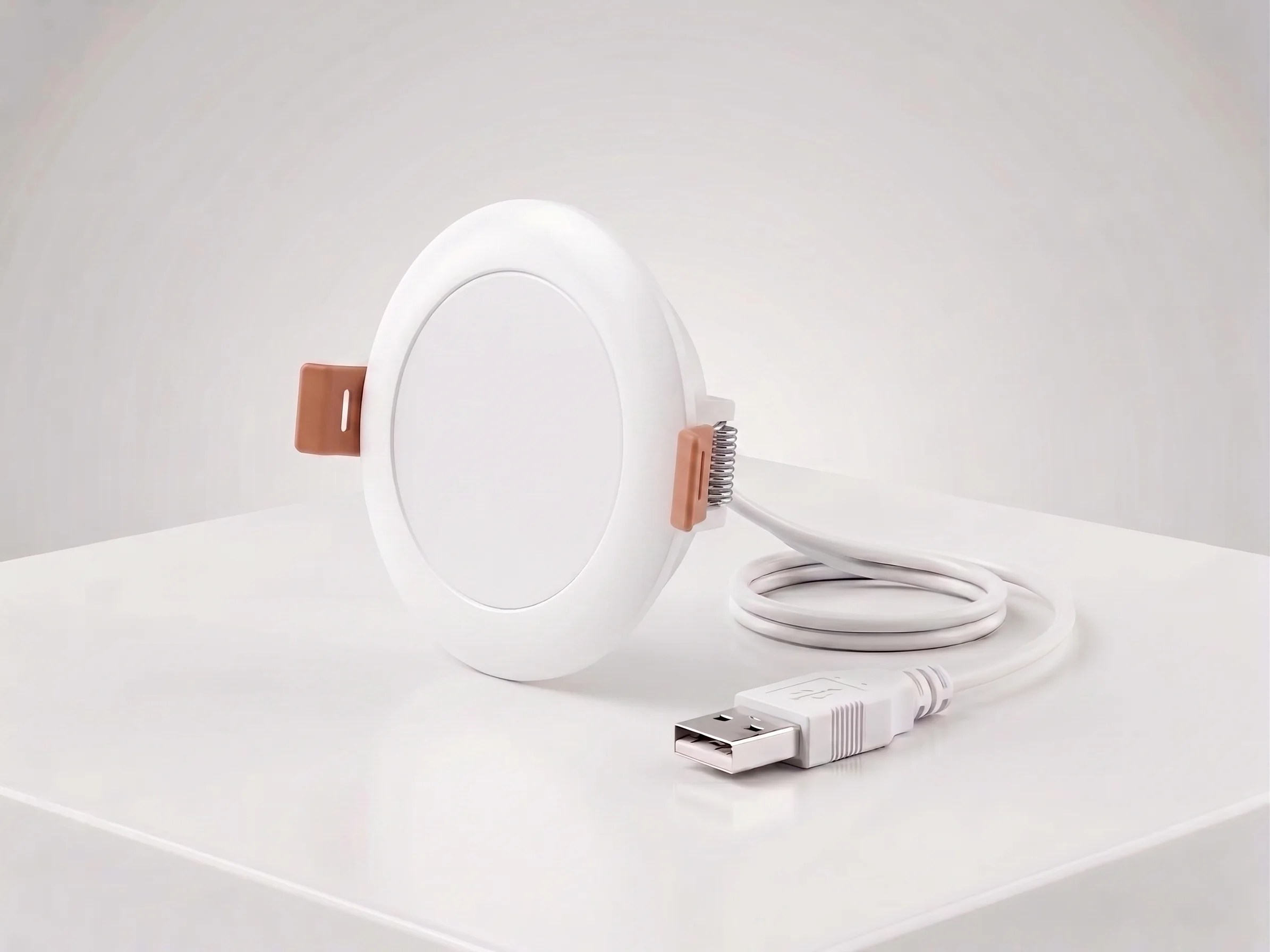
Ceiling Mount mmWave Human Presence Sensor — Zigbee
24GHz wideband mmWave ceiling presence sensor with 10m motion detection, 2.5m micro-motion, and breathing detection. 120° field, DC5V, Zigbee 3.0. For hotel room occupancy and commercial automation.
This page already points to it as the next recommended reference.
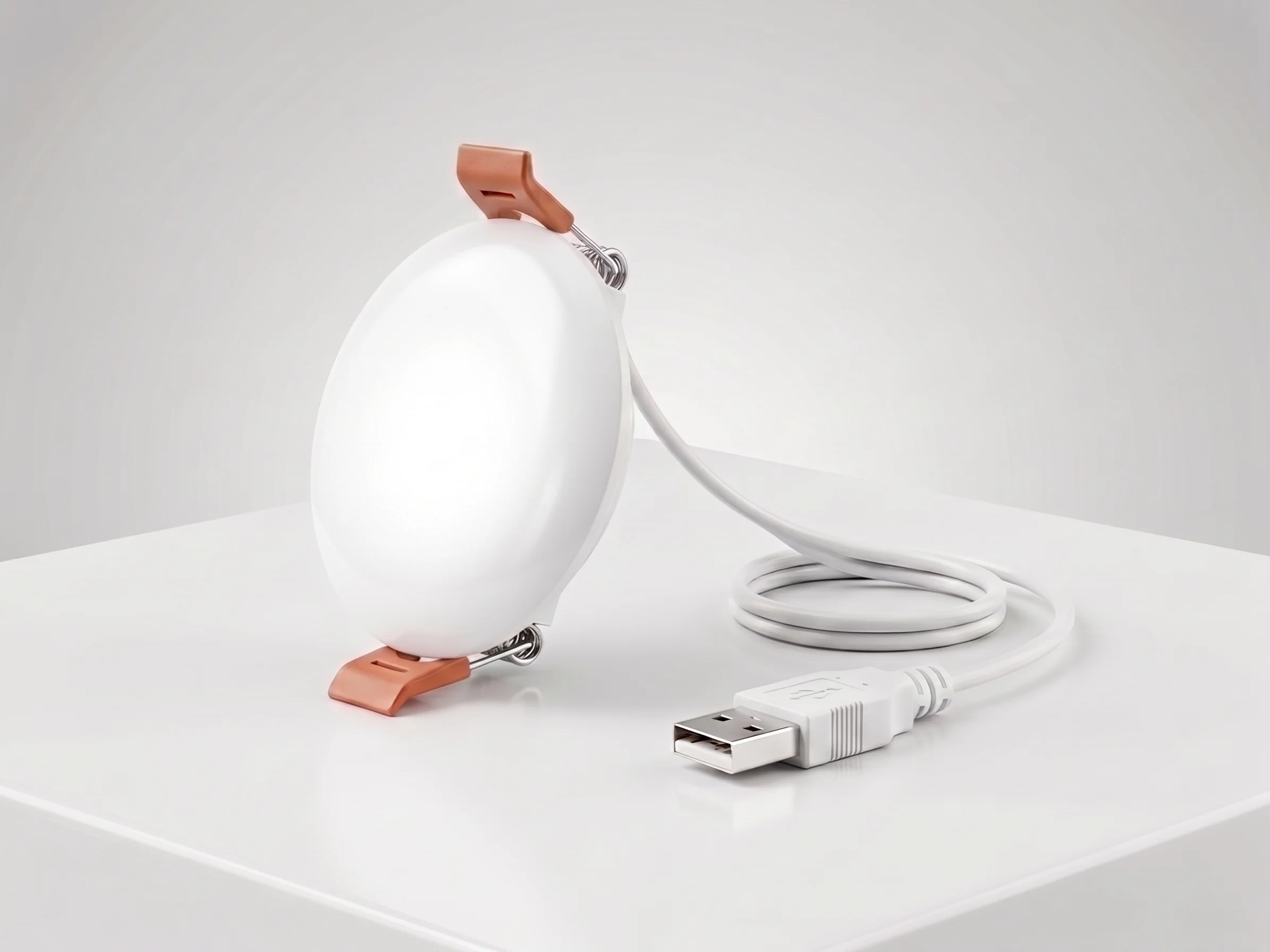
Ceiling Mount mmWave Human Presence Sensor — WiFi
24GHz wideband mmWave ceiling presence sensor with 10m motion detection, 2.5m micro-motion, and breathing detection. 120° field, DC5V, WiFi 2.4GHz. No gateway required for retrofit hotel and apartment projects.
This page already points to it as the next recommended reference.
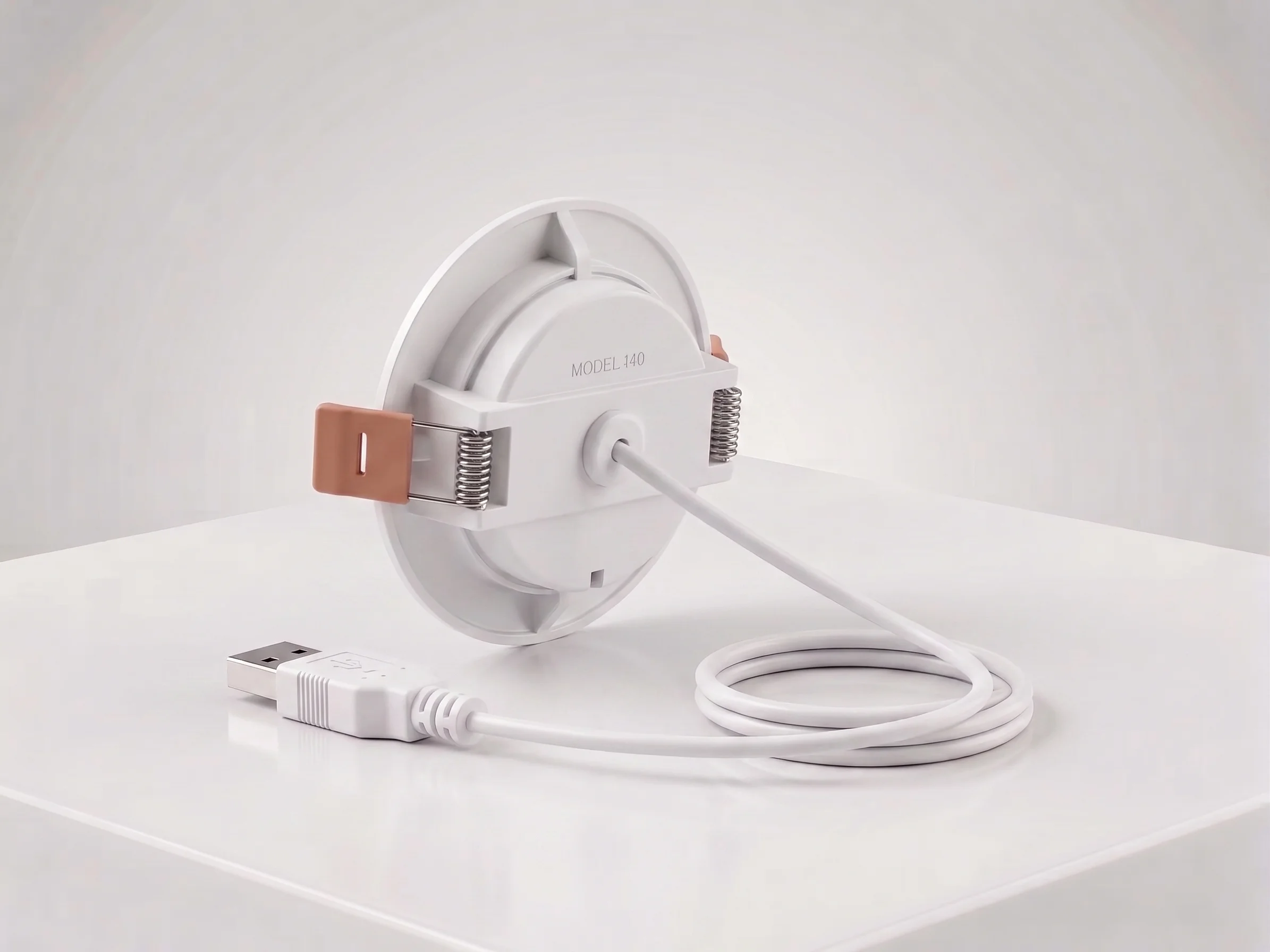
Ceiling Mount mmWave Human Presence Sensor — Matter over Thread
24GHz wideband mmWave ceiling presence sensor with 10m motion, 2.5m micro-motion, and breathing detection. 120° field, DC5V, Matter over Thread. Works natively with Apple Home, Google Home, and Alexa.
This page already points to it as the next recommended reference.
Related blog posts
3
60GHz vs 24GHz vs 77GHz mmWave Sensors: Choosing the Right Frequency for Commercial Presence Detection
Compare 60GHz, 24GHz, and 77GHz mmWave sensors for commercial presence detection. Technical specs, detection range, privacy, and OEM sourcing guidance.
It supports the same product context: Ceiling Mount mmWave Human Presence Sensor — Zigbee, Ceiling Mount mmWave Human Presence Sensor — WiFi.
What Is an Electronic Presence Sensor? Technology, Accuracy, and How It Differs From a Motion Sensor
Learn what an electronic presence sensor is, how it detects stationary humans, and how it differs from a PIR motion sensor. Covers mmWave, accuracy, and use cases.
It supports the same product context: Ceiling Mount mmWave Human Presence Sensor — Zigbee, Ceiling Mount mmWave Human Presence Sensor — WiFi, Ceiling Mount mmWave Human Presence Sensor — Matter over Thread.
How to Integrate mmWave Presence Sensors With Home Assistant (Local Control Guide)
Step-by-step local control setup guide for mmWave devices, covering MQTT/Matter config, automation scripts, calibration and OEM ceiling presence sensor integration tips.
It supports the same product context: Ceiling Mount mmWave Human Presence Sensor — Matter over Thread, Ceiling Mount mmWave Human Presence Sensor — WiFi, Ceiling Mount mmWave Human Presence Sensor — Zigbee.
Specify your hotel project with our engineers
Send your room count, ceiling type, and protocol preference. We will return a sample plan and quote within 24 business hours.
- Move from general guidance into a product or application discussion.
- Use RFQ when pricing, drawings, MOQ, or launch timing needs structure.
- Keep a direct contact path visible for fast clarifications and handoff.