Commercial Presence Detector: Complete Guide for Enterprise Deployment
A complete guide to commercial presence detectors. Learn about mmWave technology, hotel and office deployments, and how to choose the right sensor.
A commercial presence detector is an enterprise-grade occupancy detection device designed for large-scale deployment in hotel chains, office portfolios, healthcare facilities, and other commercial environments, typically using millimeter-wave (mmWave) radar technology at 60 GHz to detect both moving and stationary human occupants with a stationary-occupant true positive rate above 99% in controlled testing, and with enterprise-grade features including compliance with major standards (FCC, CE, RoHS, GDPR, CCPA, SB-327 for California, HIPAA for healthcare), integration with enterprise building management systems and building management systems, and a support framework that includes documentation, application engineering, and multi-year warranty. The commercial presence detector is distinguished from consumer-grade devices by its focus on reliability and compliance rather than ease of use, by its robust physical design (IP20 or higher ingress protection, 12–24 month warranty), and by the fact that it is sold through specialized distribution channels (industrial automation distributors, building automation distributors) rather than through retail consumer channels. The commercial presence detector market is dominated by 60 GHz mmWave radar devices, which have become the default choice for enterprise deployments because they deliver the stationary-occupant detection capability that is essential for energy management and for the guest and occupant experience.
The commercial presence detector market has grown rapidly since 2020, driven by the hospitality industry's need for accurate occupancy detection for housekeeping coordination and energy management, the office sector's need for space utilization analytics, and the healthcare sector's need for fall detection and patient monitoring. This guide provides a comprehensive overview of the commercial presence detector, covering the technology, the enterprise-grade features, the major application categories, the integration considerations, and the selection criteria for choosing the right detector for a specific enterprise deployment.
Commercial Presence Detector: Technology and Architecture
The architecture of a commercial presence detector is designed for reliability, compliance, and integration.
Commercial Presence Detector: 60 GHz mmWave Radar
The 60 GHz ISM band (57–64 GHz) is the default frequency for commercial presence detectors, providing 7 GHz of bandwidth that enables 2.1 cm range resolution and micro-Doppler detection of human breathing. The 5 mm wavelength allows for compact antenna arrays, enabling a 70 mm diameter ceiling puck form factor that is the standard for commercial deployments.
Commercial Presence Detector: Enterprise-Grade Signal Processing
A commercial presence detector includes on-board signal processing that is optimized for the commercial environment:
- Environmental filtering: robust filtering to distinguish human micro-motion from environmental motion (HVAC airflow, building vibration, fan motion)
- On-device classification: a machine learning model (or a rule-based classifier) that classifies targets as human or non-human without requiring a cloud service
- Configurable detection zones: for multi-zone presence detection in large rooms
- Occupancy counting: for applications that require the number of occupants (conference rooms, large offices)
Commercial Presence Detector: Connectivity Options
A commercial presence detector typically supports multiple connectivity options:
- Zigbee 3.0: the default for hotel deployments, with native integration with major building management systems
- WiFi: the default for office deployments, with integration with building management systems and scheduling platforms
- PoE (Power over Ethernet): for office deployments where Ethernet cabling is available
- Matter: increasingly the default for residential and hospitality deployments, providing cross-ecosystem compatibility
- BACnet/IP: for building management system integration
Commercial Presence Detector: Enterprise-Grade Features
A commercial presence detector includes a set of enterprise-grade features that distinguish it from consumer-grade devices.
Commercial Presence Detector: Compliance and Certifications
A commercial presence detector carries a comprehensive set of certifications:
- Radio certifications: FCC (US), CE (EU), and any regional certifications (IC for Canada, MIC for Japan, SRRC for China, KC for South Korea, NCC for Taiwan, RCM for Australia)
- Safety certifications: RoHS (EU), REACH (EU), and any regional safety certifications
- Data protection: GDPR compliance documentation for EU deployments, CCPA compliance documentation for California deployments, SB-327 compliance documentation for California hospitality deployments
- Healthcare: HIPAA compliance documentation for US healthcare deployments
Commercial Presence Detector: Physical Design
A commercial presence detector has a robust physical design:
- Ingress protection: IP20 or higher (dust resistance)
- Operating temperature: 0–40°C (typical for indoor applications)
- Humidity tolerance: up to 90% RH (non-condensing)
- Power options: mains power (220–240 VAC or 110–120 VAC), PoE, or battery (with 12–18 month battery life)
- Mounting options: ceiling puck (70 mm diameter, typical), wall-mount (rectangular, 80×120 mm), tile grid mount (for suspended tile ceilings)
Commercial Presence Detector: Warranty and Support
A commercial presence detector typically includes:
- Warranty: 12–24 months standard, with extended warranty options available
- Technical support: email support with guaranteed response times, optional phone support for enterprise customers
- Application engineering: optional application engineering assistance for occupancy-signal output to BMS and scheduling platforms
- Documentation: comprehensive documentation, including datasheets, installation guides, integration guides, and API documentation
Commercial Presence Detector: Applications
The commercial presence detector is deployed in a wide range of enterprise environments.
Commercial Presence Detector: Hotel Deployment
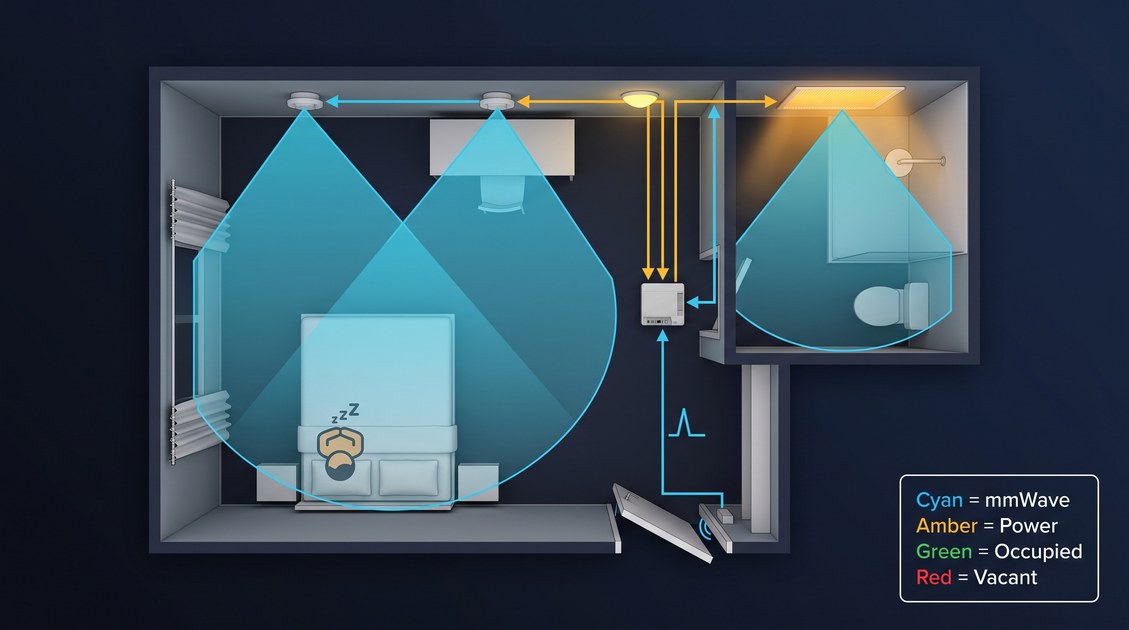
Hotel rooms are the canonical application for the commercial presence detector. A 60 GHz ceiling-mounted commercial presence detector can reliably detect whether a guest is in the room throughout their stay, including when they are sleeping, and feeds the occupancy data to the building management system for housekeeping coordination and the HVAC system for energy management.
The commercial presence detector for hotel deployment typically includes:
- Zigbee 3.0 connectivity (native occupancy-signal output to BMS)
- Mains power (220–240 VAC or 110–120 VAC)
- GDPR/CCPA/SB-327 compliance documentation
- Housekeeping automation integration
- Energy management integration
Commercial Presence Detector: Office Deployment
Office buildings use commercial presence detectors for per-room HVAC and lighting control, conference room availability detection, and space utilization analytics. The detector's ability to detect stationary occupants is essential for office applications where workers may be at their desks for hours without significant movement.
The commercial presence detector for office deployment typically includes:
- WiFi or PoE connectivity (integration with BMS and scheduling platforms)
- Mains or PoE power
- BACnet integration
- Scheduling platform integration (Microsoft 365, Google Workspace, Robin, Envoy)
- Space utilization analytics integration
Commercial Presence Detector: Healthcare Deployment
Healthcare facilities use commercial presence detectors in patient rooms for fall detection, bed-exit alerting, and occupancy-based environmental control. The privacy profile of mmWave radar (no images, non-invasive) makes it suitable for deployment in private spaces where camera-based sensing would be inappropriate.
The commercial presence detector for healthcare deployment typically includes:
- Mains power and wired network connectivity
- HIPAA compliance documentation
- Integration with nurse call systems
- Integration with EHR (electronic health record) systems
- Fall detection capability (sub-1 second latency)
Commercial Presence Detector: Multi-Property Portfolio Deployment
Large hotel chains and commercial real estate portfolios deploy commercial presence detectors across multiple properties, often standardizing on a single platform to simplify management and support. The multi-property deployment adds requirements for:
- Standardized configuration: all properties use the same sensor configuration
- Centralized management: a central dashboard or management platform
- Bulk provisioning: the ability to provision hundreds of sensors quickly
- Data aggregation: occupancy data aggregated across all properties for portfolio-wide analytics
Commercial Presence Detector: Integration Considerations
The integration of a commercial presence detector with enterprise systems is a critical consideration for large-scale deployments.
Commercial Presence Detector: BMS integration (Hotels)
For hotel deployments, the commercial presence detector typically integrates with the building management system through a Zigbee gateway or through an API. The integration enables:
- Housekeeping coordination: the BMS knows which rooms are occupied and can optimize housekeeping schedules
- Energy management: the BMS can coordinate HVAC and lighting control based on occupancy
- Guest experience: the BMS can trigger personalized welcome messages, lighting scenes, and in-room automation
The BMS vendors that support commercial presence detector integration include: Oracle Hospitality OPERA Cloud, CloudBeds, Mews, RoomKeyPMS, and others.
Commercial Presence Detector: BMS Integration (Offices)
For office deployments, the commercial presence detector typically integrates with the building management system through BACnet/IP, Modbus TCP, or an API. The integration enables:
- HVAC control: the BMS can adjust the HVAC based on actual occupancy
- Lighting control: the BMS can adjust the lighting based on actual occupancy
- Space utilization analytics: the BMS can provide data on how office space is being used
The major BMS vendors that support commercial presence detector integration include: Siemens (Desigo), Schneider Electric (EcoStruxure), Johnson Controls (Metasys), Honeywell (Enterprise Buildings Integrator), and others.
Commercial Presence Detector: Scheduling Platform Integration (Conference Rooms)
For conference room deployments, the commercial presence detector typically integrates with the scheduling platform (Microsoft 365, Google Workspace, Robin, Envoy) through an API. The integration enables:
- Real-time room availability: the scheduling platform can show whether a conference room is currently occupied
- Meeting room analytics: data on how meeting rooms are being used
- No-show optimization: the scheduling platform can release booked rooms that are unoccupied
Commercial Presence Detector: Selection Criteria
Selecting the right commercial presence detector for a specific enterprise deployment requires evaluating several criteria.
Commercial Presence Detector: Detection Performance
The detection performance is the most important criterion. Key metrics include stationary-occupant TPR, FPR, detection range, and field of view. The vendor should provide independent test data for these metrics.
Commercial Presence Detector: Compliance and Certifications
The commercial presence detector should carry the required certifications for the target market: FCC, CE, RoHS, and any regional certifications. For hotel deployments, GDPR/CCPA/SB-327 compliance is required. For healthcare deployments, HIPAA compliance is required.
Commercial Presence Detector: Integration
The integration should match the existing infrastructure. For hotel deployments, Zigbee with BMS integration is the most common. For office deployments, WiFi or PoE with BMS integration is common.
Commercial Presence Detector: Vendor Support
The vendor should provide strong technical support, including documentation, application notes, integration guides, and responsive engineering assistance. A vendor with a proven track record in the target vertical is preferred.
Commercial Presence Detector: Procurement Framework
For an enterprise procurement team, the following framework is recommended:
- Define the deployment requirements: number of properties, number of sensors per property, integration requirements, compliance requirements
- Identify candidate vendors: 2–3 vendors that offer products matching the requirements
- Request RFPs (requests for proposals): issue RFPs to candidate vendors, specifying volume, delivery timeline, compliance requirements, and integration requirements
- Evaluate proposals: evaluate proposals based on technical fit, price, lead time, vendor support, and compliance
- Conduct due diligence: conduct due diligence on the vendors, including visiting their factory, reviewing their quality certifications, and checking references
- Negotiate the contract: negotiate the supply agreement, including volume-based pricing, payment terms, warranty, and SLA
- Execute a pilot: execute a pilot deployment (50–500 sensors across 1–2 properties) before committing to the full deployment
- Scale production: scale production based on the pilot results
Commercial Presence Detector: Common Pitfalls
Several common pitfalls can undermine an enterprise commercial presence detector deployment:
- Not defining the integration requirements up front: failing to confirm BMS or BMS integration before selecting a vendor
- Ignoring compliance requirements: failing to confirm GDPR/CCPA/SB-327 or HIPAA compliance
- Not conducting a pilot: committing to a full deployment without first verifying the sensor's performance
- Underestimating the support requirements: assuming that the vendor will provide integration assistance when it may not be included
- Not standardizing across properties: using different sensors in different properties, making management and support more complex
Commercial Presence Detector: Final Recommendation
The commercial presence detector is the default technology for enterprise presence detection in 2026, with the 60 GHz mmWave radar being the default technology for most applications. The technology provides reliable stationary-occupant detection, an excellent privacy profile, and comprehensive compliance and support, making it suitable for hotel chains, office portfolios, healthcare facilities, and other enterprise environments.
For an enterprise procurement team, the right approach is to start with a clear definition of the deployment requirements, then evaluate the available sensors against those requirements, then select a vendor with a proven track record in the target vertical. The recommended products for most applications are the ceiling-presence-sensor-zigbee for hotel deployments, and the ceiling-presence-sensor-wifi for office deployments.
With the right commercial presence detector, correctly integrated with the enterprise systems, the deployment can deliver a level of occupancy awareness that is impossible to achieve with PIR-based motion detectors, and can justify the higher unit cost through improved energy efficiency, better occupant and guest experience, and more accurate occupancy data for enterprise analytics.
Part of this article content is generated by AI and optimized for professional accuracy and readability.
Not sure which sensor fits your project?
Talk to our mmWave application engineers for a free consultation.
Find the right presence sensor for your hotel project
Compare the 3 protocols, check hotel-specific case studies, and download the installation guide
Related products
2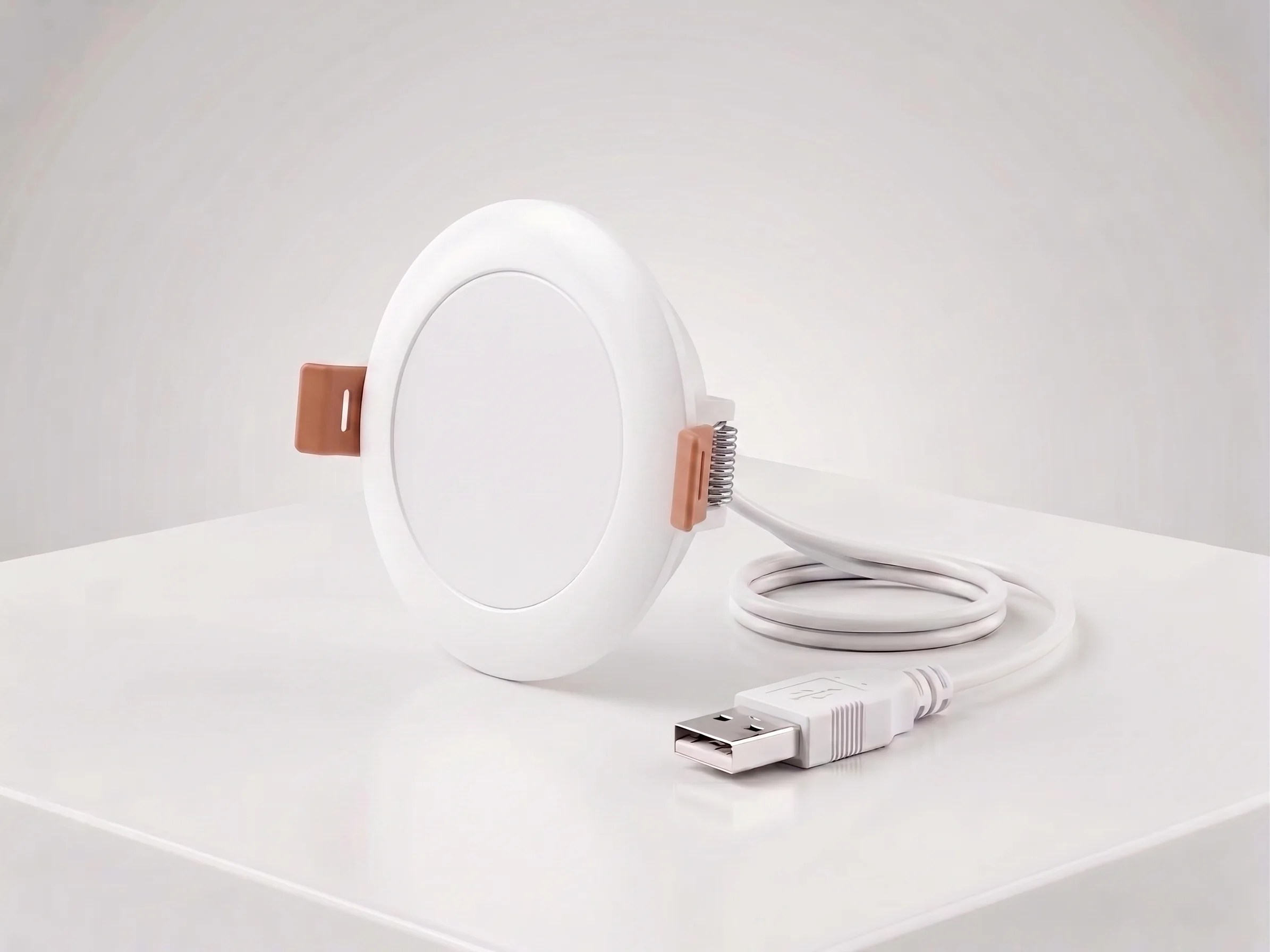
Ceiling Mount mmWave Human Presence Sensor — Zigbee
24GHz wideband mmWave ceiling presence sensor with 10m motion detection, 2.5m micro-motion, and breathing detection. 120° field, DC5V, Zigbee 3.0. For hotel room occupancy and commercial automation.
This page already points to it as the next recommended reference.
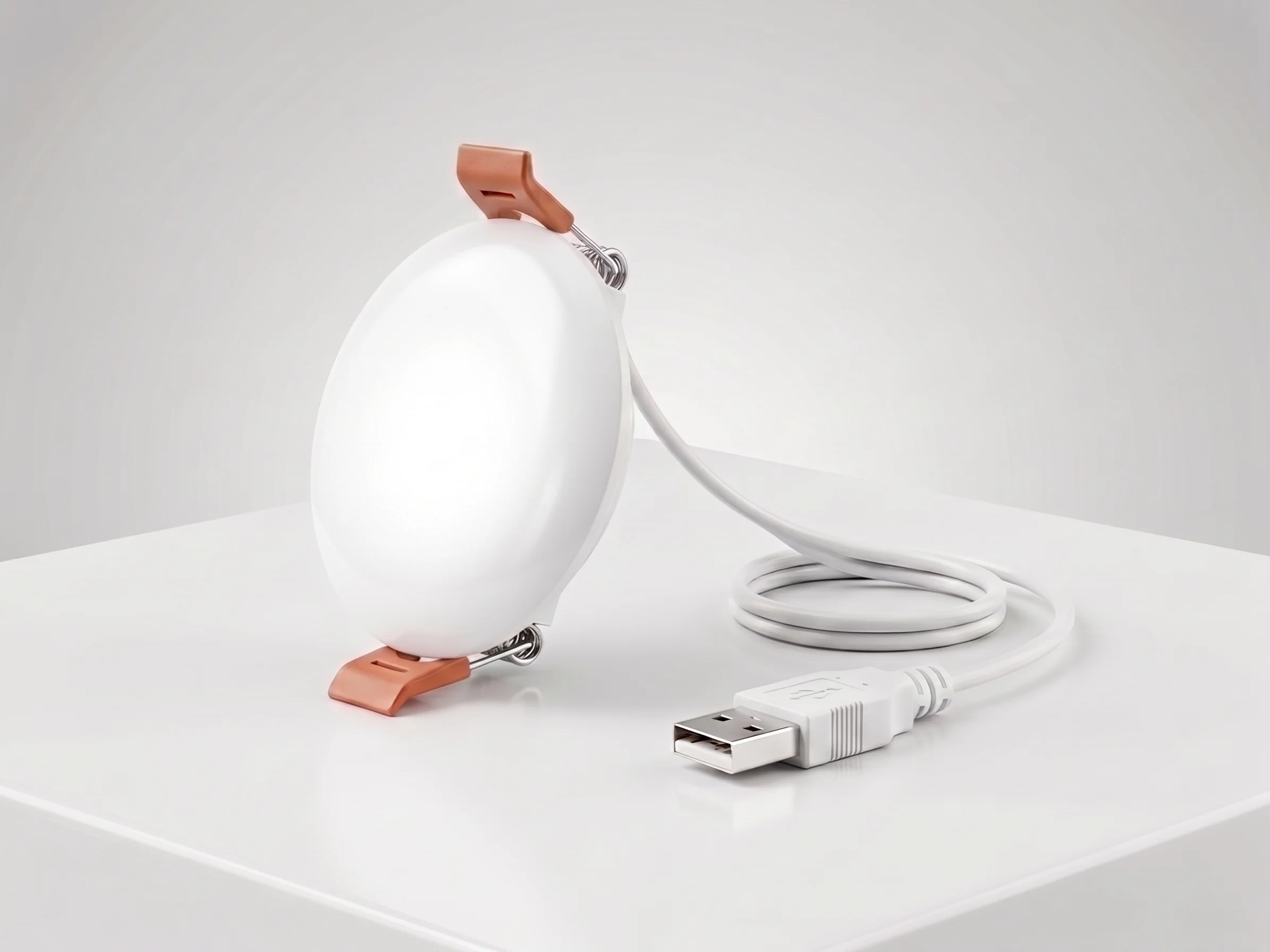
Ceiling Mount mmWave Human Presence Sensor — WiFi
24GHz wideband mmWave ceiling presence sensor with 10m motion detection, 2.5m micro-motion, and breathing detection. 120° field, DC5V, WiFi 2.4GHz. No gateway required for retrofit hotel and apartment projects.
This page already points to it as the next recommended reference.
Related solutions
1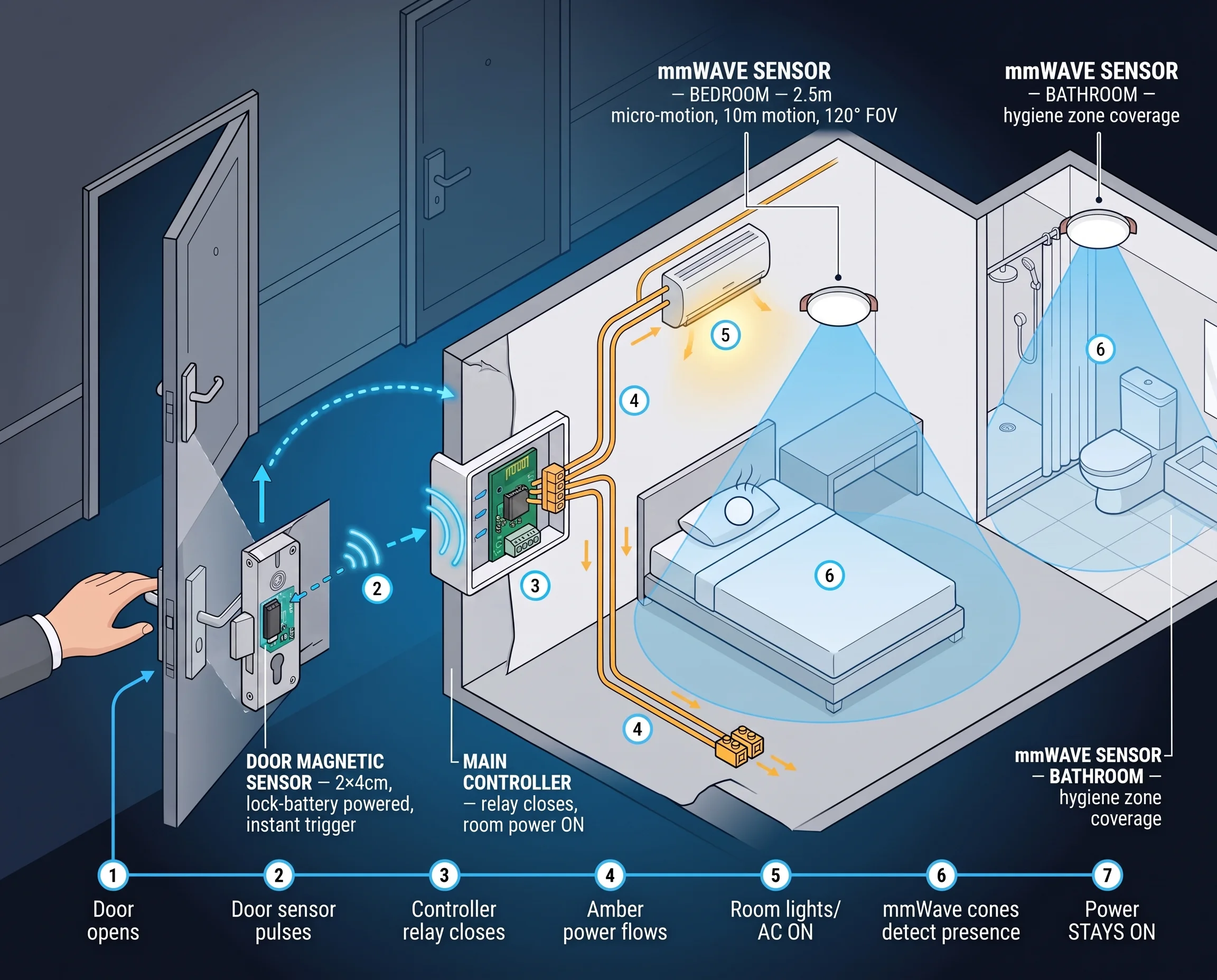
Hotel Room Occupancy & Motion Sensor Solution
mmWave radar presence sensors for hotel room occupancy, housekeeping scheduling, and HVAC energy saving. Detect true occupancy — even when the guest is asleep — with our ceiling-mount hotel room motion sensor.
It supports the same product context: Ceiling Mount mmWave Human Presence Sensor — Zigbee, Ceiling Mount mmWave Human Presence Sensor — WiFi.
Related blog posts
3
60GHz vs 24GHz vs 77GHz mmWave Sensors: Choosing the Right Frequency for Commercial Presence Detection
Compare 60GHz, 24GHz, and 77GHz mmWave sensors for commercial presence detection. Technical specs, detection range, privacy, and OEM sourcing guidance.
It supports the same product context: Ceiling Mount mmWave Human Presence Sensor — Zigbee, Ceiling Mount mmWave Human Presence Sensor — WiFi.
What Is an Electronic Presence Sensor? Technology, Accuracy, and How It Differs From a Motion Sensor
Learn what an electronic presence sensor is, how it detects stationary humans, and how it differs from a PIR motion sensor. Covers mmWave, accuracy, and use cases.
It supports the same product context: Ceiling Mount mmWave Human Presence Sensor — Zigbee, Ceiling Mount mmWave Human Presence Sensor — WiFi.
How to Integrate mmWave Presence Sensors With Home Assistant (Local Control Guide)
Step-by-step local control setup guide for mmWave devices, covering MQTT/Matter config, automation scripts, calibration and OEM ceiling presence sensor integration tips.
It supports the same product context: Ceiling Mount mmWave Human Presence Sensor — WiFi, Ceiling Mount mmWave Human Presence Sensor — Zigbee.
Specify your hotel project with our engineers
Send your room count, ceiling type, and protocol preference. We will return a sample plan and quote within 24 business hours.
- Move from general guidance into a product or application discussion.
- Use RFQ when pricing, drawings, MOQ, or launch timing needs structure.
- Keep a direct contact path visible for fast clarifications and handoff.